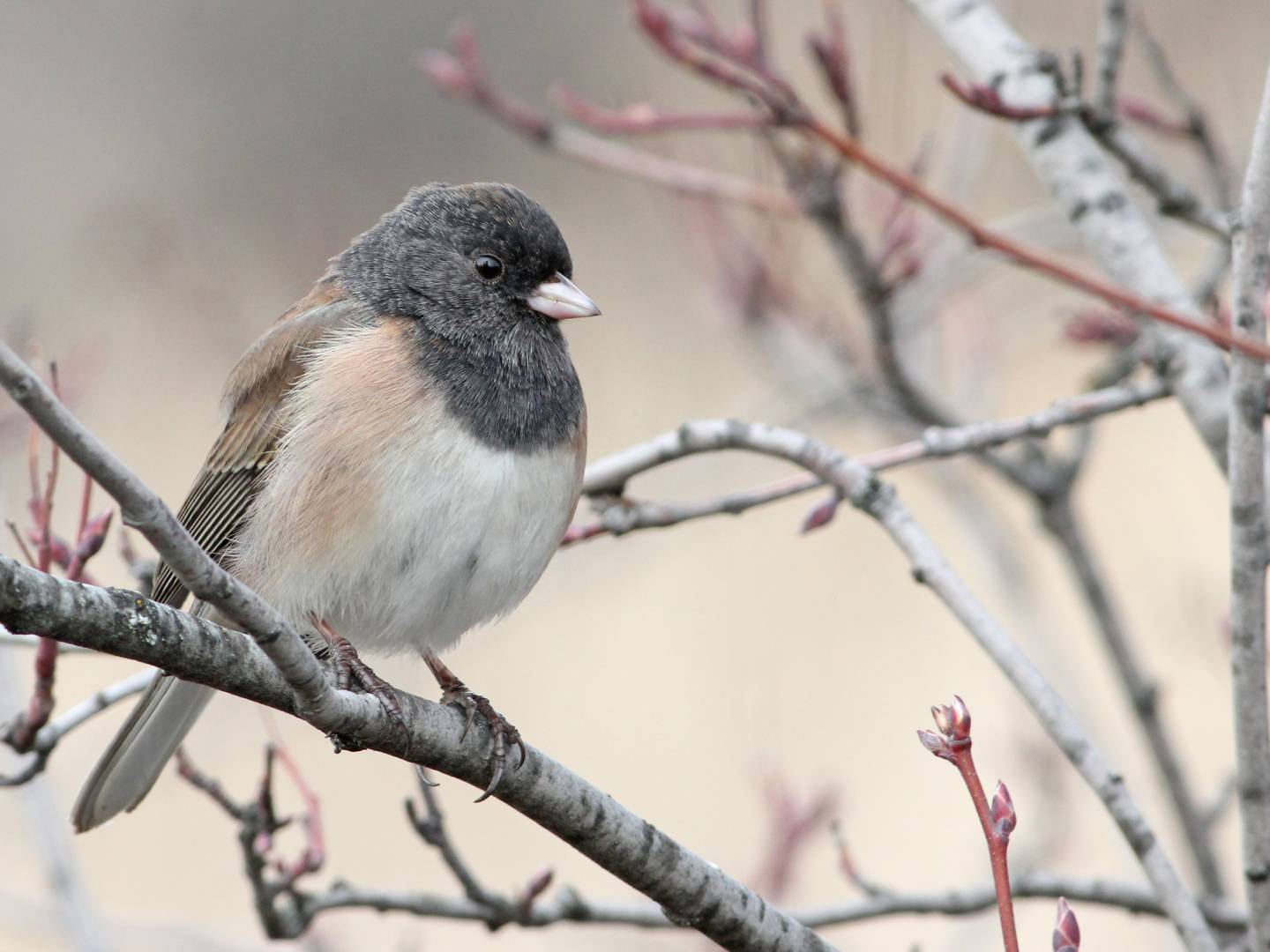

A few juncos hop beneath your bird feeder, picking through the scattered seed while other birds gather above. They clearly know where the food is, so why don’t they land on the feeder? Can they use a hopper feeder, or would a different setup suit them better?
The short answer is yes, Dark-eyed Juncos can use hopper feeders, although they generally prefer feeding on the ground or on low platforms. A hopper with an accessible feeding tray may accommodate them, but some juncos will continue collecting seed underneath instead. However, the details of your backyard setup matter too. The landing area, seed selection, and surroundings all give you useful things to consider.
This guide will cover the following:
- Why Do Juncos Eat Under a Hopper Feeder Instead of on It?
- What Hopper Feeder Features Make Seed Easier for Juncos to Reach?
- What Seed Should You Put in a Hopper Feeder for Juncos?
- Where Should You Place a Hopper Feeder to Encourage Juncos?
- Why Aren’t Juncos Visiting Your Hopper Feeder in Winter?
Keep reading or jump to a section that matches what you’re seeing in your yard.
Why Do Juncos Eat Under a Hopper Feeder Instead of on It?

For a junco, the ground beneath a feeder can be a perfectly ordinary place to find lunch. These birds naturally search low down, hopping and picking through leaf litter for food. Finding them beneath your feeder does not automatically mean something is wrong with it.
It helps to separate two observations: a junco visiting your feeding station and a junco landing directly on your feeder. Your feeder may be drawing birds into the area even when the juncos themselves remain below it.
Watch what they actually pick up. A patch covered in empty sunflower shells can look well stocked from a window, but the birds may be searching among the shells for a few remaining seeds. Their presence alone does not tell you how much edible food is available.
There is also no need to turn feeding into a training exercise. If the birds are comfortably finding food at ground level, persuading them to perch higher offers little practical benefit.
For a clearer view of their preferences, try offering a small amount of seed in a separate, low tray. Watch whether the juncos use it while leaving the hopper feeder to other birds. Treat this as a simple backyard comparison, rather than proof that every junco prefers the same arrangement.
The useful question is whether your feeding station gives them an accessible place to eat. A junco underneath your feeder can be just as welcome as one sitting on its edge.
What Hopper Feeder Features Make Seed Easier for Juncos to Reach?

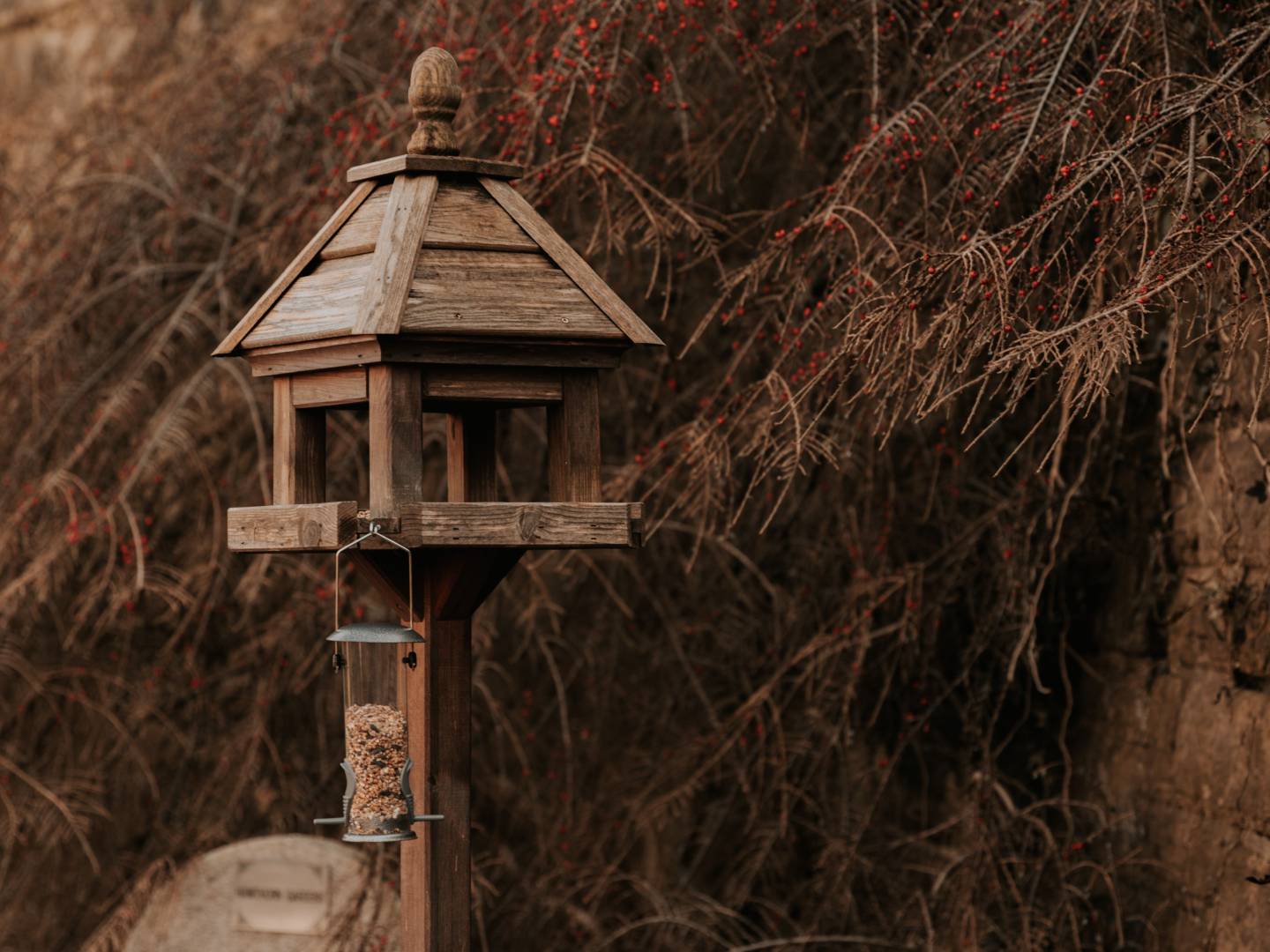
Look at the part of the feeder where a bird actually stands. The seed reservoir may be large and attractive, but the feeding edge determines how a visitor reaches its meal.
An open tray offers a different feeding surface from a narrow perch beside a small opening. Since low platforms are a recognized option for juncos, a reasonable design preference is a hopper feeder with some usable tray space around its base. This is a practical inference from their feeding habits, rather than a guarantee of visits.
Examine your feeder from the bird’s approach. Can a visitor land beside exposed seed? Does the roof leave an accessible opening above the tray? Is the food available along the feeding edge, or trapped inside the reservoir?
You can check seed movement before hanging the feeder. Add a modest amount, set the feeder upright, and see whether seed reaches the intended feeding area. Avoid modifying openings unless the maker recommends it.
Maintenance matters as much as access. A feeder that is awkward to empty can make routine care unnecessarily difficult. Before choosing one, check how you will reach the bottom corners, remove old food, and inspect the tray.
A roof helps protect stored seed, but it does not make a hopper weatherproof. Wind-driven rain can still reach exposed feeding areas, and damp seed requires attention.
If you are considering a feeder, compare its feeding tray and cleaning access with the setup you need. A hopper feeder can serve a mixed backyard flock while a separate low tray gives juncos another option.
What Seed Should You Put in a Hopper Feeder for Juncos?

Start by checking the ingredients rather than the picture on the seed bag. A blend marketed for backyard birds may contain a very different combination from the one beside it.
Millet is a useful starting point for juncos. Cornell notes that they appear to prefer millet to sunflower seed at feeders. That makes a millet-containing mix worth considering when these birds are your focus.
White proso millet is an option for a junco feeding area, but you do not need to replace your entire seed supply immediately. Begin with a small quantity and observe what happens. Oregon State University also suggests millet among foods you should offer to attract juncos.
Check that your hopper handles the seed you intend to use. Different feeder openings dispense different foods differently. If you are unsure, test a little seed before completely filling the reservoir.
Keep the comparison simple. If you change the food, feeder, and location all at once, you will have difficulty identifying which change mattered. Try the seed first while keeping the rest of the arrangement the same.
A hopper feeder shared by several species does not have to contain only junco favorites. You can keep a general seed mix in the hopper and offer a small millet portion separately. That also makes it easier to see whether the juncos prefer the millet.
Avoid interpreting every uneaten seed as rejection. First check whether the food is accessible and in good condition. A feeder full of seed provides little information if none reaches the tray.
Let the birds’ actual use guide your next refill, rather than buying a large bag before you know what works.
Where Should You Place a Hopper Feeder to Encourage Juncos?

Think about the feeding area as a whole. The feeder is one part of a space that also includes landing places, nearby vegetation, and the surface underneath.
Oregon State University recommends placing feeders near trees and shrubs that provide juncos with cover. That gives you a useful starting point when comparing possible locations in your yard.
“Near cover” should still involve a careful look at the actual site. Consider whether you can see the feeding area clearly and whether you notice any cats or other disturbances. A location that looks sheltered from your window may look quite different when you stand beside it.
Choose somewhere you can reach easily for routine care. If checking the feeder requires crossing a muddy bed or moving garden furniture, the location may become inconvenient for you during wet weather.
Also look beneath the feeder. Can you easily remove accumulated shells and discarded food? Would a separate tray fit without blocking a walkway? Is the ground regularly flooded or disturbed?
If you add a low tray, treat it as its own feeding spot. It does not need to sit directly beneath the hopper where falling debris will collect. A nearby position lets you observe both surfaces and maintain them separately.
There is no single hopper height that guarantees junco visits. Rather than repeatedly raising and lowering the feeder, watch where the birds travel and feed. How they use your yard gives you more useful information than an arbitrary measurement.
Keep a short note of what you change and what you observe. Even a few words, such as “tray used, hopper ignored,” can help you avoid rearranging a setup that is already serving the birds.
Why Aren’t Juncos Visiting Your Hopper Feeder in Winter?

Before changing the feeder, establish whether juncos are present at all. Seeing them elsewhere in the yard suggests a different problem from seeing none in the neighborhood.
Season matters. Across much of North America, juncos become more prevalent during winter. Although, their presence varies with region and elevation. A feeder cannot draw birds that are not usually there.
If juncos are nearby, check the feeder itself. Look at the exposed feeding edge instead of judging by the amount in the reservoir. Is seed available where a bird can reach it? Has snow covered the tray? Is old food blocking the outlet?
Inspect the contents after wet weather. Remove spoiled food rather than topping up a questionable batch with fresh seed. Hopper feeders can hold substantial quantities, so a full reservoir should not replace regular inspection.
Next, observe the activity around the feeding station. Are birds repeatedly interrupted by people, pets, or other visitors? Do juncos approach during quieter periods? Those observations can help you decide whether the issue is access, disturbance, or simply the timing of your own birdwatching.
If you want to compare options, offer the same seed in a low tray while leaving the hopper feeder in place. Project FeederWatch suggests platforms near the ground as especially suitable for attracting juncos.
Give yourself permission to accept the result. If juncos use the tray and other birds use the hopper feeder, your feeding station is meeting different needs. You do not need every species to eat from every feeder.
Give Juncos a Feeding Option That Fits

Dark-eyed Juncos can visit hopper feeders, but direct use should not be your only measure of success. Watch the whole feeding area and notice where the birds choose to eat.
Begin with the setup you have. Check the feeding edge, inspect the seed, and consider whether a small low tray would make a useful addition. Change one thing at a time so your observations remain meaningful.
If you are adding a hopper feeder for a mixed backyard flock, take a look at this feeder and compare its layout with your needs. Pairing it with another feeding surface gives you room to accommodate different visitors. The most useful setup is one you can maintain easily and the birds actually use.
Image Credits
Blalonde, CC BY-SA 3.0, via Wikimedia Commons | Cropped from original
Cephas, CC BY-SA 3.0, via Wikimedia Commons | Cropped from original
Gary Leavens, CC BY-SA 2.0, via Wikimedia Commons | Edited from original
Charles J. Sharp, CC BY-SA 4.0, via Wikimedia Commons | Cropped from original
lwolfartist, CC BY 2.0, via Wikimedia Commons | Cropped from original
Varik Valefor, CC0, via Wikimedia Commons | Cropped from original
Vickie J Anderson, CC BY-SA 4.0, via Wikimedia Commons | Cropped from original





Leave a Reply