Introduction
Have you ever wondered if Red Crossbills will visit your feeders? Are you setting up feeders in a pine-heavy yard and hoping to attract something unusual? Or maybe you’ve heard about crossbill irruption years and want to be ready when they show up.
Red Crossbills are not typical feeder birds, but under the right conditions, you can increase your chances. In this guide, you’ll learn whether feeders work at all, what foods they might accept, which feeder types give you the best shot, where to place them, and when to expect activity.
In this guide, you will learn:
- Can Red Crossbills Use Bird Feeders in Backyards
- Best Seeds and Food for Red Crossbills at Feeders
- Feeder Types That Work (or Don’t) for Crossbills
- Placement Tips to Attract Red Crossbills
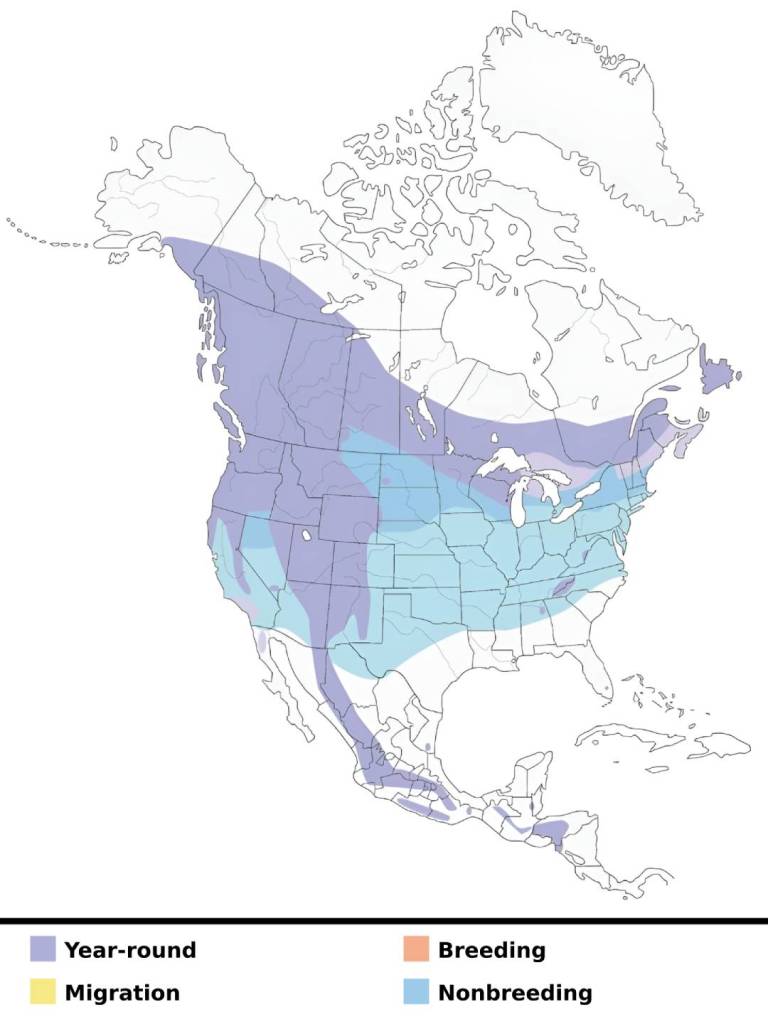
- When and Where You’re Most Likely to See Crossbills
Keep reading or jump to a section that matches your setup.
Red Crossbills rarely visit standard backyard feeders because they specialize in extracting seeds from pine cones. However, during irruption years or food shortages, they may visit hopper or platform feeders stocked with sunflower seeds, especially if placed near conifer trees in quiet areas.
If you’re setting up feeders in a pine-heavy yard, having a reliable seed feeder already in place can help you take advantage of those rare crossbill visits when they happen.
Can Red Crossbills Use Bird Feeders in Backyards
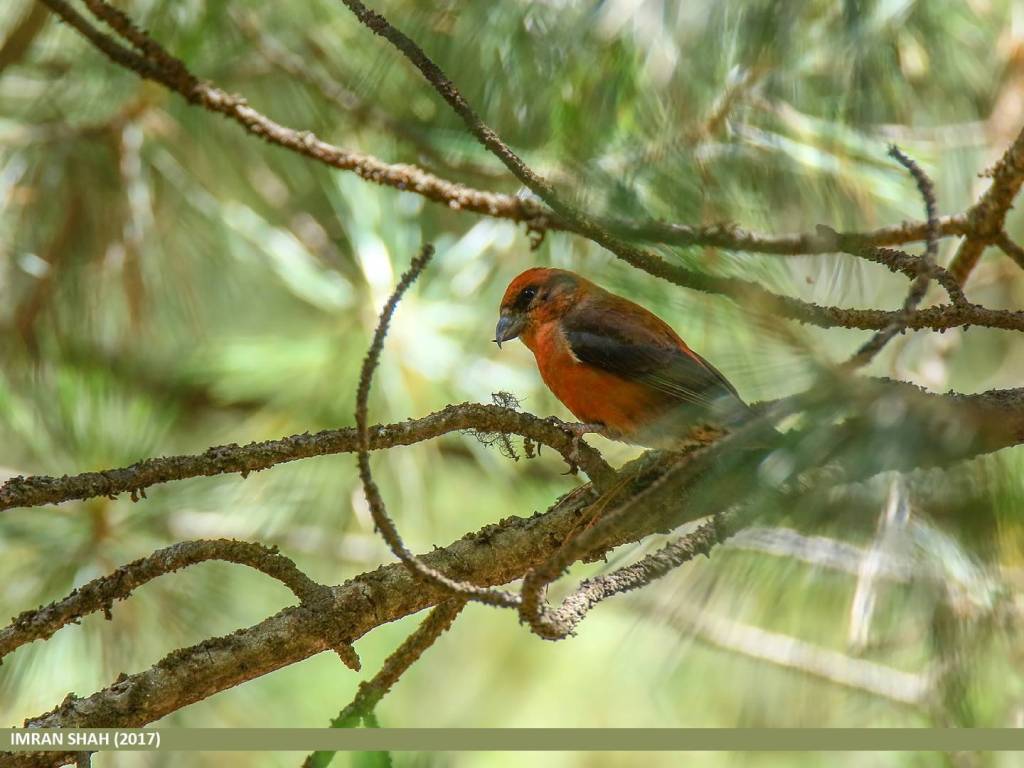
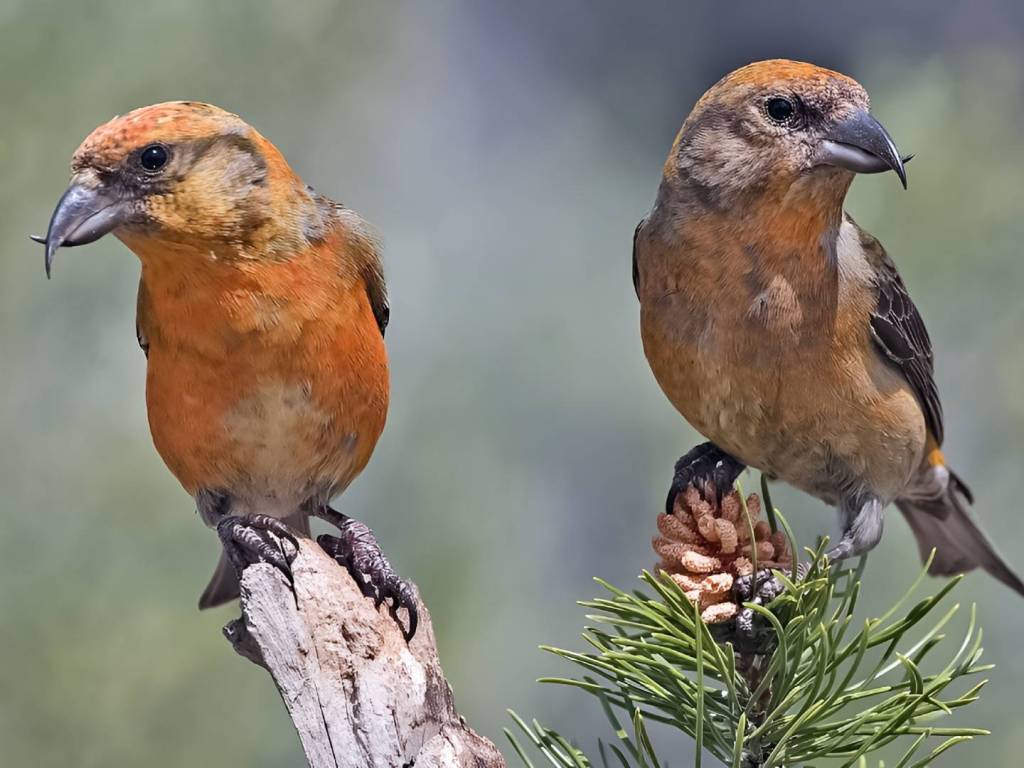
Red Crossbills are highly specialized birds. Their crossed bills are designed to pry open pine cones, not crack open typical feeder seeds. Because of this, they do not behave like common feeder finches such as goldfinches or house finches.
In most years, you will not see them at feeders at all. They prefer to stay in conifer forests where food is abundant and predictable. Even if you live near pine trees, they may pass through without stopping.
However, there are exceptions. During irruption years, when cone crops fail in their usual range, crossbills travel widely in search of food. This is when they are most likely to appear in suburban or backyard settings.
Even then, they tend to remain cautious. They may briefly investigate feeders but will not linger unless conditions feel right. Quiet environments, nearby trees, and easy-to-access food all matter more than the feeder itself.
If your goal is to attract crossbills, think of feeders as a backup option rather than a primary draw. Your habitat matters more than your equipment.
Best Seeds and Food for Red Crossbills at Feeders
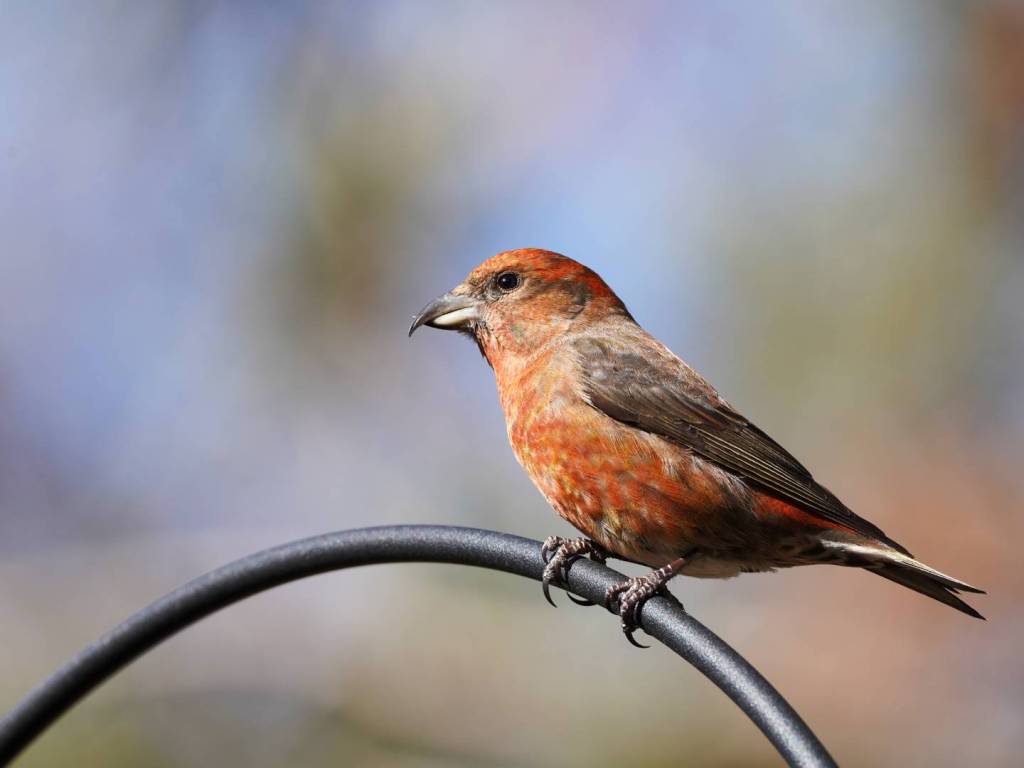
Since crossbills are adapted to conifer seeds, typical feeder mixes are not ideal. Whole sunflower seeds, for example, can be difficult for them to handle compared to their natural food.
If they do visit feeders, they are more likely to accept:
- Sunflower seeds
- Soft, easy-to-access seeds
- Possibly small nut pieces
Nyjer seed is usually too small to be worth their effort, and mixed seed blends often contain filler they will ignore.
The key is accessibility. Crossbills are efficient feeders in the wild, and they will not waste time struggling with tough shells or awkward feeding positions.
Freshness also matters. If you are trying to attract unusual visitors like crossbills, stale seed will work against you. Keep feeders clean and stocked with high-quality options.
That said, even the perfect seed does not guarantee success. Food choice only matters if crossbills are already nearby and willing to explore.
Feeder Types That Work (or Don’t) for Crossbills
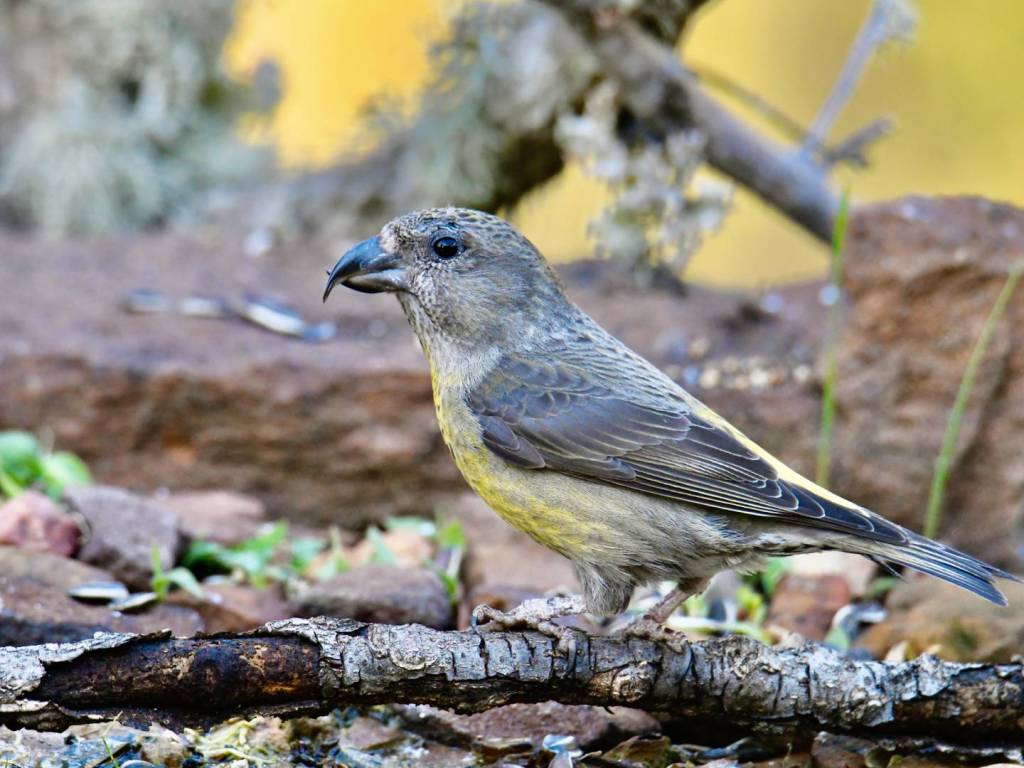
If crossbills do approach feeders, they prefer simple, open access.
Platform feeders are your best option. They allow birds to land comfortably and pick through food without dealing with small ports or perches. This matches their natural feeding style more closely.
Tray feeders attached to railings or posts can also work well, especially if placed near trees where birds feel safe.
Tube feeders are less effective. The narrow feeding ports and perches are designed for smaller, more agile finches. Crossbills may struggle or avoid them entirely.
While platform feeders are the top choice for crossbills, a hopper-style feeder can still play a useful supporting role. During irruption years, when crossbills are more willing to explore, they may sample easy-access seed from a hopper if it’s well-stocked with sunflower seeds. A hopper feeder also helps attract other finches, which can signal safety and draw attention to your feeding area.
If you are setting up specifically for crossbills, prioritize openness over capacity. A simple tray with the right seed will outperform a complex feeder every time.
Placement Tips to Attract Red Crossbills
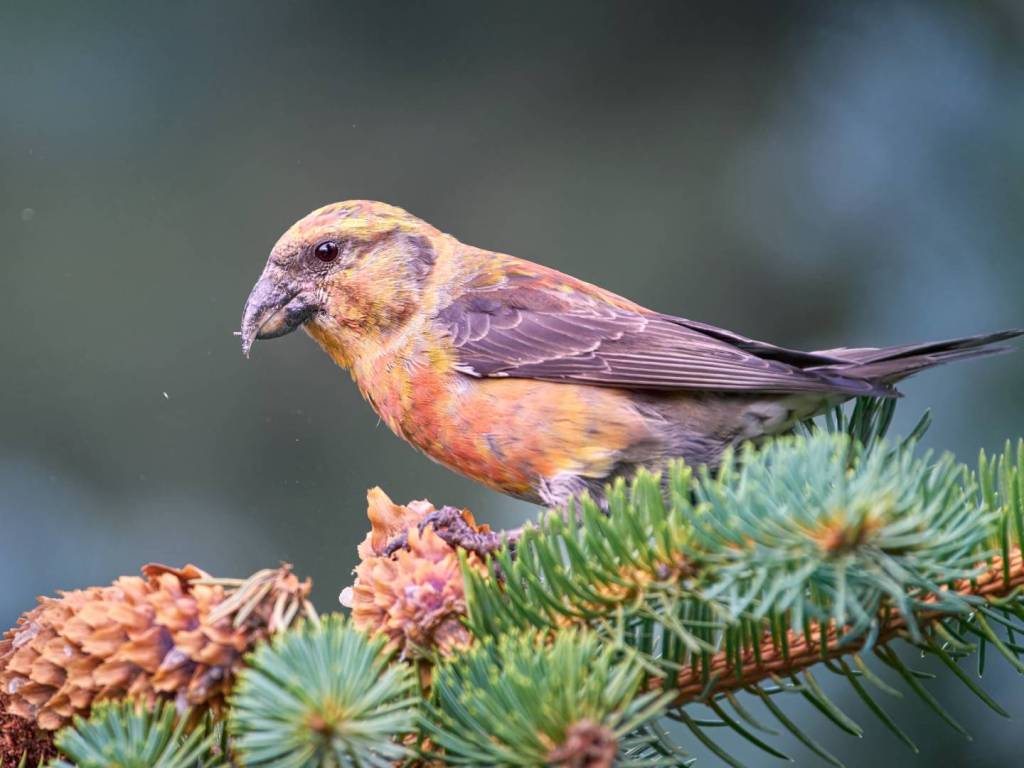
Placement is the most important factor when trying to attract crossbills.
Start near conifer trees. If you have pine, spruce, or fir nearby, place your feeder within short flying distance. Crossbills are unlikely to venture far from familiar feeding grounds.
Height also matters. Position feeders at mid-level or slightly elevated spots that mimic natural foraging zones rather than low ground feeders.
Keep the area quiet. Crossbills are not as bold as typical backyard birds. Avoid placing feeders near heavy foot traffic, doors, or noisy patios.
Provide nearby cover. Trees or dense shrubs give birds a place to perch and observe before committing to a feeder.
You can also scatter a small amount of seed on a flat surface beneath trees. This mimics natural feeding conditions more closely than hanging feeders.
The goal is to make your setup feel like an extension of the forest, not a typical backyard feeding station.
When and Where You’re Most Likely to See Crossbills
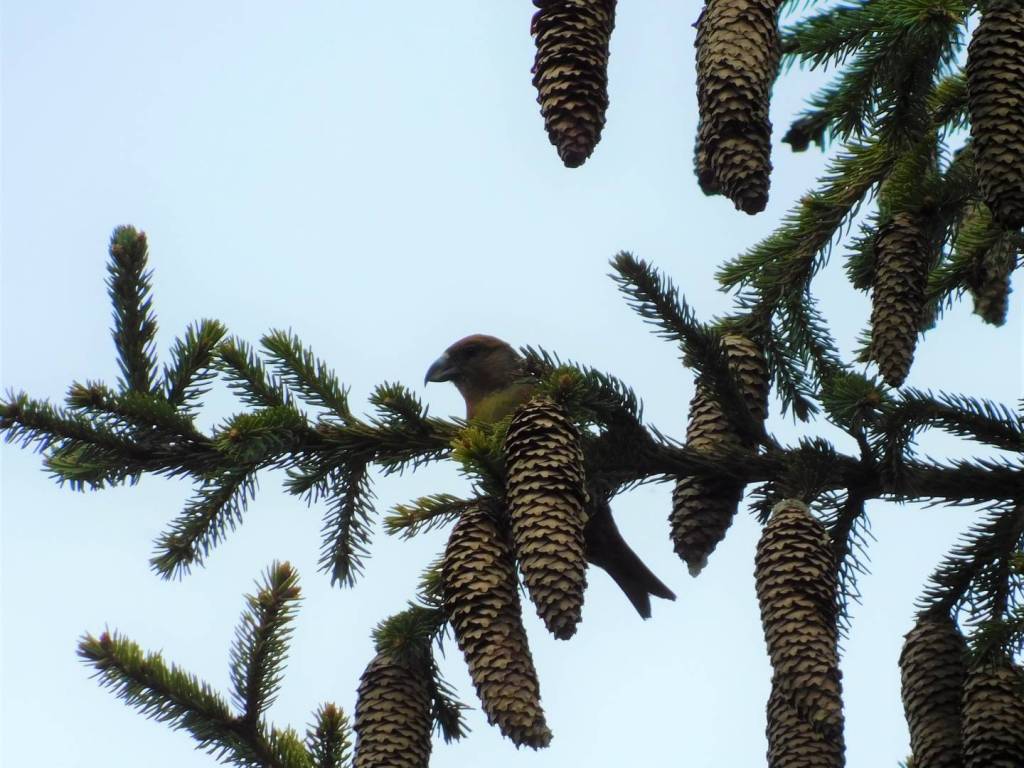
Timing plays a huge role in success.
Red Crossbills are most likely to appear at feeders during irruption years. These occur when cone crops fail in their usual range, forcing them to travel widely in search of food.
In these years, they may show up in places where they are rarely seen, including suburban neighborhoods and backyard setups.
Outside of irruption periods, your chances are very low, even with a perfect feeder setup.
Seasonally, fall and winter are the best times to watch for them. This is when food shortages become more apparent and movement increases.
Geography also matters. If you live near forests with conifer trees, your chances improve. In areas without natural habitat, feeder visits are extremely unlikely.
If you hear their distinctive calls overhead, that is your cue to check feeders and nearby trees. Crossbills often travel in flocks and may briefly stop if conditions look promising.
Patience is key. You are not building a feeder setup for daily visits. You are preparing for rare opportunities.
Conclusion
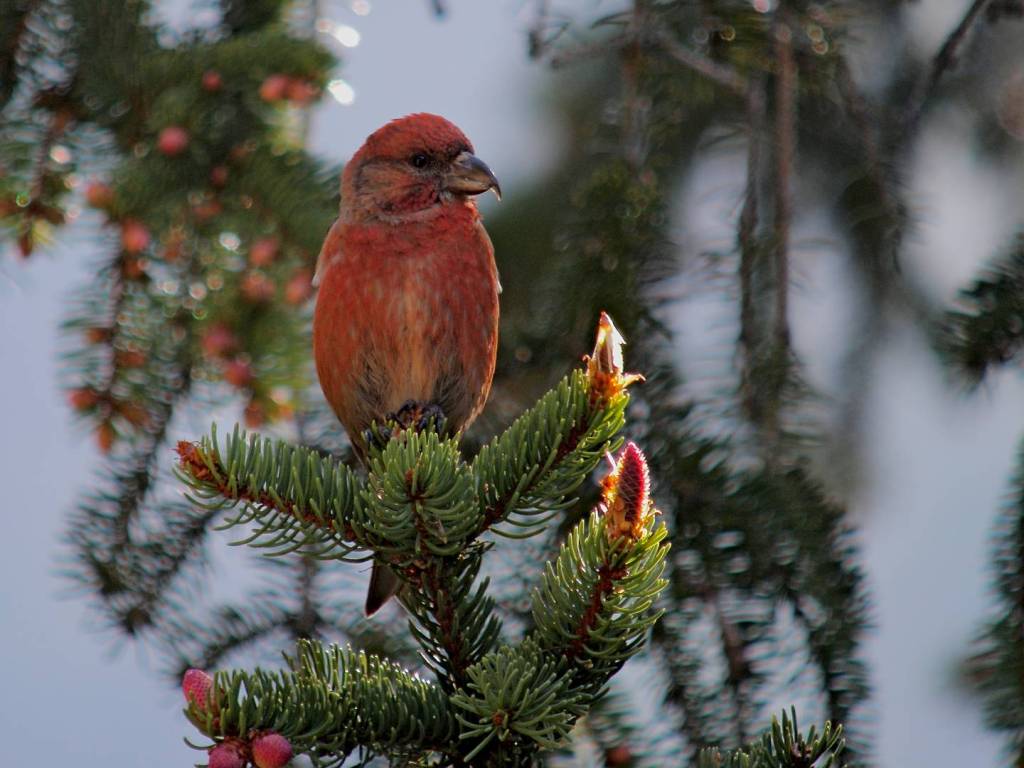
Attracting Red Crossbills to feeders is less about the feeder and more about timing, location, and realism.
They are not typical backyard birds, and even the best setup may go unused for long periods. But during irruption years, a simple, well-placed feeder with the right food can give you a rare and rewarding sighting.
If you want to be ready for unpredictable visitors like Red Crossbills, start with a dependable feeder setup you can maintain year-round. A hopper-style feeder stocked with high-quality, easy-to-eat seed gives you a solid foundation and ensures your yard stays active, so when crossbills do pass through, your setup is already working in your favor.
You may not see them often, but when you do, it will feel worth the effort.


 Wing Watchers with Wagner
Leave a comment