

Introduction
Welcome, folks! Gather around as we step into the world of one of North America’s most charming songbirds—the Purple Finch. If you’ve ever spotted a small, vibrant bird flitting through the trees and wondered what it was, you might’ve glimpsed this colorful visitor. Whether you’re strolling through a forest trail or watching feeders from your kitchen window, the Purple Finch brings a burst of color and sweet song to any day. Today, we’re going to dive into everything you need to know about this bird—from how to spot one, to where they live, what they eat, and how to tell them apart from their look-alike cousins. So grab your binoculars and your curiosity—this will be a fun flight!
What Does a Purple Finch Look Like?

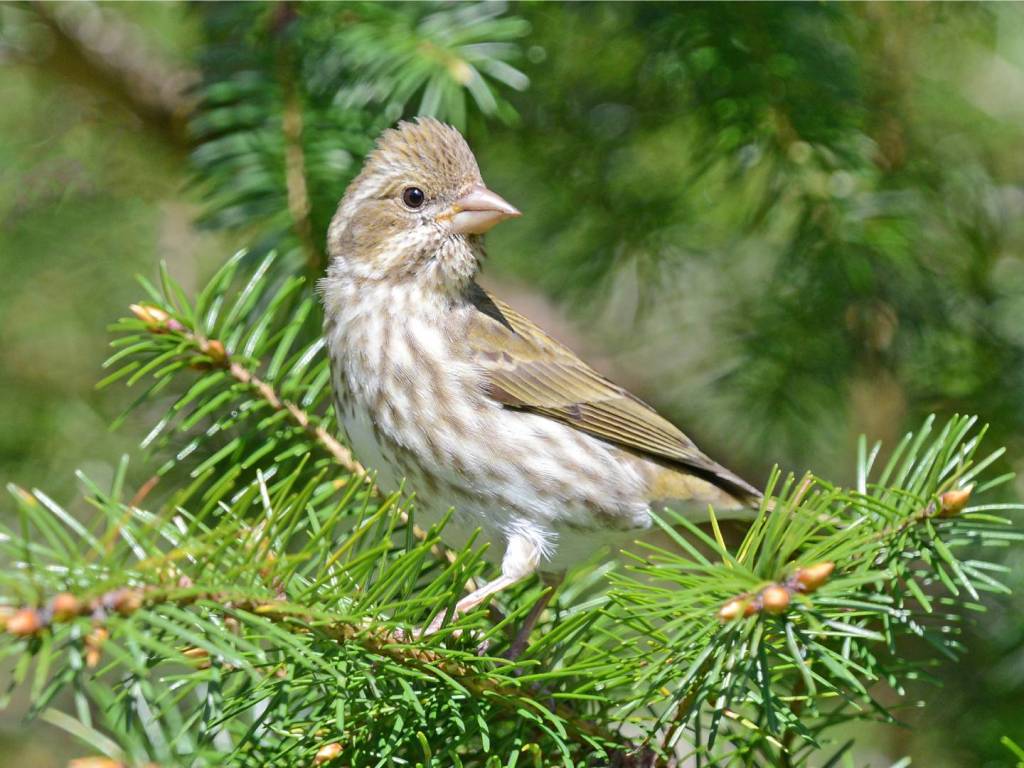
Alright, birdwatchers—let’s talk about markings! When you’re out on the trail or looking through your backyard window, knowing what to look for is key to good Purple Finch identification. First off, let’s clear something up—the Purple Finch isn’t really purple. The males are more of a rich raspberry red, kind of like someone dipped them in cranberry juice. That red covers the head, chest, back, and rump, fading slightly into a lighter belly. It’s not patchy like some other birds, but smooth and even—almost like they’ve been soaked in color.
Now, the female Purple Finch is a whole different story. She doesn’t have any red at all. Instead, she sports a more subtle look with brown and white tones. Her upperparts are light brown, and her underparts are white with sharp, dark brown streaks running down her chest and sides. One standout feature? That crisp white eyebrow stripe—called a supercilium—sits right above her eye and gives her a fierce little expression.
Both males and females are medium-sized finches with stout, cone-shaped beaks perfect for seed-cracking. They’ve got a not-too-long, not-too-short tail and a chunky build, which makes them look just a tad bulkier than some of their relatives.
So next time you’re out and spot a reddish flash or a streaky brown bird with a bold white eyebrow, you’ll know exactly what you’re looking at. The Purple Finch is a true gem for any birder’s life list!
Where Can Purple Finches Be Found?

So where do these raspberry-toned beauties call home? For the Purple Finch’s habitat and range, these birds are lovers of cool, green spaces. During the breeding season, they favor coniferous and mixed forests—places filled with evergreens like spruce and fir, along with a mix of deciduous trees like maple or birch. You’ll find them nesting across much of Canada and stretching down into the northeastern United States. They also breed along parts of the Pacific Coast, especially in areas of Washington, Oregon, and northern California.
But Purple Finches aren’t shy about expanding their territory. While they prefer the quiet of wild woodlands, they’ve also adapted to more suburban settings. You might spot them along wooded streams, in extensive parks, or even in neighborhoods that boast a good mix of mature trees. They seem to thrive where nature hasn’t been totally pushed out by pavement.
As for winter? That’s when things get interesting. Some populations, especially those in northern Canada, head south into the U.S. for the season. Others stick around year-round, particularly in areas where the winters are a bit more forgiving. You’ll often find them at backyard feeders in winter, especially if you’ve stocked up on sunflower seeds.
So whether you’re hiking through forested trails or sipping coffee on your deck, keep your eyes peeled. These little finches have a wide range and a knack for showing up where you least expect them—always adding a splash of color to the scenery.
What Do Purple Finches Eat?

Let’s talk snacks—Purple Finch style. These birds have a pretty diverse menu, and understanding their feeding habits can help you attract them to your backyard. The Purple Finch diet is mostly made up of seeds, especially from trees like conifers, elms, and maples. Think of them as little foraging machines, hopping through treetops or shrubbery looking for the tastiest bite.
One of their favorite meals? Sunflower seeds—particularly the black oil variety. That’s why birdwatchers often have luck spotting them at feeders in fall and winter. They use their strong, cone-shaped beaks to crack open shells and get to the nutritious center. But they’re not just about seeds. Purple Finches also eat soft buds and nectar in spring, giving them a sugary energy boost when the breeding season is in full swing.
Fruits and berries are also on the menu—especially wild ones like mulberries and elderberries. You might even catch them feasting on cherries or crabapples if they’re in reach. When insects are plentiful, especially in warmer months, they’ll also munch on aphids, caterpillars, and other small bugs. These protein-rich snacks are especially important when they’re feeding their young.
So if you’re hoping to host these finches in your yard, try a mix of sunflower seeds, natural berry-producing shrubs, and a clean birdbath for hydration. With the right buffet, they’ll be happy to drop in for a visit—and maybe even stay a while.
How Can You Differentiate Between a Purple Finch and a House Finch?


A common question you might have while on the trail is: “Wait…was that a Purple Finch or a House Finch?” And I don’t blame you—these two can look pretty similar at a glance. But once you know what to look for, you’ll start picking up on the differences right away.
Let’s start with the males. House Finches have red too, but it’s more of a bright, orangey red limited to their forehead, throat, and chest. Their back and belly stay brownish, and they’ve got bold dark streaks running down their sides. Purple Finch males are more uniformly colored. They look like they’ve been dipped in raspberry jam—from the head to the rump, with less contrast and no heavy side stripes.
When comparing their builds, Purple Finches look chunkier with a more robust, slightly curved beak and a shorter tail. House Finches appear more slender with a longer tail that has a slight notch at the tip.
Now, let’s look at the females. Female House Finches are brown and streaky all over, but they don’t have that standout facial marking. Female Purple Finches, however, have a distinct white line above their eyes that gives them a bold, expressive look.


Once you’ve seen both side by side, it’s hard to unsee the differences. So keep those binoculars up and your bird guide handy—identification gets easier with practice!
Do Purple Finches Migrate?
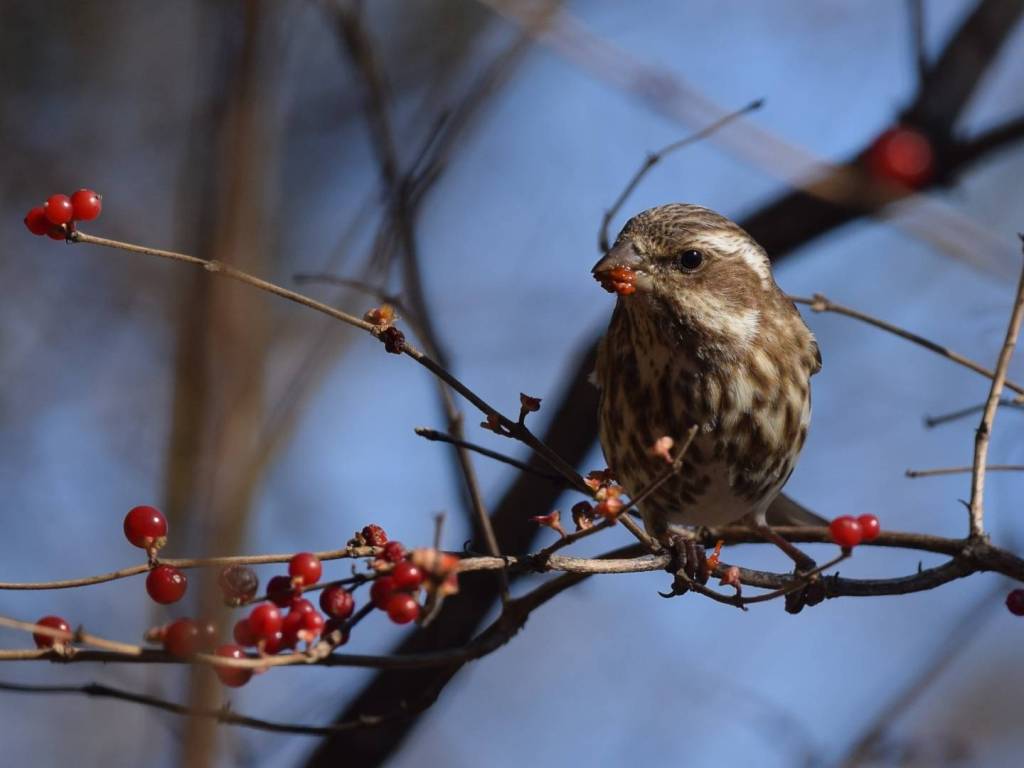
Migration is one marvel of the bird world—and Purple Finches add their own twist to the journey. Unlike some birds that stick to a strict north-south route, Purple Finch migration patterns can vary quite a bit depending on where they’re coming from.
Finches that breed in the far north of Canada typically head south for the winter, often settling in the eastern and southeastern United States where the climate is milder and food is easier to find. You might see them show up at feeders in places like the Carolinas, Georgia, or even parts of Texas during colder months. But not all Purple Finches pack their bags. Some populations, especially those along the Pacific Coast or in the northeastern U.S., are permanent residents or only move short distances.
Their migration timing isn’t rushed either. Instead of a fast, synchronized flight, Purple Finches migrate gradually over several weeks. In fall, their movements begin around September and can continue into December. Come spring, the return north is just as relaxed, usually taking place between March and May.
One interesting note: their movements can be “irruptive,” meaning they might show up in unusually large numbers in a region some winters and be completely absent the next. This usually depends on food supply—if seeds are scarce up north, they’ll move farther south in search of better foraging.
So if you suddenly spot an entire flock of Purple Finches one winter—consider yourself lucky! You could be witnessing a rare migration surprise.
How Do Purple Finches Nest and Reproduce?

When spring arrives and the woods begin to hum with life, Purple Finches get to work on one of nature’s most delicate tasks—raising the next generation. Their nesting habits are a true testament to their adaptability and instinct.
Female Purple Finches take the lead when building the nest. She chooses a site—usually on a horizontal branch of a coniferous tree, tucked safely away from the trunk but still high enough to avoid predators. Occasionally, she’ll use a fork in a tree or even a tall shrub, especially in suburban areas with their preferred cover.
Once she’s picked the perfect spot, construction begins. Using twigs, grasses, rootlets, and moss, she forms a neat little cup. Inside, she’ll line it with softer materials like animal hair or feathers to create a warm, protective space for her eggs.
She typically lays 3 to 6 pale blue or greenish eggs, often speckled with dark markings. The female handles all the incubation duties, keeping the eggs warm for about 12 to 14 days while the male brings food and stands guard. Once the chicks hatch, they’re completely helpless—vulnerable and dependent on their parents for warmth and food.
Both parents help feed the young, delivering a mix of seeds and insects to give them the nutrients they need to grow. In just a few short weeks, the fledglings are ready to take their first flight, and soon they’ll be hopping through the canopy just like their parents.
Conclusion

The Purple Finch may be small, but it brings a big presence to our forests, backyards, and bird feeders. From its bold raspberry-colored males to its subtly streaked females, this bird is a delight to spot and a joy to learn about. Whether you’re admiring one perched in a conifer or watching a flock migrate through on a crisp fall day, the Purple Finch always offers something worth pausing for. Now that you know how to identify them, where to find them, what they eat, and how they live, you’re better prepared to appreciate this feathered friend in the wild. So next time you’re outside, keep your ears open and your binoculars ready—you just might meet the Purple Finch up close.


 Wing Watchers with Wagner
Leave a comment