Introduction
The Ruby-throated Hummingbird is the only hummingbird that breeds widely across eastern North America, which is why it shows up in so many backyards each year. People notice them because of their speed and color, but most don’t realize how specific their behaviors, movements, and life cycle really are. These birds follow tight seasonal schedules, defend feeding areas aggressively, and survive on a razor-thin energy budget. Understanding how to tell males from females, when they migrate, where they nest, and how they behave makes backyard sightings more meaningful and helps avoid common mistakes like putting feeders out too late or assuming every bird with a red throat is male. This breakdown focuses on practical identification and behavior, not folklore or symbolism, and sticks to what actually helps you understand what you’re seeing.
Ruby-throated Hummingbird Female vs Male: How to Tell the Difference
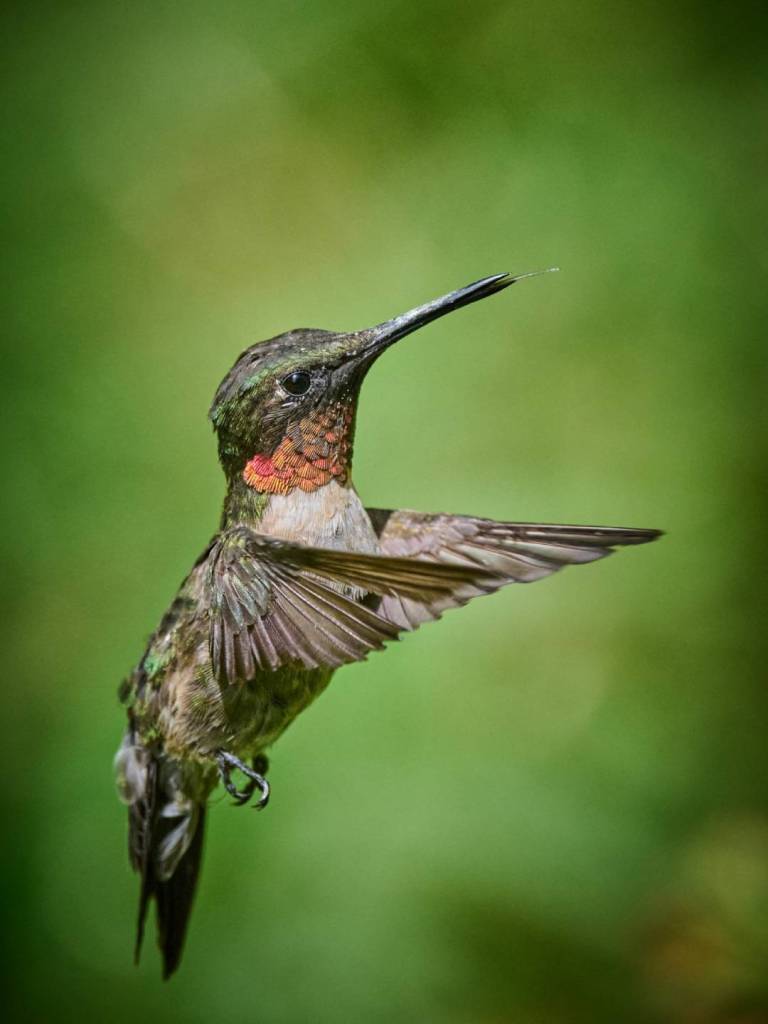
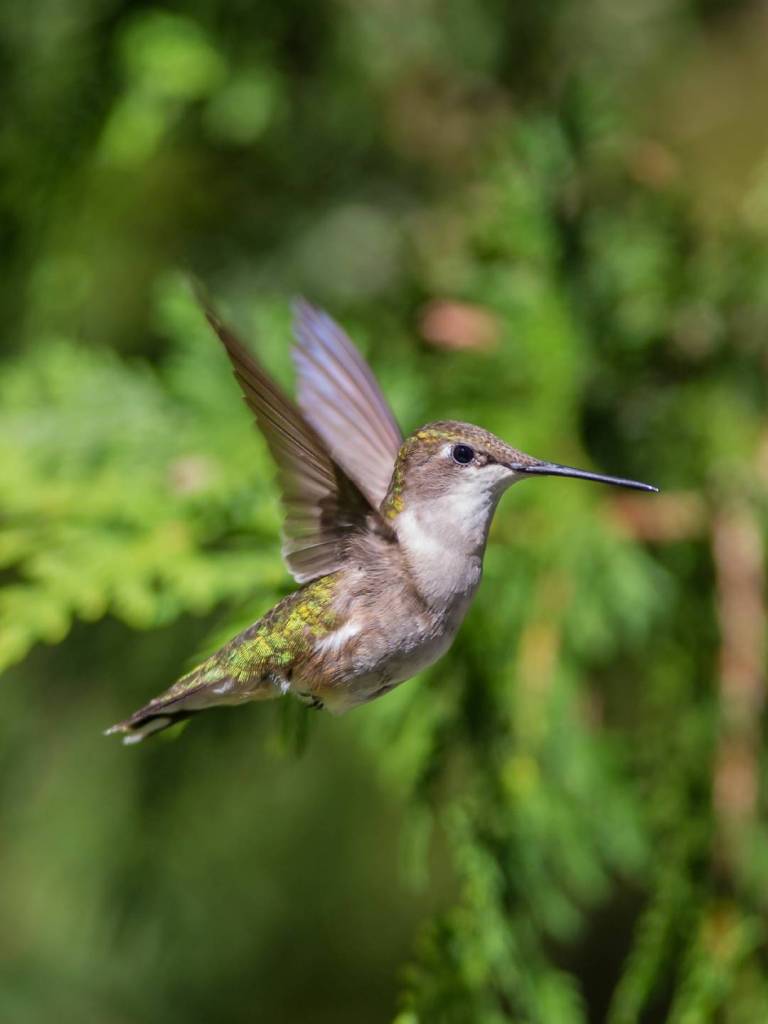
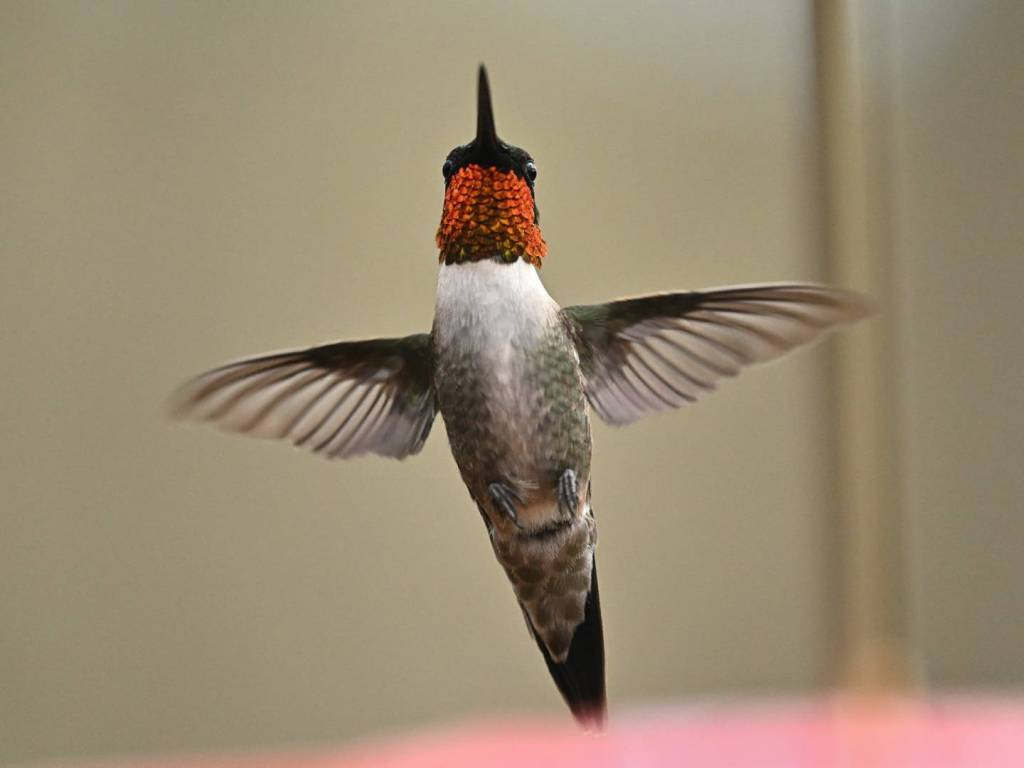
The easiest difference between male and female Ruby-throated Hummingbirds is the throat. Adult males have a bright, metallic red throat called a gorget. In direct sunlight it flashes ruby red, but in shade it can look black. Females never have this red throat. Instead, their throat is white or pale gray, sometimes with light streaking.
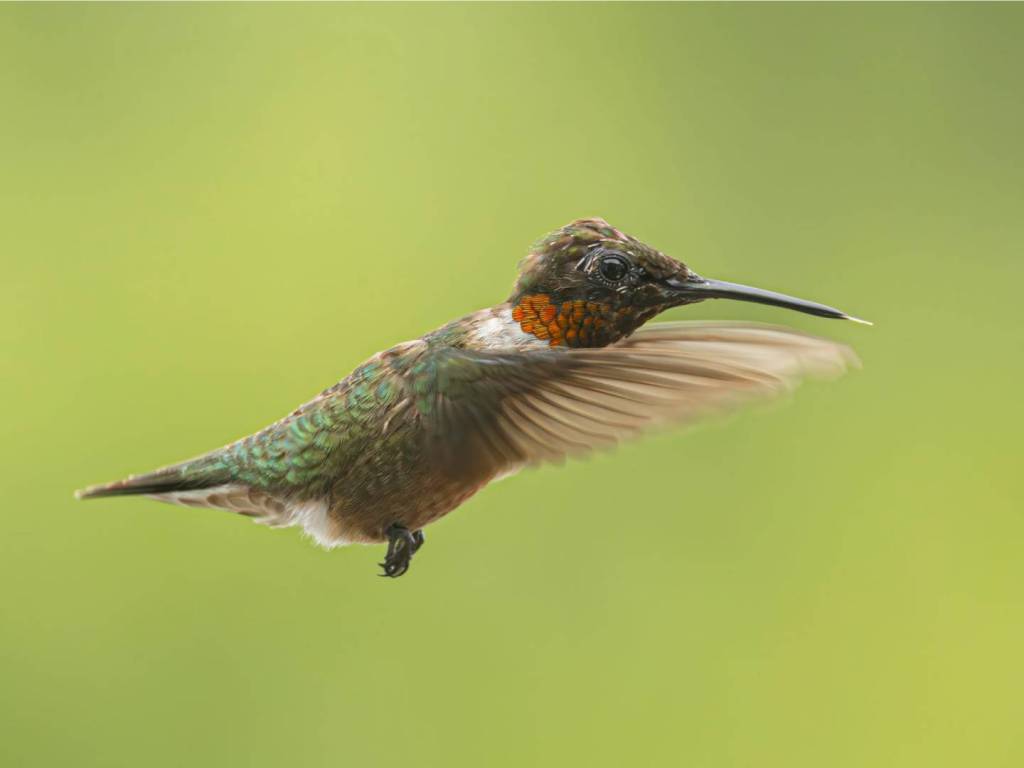
Females are slightly larger overall, though the size difference is subtle unless you see them side by side. Both sexes have green backs and pale undersides, so relying on body color alone usually leads to misidentification. The tail is another useful clue. Males have a more pointed tail with narrow outer feathers, while females have a rounded tail with white tips on the outer feathers. Juvenile males can confuse people because they look like females at first, sometimes showing only a few red speckles on the throat late in the season.
Behavior can also help. Males are more likely to be seen aggressively defending feeders or flowers, chasing off other hummingbirds and even larger birds. Females tend to be more focused on efficient feeding and will tolerate nearby birds more often. None of these traits are perfect on their own, but taken together they usually give a clear answer.
Ruby-throated Hummingbird Migration and Map Updates
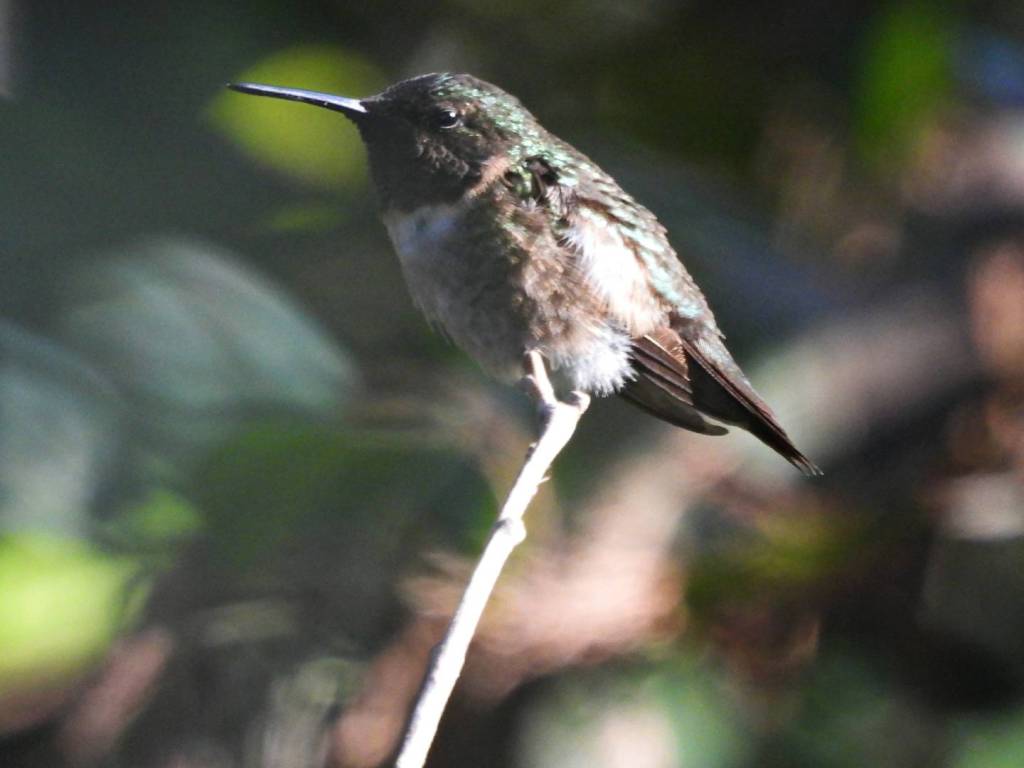
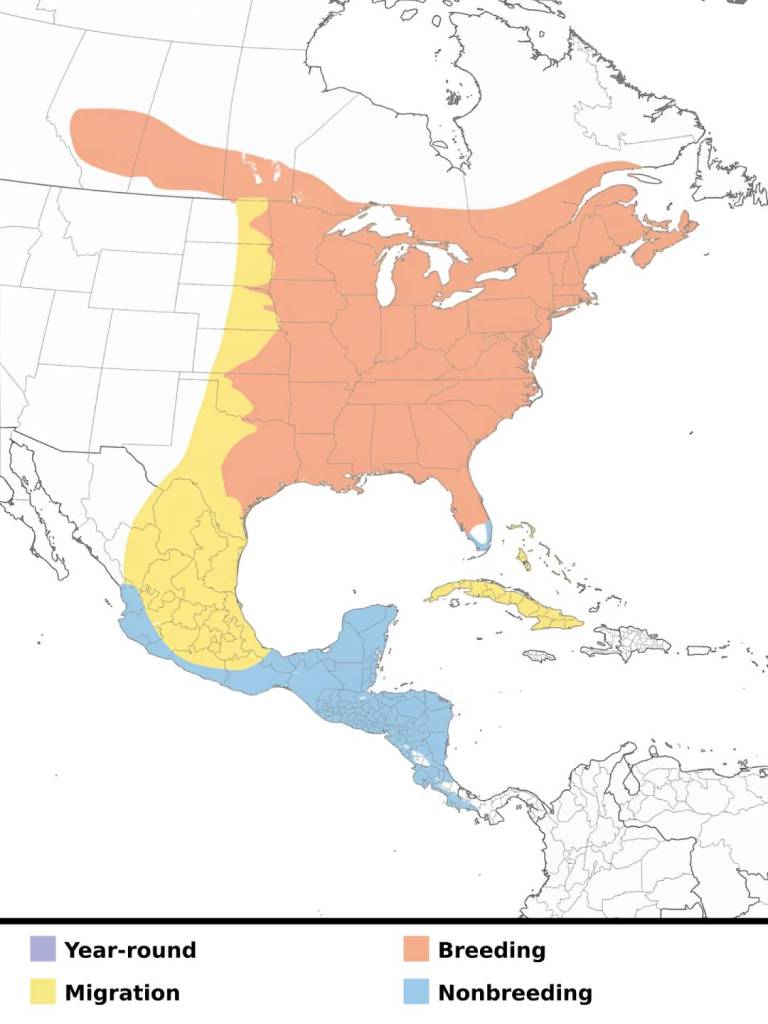
Ruby-throated Hummingbirds migrate farther than most people expect. They spend winter in Central America and southern Mexico, then move north each spring. Many cross the Gulf of Mexico in a single nonstop flight of roughly 500 miles. That trip can take 18 to 24 hours, powered entirely by stored fat.
Spring migration typically begins in late February or early March in the southern U.S. and reaches the northern states and southern Canada by late April through May. Fall migration starts earlier than people realize, often by late July or August, especially for adult males. Females and young birds follow later, with most leaving the U.S. by October.
Migration maps are updated each year using sighting reports, banding data, and weather patterns. These maps show waves of movement rather than a smooth front. Cold snaps, storms, and food availability can stall birds for days. This is why feeders remain important during migration, not just in summer. Taking feeders down too early in fall does not encourage migration and can remove a critical food source when birds are trying to build fat reserves.
Nesting and Baby Ruby-throated Hummingbirds
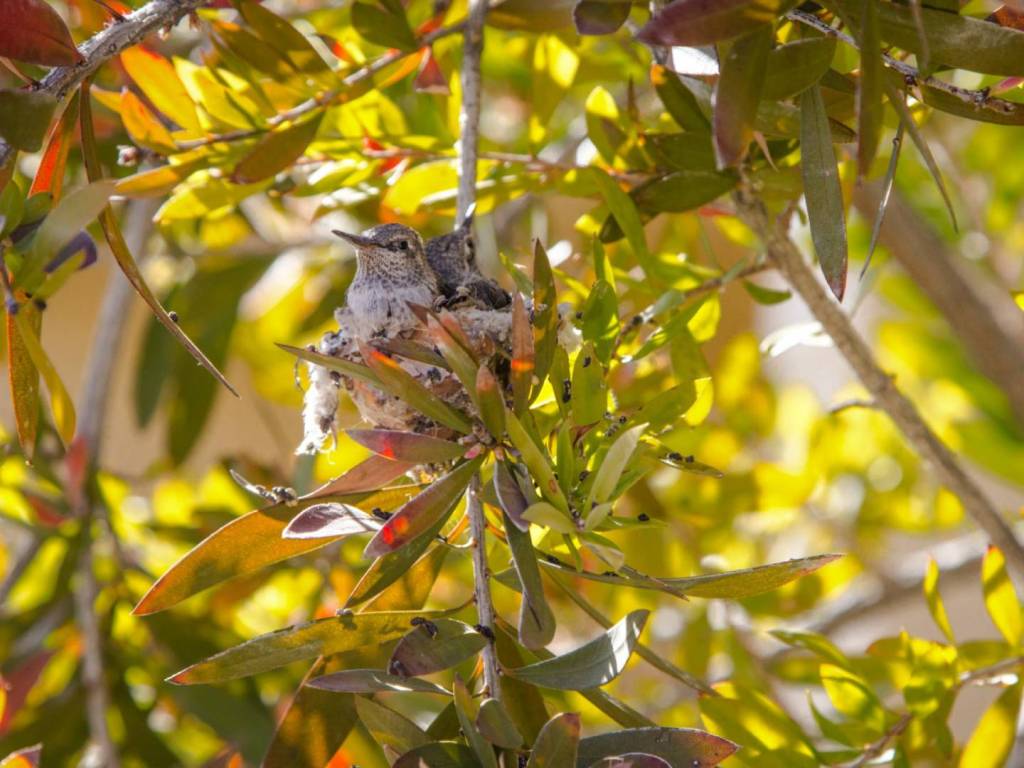
Female Ruby-throated Hummingbirds handle nesting alone. Males play no role beyond mating. The nest is about the size of a walnut and is usually built on a horizontal tree branch, often 10 to 40 feet above ground. It is made of plant down held together with spider silk, which allows the nest to stretch as the chicks grow. Lichen is added to the outside to camouflage it.
The female lays two eggs, each about the size of a jellybean. Incubation lasts roughly two weeks. After hatching, the chicks grow fast and require frequent feeding. The mother feeds them a mixture of regurgitated insects and nectar, providing protein as well as energy.
Chicks fledge at about three weeks old. Even after leaving the nest, they remain dependent on the female for a short period while they learn to feed efficiently. Nesting season generally runs from late spring into summer, and females may raise more than one brood in a single season if conditions allow.
Ruby-throated Hummingbird Size, Lifespan, and Facts
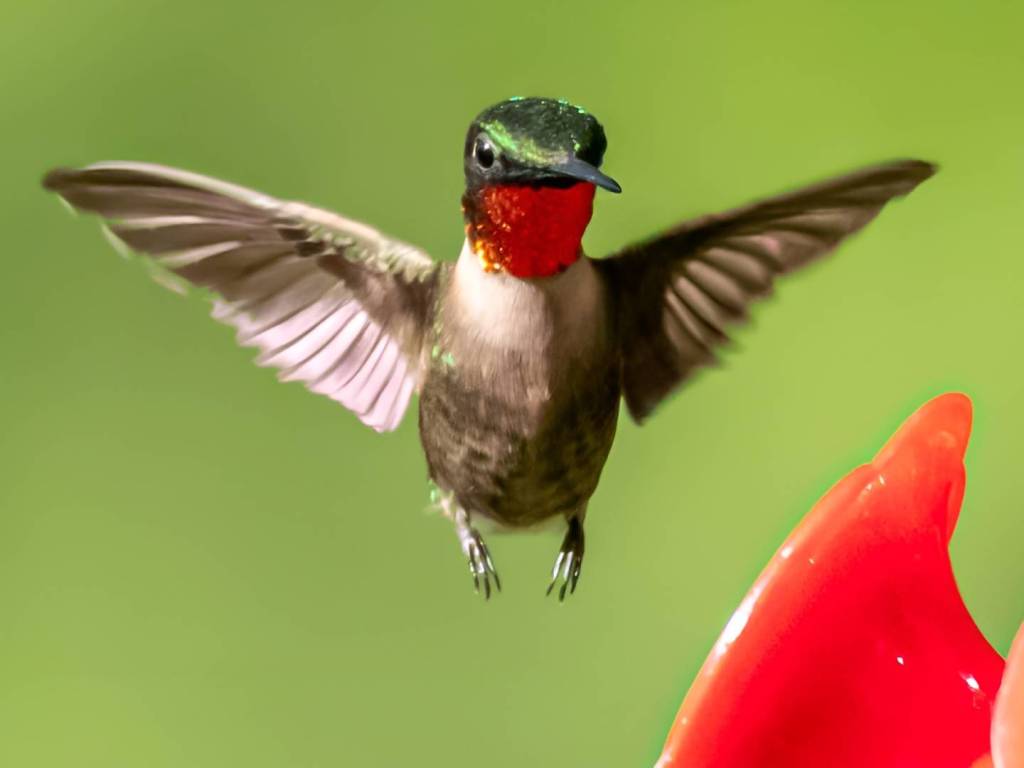
Ruby-throated Hummingbirds are small even by hummingbird standards. They measure about 3 to 3.5 inches long and weigh roughly the same as a penny. Their wingspan is around 4 inches. Despite this size, they have one of the longest migration routes of any bird their size.
Average lifespan is typically 3 to 5 years, though some banded individuals have lived longer. Mortality is high in the first year due to weather, predators, and migration stress. Their heart rate can exceed 1,200 beats per minute during flight, and their wings beat around 50 times per second.
They are the smallest bird species that regularly breeds in eastern North America. To survive cold nights, they can enter a state called torpor, lowering their body temperature and metabolic rate to conserve energy. This is normal behavior and not a sign of illness.
Ruby-throated Hummingbird Call and Behavior
Ruby-throated Hummingbirds are not known for melodic songs. Their vocalizations are short chips, squeaks, and chatter, often heard during aggressive interactions. The sounds are more functional than communicative, used to warn rivals or signal irritation.
Flight behavior is one of their most recognizable traits. They can hover, fly backward, and make sharp directional changes. Males perform dramatic U-shaped dive displays during courtship, producing a buzzing or chirping sound from their tail feathers at high speed.
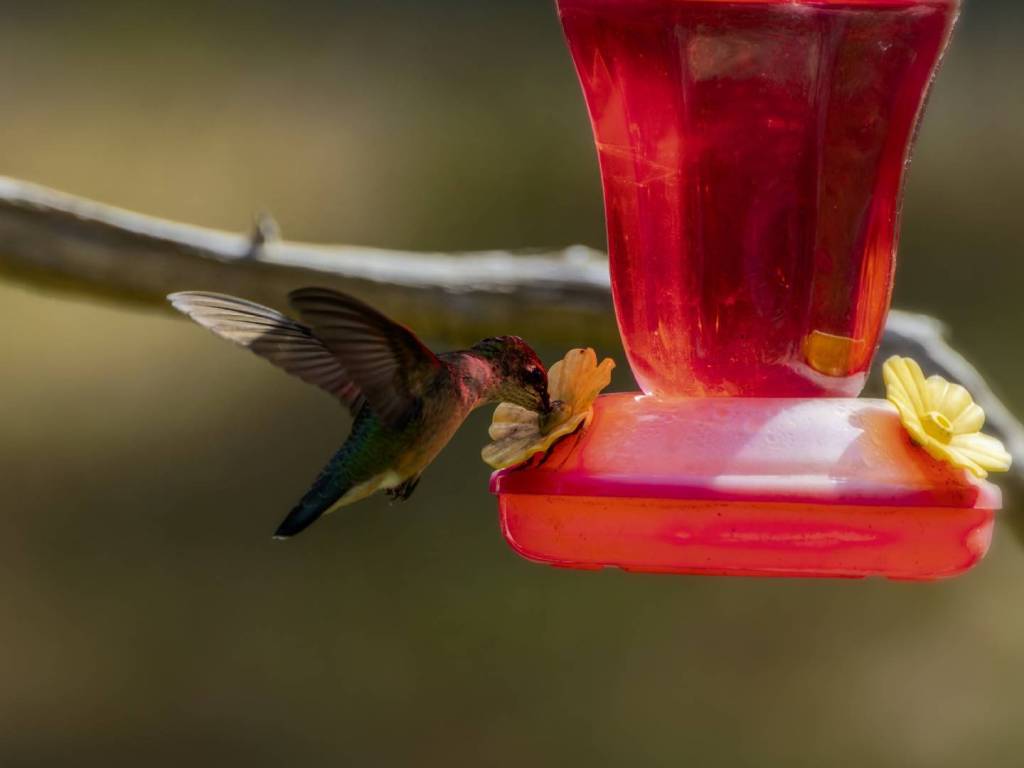
They are highly territorial around food sources. A single bird may defend a feeder or flower patch aggressively, chasing off others repeatedly. This behavior looks wasteful but helps ensure consistent access to nectar. Feeding involves both nectar and insects. Nectar provides energy, while insects supply protein and nutrients essential for growth and feather maintenance.
Ruby-throated Hummingbird Habitat and Scientific Name
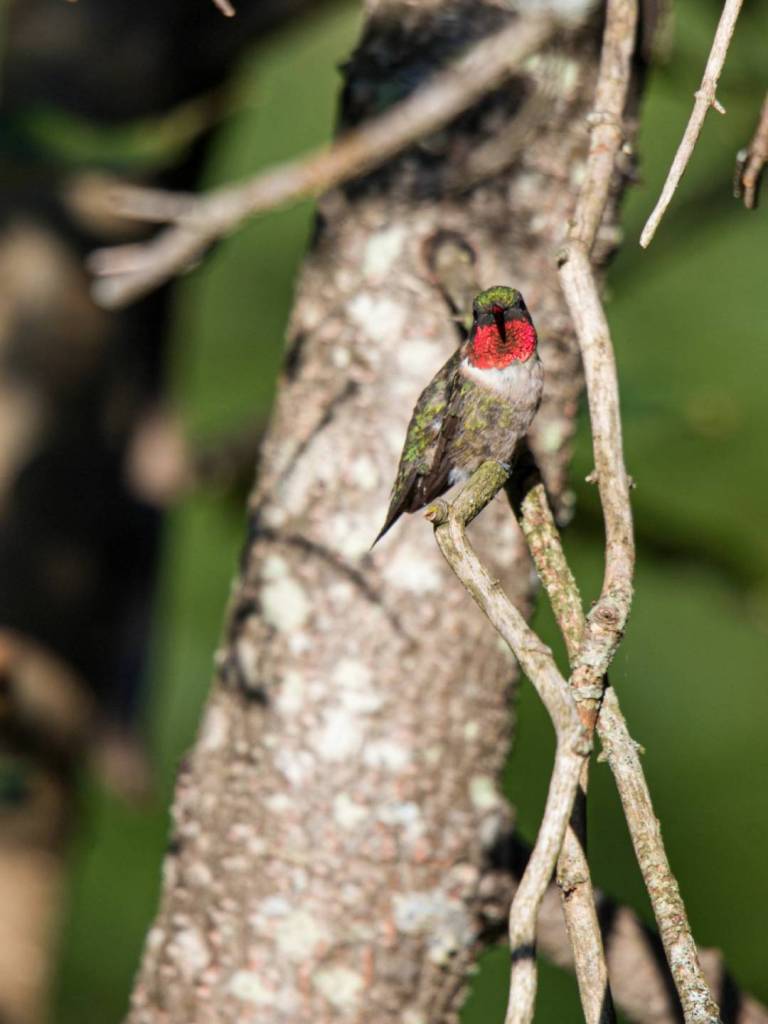
Ruby-throated Hummingbirds occupy a wide range of habitats during the breeding season, including forest edges, open woodlands, meadows, gardens, and suburban backyards. They prefer areas with flowering plants and nearby trees or shrubs for nesting and perching.
Their breeding range covers most of eastern North America, from the Gulf Coast up into southern Canada. During winter, they move into tropical forests, plantations, and gardens in Central America. They are adaptable, but they still rely on consistent food sources and shelter.
The scientific name of the Ruby-throated Hummingbird is Archilochus colubris. It reflects both its agility and its slender, snake-like appearance in flight. It remains the most widespread and familiar hummingbird species east of the Great Plains.
Conclusion
The Ruby-throated Hummingbird is easy to recognize but often poorly understood. Small details like tail shape, migration timing, and feeding behavior explain a lot about why they appear when they do and how they survive such extreme demands. Knowing these basics helps avoid common misconceptions and makes backyard observations more accurate. Whether you’re watching a territorial male chase rivals or spotting a female quietly feeding before nesting, each behavior fits into a tight seasonal system. Paying attention to those patterns gives a clearer picture of one of North America’s most specialized birds.



 Wing Watchers with Wagner
Leave a comment