
Introduction
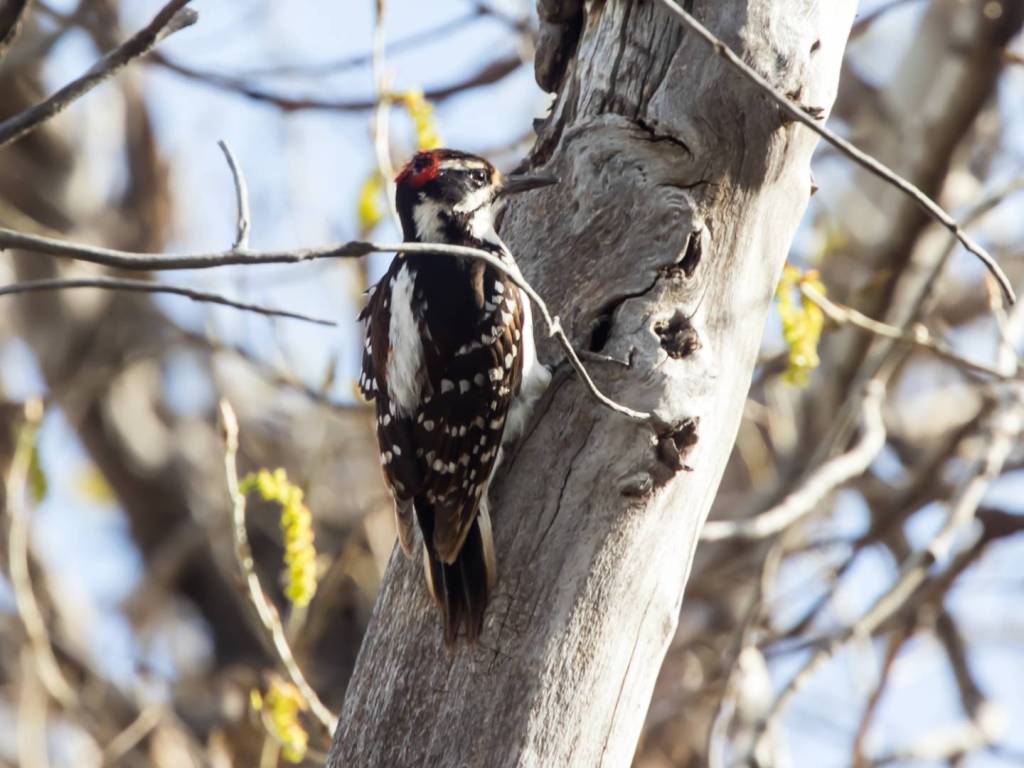
If you’re new to birding, this guide will help you spot and enjoy Hairy Woodpeckers. The Hairy Woodpecker is a common species of woodpecker found in North America. It closely resembles the smaller Downy Woodpecker, so learning their differences sharpens identification skills. The Hairy is known for its loud drumming, wide range, and role in controlling insect populations. This post covers its scientific name, how to tell it from the Downy, male-female differences, key field marks, and its habitat and calls.
What Is the Scientific Name of the Hairy Woodpecker?

The Hairy Woodpecker’s scientific name is Picoides villosus. It belongs to the family Picidae, which includes all woodpeckers, and is part of the genus Picoides. This genus contains several other North American woodpeckers, many of which share similar black-and-white plumage patterns.
Within its taxonomic classification, the Hairy Woodpecker is grouped with species known for their straight, chisel-like bills and their ability to drum on trees to locate insects. The specific name villosus comes from Latin, meaning “hairy” or “shaggy.” Early naturalists likely chose this term because of the slightly wispy appearance of the bird’s white back feathers, which can look a little uneven compared to the sleeker plumage of some related species.
Learning scientific names isn’t just for experts. It helps birders see how different species are connected and why they act in similar ways. For instance, knowing where the Hairy Woodpecker fits in its family can help you guess its habits, like searching tree trunks for insects, just like its close relatives.
Hairy Woodpecker vs Downy Woodpecker: How to Tell Them Apart
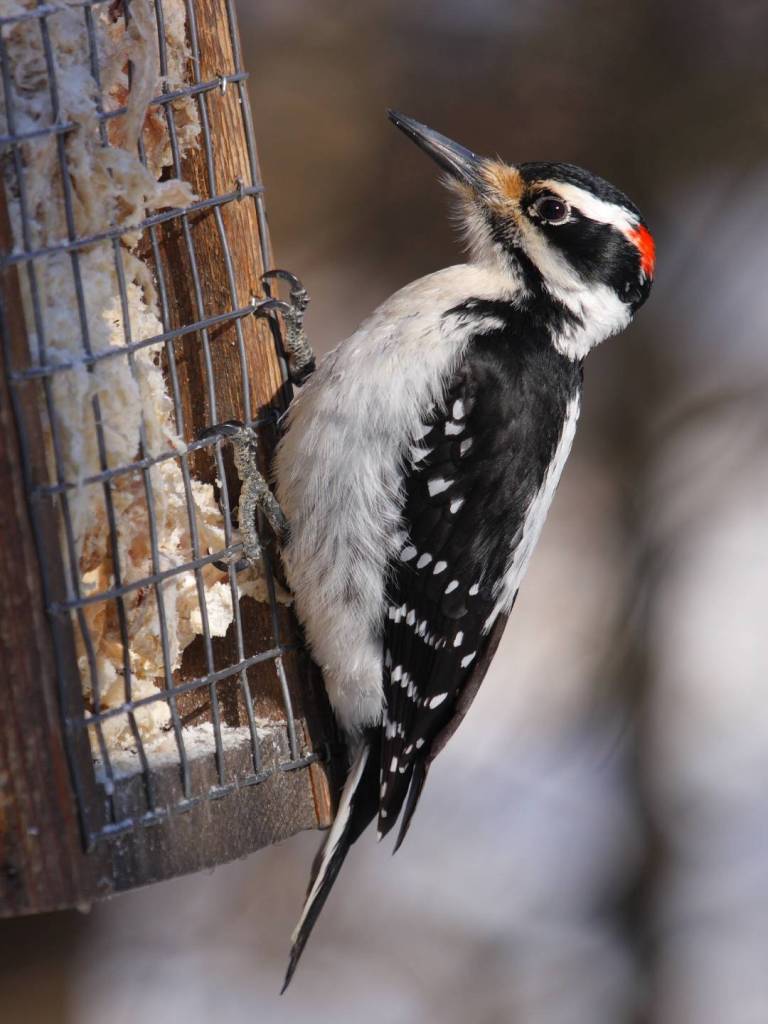

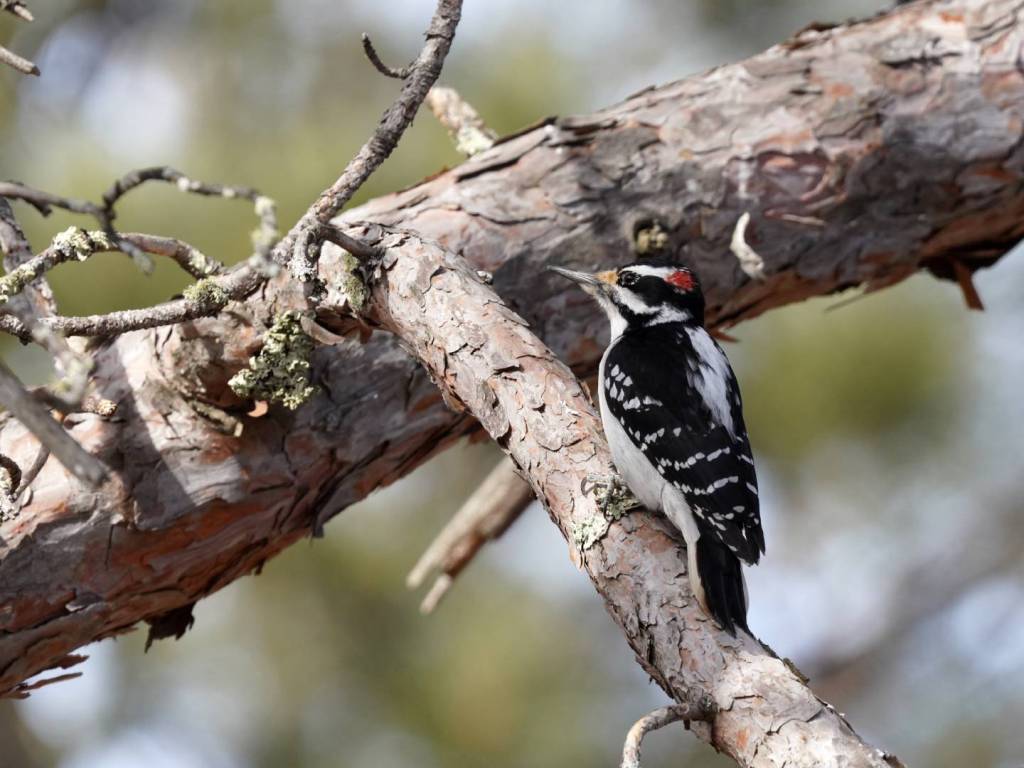
Hairy and Downy Woodpeckers look similar: both are black and white with white bellies, bold back stripes, and, on males, a small red patch on the head. The main differences are size and bill length.
The Hairy Woodpecker is significantly larger, at about 9 inches, while the Downy Woodpecker is closer to 6 inches. A key difference is the bill: the Hairy’s bill is almost as long as the width of its head; in contrast, the Downy’s bill is much shorter, only about a third as long. Bill shape and size are often the quickest ways to distinguish them.
Another subtle difference is in the tail. Downy Woodpeckers often have small black spots on their white outer tail feathers, while Hairy Woodpeckers usually have clean white. This detail can be hard to see without a close look.
Both species sometimes coexist in the same areas, so observing bill length and body size is crucial. With practice, the Hairy Woodpecker stands out clearly from its smaller cousin.
Male vs Female Hairy Woodpecker: Key Differences
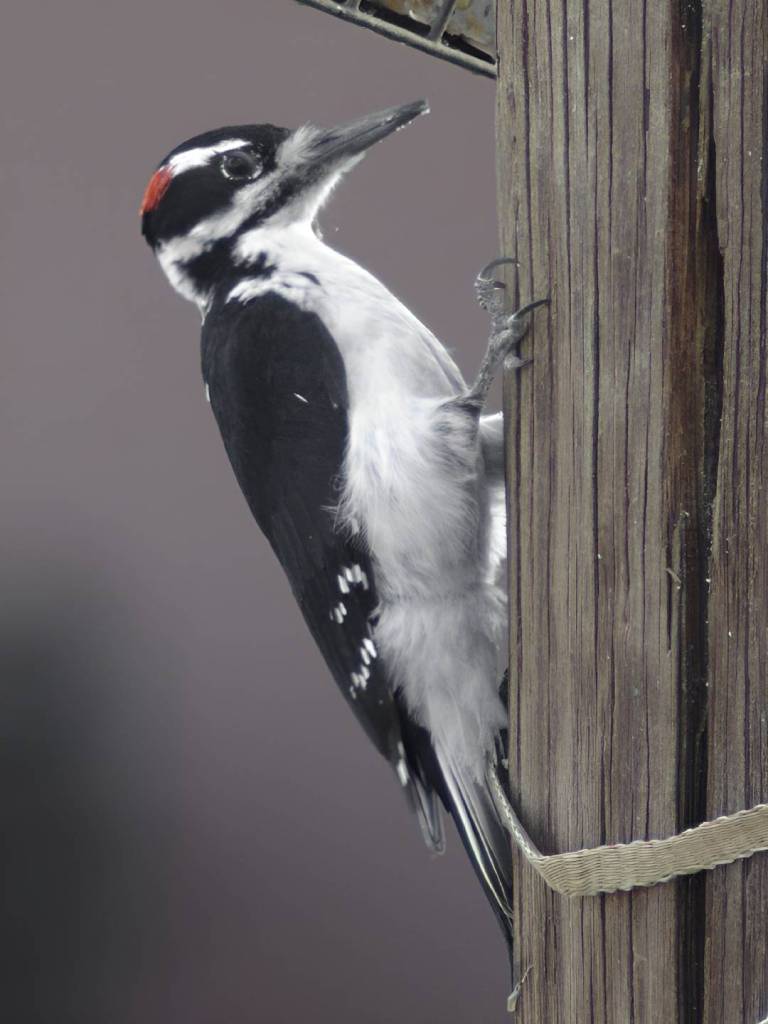

Like many woodpeckers, male and female Hairy Woodpeckers are very similar in size and plumage. The main distinction is the red patch on the back of the head. Males have this red marking, while females do not. Otherwise, both sexes have the same black-and-white plumage pattern, making them tricky to tell apart if the head is not visible.
Behavioral differences can also provide clues. During the breeding season, males are often the ones who are more actively drumming and defending their territory. They will hammer loudly on resonant surfaces, such as dead tree trunks or even metal structures, to broadcast their presence. Females may drum too, but they generally do so less frequently.
When it comes to feeding, both sexes exhibit similar habits of probing bark for insects and larvae, although males are sometimes observed working slightly higher on tree trunks, while females may forage lower. This pattern isn’t strict, but some birders use it as an additional hint when trying to identify which is which in the field.
Knowing how to distinguish between males and females can be especially useful during the nesting season. If you observe a cavity nest, you may notice the male taking turns with the female to excavate the hole, incubate the eggs, and feed the young. Spotting which parent has the red head patch helps confirm who is doing which task.
Hairy Woodpecker Size, Feathers, and Appearance

The Hairy Woodpecker is a medium-sized woodpecker, averaging about 9 to 10 inches in length with a wingspan of 13 to 16 inches. It weighs around 1.5 to 3 ounces, making it noticeably bulkier than the similar Downy Woodpecker.
Its plumage is crisp black and white. The back has a solid white stripe. The wings are black with rows of white spots. The underparts are plain white. The face features black-and-white striping, with a bold black line extending from the bill through the eye. Males have a red patch on the back of the head; females do not.
Juveniles resemble adults but are generally duller in color. Young males may exhibit a small, red patch on the crown, which typically migrates to the back of the head as they mature. The straight, strong bill is long and built for chiseling wood.
The Hairy Woodpecker’s bold black and white feathers make it easy to spot against tree trunks. Once you know its steady drumming, you’ll find it even easier to notice in the woods.
Habitat and Range of the Hairy Woodpecker

The Hairy Woodpecker is found across most of North America. Its range stretches from Alaska and Canada through the United States and into parts of Mexico and Central America. Unlike some migratory species, the Hairy is a year-round resident in most of its range.
This woodpecker prefers mature forests, including both deciduous and mixed forests. It is also common in parks, orchards, and wooded neighborhoods. As long as there are large trees for foraging and nesting, the Hairy can adapt. It favors dead or decaying wood for nests and feeding.
In western regions, the species can be found in coniferous forests, while in the east, it often inhabits hardwood stands. Due to its adaptability, birders may encounter it in various settings, ranging from remote wilderness areas to backyard feeders.
Because the Hairy Woodpecker lives in so many places, it plays a big role in the forest. By drilling into trees for insects, it helps control pests and keeps the forest healthy. The holes it makes also become homes for other birds and animals.
What Sound Does a Hairy Woodpecker Make?
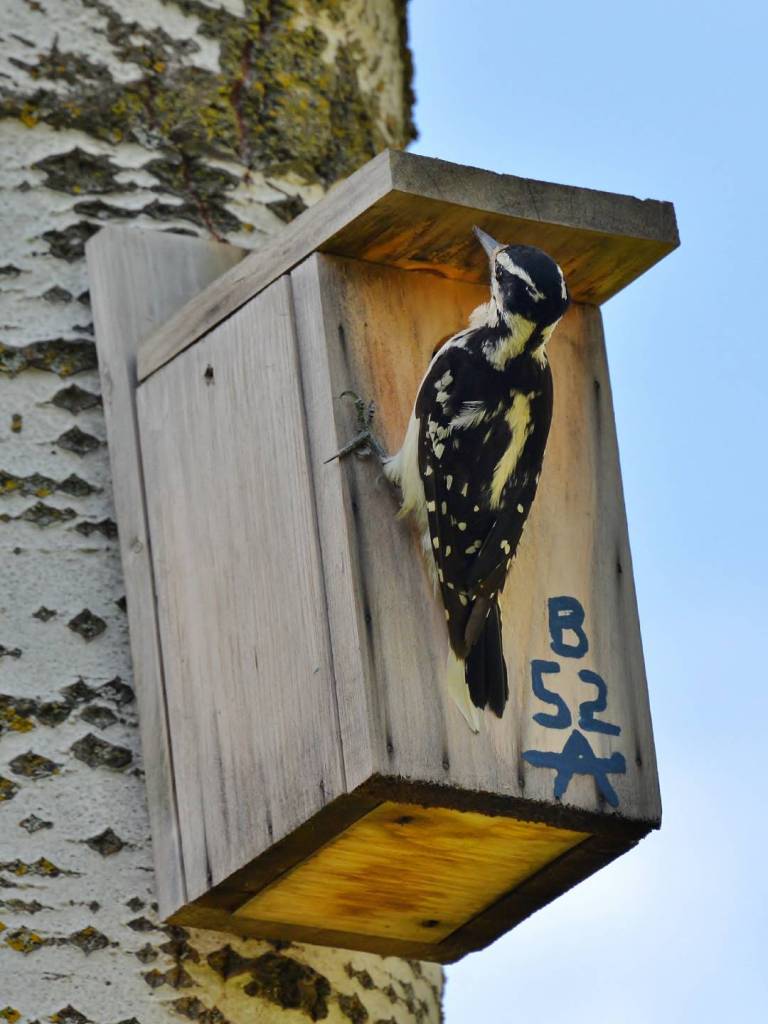
The Hairy Woodpecker communicates with calls and drumming. Its main call is a sharp, quick “peek” or “pik,” often repeated in a series. This call is higher and more forceful than the Downy’s softer version.
In addition to calls, the Hairy Woodpecker is well known for its drumming. Drumming is not random tapping; it is a deliberate signal, especially during the breeding season. The Hairy’s drum is a rapid, one-second burst made by striking a resonant tree trunk or branch with its bill. This sound carries through the woods, serving as a territorial claim and an advertisement to potential mates.
Birdwatchers use drumming patterns to identify woodpeckers when the birds are hidden from view. Compared to the Downy, the Hairy’s drumming is faster and more even. This helps distinguish them by ear.
Hearing the calls and drumming of Hairy Woodpeckers adds another layer to identification. By learning their sounds, you can detect their presence long before you see them. This skill is especially valuable in dense forests where visual sightings are limited.
Conclusion
The Hairy Woodpecker is common and easy to find in North American forests. Its long bill, sharp calls, and black-and-white feathers help birdwatchers tell it apart from similar species. If you learn to spot the differences between Hairy and Downy Woodpeckers, and notice the red patch on males, you’ll have an easier time identifying them. Since they live in many places all year, you can look for them almost anywhere. Getting to know both their looks and sounds will make birding more fun, whether you’re new or experienced.



 Wing Watchers with Wagner
Leave a comment