

Introduction
If you’ve ever taken a summer walk through a riverside thicket or orchard and caught a flash of chestnut and black, chances are you’ve crossed paths with the Orchard Oriole. This species is the smallest oriole in North America, but it makes up for its size with energy and song. Unlike its larger cousin, the Baltimore Oriole, the Orchard Oriole favors shrubby edges and open woodlands, darting quickly through branches as it searches for insects and fruit. To a casual eye, it can be tricky to spot, but with patience and open ears, you’ll find they reveal themselves. Today, we’ll explore what they sound like, where to find them, how to tell the sexes and ages apart, and even how they compare to their showier relatives.
What Does the Orchard Oriole Sound Like?

The Orchard Oriole song is a fast, cheerful mix of whistles and chatters that can remind you of a finch who’s had too much coffee. The phrases are quick, rolling together with little pause, often repeated from a high perch. If you compare it to the Baltimore Oriole, which sings in clearer, flute-like whistles, the Orchard Oriole’s sound is more hurried and less melodic but just as distinctive once you’ve tuned your ear. Their call notes include sharp “chek” sounds, which they toss out while foraging or to keep in touch with mates.
Listen in areas where orioles are likely, such as along edges of rivers or orchards, and notice if the song feels rushed compared to other birds nearby. Birders often confuse them with warblers at first, but orioles’ tones are richer and more throaty. If you can pick out that hurried rhythm, you’re well on your way.
Vocalizations are one of the best ways to detect these birds, since they often stay tucked into foliage. Recognizing the Orchard Oriole call not only helps you identify them but also reveals when they’ve arrived in spring or if they’re moving through on migration. And here’s a fun side note: males sometimes sing through the night during breeding season, a behavior that can surprise those who expect birds to stop activity during evenings.
Where Can You Find the Orchard Oriole?
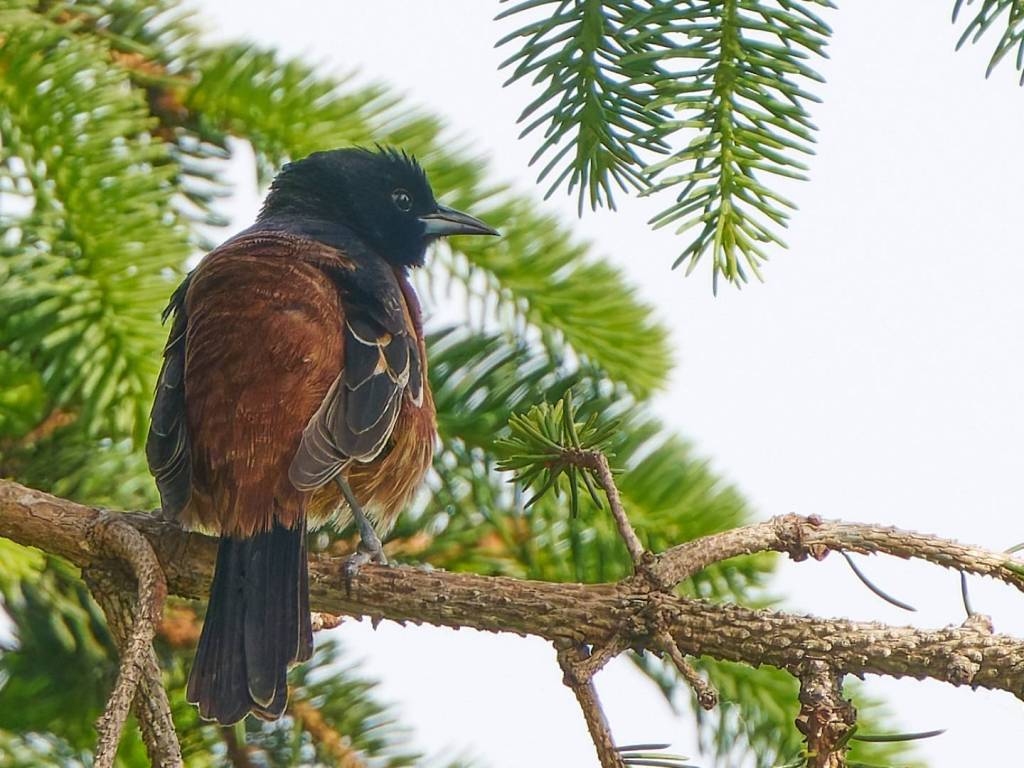
If you’re scanning a range map for Orchard Orioles, you’ll notice they stretch across much of the eastern and central United States in summer, dipping down into northern Mexico. Come fall, Orchard Oriole migration carries them farther south into Central America and even northern South America, making them one of the longest-distance migrants among orioles. Their wintering grounds stretch as far as Venezuela.
Where do Orchard Orioles live during the breeding season? They prefer open habitats—edges of rivers, shrubby thickets, and, as their name suggests, orchards. Think of places with scattered trees rather than deep forest. In this way, they fill a niche similar to a bluebird or flycatcher, relying on semi-open country where insects are plentiful.
Here’s a comparison worth noting: Baltimore Orioles often choose taller trees in more wooded spaces, while Orchard Orioles stay closer to the ground, weaving in and out of low vegetation. If you’re walking along a riverbank, watch for quick movements near willows and shrubs rather than in the canopy.
The importance of understanding the habitat of the Orchard Oriole is straightforward. If you know where to look, you dramatically increase your chances of finding one. Birders who only search in forests may miss them entirely. Also, since they migrate at night and arrive in flocks, keep an eye out in May, when a whole group might suddenly appear in your local park. That sudden influx is a sure sign their territory has shifted northward for the season.
How to Tell Male and Female Orchard Orioles Apart?

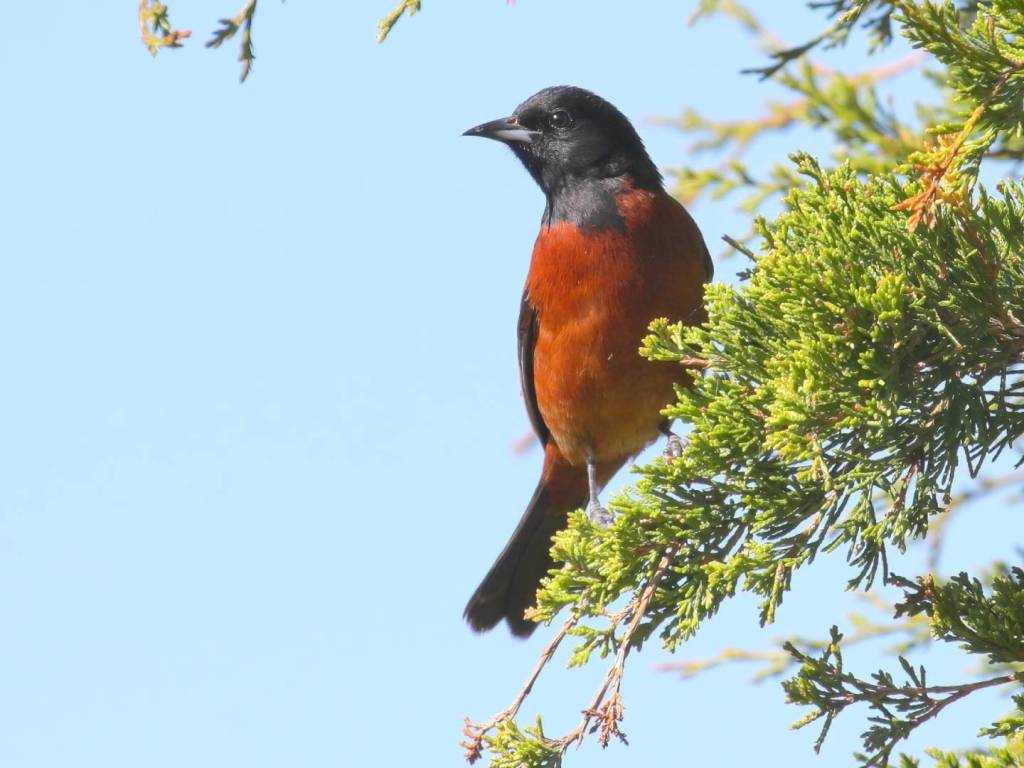
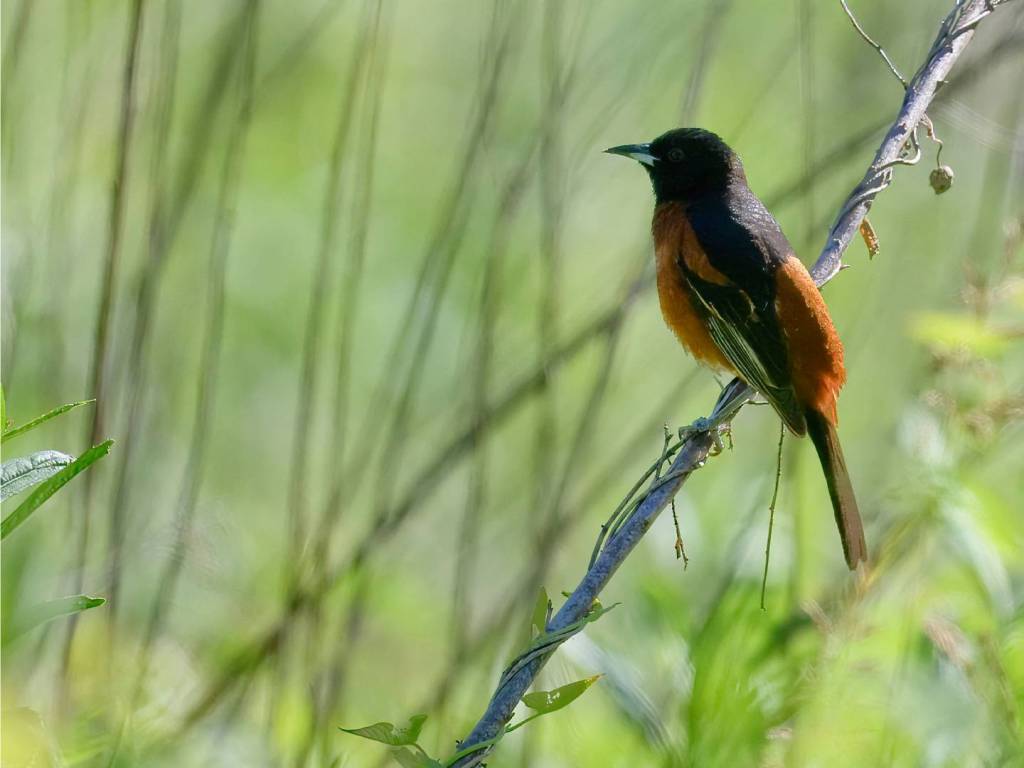
One of the most exciting challenges for birders is to be able to spot the differences between male and female Orchard Orioles. An adult male Orchard Oriole is unmistakable: a rich chestnut-red body paired with a black head, throat, back, and tail. They look smaller and darker than a Baltimore Oriole male, but that chestnut tone gives them away.
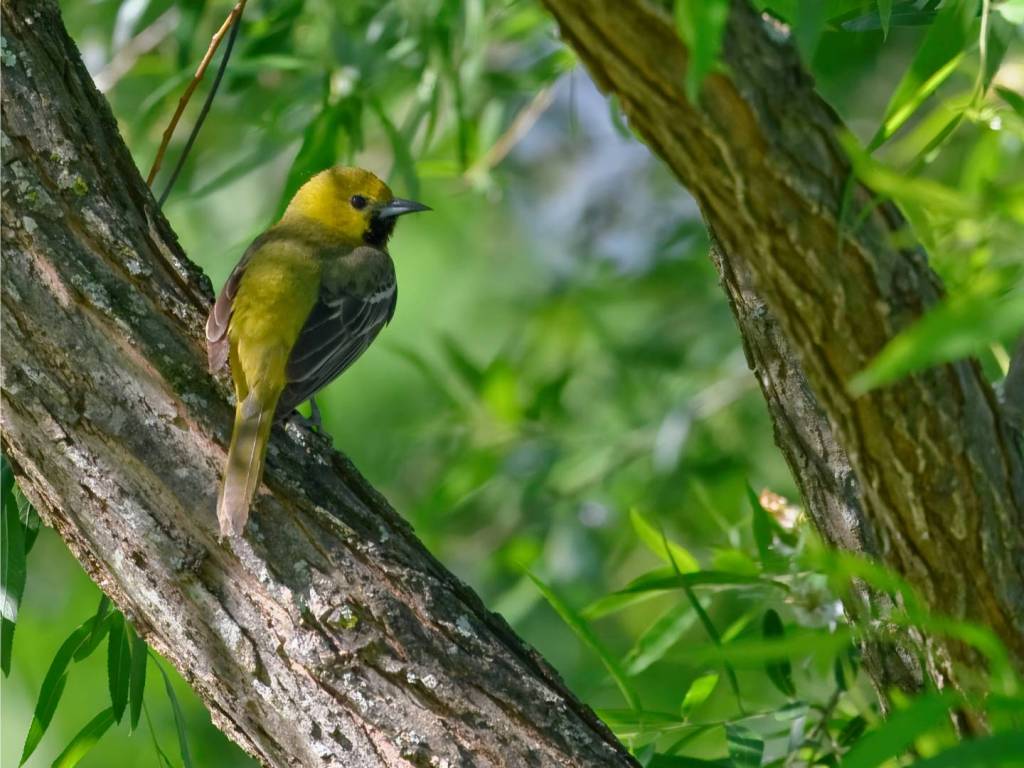
The Orchard Oriole female is a completely different bird at first glance. She’s yellow-green overall, with two white wing bars, lacking any chestnut or black. If you’re not expecting it, you might assume she’s a warbler. When comparing male and female Orchard Orioles, think of them as two sides of the same coin. One bold and contrasty, the other subtle and camouflaged.
If you see a yellowish bird hanging close to a male or carrying nesting material, you’re likely looking at a female Orchard Oriole. When in doubt, watch for behavior. Females are more likely to weave nests, while males sing conspicuously from exposed perches.
Gender differences can sometimes trick observers into thinking they’re seeing two different species. Recognizing Orchard Oriole male and female traits helps birders build confidence and accuracy in the field. It also highlights how different roles in reproduction influence plumage—males advertise, while females blend into foliage for safety.
Where and How Do Orchard Orioles Nest?

The Orchard Oriole nest is a remarkable piece of craftsmanship. Females weave a hanging pouch from grasses, plant fibers, and even yarn or string when available. Suspended from a branch, the nest resembles a tidy hammock cradling the clutch. If you’ve seen a photo of an Orchard Oriole nest, you’ll notice it’s more delicate than that of a Baltimore Oriole, often hanging lower and closer to open ground.
Their breeding season begins in late spring, a bit later than many songbirds, as they time nesting with peak insect availability. Orchard Oriole eggs are pale bluish-white, usually three to six per clutch, and incubation lasts just under two weeks. During this time, the female does most of the sitting while the male helps by defending its territory and bringing food once the nestlings hatch.
To spot a nest, look in lower branches of trees like willows, cottonwoods, or orchard fruit trees near water sources. If you see a female slipping in and out of foliage, there might be a nest nearby.
Observing Orchard Oriole nesting habits gives birders insight into their conservation needs. These birds depend on shrubs and low trees, which means heavy trimming or habitat clearing can directly impact their breeding success. Understanding where they raise their young helps us protect the habitats that sustain them.
How Do Orchard Orioles Compare to Baltimore Orioles?
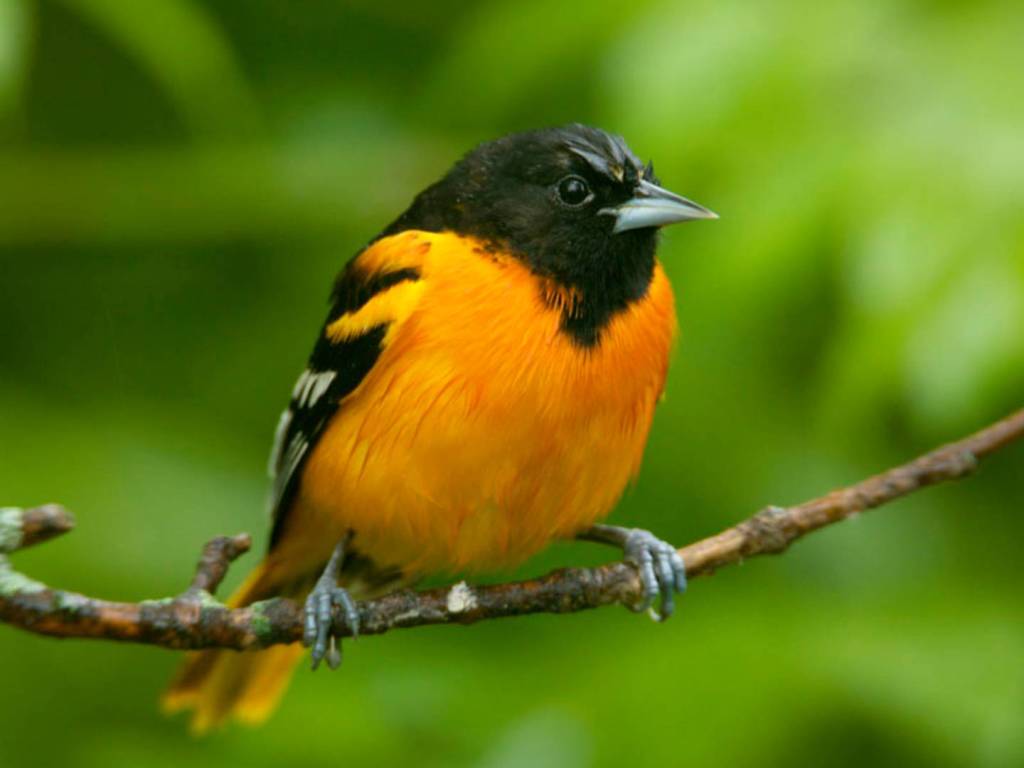
It’s easy to confuse Orchard Orioles with their bigger cousins, so let’s break down Orchard Oriole vs Baltimore Oriole. First, size: Orchard Orioles are noticeably smaller, around 7 inches long, compared to the Baltimore’s 8–9 inches. Think sparrow-sized versus robin-sized.
Plumage is another giveaway. Male Baltimore Orioles glow in bright orange, while male Orchard Orioles display that darker chestnut-red. Females differ too—Baltimore females show more orange tones, whereas orchard females stay yellow-green. So, if you see a female that looks more yellow than orange, you’re probably looking at an Orchard Oriole.
Habitat provides further hints. Baltimore Orioles often favor tall trees in suburban neighborhoods or forests, while Orchard Orioles stick closer to riversides, pastures, and brushy edges. If you’re scanning high oaks in a neighborhood, expect Baltimore Orioles; if you’re near willows by a river, think Orchard Orioles.
Learning the difference between the Orchard and Baltimore Orioles avoids misidentifications and adds depth to your birding. It also highlights how two close relatives divide resources and territories to thrive side by side. These behaviors can show the subtle balancing act in ecosystems, where similar birds coexist by adapting to slightly different niches. And next time someone points out a “Baltimore Oriole,” you’ll be ready to check whether it truly is or if it’s the smaller, chestnut cousin.
What Does a Juvenile Orchard Oriole Look Like?
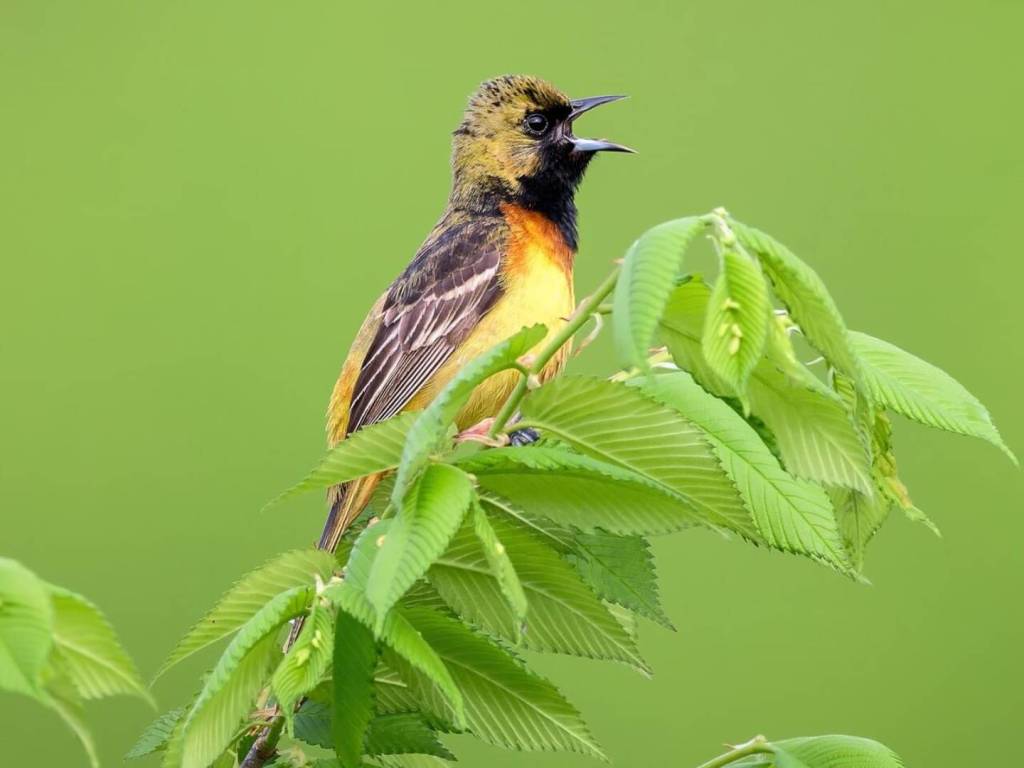
Identifying an Orchard Oriole juvenile can be tricky, but once you know the plumage stages, it becomes a rewarding challenge. Young Orchard Orioles, often called immature Orchard Orioles, resemble adult females at first glance. They wear yellow-green plumage with faint wing bars, which helps them blend in and avoid drawing attention while they grow.
As they age, males begin to show darker throat patches and eventually develop that signature chestnut and black. This transition takes time, sometimes not fully developing until their second year. So, you may encounter a juvenile Orchard Oriole that looks halfway between female and male. If you spot a yellowish bird with patchy black on the throat or hints of chestnut on the underparts, you’re probably looking at an immature Orchard Oriole male. Females stay more consistently yellow-green, making the in-between look a clear sign of a young bird.
Knowing the plumage stages of the Orchard Oriole helps birders avoid confusion, especially when comparing them to warblers or female Baltimore Orioles. It also gives a glimpse into the growth cycle of a species, showing how birds gradually transition into full adult plumage. And spotting a baby Orchard Oriole being fed by a parent is another one of the joys of summer birding.
Conclusion
The Orchard Oriole may be small, but its story is rich with song, migration, and family life. From its hurried vocalizations to its preference for brushy riversides, every trait tells us something about how it survives and thrives. Learning to tell males from females, juveniles from adults, or Orchard Orioles from Baltimore Orioles is about tuning in to the subtleties of nature’s design. The next time you’re near water in spring or summer, listen for that quick chatter and scan for flashes of chestnut or yellow-green. With patience, you may spot one of North America’s most elegant and understated orioles weaving its nest or chasing insects. And that little discovery is what keeps birding endlessly rewarding.


 Wing Watchers with Wagner
Leave a comment