
Introduction
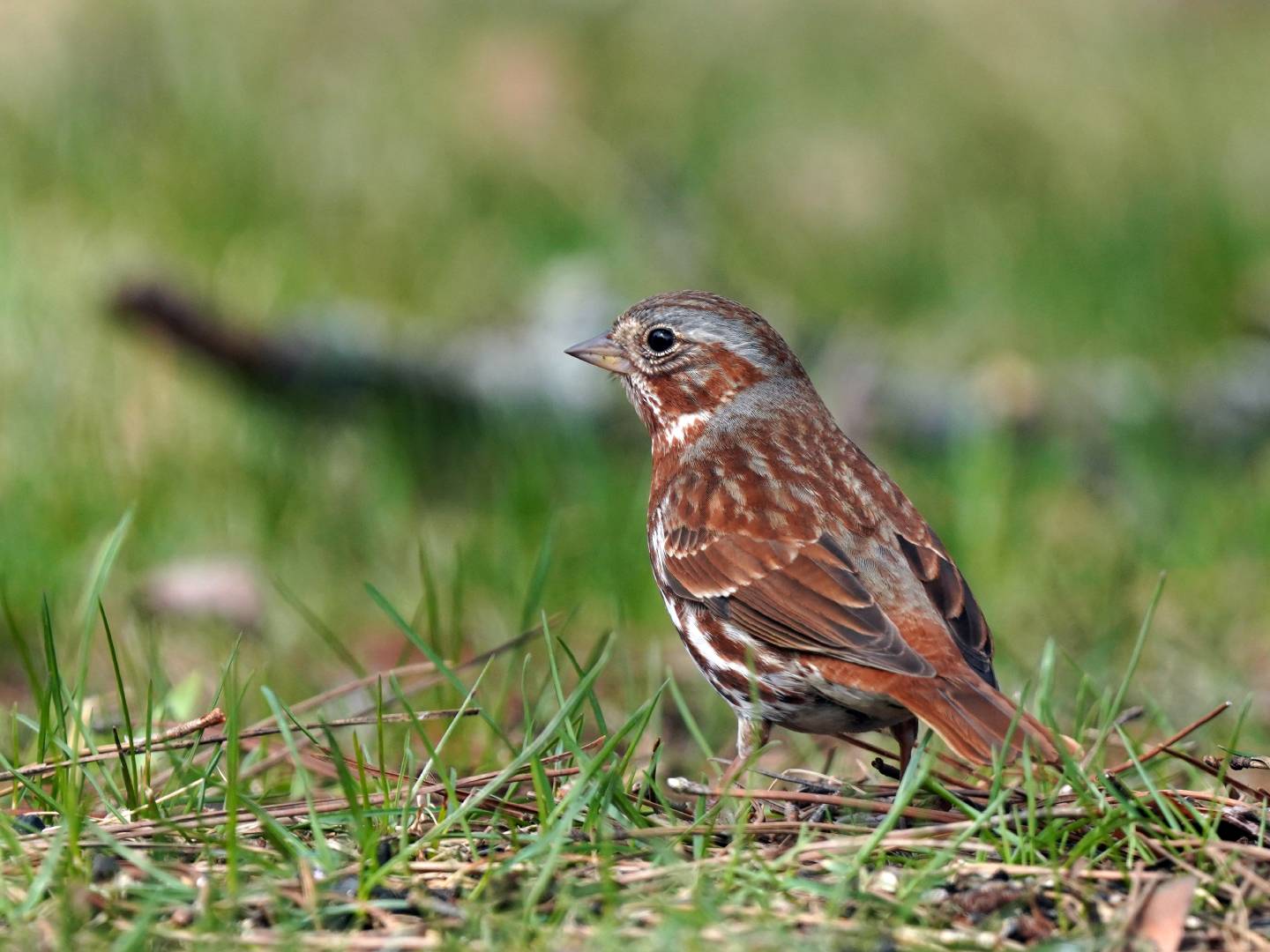
If you’ve ever heard a flurry of rich, musical notes spilling from a thicket in spring, you may have met the Fox Sparrow. This bird, a plump, shy songster, earns its name from its rusty fox-red coloring, though not every population shows it the same way. Fox Sparrows are one of North America’s most variable sparrows, split into several regional groups that can look so different you might think they’re separate species. For birdwatchers, that means spotting one can be both exciting and a little puzzling. They’re often found scratching noisily in leaf litter, using both feet like a tiny chicken. Let’s explore their voice, range, habits, and quirks so that the next time you see or hear one, you’ll know exactly who’s hiding in the brush.
What Does the Fox Sparrow Sound Like?

The Fox Sparrow song is a bold cascade of clear whistles, often compared to a flute played quickly and with vigor. Unlike some sparrows that keep things short and buzzy, the Fox Sparrow call is melodious and carries well through forest edges. If you’re out in spring, listen for a series of rich notes that tumble downward, almost like a thrush but sharper. These Fox Sparrow vocalizations vary across their range, so what you hear in Alaska might not match what’s sung in the Appalachians.
Their bird call outside the breeding season is a sharp “chink,” which can sound similar to a towhee. A good tip is to watch for a bird scratching both feet at once while you listen. That combination—leaf litter spray and a sweet, emphatic song—is a giveaway.
Learning Fox Sparrow sounds is more than a birder’s parlor trick. Since these sparrows often stay hidden in dense cover, hearing them is sometimes the only way you’ll know they’re around. And because they’re migratory, being able to recognize their music can signal seasonal changes. In fact, hearing that first burst of song in March might be the moment you realize spring migration is kicking off. Much like a robin’s first chorus tells us winter is ending, the Fox Sparrow announces a quieter but equally important transition. So next time you’re in a thicket, let your ears guide you first, the song will likely reach you before the bird ever does.
Where Can You Find the Fox Sparrow?

Looking at the range map at the beginning of this post, you can see just how widespread this bird really is. Their breeding grounds stretch from Alaska through much of Canada, dipping into mountain regions of the western United States. In winter, their range shifts south, with many moving into the eastern and southern U.S., and some reaching as far as northern Mexico.
So, where do Fox Sparrows live day to day? In summer, they prefer cool, brushy forests, especially along streams or disturbed edges where dense shrubs offer both food and cover. During winter, they’re more likely to show up in thickets, hedgerows, and even backyard feeders if you’ve got the right setup.
Their migration is timed with seasonal food availability. Large numbers funnel through central and eastern states in spring and fall, often noticed when they scratch noisily under bushes. Remember to look down as much as you look up. Unlike warblers singing from treetops, these sparrows spend most of their time near the ground, working leaf litter like pros.
Understanding Fox Sparrow habitat helps birders and conservationists alike. When brushy areas are cleared, these sparrows lose crucial cover. Think of them like forest-floor specialists—without that protective undergrowth, they’re exposed and less likely to thrive. For backyard birders, this knowledge offers a chance to help. Leaving a corner of your yard a little “wild” could provide the perfect winter hideout. Spotting one at home can feel like welcoming a piece of the boreal forest into your backyard.
How Do Male and Female Fox Sparrows Differ?

When it comes to male vs. female Fox Sparrows, the differences aren’t as bold as in some bird species, but they’re still there if you know what to look for. Both sexes share the streaked, reddish-brown look, but males tend to be slightly brighter and more richly colored, while female Fox Sparrows can appear a bit duller overall. This makes identifying Fox Sparrows tricky, especially since they also vary widely by region. The “red” group in the East is rusty and warm-toned, while western birds can be grayer, darker, or even sooty brown.
Behavior often gives clues. A male Fox Sparrow is far more likely to sing from a perch, advertising territory and attracting a mate. Females rarely sing, sticking instead to sharp calls when disturbed. If you’re trying to pick out gender differences, listening can be just as important as looking. During nesting season, watch for which bird lingers at the nest site versus which one sings nearby. The singer will almost always be the male.
Distinguishing males and females helps birders understand breeding roles. Males invest heavily in defending territory with song, while females handle much of the nest-building. Observing the balance between them offers a window into how sparrows adapt their parenting. For scientists, knowing which sex is singing or showing aggression provides critical data on population dynamics. For the casual birder, recognizing those subtle cues transforms a hidden thicket scratcher into a bird with a story unfolding right before your eyes.
What Do Fox Sparrows Eat?

If you want to understand a bird, look at its diet. The Fox Sparrow diet revolves around seeds, insects, and berries, shifting with the seasons. In winter, when insects are scarce, they focus heavily on seeds and fallen fruit. Come spring and summer, when protein demands rise, they switch to beetles, caterpillars, and other invertebrates.
So, what do Fox Sparrows eat at your feeder? They’ll happily take cracked corn, millet, and sunflower seeds scattered on the ground. Don’t expect them to perch on a feeder—they prefer scratching at the base like chickens. If you want to try feeding Fox Sparrows, sprinkle food in sheltered spots near dense shrubs.
Their foraging behavior is one of their trademarks. Unlike many sparrows that pick delicately, Fox Sparrows use both feet to kick backward in rapid bursts, spraying leaves behind them. If you spot a bird working the ground this way, you’ve probably found your sparrow.
Knowing a Fox Sparrow’s food preferences shows us how connected they are to their environment. Their reliance on insects during the breeding season makes them valuable in controlling pest populations. Their seed-eating in winter ties them closely to native plants. By leaving leaf litter intact and planting fruit-bearing shrubs, we create space for their natural foraging style. A good comparison is the towhee, which also double-scratches, but Fox Sparrows add that extra level of vigor. Paying attention to what and how they eat helps us notice when changes in habitat or climate disrupt their natural rhythm.
Where and How Do Fox Sparrows Nest?

The nesting season of Fox Sparrows starts in late spring, often timed with insect abundance. They prefer dense cover, usually near the ground in shrubs, grass tufts, or even tucked against a log. Occasionally, especially in northern or mountainous habitats, nests may be slightly elevated, but they rarely go high in trees.
A typical nest is a bulky cup made of grasses, bark, and moss, lined with finer materials. Fox Sparrow eggs are usually pale green or bluish, speckled with brown. A clutch ranges from three to five, and incubation lasts about two weeks. The female does most of the brooding, though the male often helps feed once the chicks hatch.
Watching Fox Sparrow baby birds grow is rewarding. They fledge in about ten days, which means the parents work overtime, delivering insects nonstop. This intense reproduction cycle ensures survival in short northern summers, where there’s little time to raise a brood before migration begins again.
If you see an adult carrying food into thick brush and disappearing, chances are you’re near an active nest. Give them space—stressed parents may hesitate to feed if watched too closely.
The Fox Sparrow’s nesting behavior underscores how dependent they are on undisturbed habitats. Clearing understory for logging or development can wipe out dozens of potential nesting sites. By appreciating where and how they nest, birders gain insight into why preserving dense brush and ground cover is essential for the species’ long-term success.
What Are Some Interesting Facts About the Fox Sparrow?


Beyond their song and habits, there are plenty of Fox Sparrow facts worth knowing. For one, they’re divided into four main groups—red, slate-colored, sooty, and thick-billed. These groups look so different that for decades ornithologists debated whether they should be separate species. This kind of lesser-known info makes them one of the most diverse sparrows in North America.
If you’re keeping a list of your observations, pay attention to which group of Fox Sparrow you’ve spotted. A red Fox Sparrow in Maine looks nothing like a sooty Fox Sparrow in California, and noting the difference adds depth to your records.
They’re larger than most sparrows, closer in size to a small thrush. That heft gives them extra power when scratching through leaves. Their bold foraging can sound surprisingly loud for such a shy bird.
The Fox Sparrow has one of the strongest, richest songs of any sparrow, sometimes rivaling the beauty of a wood thrush. Imagine a sparrow trying to out-sing a thrush, and you’ve got an idea of their vocal punch. Small details like these remind us that birdwatching isn’t just about names on a checklist.
Appreciating the Fox Sparrow’s subspecies debates or marveling at their regional diversity helps us connect more deeply with the natural world. Each sighting becomes not just an identification but a chance to witness a story of variation, adaptation, and survival.
Conclusion

The Fox Sparrow may not perch boldly on a feeder pole like a cardinal or blue jay, but its story is no less fascinating. From its flute-like song and ground-scratching foraging to its wide-ranging plumage variations, it stands as one of the most intriguing sparrows in North America. Learning its calls, habitats, and nesting preferences helps us notice its presence even when it tries to stay hidden. By leaving wild corners in our yards and protecting brushy habitats, we support not just this bird, but countless others that share the same needs. The Fox Sparrow is a reminder that even the quieter, secretive birds carry a richness worth our attention. All it takes is a careful ear and a watchful eye.




Leave a Reply