
Introduction
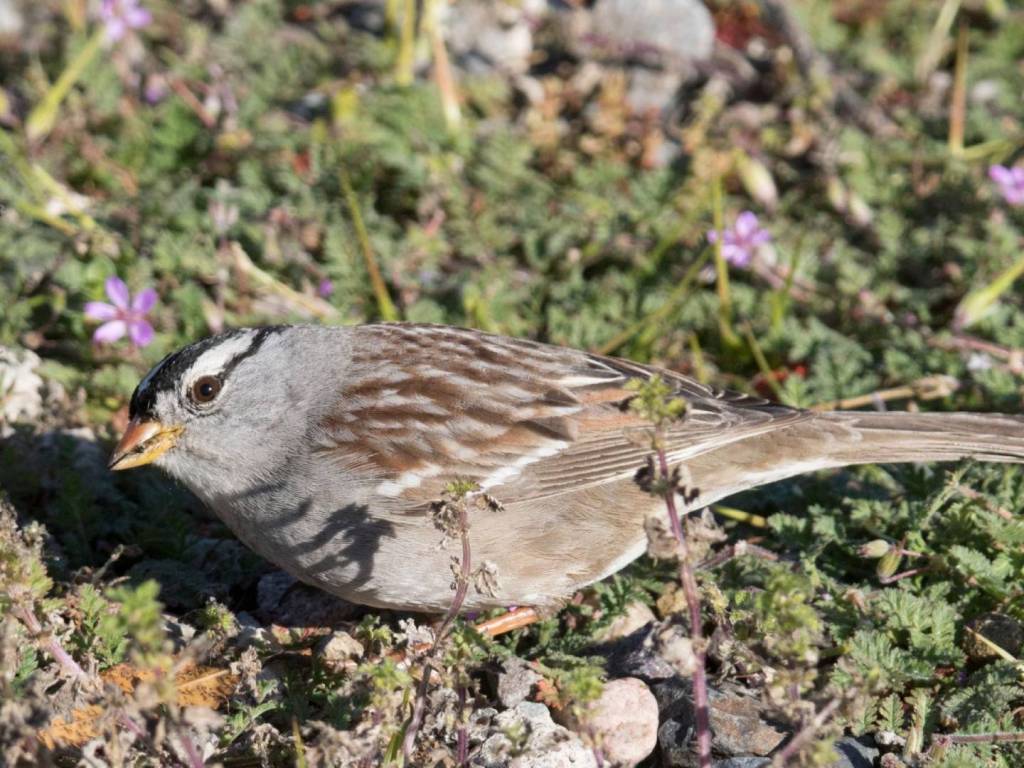
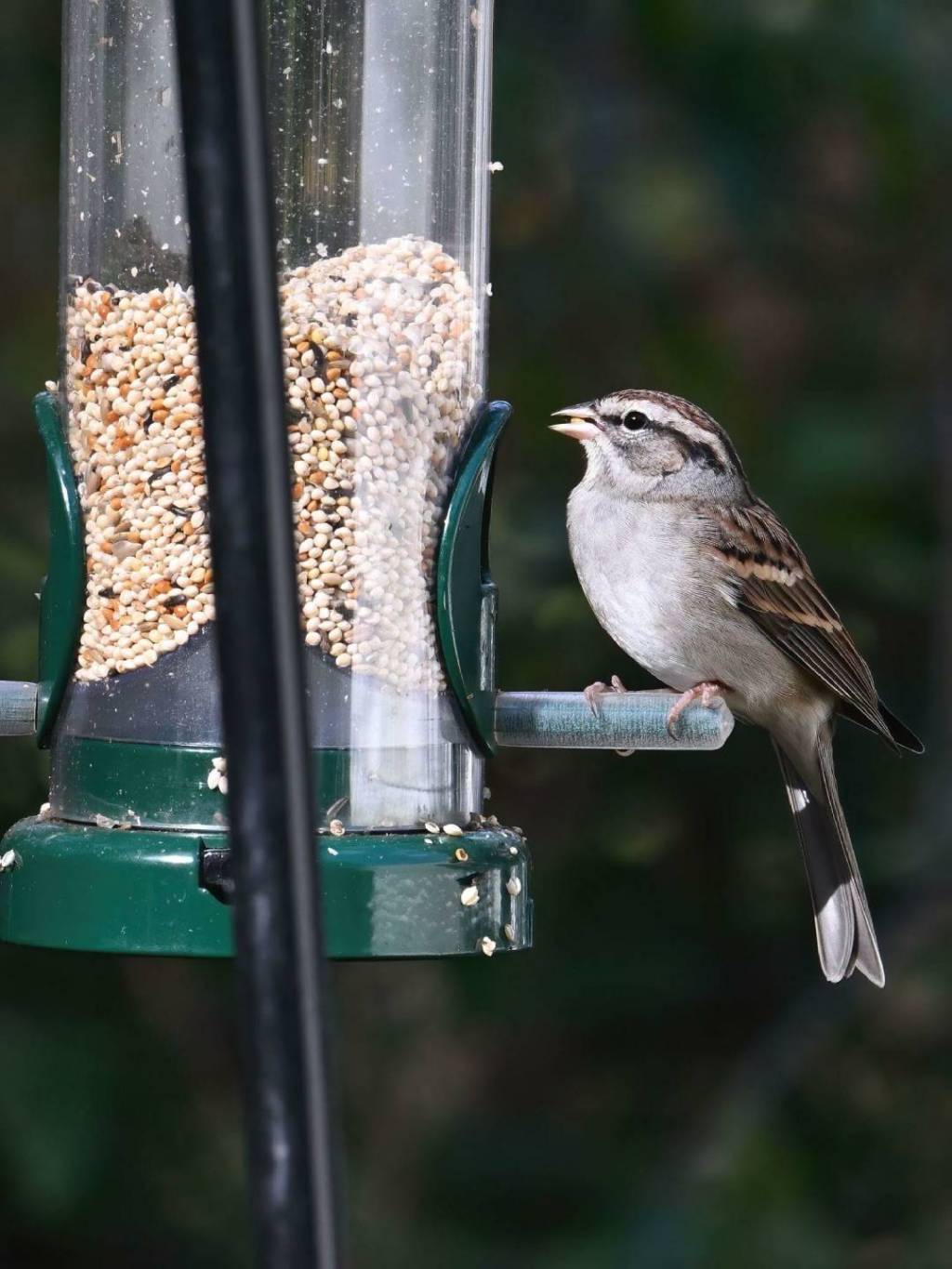
White-crowned Sparrows visit many backyards during migration and winter, but do not act like typical feeder birds. Using a standard tube feeder with sunflower seeds often fails to attract them.
Do they prefer feeding on the ground or using a tray feeder? Which platform feeder works best for them? Where should the feeder be placed so they actually feel safe enough to visit? And which seeds do they reliably eat?
These questions matter because White-crowned Sparrows are wary. If your setup is off, they may stay in shrubs and never approach.
In this article, we will look at:
- Do White-crowned Sparrows prefer ground or tray feeders?
- Best platform feeders for White-crowned Sparrows
- Where to place a feeder for White-crowned Sparrows
- What seed works best in a White-crowned Sparrow feeder
- How to Keep Larger Birds Away From a White-crowned Sparrow Feeder
Keep reading, or jump to the section that answers your question.
Do White-crowned Sparrows Prefer Ground Feeders or Tray Feeders?
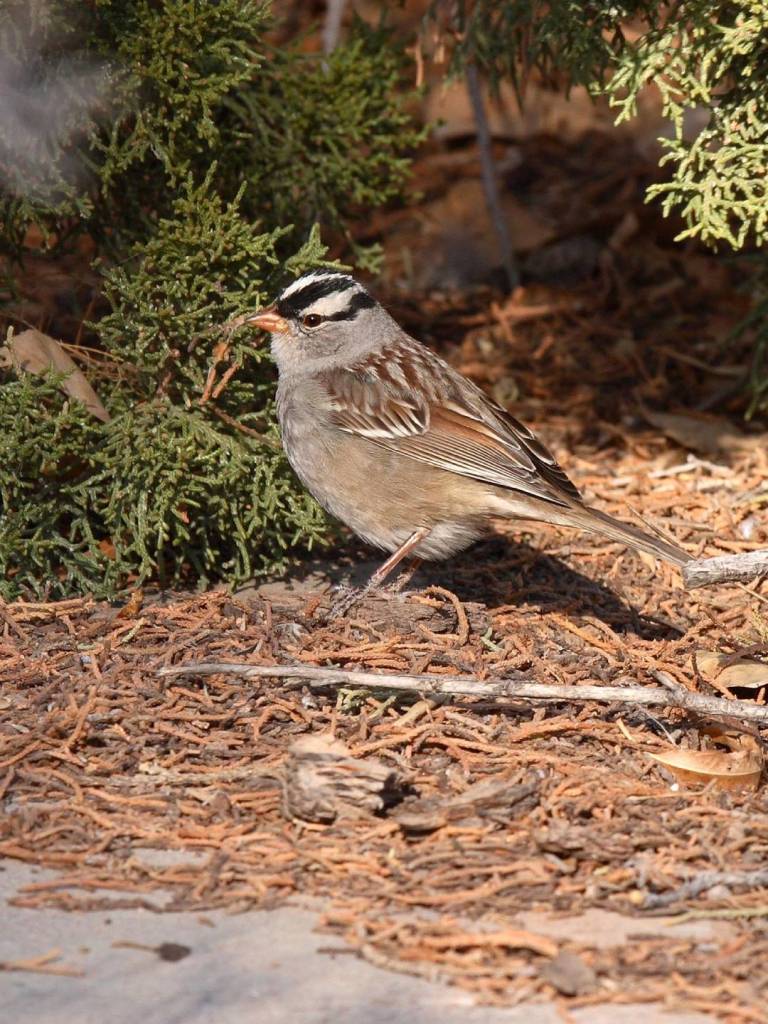
White-crowned Sparrows are ground feeders. In nature, they walk and hop through leaf litter to find seeds. Unlike finches or chickadees, they scratch soil or debris for food.
Because of this behavior, they are much more likely to use a ground-feeding area or a low-tray feeder than a hanging feeder.
Some birders think sparrows avoid feeders, but they simply prefer options that match their natural feeding style. Ground-level or wide trays help White-crowned Sparrows adapt more easily.
Many backyard observations show the same pattern. The birds first appear under feeders, picking up spilled seed. If a platform feeder is introduced nearby, they will often start using it.
A ground feeding station can be as simple as scattering seed on cleared soil or grass. Some use a ground tray or shallow platform. These allow the birds to walk naturally while feeding.
Height matters. Even a feeder several feet off the ground may feel unnatural. Lower feeders work better.
If you’re trying to attract White-crowned Sparrows for the first time, the easiest method is to provide seed on the ground or on a low tray near shrubs where they already forage.
Best Platform Feeders for White-crowned Sparrows
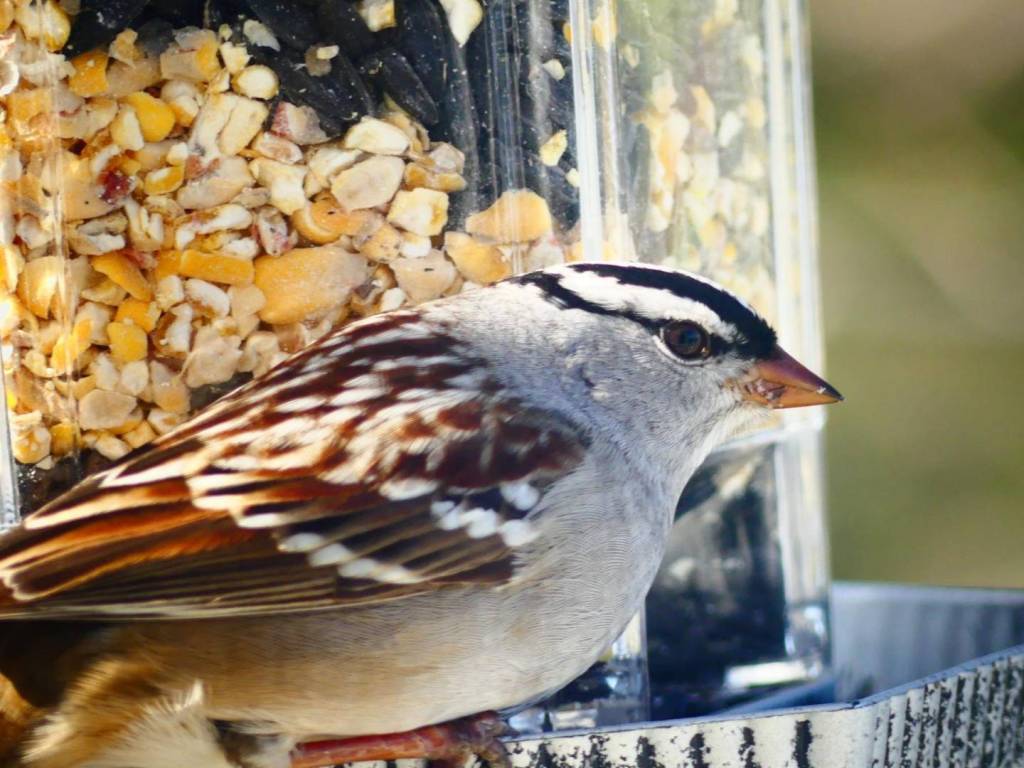
Platform feeders are one of the most reliable ways to feed White-crowned Sparrows. These feeders provide a wide open surface where birds can land, walk, and pick up seeds, much like natural ground feeding.
The best platform feeders for sparrows share a few basic features.
First, they have an open design. White-crowned Sparrows prefer feeders where they can easily see their surroundings. Enclosed feeders or narrow feeding ports tend to discourage them.
Second, the surface should be fairly large. A wider platform allows several birds to feed at once and gives sparrows space to move around.
Drainage on platform feeders prevents rainwater from collecting, so the seed stays dry and usable longer.
There are two common styles that work well.
One option is a hanging platform feeder suspended from a branch or pole. These feeders sit several feet above the ground but still provide an open feeding area.
The other option is a pole-mounted tray feeder placed low to the ground. This design often works better for White-crowned Sparrows because it closely matches their natural feeding height.
Many birders also use a ground platform and feeders. These are simple trays placed directly on the ground. They attract sparrows quickly but may also draw squirrels or other animals.
Regardless of the style you choose, the key idea is simple. The feeder should allow the birds to walk and feed naturally, rather than forcing them to cling or balance.
Where to Place a Feeder for White-crowned Sparrows
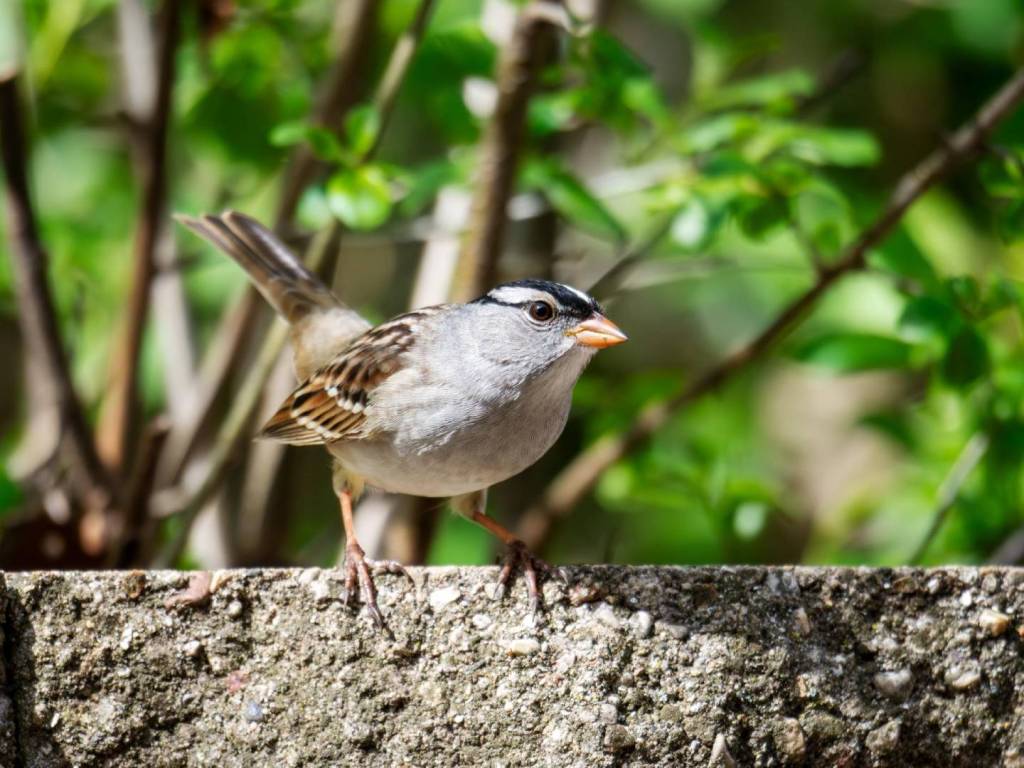
Placement often determines whether White-crowned Sparrows will use a feeder at all.
These birds prefer feeding areas close to protective cover. In the wild, they spend much of their time near shrubs, hedges, or dense vegetation. If a predator appears, they can dive into cover immediately.
Feeders in the open are often ignored by these sparrows.
Place feeders near shrubs or low trees. This gives birds a quick escape route and makes them feel secure while feeding.
A feeder a few feet from cover works better than one farther away, but not so close that predators can hide.
Many birders find success by placing a platform feeder about five to ten feet from a shrub line. This distance gives the birds visibility while still keeping cover within reach.
Season also plays a role. White-crowned Sparrows often visit feeders during migration and winter. At these times, natural food may be less available, and feeders placed near winter shelter become more attractive.
If you notice these sparrows already feeding on the ground beneath another feeder, that is a strong signal. Setting up a tray feeder nearby often encourages them to start using it.
What Seed Works Best in a White-crowned Sparrow Feeder
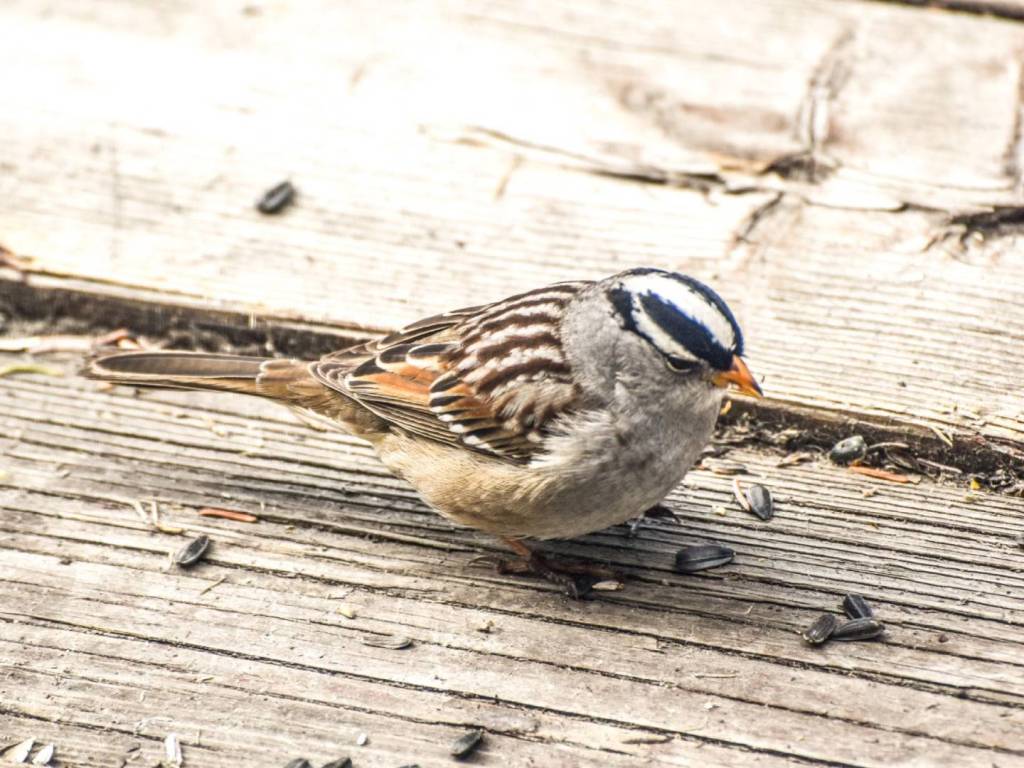
White-crowned Sparrows prefer small seeds, matching their natural diet of grass seeds and small grains.
The single most effective seed for attracting them is white proso millet.
Millet works well because it’s easy for small birds to eat and resembles seeds found in the wild. White-crowned Sparrows often find it quickly on a tray or the ground.
Mixed seed blends with a high millet content also work well. These blends sometimes include cracked corn, milo, and other grains that ground-feeding birds eat.
However, seeds designed mainly for finches may not attract them as consistently. Foods like nyjer seed are preferred by goldfinches and often ignored by sparrows.
Black oil sunflower seeds are eaten too, but White-crowned Sparrows usually pick smaller seeds first if available.
Observe which seeds the sparrows pick up beneath other feeders. If they’re already eating millet or small grains, offering those seeds directly yields better results.
Offering the right seed can determine whether the birds visit briefly or return often.
How to Keep Larger Birds Away From a White-crowned Sparrow Feeder
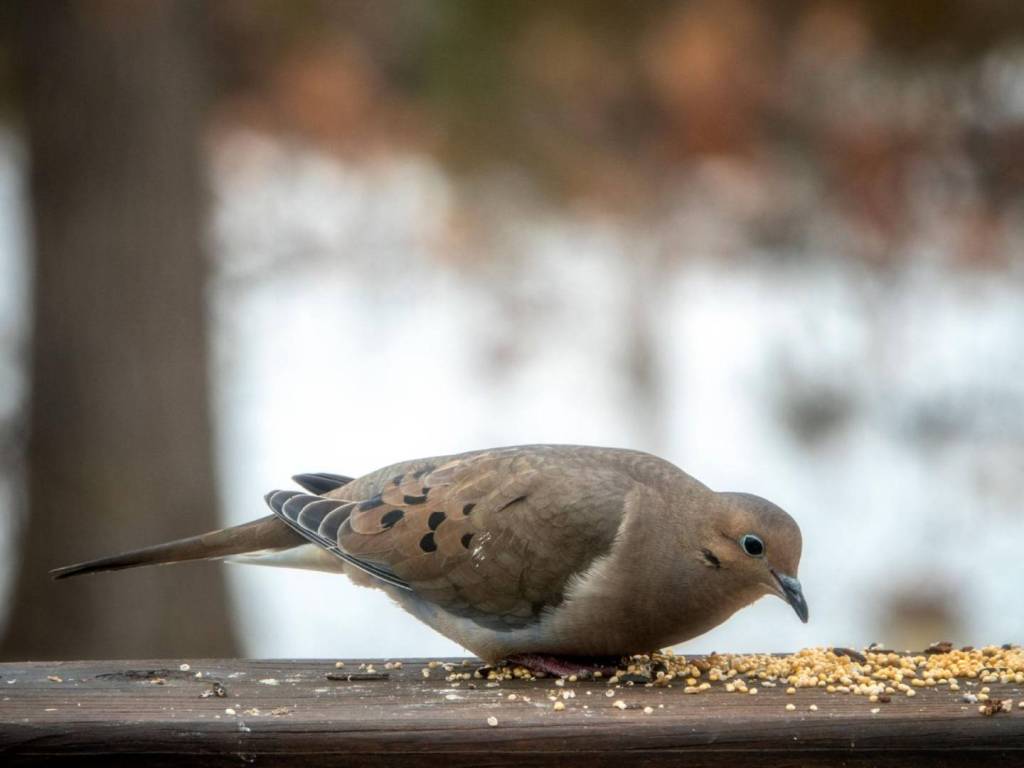
A challenge with ground or platform feeders is that large birds often find them first. Mourning Doves, pigeons, blackbirds, and jays may dominate and consume most of the seed.
This does not mean a sparrow feeder setup will fail. It simply requires a few adjustments.
One effective strategy is feeder size. Using a smaller tray feeder limits the number of large birds that can land at once. White-crowned Sparrows can still access the seed easily, but larger birds may find the space uncomfortable.
Choosing millet targets sparrows and other small ground feeders, but tempts fewer large birds compared to sunflower seeds.
Feeder placement also helps. If the feeder is positioned close to cover, sparrows feel comfortable using it. Larger birds often prefer more open feeding areas and may visit less frequently.
Some birders also scatter a small amount of seed in several places rather than concentrating it in one tray. This spreads birds out and prevents dominant species from controlling one another. Finally, regular cleaning is important for ground feeding setups. Removing old seed and debris helps maintain a healthy feeding area and prevents mold or spoilage.
With a few adjustments, you can maintain a feeding station that attracts White-crowned Sparrows without being overrun by larger birds.
Conclusion
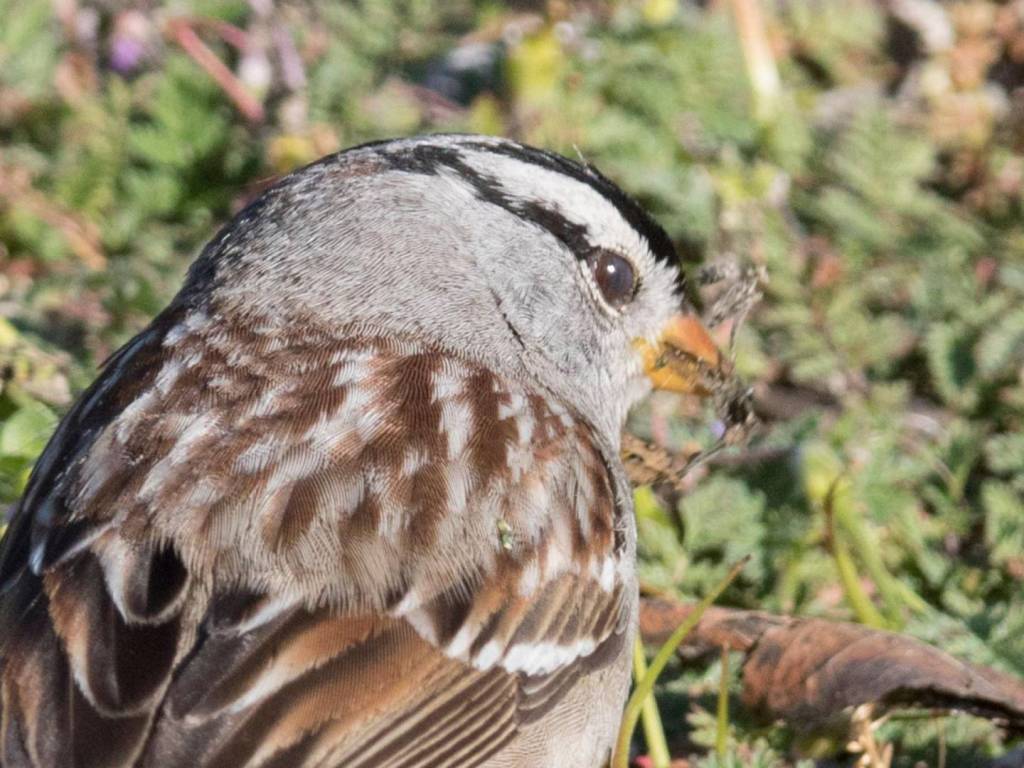
White-crowned Sparrows respond best to feeders that mimic their natural feeding. They prefer open spaces where they can walk and pick up seeds.
Ground feeding areas and platform feeders work especially well. When these feeders are placed near shrubs or protective cover, the birds are likely to visit regularly.
Seed choice is important. White proso millet and small grain mixes are usually most effective for attracting them. Finally, a few adjustments can help keep larger birds from dominating the feeder. Smaller trays, selective seed choices, and thoughtful placement often make a White-crowned Sparrow a regular visitor during migration and winter, providing a close look at one of the most recognizable sparrows in North America.


 Wing Watchers with Wagner
Leave a comment