Introduction
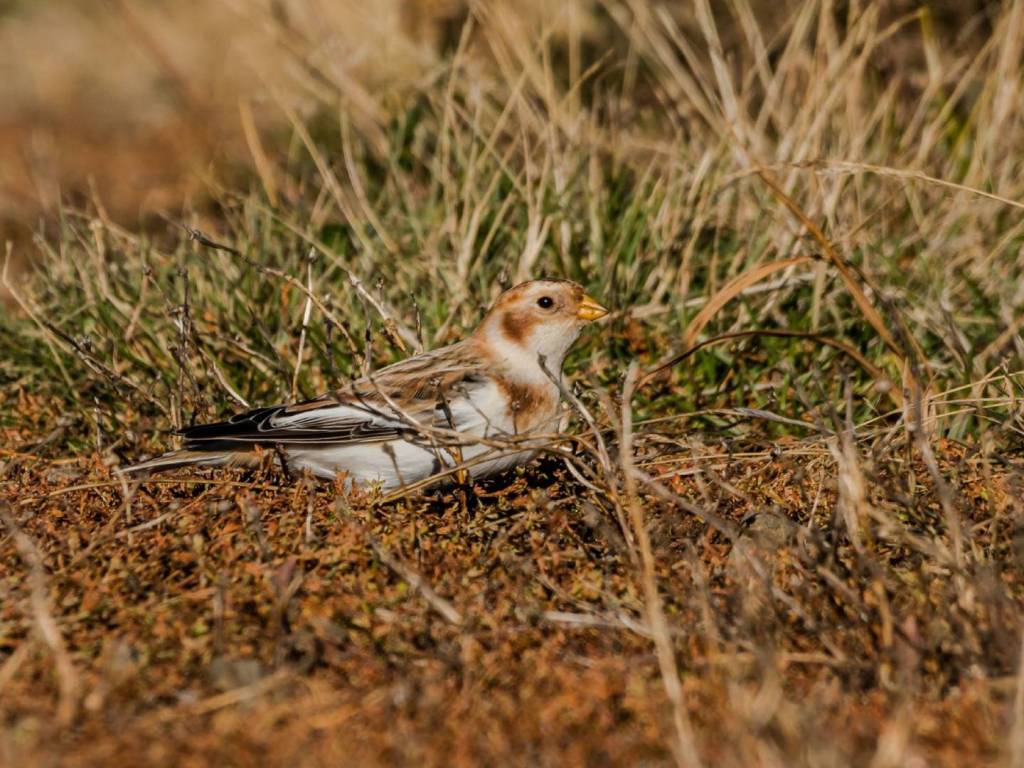
Have you ever watched a snowy field in winter and wondered if those white flashes might come into your yard? Do Snow Buntings visit backyard feeders, or do they stay out in open fields? If they do come in, what seed should you offer? And why do they seem to ignore hanging tube feeders?
In this article, we’ll walk through:
- Do Snow Buntings come to backyard feeders in winter?
- What do Snow Buntings eat at feeders?
- How to attract Snow Buntings to ground feeders
- Where Snow Buntings are most likely to visit feeders
- Why they avoid traditional hanging feeders
Keep on reading, or feel free to jump to the section that answers your question.
Do Snow Buntings Come to Backyard Feeders in Winter?
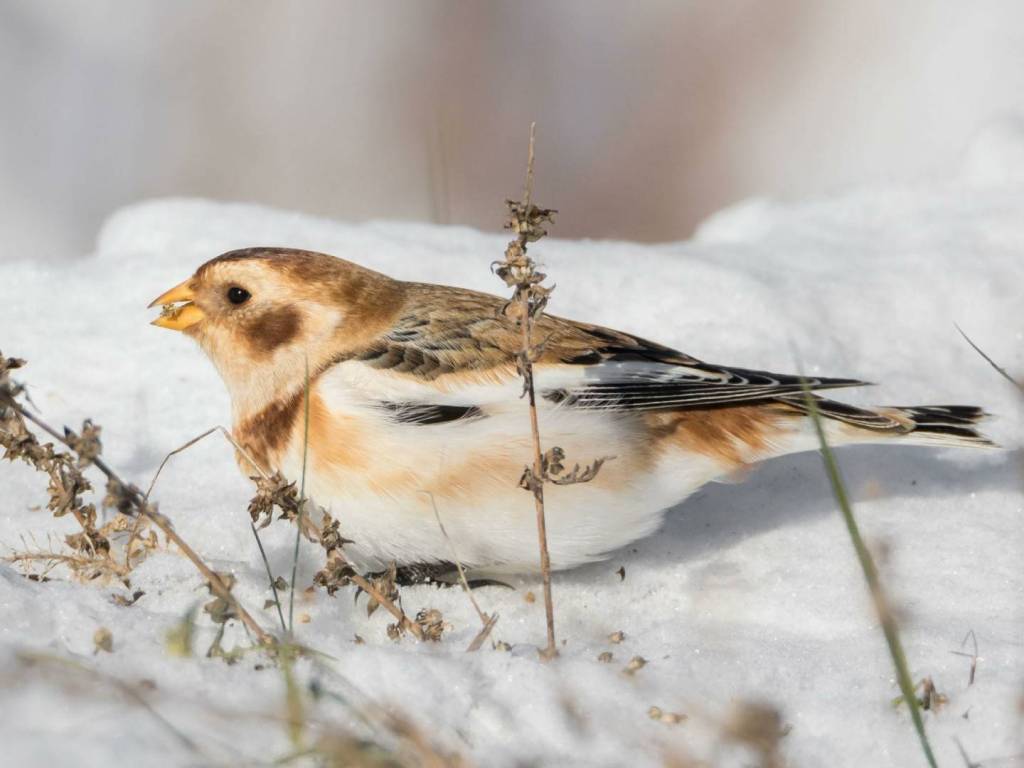
Snow Buntings do visit feeders, but only under specific conditions.
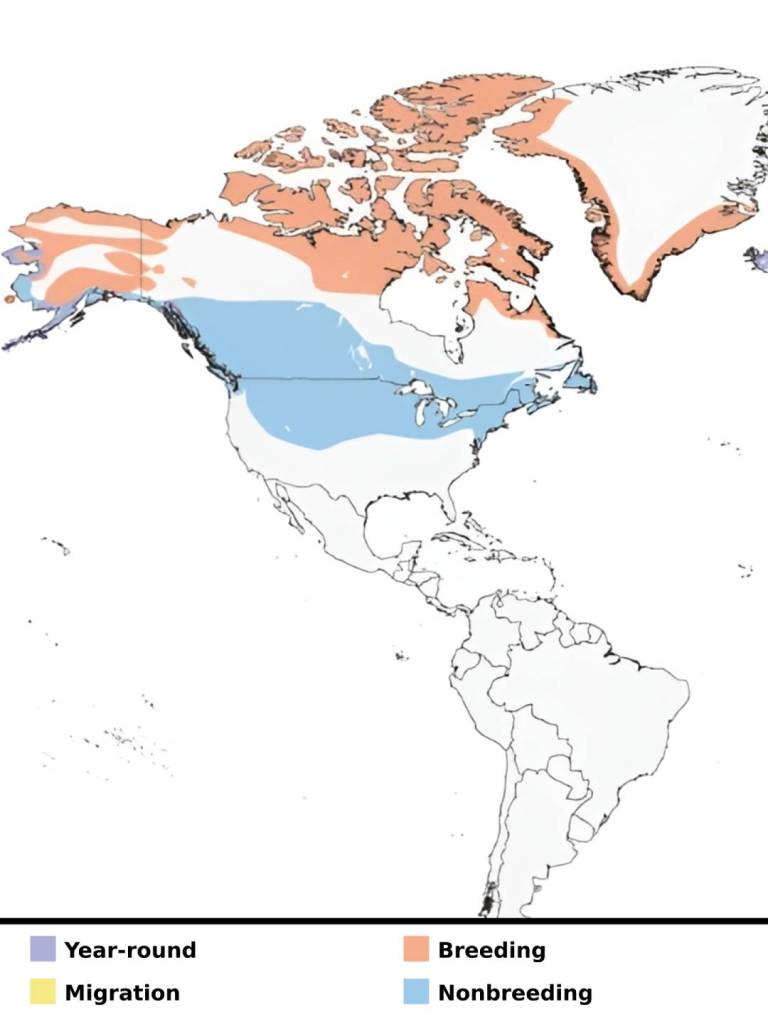
They are winter birds across much of the northern United States and southern Canada. Unlike chickadees or finches, they do not naturally associate with wooded backyards. Snow Buntings prefer wide, open spaces such as farm fields, shorelines, prairies, and windswept lots. That habitat preference shapes whether they will ever notice your feeder.
In harsh winters, when natural seeds are buried under deep snow or locked in ice, flocks may move closer to rural homes and outbuildings. If you live near open farmland or coastal areas within their winter range, your odds improve. Suburban neighborhoods with dense trees and fences are far less attractive to them.
They also travel in tight flocks. If one bird finds food, others often follow. That means visits can feel sudden and dramatic. A yard that had none yesterday may host dozens today.
So yes, Snow Buntings can visit feeders. But it depends on habitat, weather severity, and whether your setup matches how they normally feed.
What Do Snow Buntings Eat at Feeders?
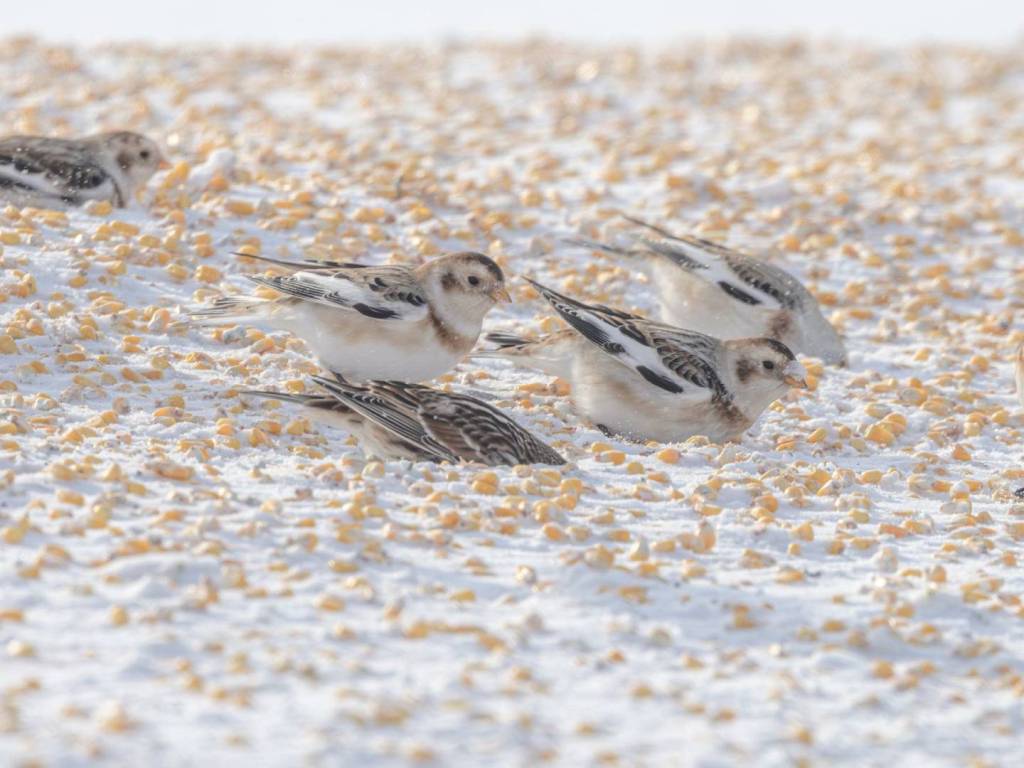
Snow Buntings are primarily seed eaters in winter. In open fields, they feed on grass seeds, weed seeds, and leftover grain.
At feeders, they prefer:
- White proso millet
- Cracked corn
- Small mixed seeds scattered on the ground
They will eat sunflower chips occasionally, but whole black oil sunflower seeds are less appealing. Their bills are built for smaller seeds, and they naturally feed by walking and picking from the ground rather than clinging to a feeder port.
Think about how juncos feed. Snow Buntings behave in a similar way, but in larger, more coordinated flocks. They land together, spread out, and move steadily across an area while feeding.
If you want to offer food specifically for them, skip the typical finch mix heavy in sunflower. A simple layer of millet on a cleared patch of snow is often more effective than a full feeder hanging from a pole.
The key is matching what they already eat in winter fields. The closer your offering resembles spilled grain in an open area, the more likely they are to accept it.
How to Attract Snow Buntings to Ground Feeders
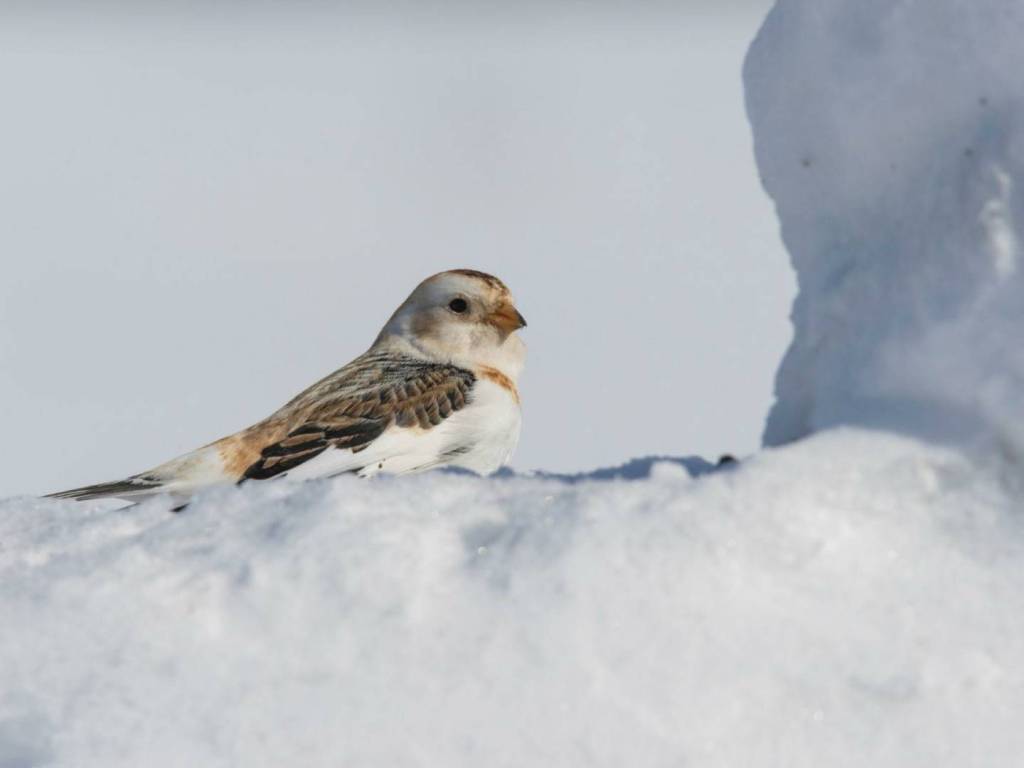
If your goal is to attract Snow Buntings, the setup matters more than the seed.
Start by choosing the most open part of your yard. Avoid placing food near dense shrubs, fences, or tree lines. Snow Buntings feel safer where they can see in all directions.
Clear a patch of snow down to bare ground if possible. Scatter white proso millet directly on that surface. If snow cover is deep, use a low platform feeder placed directly on the ground. Keep it simple and flat.
Avoid tall poles with hanging feeders. Buntings rarely perch above ground to feed. They prefer to land, walk, and feed in short bursts.
Consistency also helps. Once a flock discovers a reliable food source, they may return daily during cold spells. But if conditions change or natural food becomes available again, they can disappear just as quickly.
If you live near farmland in northern states or along large open shorelines, your chances are highest. In wooded neighborhoods, even a well-designed ground feeder may go unnoticed.
Where Are Snow Buntings Most Likely to Visit Feeders?
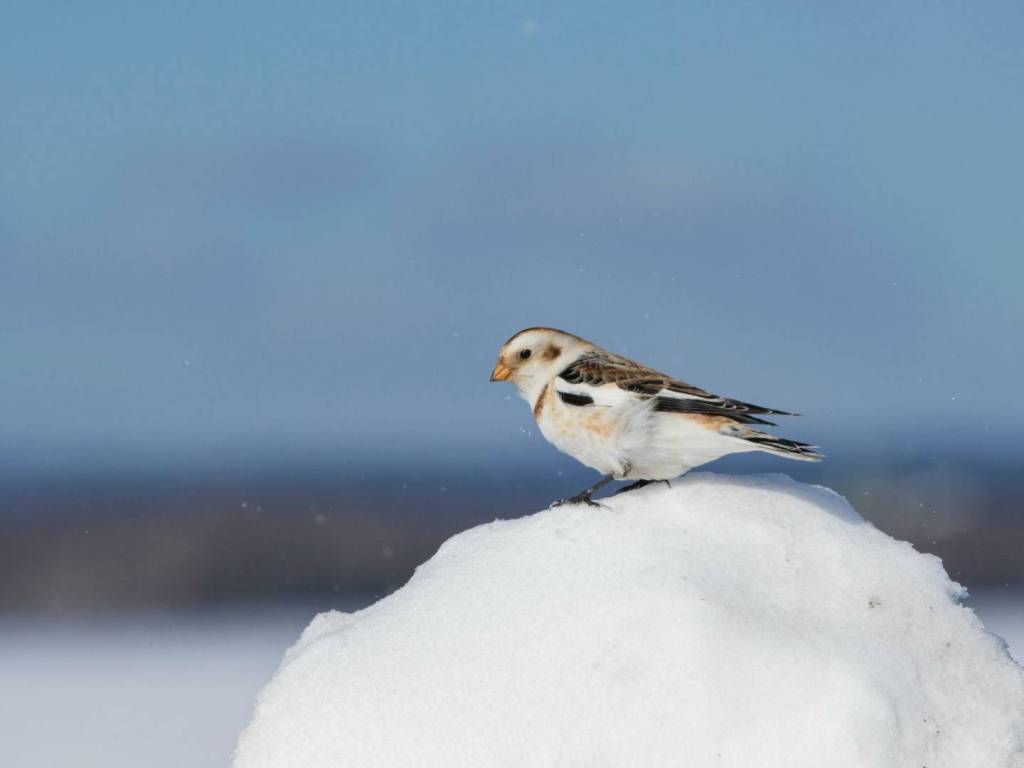
Snow Buntings breed in the Arctic and move south for winter. During winter, they are most common across:
- The northern Great Plains
- The Upper Midwest
- Parts of New England
- Southern Canada
They favor open agricultural landscapes, coastal dunes, frozen lakeshores, and flat prairie.
If your home borders wide, treeless land, you are in the best position. A rural property surrounded by fields is far more likely to host Snow Buntings than a city lot surrounded by houses and trees.
Timing also matters. They usually arrive in late fall and remain through winter, often departing by early spring. Severe cold fronts can push flocks farther south temporarily.
Before investing effort into a feeding setup, confirm they occur regularly in your region during winter. If they are rare in your area, changing feeder types will not solve the problem. Habitat and geography determine presence first. Feeder design only matters after that.
Why Don’t Snow Buntings Use Traditional Hanging Feeders?
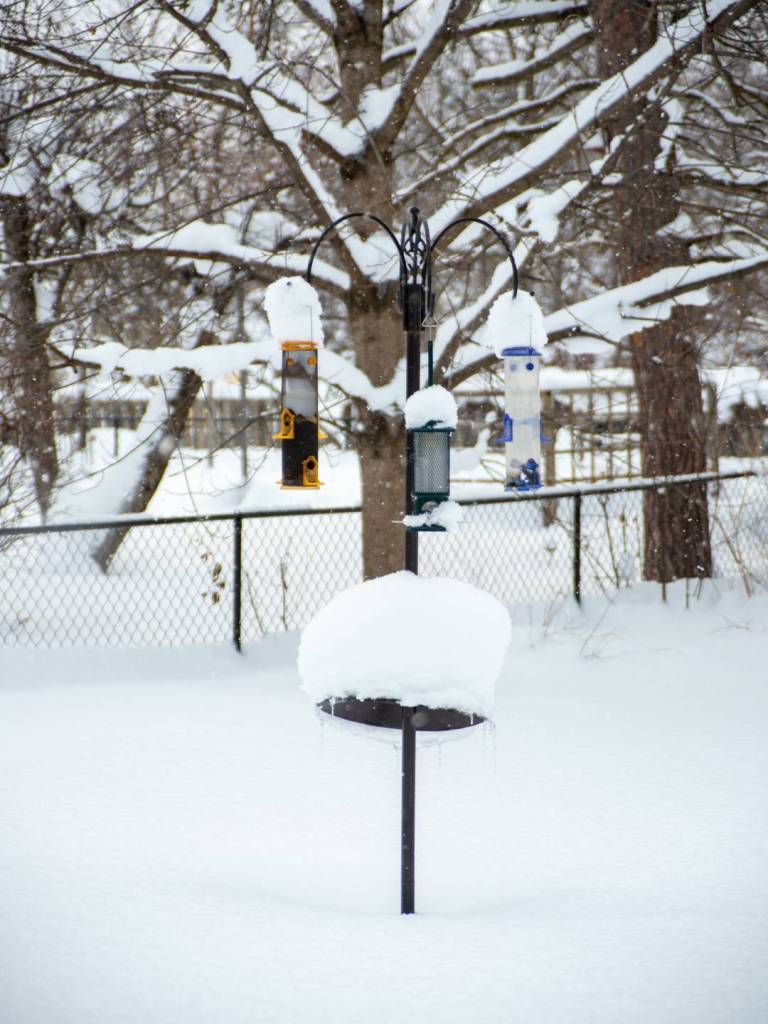
Snow Buntings avoid most hanging feeders because those feeders do not match their feeding style.
Tube feeders are designed for birds that cling vertically and extract seeds from small ports. Finches and chickadees are adapted for that. Snow Buntings are not. They are ground walkers.
Their legs are strong, and their feeding pattern involves moving steadily across open terrain while picking seeds from the surface. Perching above ground exposes them and changes their natural behavior.
Platform feeders placed low to the ground are more appropriate. Even better is simply scattering seed on a cleared area.
Another factor is flock behavior. When dozens of birds arrive together, a narrow tube feeder cannot accommodate them. A wide ground area allows the whole flock to feed at once.
If you have only hanging feeders and never see Snow Buntings, the issue is likely feeder type and placement, not the seed itself.
Conclusion
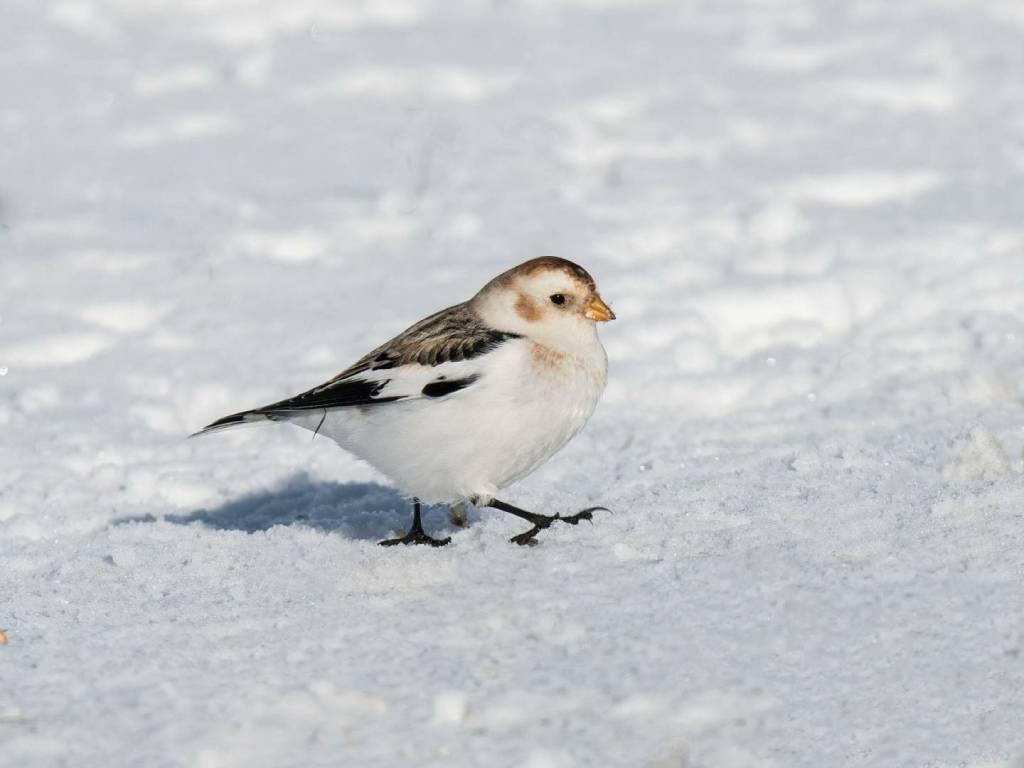
Snow Buntings can visit feeders, but only when conditions line up. They prefer open landscapes, ground feeding setups, and small seeds such as millet. Traditional hanging feeders rarely appeal to them.
If you live in their winter range near open farmland or shoreline, clearing a patch of ground and scattering seed gives you the best chance. If you live in a wooded neighborhood outside their typical range, feeder adjustments alone may not bring them in.
When they do appear, it often happens quickly and in numbers. A quiet winter yard can suddenly host a moving flock of white and brown birds sweeping across the snow. With the right setup and location, your yard could become part of that winter movement.


 Wing Watchers with Wagner
Leave a comment