Introduction
The Western Kingbird is one of those birds many people recognize by sight but cannot quite name. You see it perched on fence lines and power lines, darting out after insects, and aggressively chasing away anything that gets too close. If you have ever wondered what kind of bird that is, how to identify it, or whether it is always that territorial, you are in the right place.
- Are you trying to figure out where Western Kingbirds live and when they are present in your area?
- Do you want help recognizing their calls and sounds?
- Are you unsure how to identify one in the field, or curious about the red patch on its head?
- Maybe you are asking how big they are, whether males and females look different, or what their nests and young look like.
This article is organized so you can either read straight through or jump directly to the section that answers your question:
Western Kingbird Range, Map, and Locations
Western Kingbird Song and Call
Western Kingbird Identification and Key Features
Western Kingbird Size and Physical Measurements
Western Kingbird Male vs Female Differences
Western Kingbird Nesting and Baby Birds
Keep reading for a full overview, or feel free to jump to the section that matches what you are looking for.
Western Kingbird Range, Map, and Locations
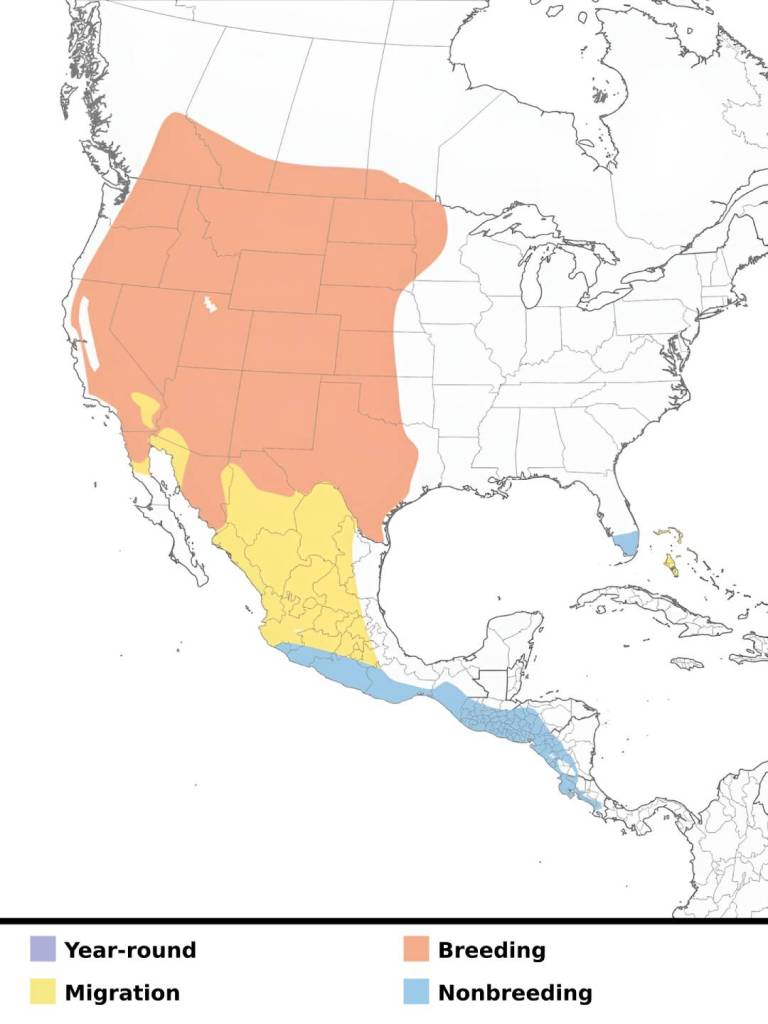
The Western Kingbird’s range covers much of western North America during the breeding season. They are widespread across the western United States, including California, Oregon, Colorado, and much of the Great Plains. You will most often find them in open areas with scattered trees or structures, such as grasslands, agricultural fields, desert scrub, and suburban edges. They favor places with exposed perches, which is why they are so commonly seen on utility lines and fence posts.
During winter, Western Kingbirds migrate south. Most leave the United States entirely, traveling into Mexico and Central America. A few may linger in southern California or along the southern border in mild years, but they are largely absent from the U.S. in winter. If you are seeing a kingbird in Oregon or Colorado, for example, it will almost always be between late spring and early fall. Their seasonal presence makes them a reliable sign of warmer weather and active insect populations.
Western Kingbird Song and Call
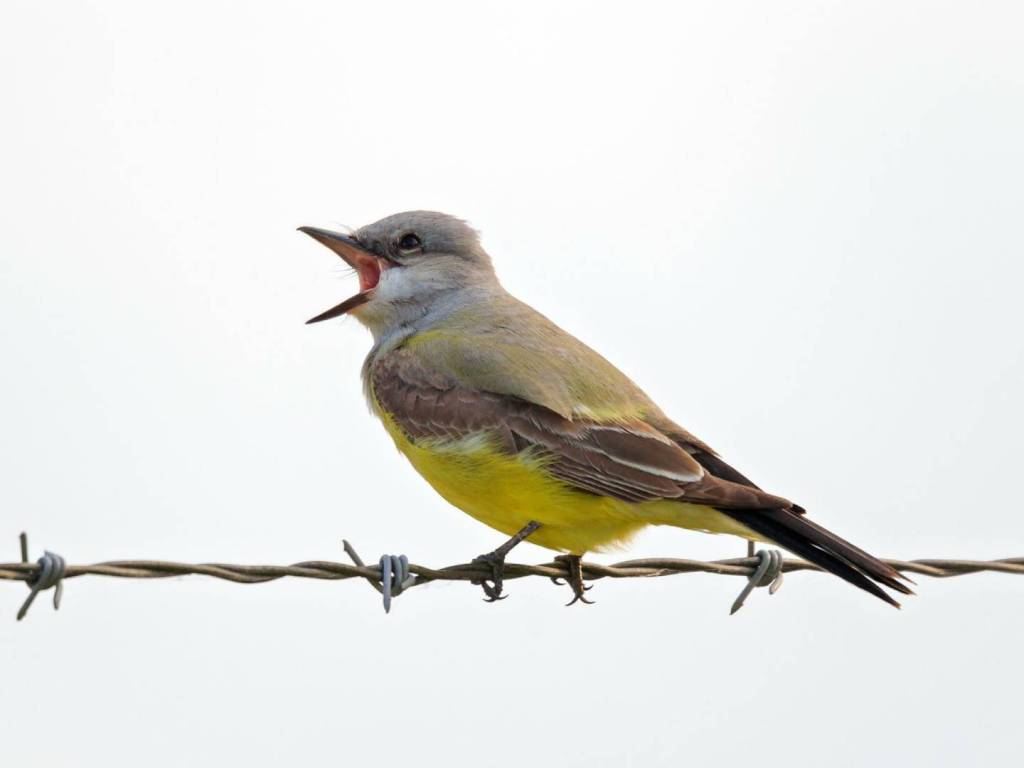
Western Kingbird vocalizations are sharp and easy to pick out once you learn them. Their most common call is a loud, chattering “kip-kip-kip” or “kit-kit-kit,” often given while perched or during short flights. The tone is dry and buzzing, not musical. This is especially noticeable during the breeding season when birds are defending territory.
They also produce more rapid, excited calls when chasing intruders, including other birds much larger than themselves. Western Kingbirds are known for aggressively mobbing hawks, crows, and even ravens that enter their nesting area. These aggressive calls are often your first clue that a nest is nearby. While they do have a simple song, it is usually a loose series of harsh notes rather than a structured melody. Compared to many songbirds, Western Kingbirds rely more on posture and behavior than on complex vocal displays.
Western Kingbird Identification and Key Features
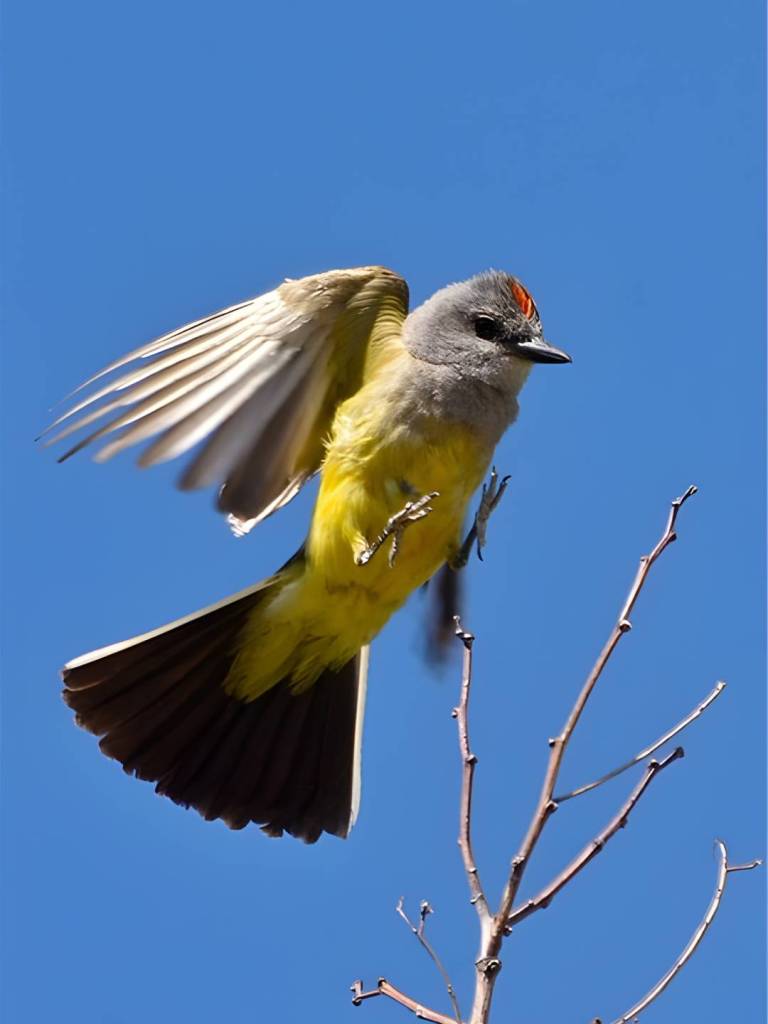
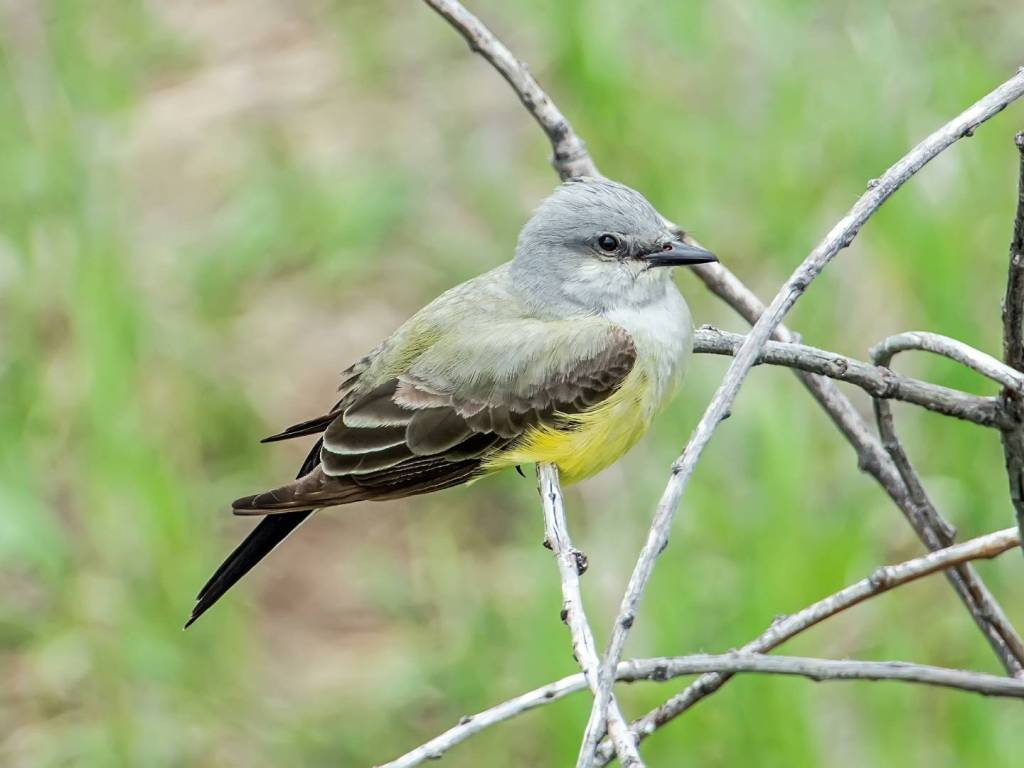
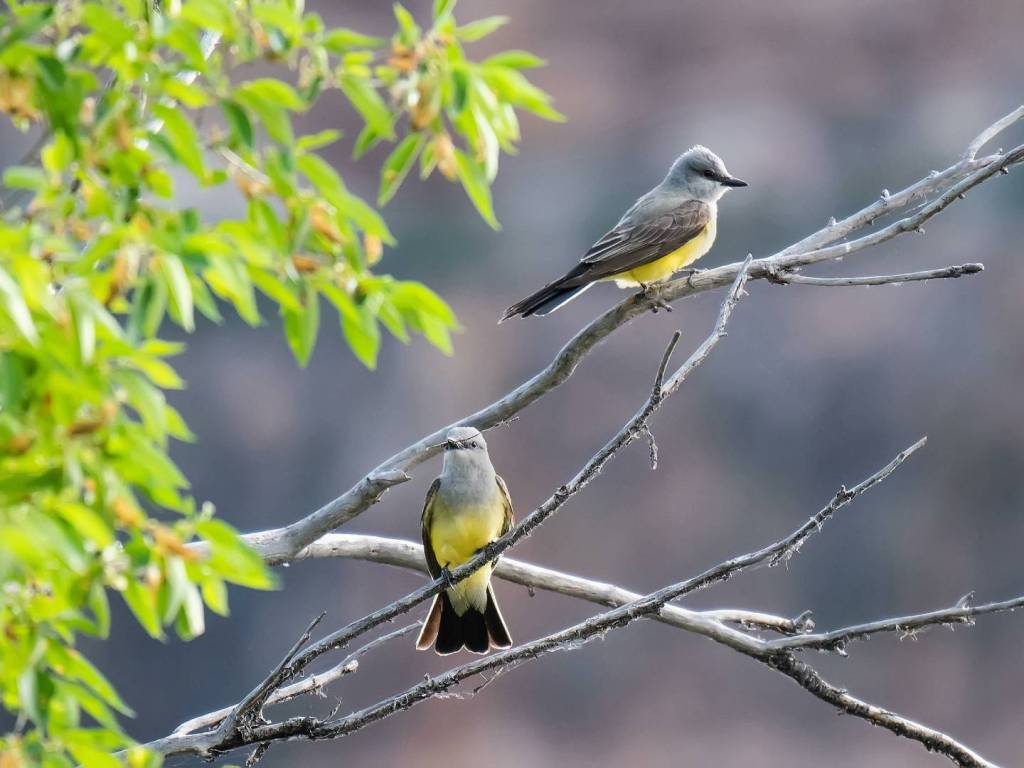
Identifying a Western Kingbird becomes straightforward once you focus on a few key features. They have a pale gray head and upperparts, a white throat and chest, and a bright yellow belly. The tail is black with distinct white outer edges, which are often visible in flight. The bill is fairly long and straight, typical of flycatchers.
One feature that causes confusion is the small red or orange patch on the crown. This “red dot” is usually hidden by feathers and is not always visible. It may show briefly when the bird is agitated or during courtship, but you should not rely on it for identification. Behavior is often more reliable than color. Western Kingbirds sit upright, make short aerial sallies for insects, and frequently return to the same perch. These traits help separate them from similar species like the Eastern Kingbird or other flycatchers.
Western Kingbird Size and Physical Measurements
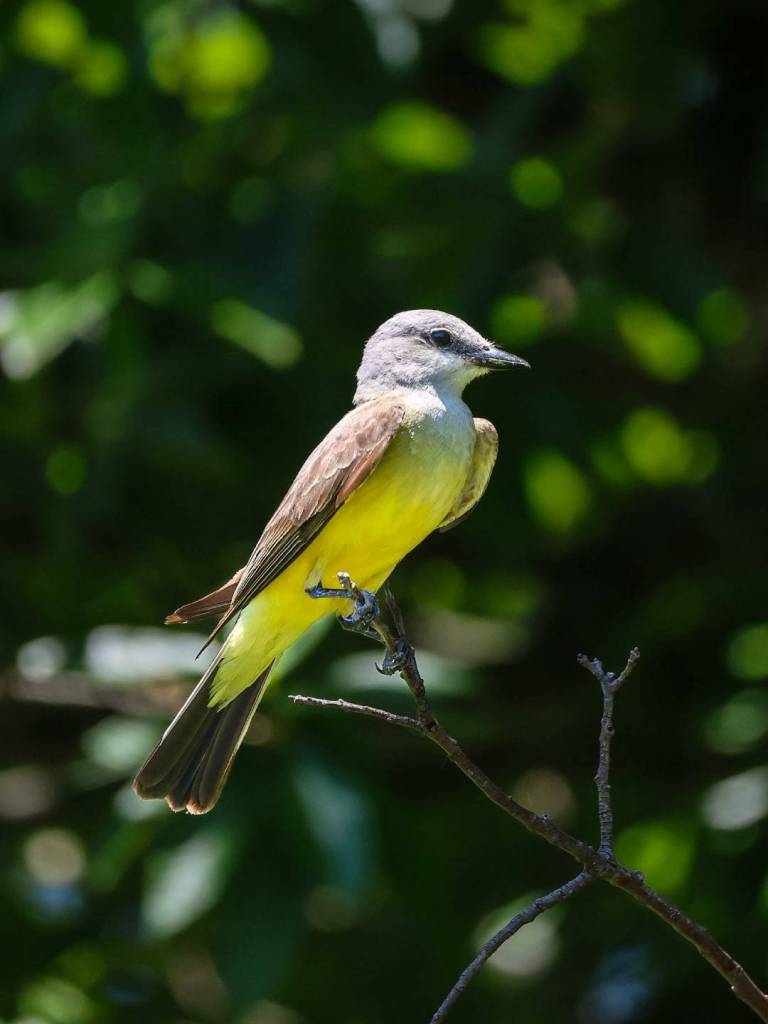
Western Kingbirds are medium-sized flycatchers. They measure about 8.5 to 9.5 inches in length from beak to tail. Their wingspan typically falls between 15 and 16 inches, giving them a broad-winged appearance in flight. Despite this size, they are fairly lightweight, usually weighing around 1.3 to 1.5 ounces.
In the field, they appear sturdy rather than slim, especially when perched. Their relatively large head and thick chest can make them look bigger than some other flycatchers. When watching them hunt, their size allows for strong, direct flight rather than fluttery movements. This combination of size and confident behavior helps explain why they are effective at defending territory and chasing away intruders.
Western Kingbird Male vs Female Differences
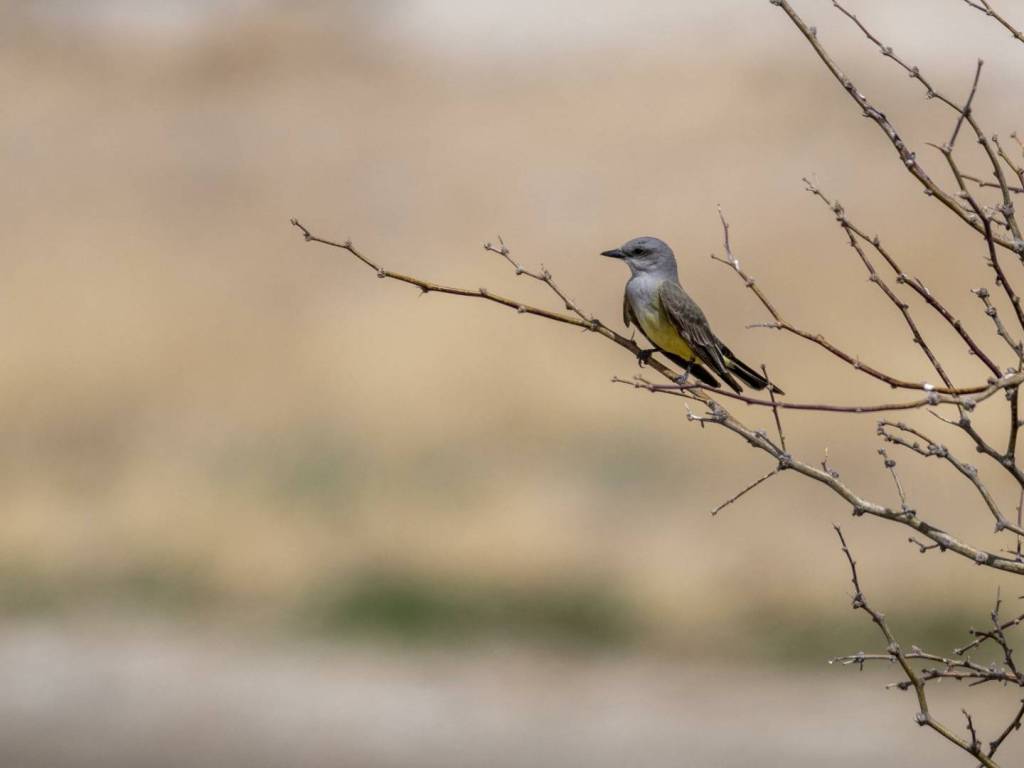
Male and female Western Kingbirds look nearly identical. There is no strong sexual dimorphism in plumage, which means you cannot reliably tell males and females apart by color or markings alone. Both sexes share the same gray, white, and yellow coloration, along with the black-and-white tail pattern.
In some cases, males may show the hidden red crown patch more often during breeding season, but this is inconsistent and not visible in most field conditions. Behavior is usually the best clue. Males are more likely to engage in aggressive territorial defense and frequent calling early in the breeding season. Females, on the other hand, spend more time at the nest once eggs are laid. Without observing behavior over time, most Western Kingbirds cannot be confidently sexed in the field.
Western Kingbird Nesting and Baby Birds
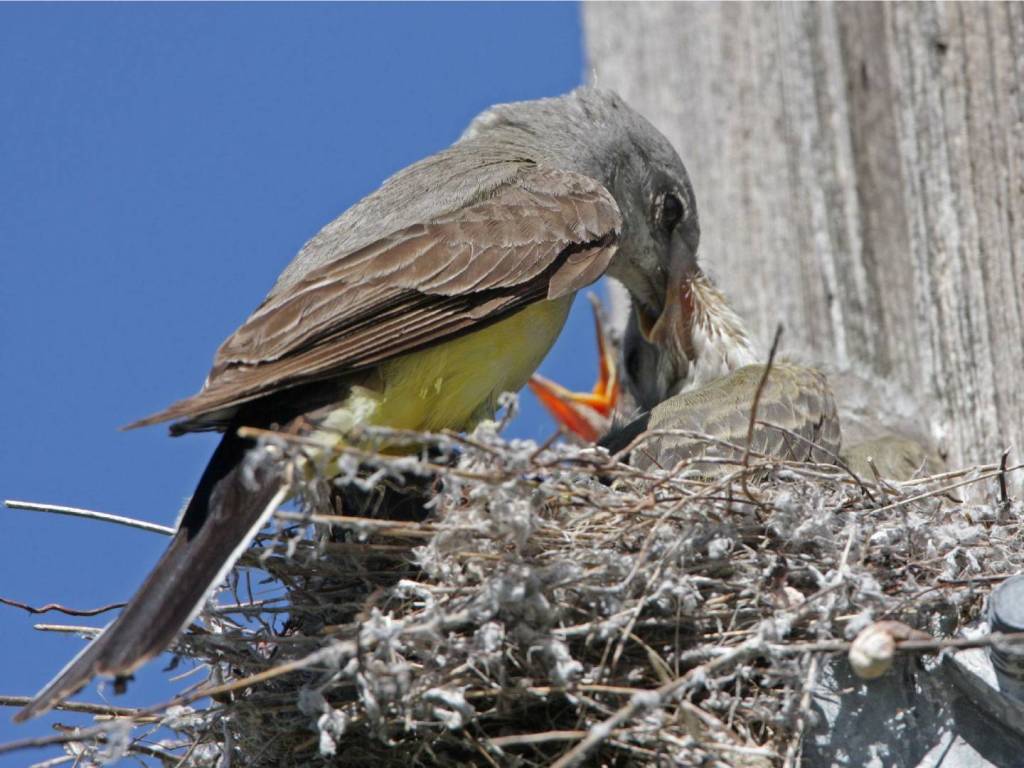
Western Kingbirds typically nest in open, elevated locations. Common nest sites include tree branches, shrubs, utility poles, and human-made structures. The nest itself is a bulky cup made of twigs, grasses, weeds, and sometimes bits of trash like string or paper. It is often placed in a very exposed position, which seems risky but works well due to the bird’s aggressive defense behavior.
Breeding season usually begins in late spring and extends into summer. Females lay three to five eggs, which are incubated for about two weeks. Both parents feed the chicks once they hatch, bringing insects frequently throughout the day. Baby Western Kingbirds grow quickly and typically leave the nest after about two to three weeks. Even after fledging, young birds often remain near the nest site while parents continue feeding them. During this time, adult kingbirds are especially defensive, and you may notice increased chasing of other birds in the area.
Conclusion
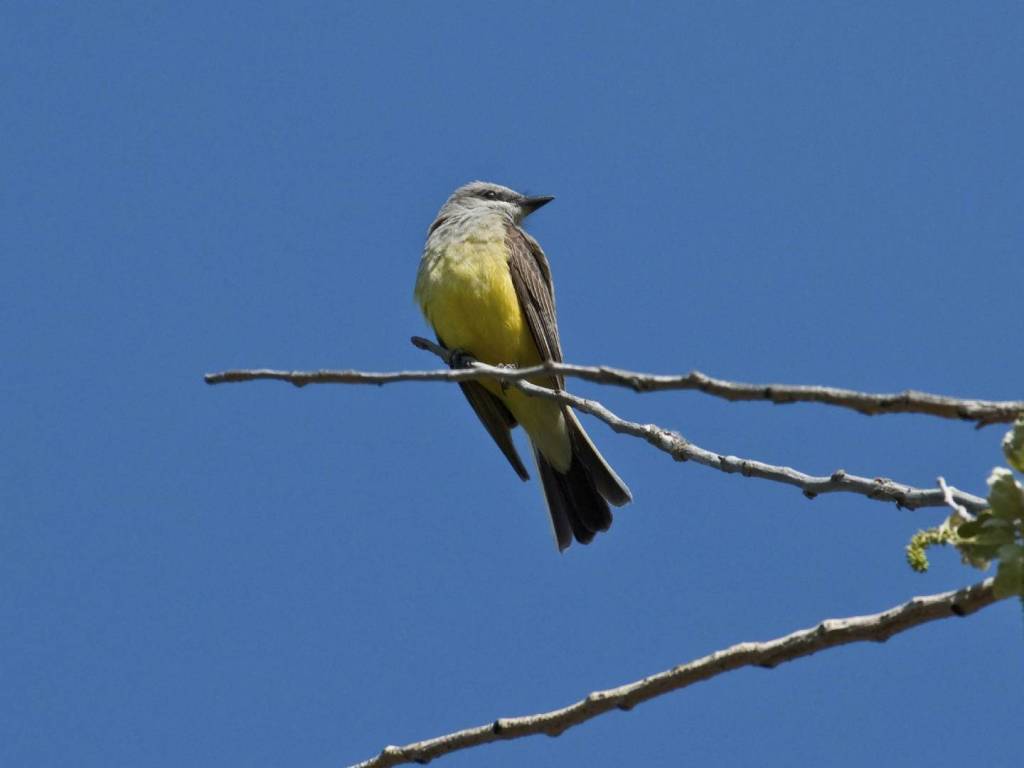
The Western Kingbird is a bird built for open spaces. Its upright posture, bold behavior, and constant activity make it one of the easiest flycatchers to notice once you know what to watch for. While its colors are simple, its behavior is anything but subtle. From aggressive nest defense to efficient aerial hunting, it plays a clear role in controlling insect populations across its range. If you spend time in open country during spring or summer, chances are you have already seen one. With the details covered here, you should now be able to identify it with confidence and better understand what it is doing when you spot it perched on a wire, watching the sky.



 Wing Watchers with Wagner
Leave a comment