Introduction
Winter is the hardest season for most backyard birds. Insects are gone, plants are dormant, and snow or ice can lock away natural food for days at a time. Birds burn a lot of calories just staying warm, especially on long nights when temperatures drop fast. That is where simple winter feeding makes a real difference. You do not need fancy feeders or expensive mixes. Birds care about energy, accessibility, and consistency. High-fat foods, easy-to-reach feeding spots, and safe ingredients matter more than variety. This post focuses on practical DIY bird feed for winter that actually helps birds survive cold weather. Everything here is based on what birds reliably use, what is safe, and what is realistic to make at home without turning it into a project that never gets done.
Easy DIY Bird Feed for Winter
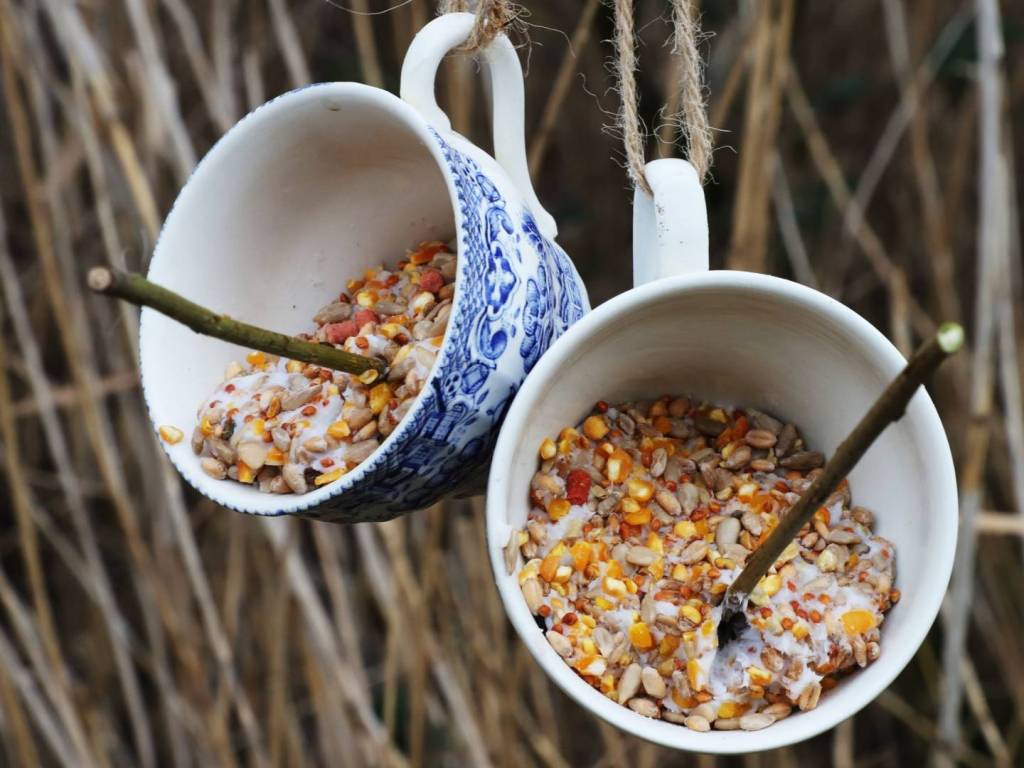
Winter bird food should do one thing well: deliver calories. Fat and protein beat filler every time. The simplest DIY winter mix starts with black oil sunflower seeds. They are thin-shelled, high in fat, and widely accepted. Add cracked corn for bulk energy and a small amount of white proso millet for ground-feeding birds. Skip dyed seed and cheap mixes loaded with red millet. Birds ignore it, and it ends up sprouting under the feeder in spring.
If you want a no-cook option, mix equal parts sunflower seeds and shelled peanuts. This works well for chickadees, nuthatches, woodpeckers, and jays. Keep peanuts raw and unsalted. Salt is a real problem for birds in winter when water is limited.
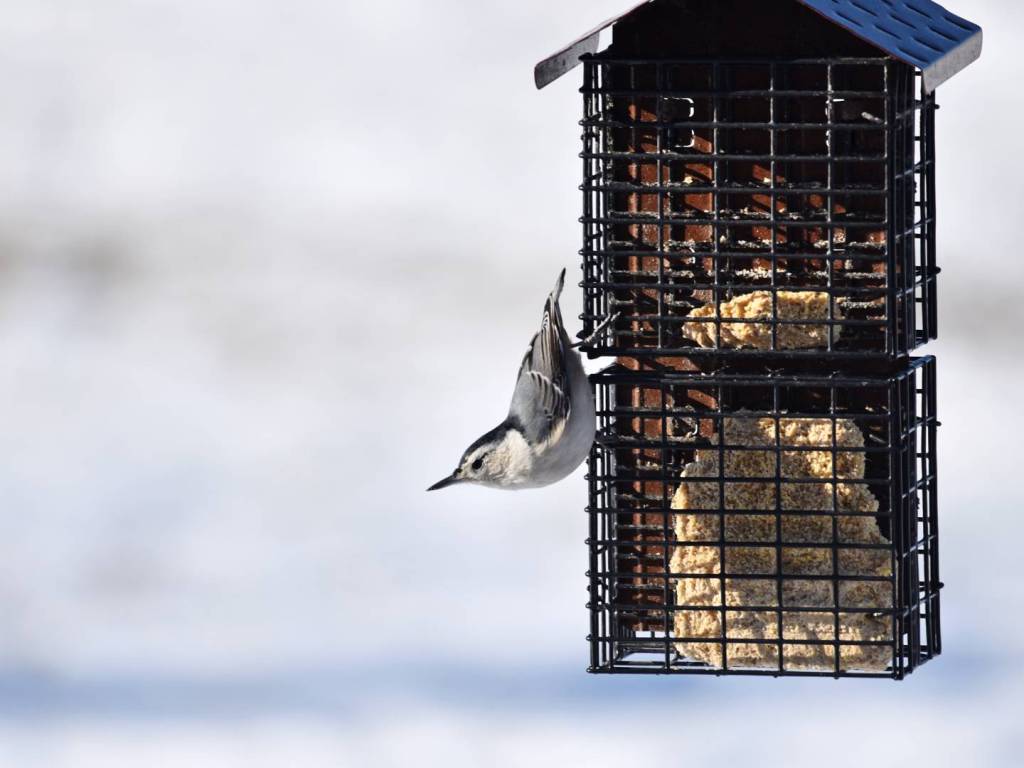
Suet is another easy win. Store-bought suet is fine, but homemade suet lets you control the ingredients. A basic winter suet uses rendered animal fat or vegetable shortening mixed with peanut butter and seeds. In cold weather, it stays firm and provides long-lasting energy. Hang suet in a cage feeder so birds can cling and feed without perching in deep snow.
Consistency matters more than novelty. A simple mix offered every day beats a rotating menu that appears once a week. Birds remember reliable food sources and will check them daily during cold snaps.
What to Feed Birds in Winter from the Kitchen
Some kitchen scraps are genuinely useful in winter. Others are not worth the effort. The goal is still fat and calories, not crumbs. Plain oats are a solid option. Rolled or steel-cut oats work. Instant oats are fine if they are unflavored. Cooked or raw, both get eaten, though raw oats stay usable longer in wet weather.
Peanut butter is one of the best winter bird foods you already have. Spread it directly on tree bark, pinecones, or wood scraps. Always use plain, unsalted peanut butter. Mix it with oats or cornmeal to reduce stickiness and make it easier for smaller birds to feed safely.
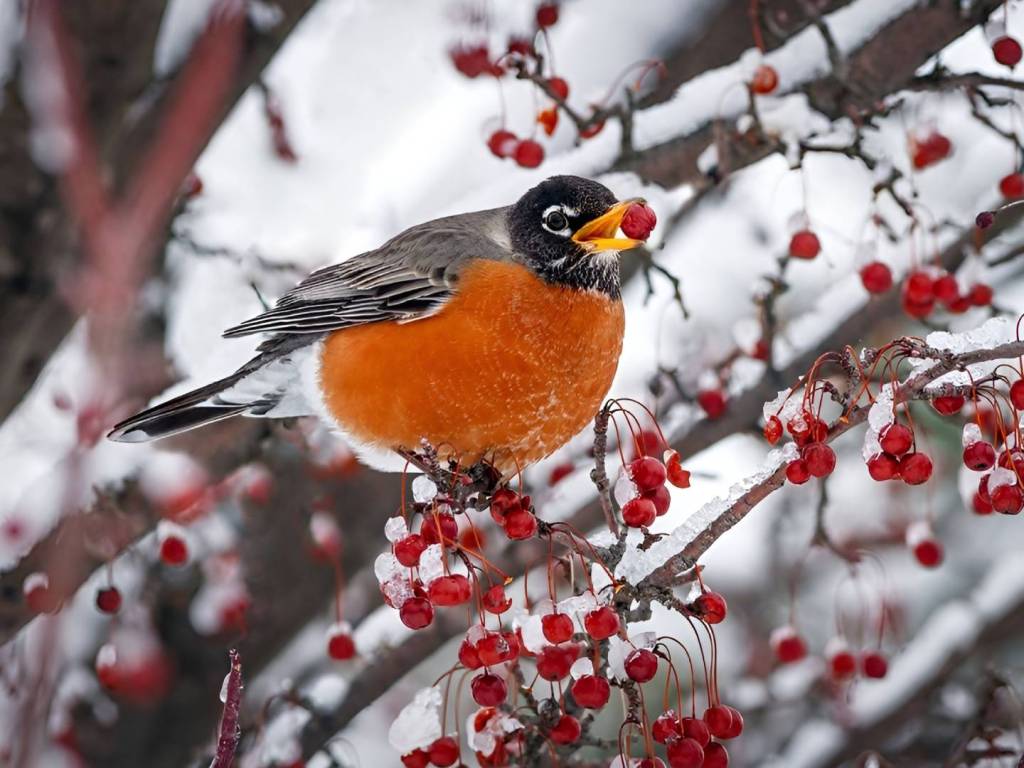
Fruit scraps help certain species. Apple slices, raisins soaked in warm water, and overripe berries attract robins, waxwings, and bluebirds during mild winter periods. Place fruit on a platform feeder or directly on the ground where birds can see it easily. Remove uneaten fruit after a day to prevent freezing into solid blocks.
Avoid bread, seasoned leftovers, dairy, and anything salty or sugary. These do not provide usable nutrition and can cause digestive problems. If it would not fuel you through a freezing night outside, it probably will not help a bird either.
How to Make Bird Food at Home with Oatmeal
Oatmeal-based bird food is cheap, flexible, and works especially well when seed supplies run low. A basic recipe uses 1 cup of oats, 1/2 cup of peanut butter, and 1/2 cup of cornmeal or flour. Mix until a thick dough forms. In winter temperatures, this sets up quickly.
For a higher-energy version, add melted suet or shortening before mixing. Pour the mixture into shallow molds, muffin tins, or simply press it onto tree bark. Let it cool completely before putting it outside. This prevents it from sliding off or soaking into the feeder.
Oatmeal mixes shine in no-seed setups. Woodpeckers, chickadees, and nuthatches all use them readily. Smaller birds can cling and take small bites without cracking shells. That matters during prolonged cold spells when energy conservation is critical.
Keep portions modest. Large chunks freeze solid and become unusable. Smaller portions stay workable and reduce waste. Replace as needed rather than piling on more food than birds can eat in a day or two.
Homemade Bird Food Without Seeds
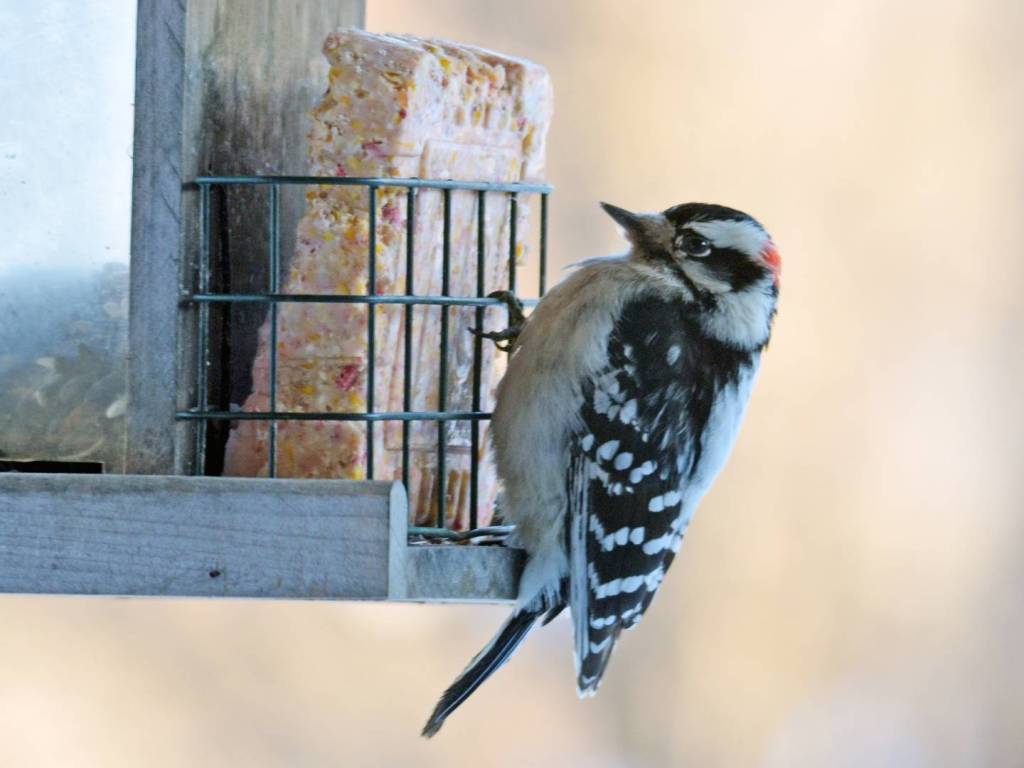
Seedless bird food matters in winter for two reasons. First, it reduces waste under feeders. Second, many insect-eating birds shift to fat-based foods when insects disappear. Suet without seeds targets these species directly.
A simple seedless suet is made with rendered beef fat or vegetable shortening, mixed with peanut butter. Add oats or cornmeal for texture. Pour into molds or spread directly into a suet cage. This attracts woodpeckers, nuthatches, and wrens.
Another option is fat-coated fruit. Dip apple slices or raisins into melted fat and let them cool before placing them out. This works best during milder winter periods when fruit-eating birds are still active.
Seedless feeding also helps in small yards where cleanup is an issue. No shells, no sprouting mess, and less attraction for rodents. Place seedless feeders higher off the ground and near cover so birds feel safe feeding quickly.
How to Make a Bird Feeder for a School Project
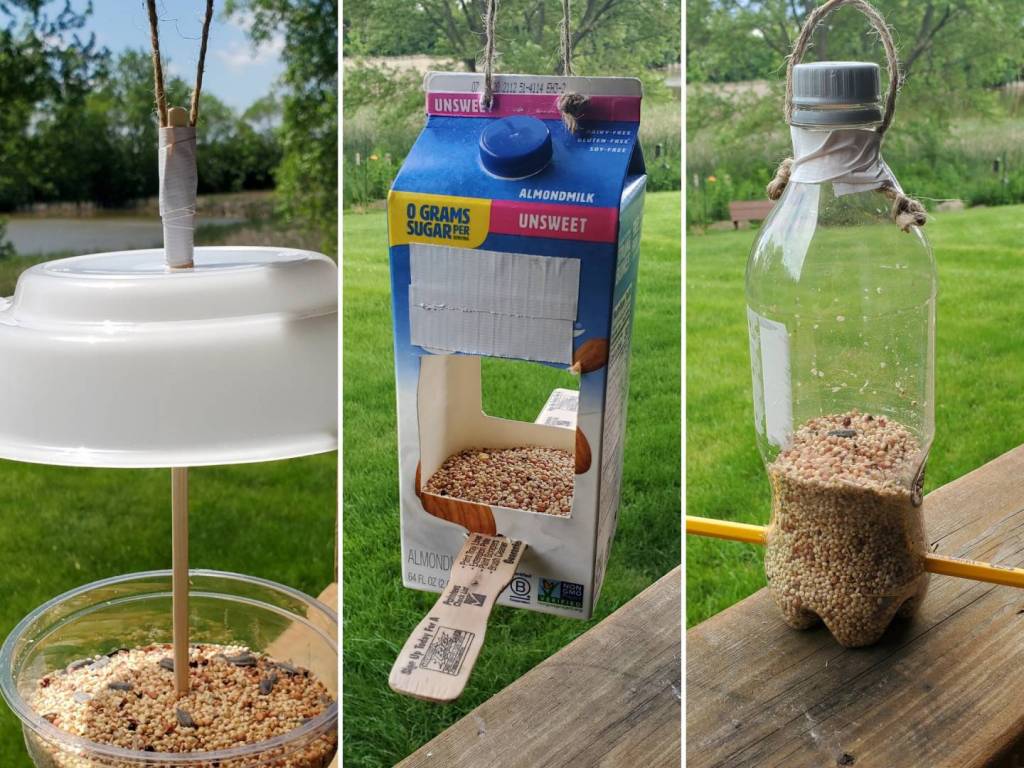
School bird feeder projects work best when they are simple, visible, and functional. Complicated designs fail outside. Recycled materials are ideal. Milk cartons, plastic bottles, and cardboard tubes all work if prepared correctly.
For a quick project, cut feeding holes in a plastic bottle, insert wooden spoons as perches, and fill with seed or oat mix. Punch holes near the top and hang with a string. This feeder lasts through winter if checked regularly.
Pinecone feeders are another classroom staple. Tie a string, coat with peanut butter, roll in oats or seeds, and hang. These are short-term feeders but perfect for learning and observation.
Emphasize placement. Hang feeders where students can see them, but away from windows to prevent strikes. Keep them at least a few feet from dense shrubs so predators cannot ambush feeding birds.
The lesson matters more than the feeder. Show how food choice, placement, and consistency affect bird behavior over time.
Bird Feeder Ideas for Winter Backyard Feeding
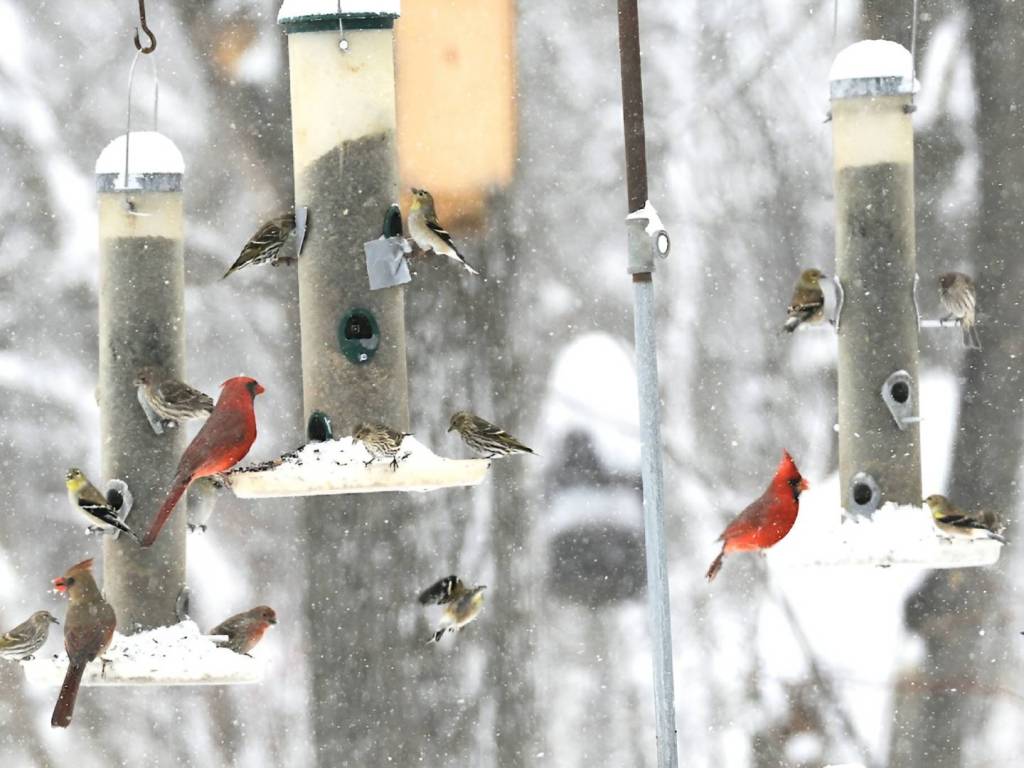
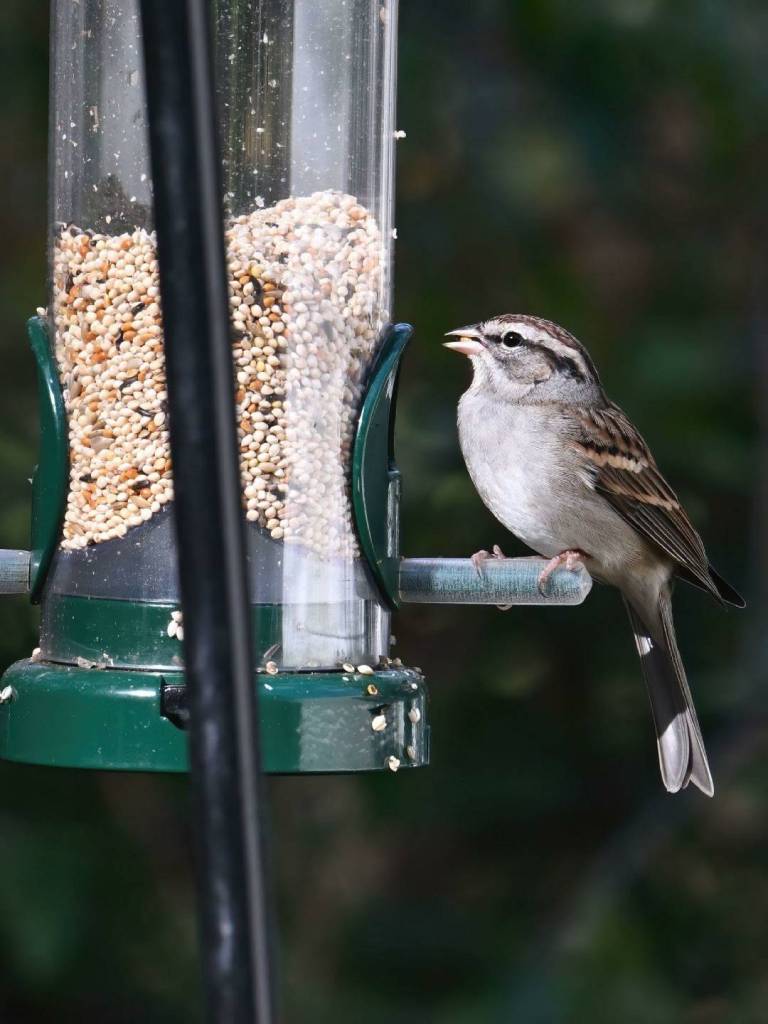
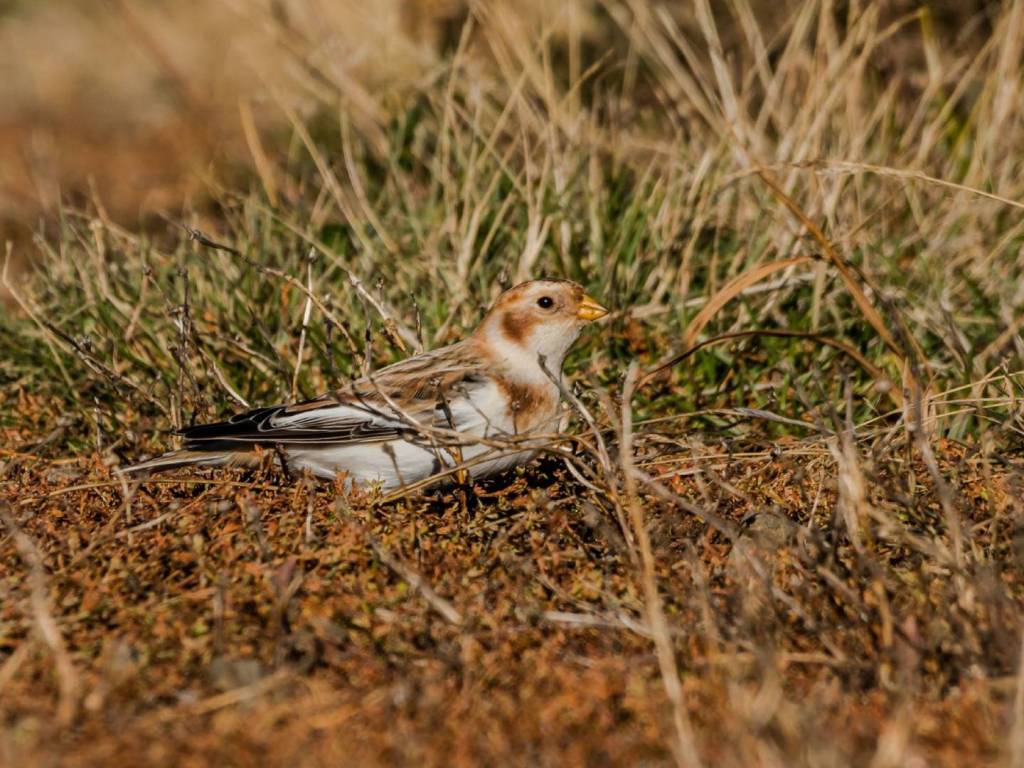
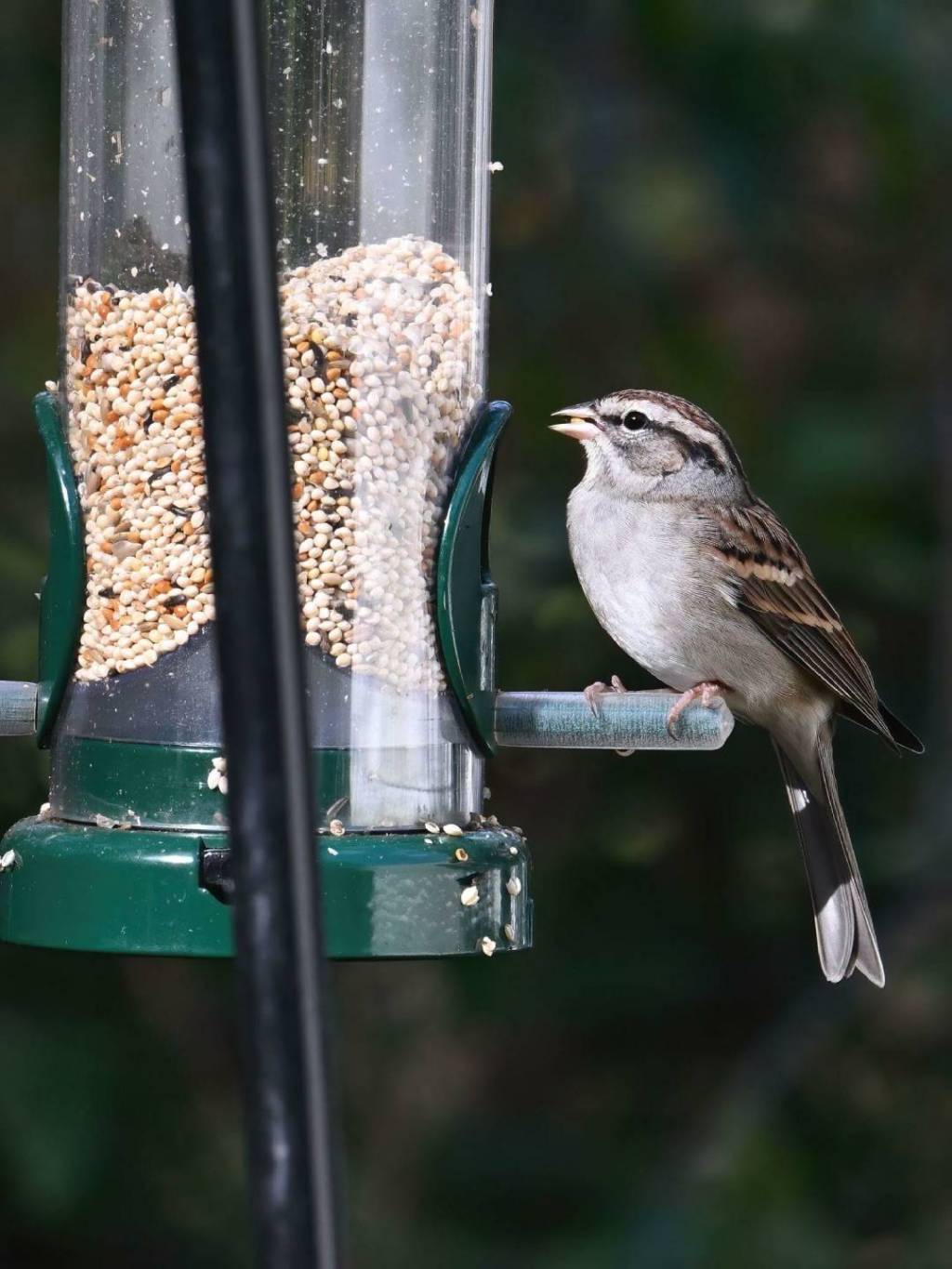
Winter feeding stations work best when they cover different feeding styles. Tube feeders for seed eaters, suet cages for clingers, platform feeders for larger birds, and ground feeding areas for sparrows and juncos. You do not need fifty feeders, but you do need variety.
Wooden feeders hold up better in snow and ice than thin plastic. They shed moisture and provide stable perches. Check out this high-quality bird feeder if you’re looking for one. Place feeders where wind is blocked, but visibility is good. Birds avoid exposed feeding spots during storms.
Spacing matters. Spread feeders out to reduce crowding and aggression. This also reduces disease risk during winter, when birds congregate closely. Clean feeders regularly, even in cold weather.
Water is often overlooked. A shallow dish refreshed daily or a heated bird bath can be more valuable than extra food during freezing conditions. Birds need water to process dry, high-fat foods.
Think in systems, not single feeders. Food, water, shelter, and safe placement together make winter feeding effective.
Conclusion
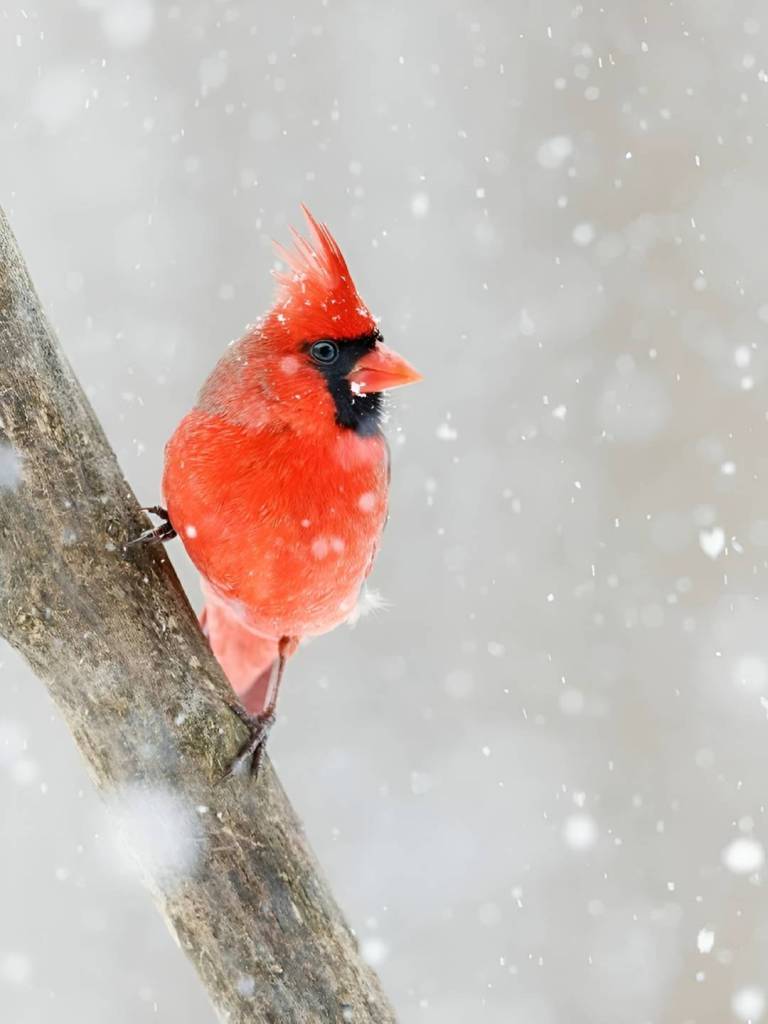
DIY bird feed for winter does not need to be complicated. Birds need calories, consistency, and safe access. High-fat foods like suet, peanut butter, and oats outperform flashy mixes when temperatures drop. Kitchen scraps can help if chosen carefully, but many common foods do more harm than good. Simple feeders placed well and maintained regularly matter more than creative designs. Winter feeding works best when you focus on what birds actually use, not what looks good to us. Keep it simple, keep it clean, and keep it consistent. That is how backyard feeding makes a real difference when winter hits hardest.


 Wing Watchers with Wagner
Leave a comment