

Introduction
Welcome, everyone! Today we’re going to explore one of the most charming little songbirds you’ll spot across North America — the Chipping Sparrow. These tiny birds may not seem flashy at first glance, but take a closer look, and you’ll find they have a world of fascinating behaviors and features to discover. Whether you’re an experienced birder or just getting started, the Chipping Sparrow is a wonderful species to learn about. Throughout our talk, we’ll dive into how to tell a male from a female, how they compare to similar birds, what they love to eat, their migration habits, what they sound like, and even where they like to build their nests. Let’s get started and find out why this little bird is such a backyard favorite!
How Can You Tell a Male from a Female Chipping Sparrow?

If you’ve ever tried identifying a Chipping Sparrow male and female, you know it can be tricky! These birds are known for their simple but sharp appearance, making male vs female chipping sparrow identification a real challenge. However, with a little patience and a good eye, you can learn how to tell male from female chipping sparrows when you’re out birdwatching.
Both males and females have a crisp chestnut cap, a white eyebrow, and a black eye-line. But during the breeding season, the male’s colors tend to look a little brighter and more defined. If you see a Chipping Sparrow with an especially vivid chestnut crown and sharp white eyebrow, you’re likely looking at a male.
Identifying female Chipping Sparrows can be a little tougher because their markings are often just a bit duller or faded compared to males. Outside of the breeding season, it gets even harder — both sexes molt into a plainer look, losing some of that bright chestnut tone on the head and gaining a more streaky, brownish top.
Behavior can sometimes offer a clue, too. Males are usually more vocal, singing their trilling song to defend territory and attract mates, while females are a little quieter as they focus on nesting.
While color differences aren’t huge, remembering that the chipping sparrow female tends to have softer, less vivid markings can really help. Don’t worry if it takes some practice — even seasoned birdwatchers double-check these little sparrows!
How Does a Chipping Sparrow Compare to Other Birds?
When you’re out in the field, it’s easy to mix up a Chipping Sparrow with some of its feathered neighbors. Let’s walk through a few key comparisons so you can confidently spot the difference between a Chipping Sparrow and other birds.
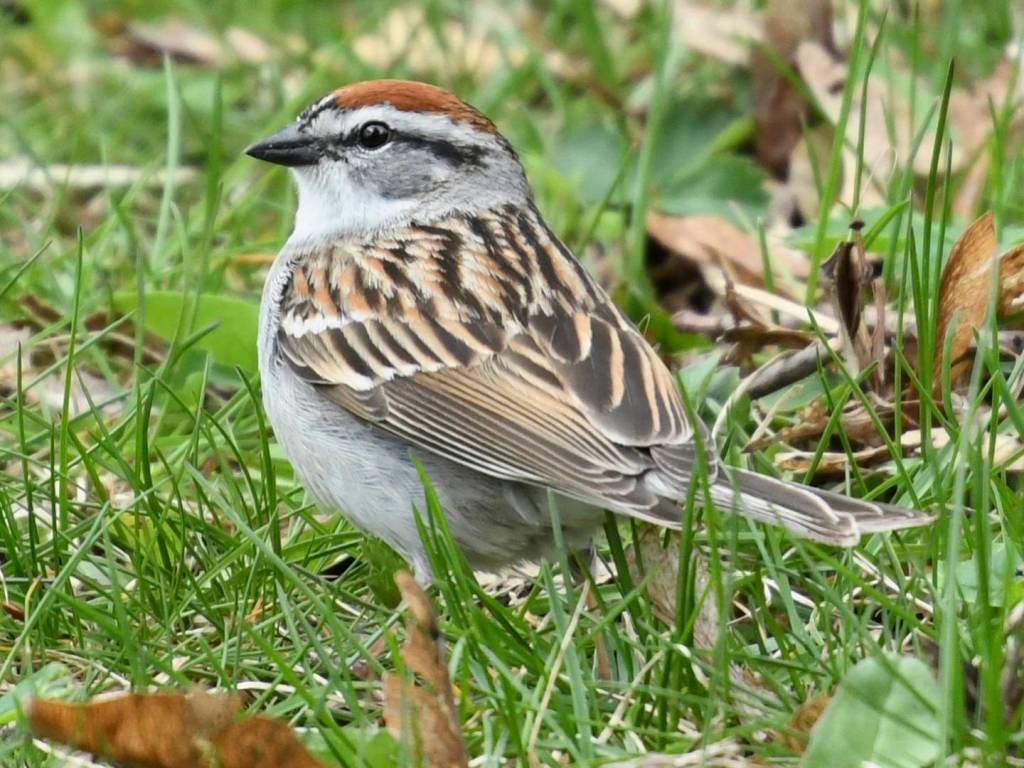

First up: Chipping Sparrow vs House Sparrow. House Sparrows are chunkier, with a gray head and black bib — features you won’t find on a slender Chipping Sparrow. Plus, House Sparrows are often found around human buildings, while Chipping Sparrows prefer open woods and grassy areas.


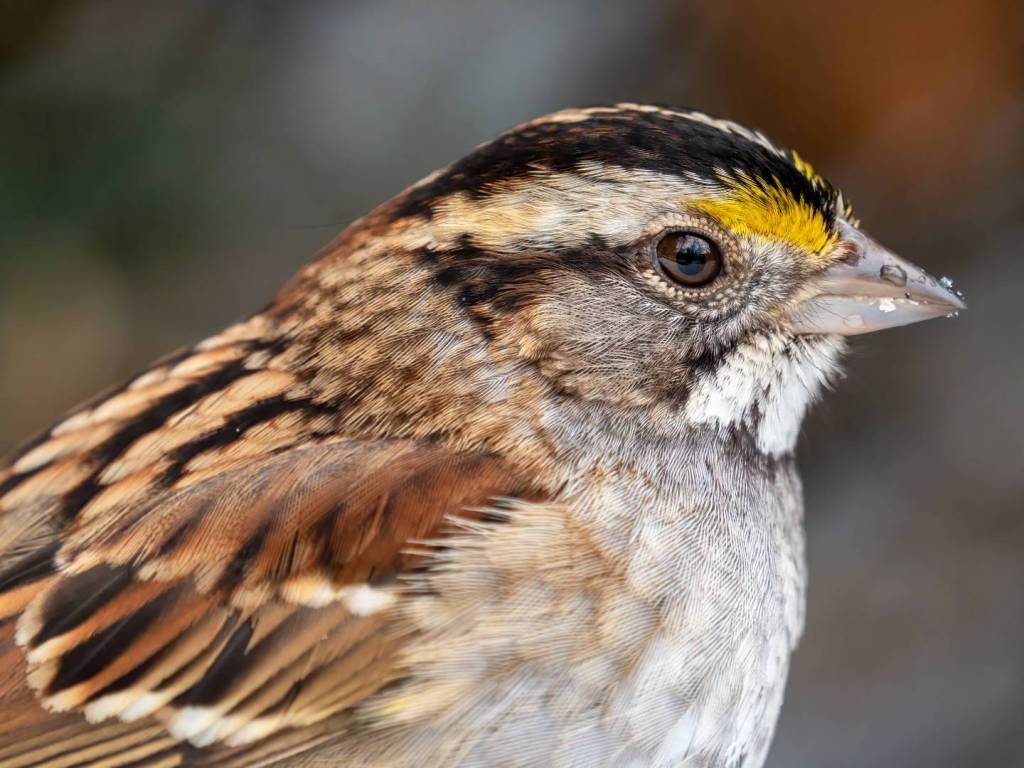
Next: Chipping Sparrow vs White-crowned Sparrow. White-crowned Sparrows are bigger and have bold black and white stripes on their heads, compared to the Chipping Sparrow’s chestnut cap and thin black eye-line. If you’re noticing a flashy crown pattern, you’re probably looking at a White-crowned.
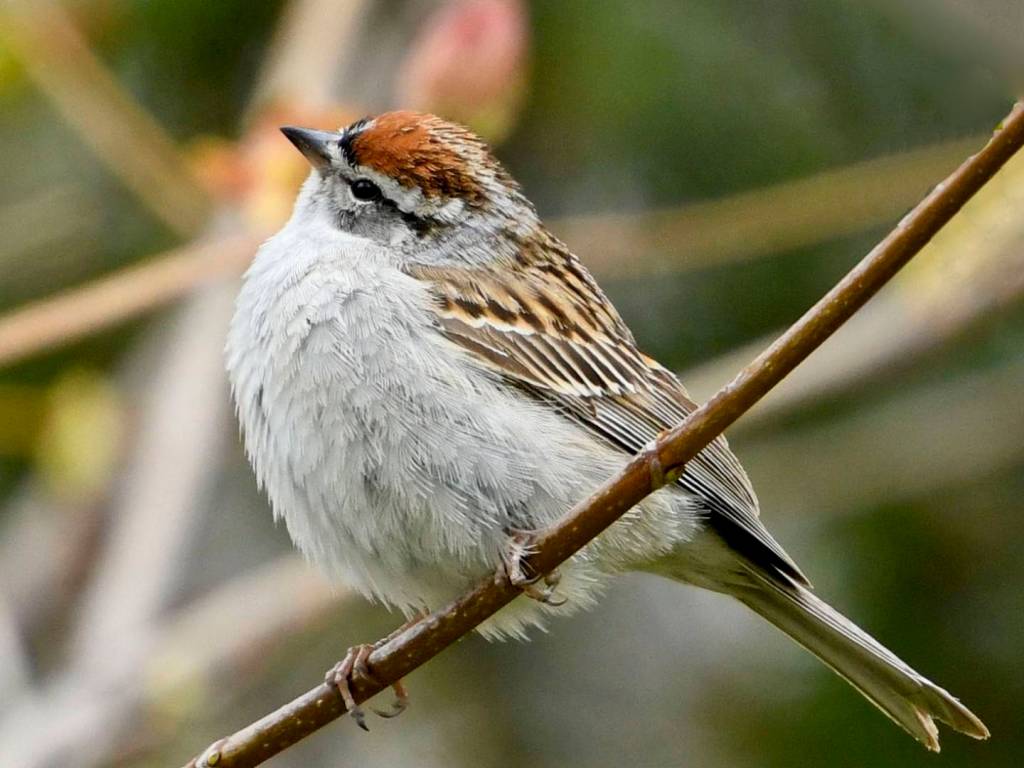

Now, Chipping Sparrow vs Carolina Wren. They’re very different! Carolina Wrens are rounder, reddish-brown, and have a long curved bill. Plus, they sing loud, bubbly songs, unlike the Chipping Sparrow’s steady trill.


Finally, Chipping Sparrow vs Clay-colored Sparrow. This one’s tough. Clay-colored Sparrows have a pale brown cap and a faint mustache stripe. They lack the deep chestnut color that makes Chipping Sparrows pop.
Learning the difference between Chipping Sparrows and House Sparrows (and others) really comes down to looking closely at the cap color, head stripes, and size. Practice makes perfect — and every comparison sharpens your birding skills!
What Do Chipping Sparrows Eat?
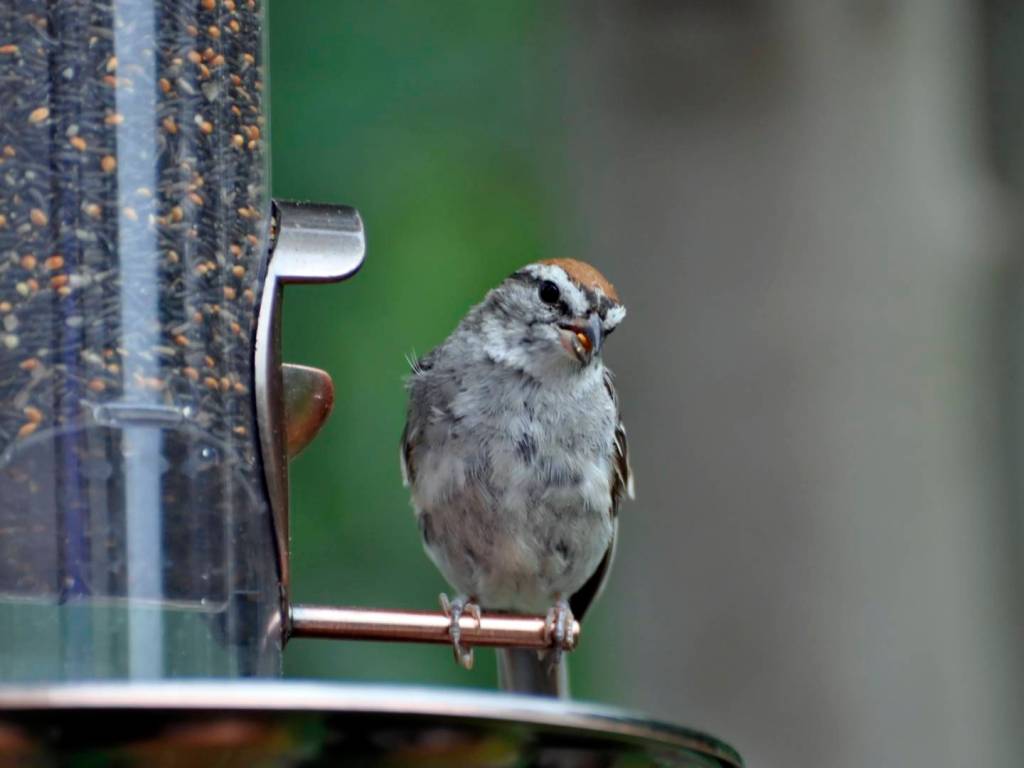
If you’ve ever spotted a Chipping Sparrow hopping through the grass, you might have wondered: what does a Chipping Sparrow eat? These little birds are quite the opportunistic feeders, and their diet shifts with the seasons to take advantage of whatever food is available.
During spring and summer, insects make up a big part of the Chipping Sparrow diet. They’ll feast on beetles, caterpillars, grasshoppers, and even spiders. High-protein foods like these are especially important during breeding season, helping adults stay strong and giving growing chicks the nutrition they need.
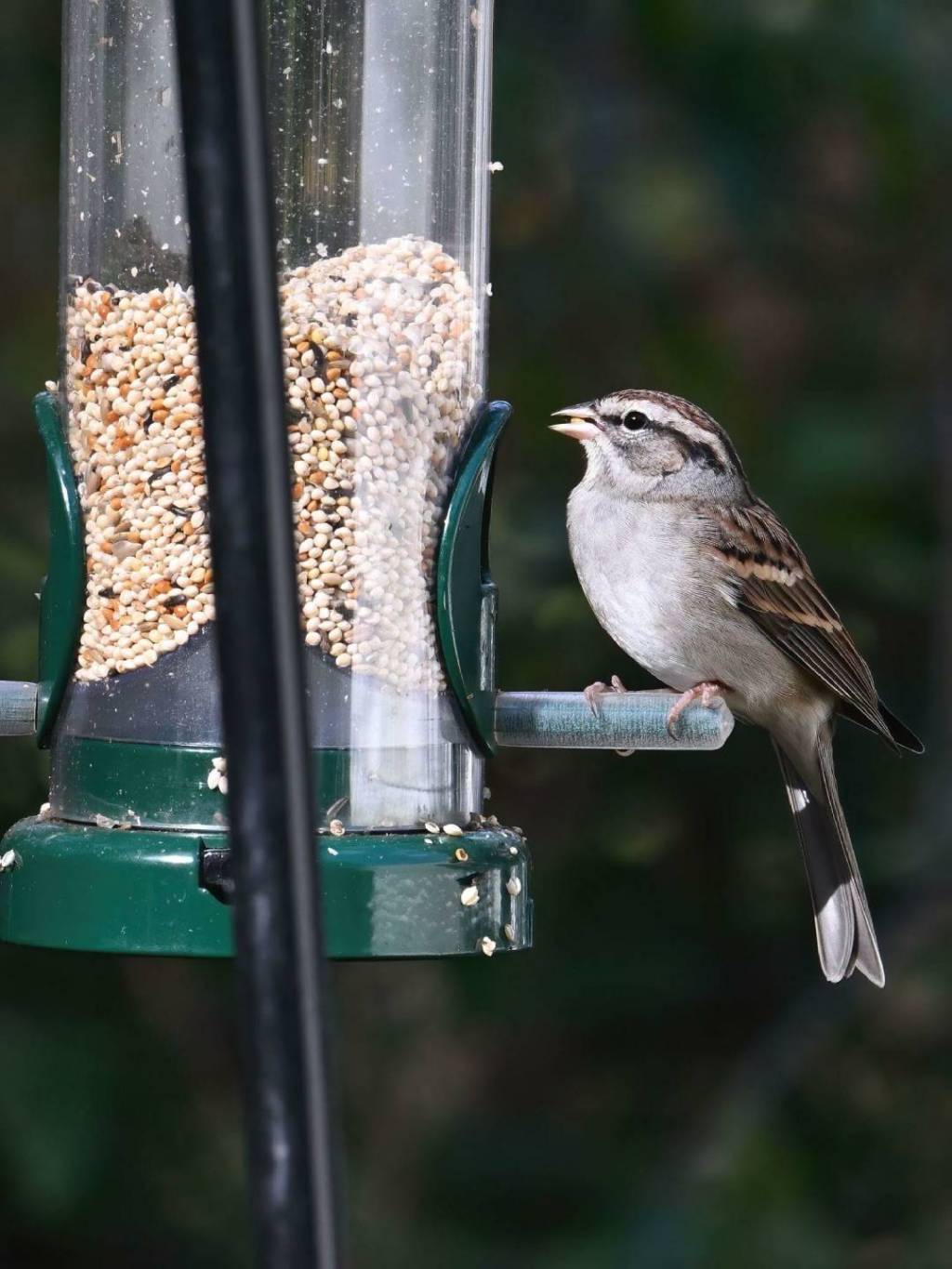
As fall rolls around, Chipping Sparrows switch gears. Seeds become their main food source. In fact, if you’re feeding Chipping Sparrows in your backyard, offering millet or other small seeds can attract them. They especially love grass seeds, which they find in open fields and along the edges of woods.
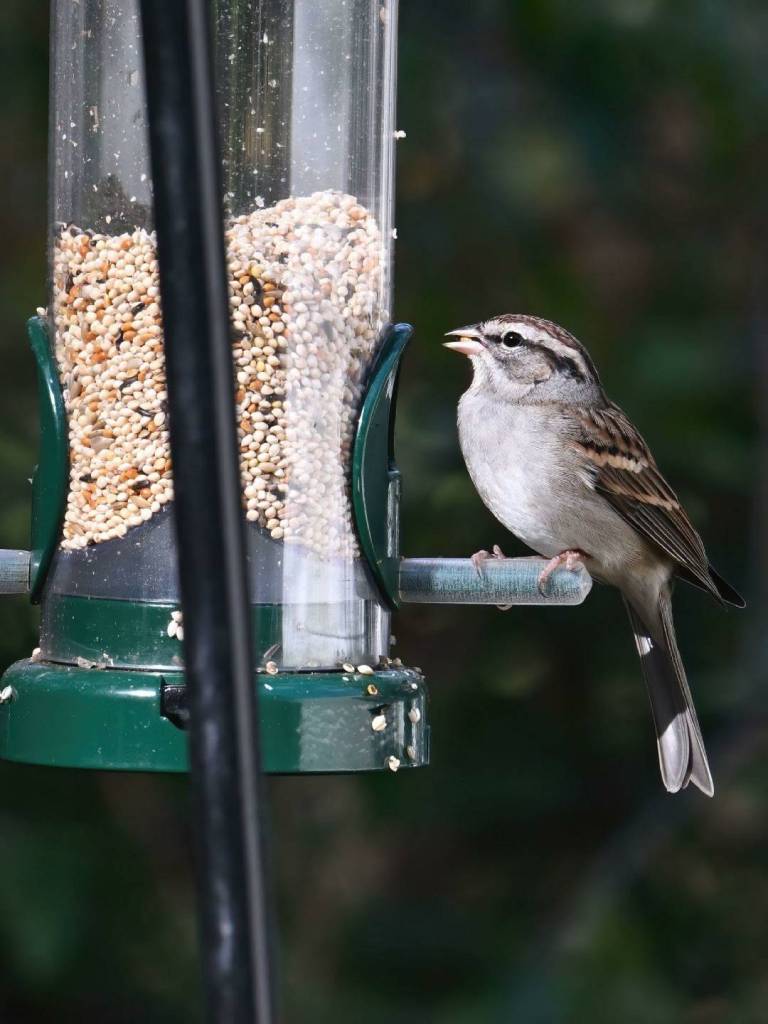
At feeders, they prefer ground-feeding platforms or simply picking up fallen seeds. They aren’t too picky and will happily eat a variety of seeds eaten by Chipping Sparrows, like sunflower chips, cracked corn, and thistle.
Providing a clean feeding area and fresh seeds can encourage these sparrows to become regular visitors. Plus, they’re polite guests — often coming and going without causing much fuss among other birds.
By knowing more about Chipping Sparrow food habits, you’ll have a better chance of spotting them and maybe even giving them a helpful hand during migration or the colder months!
What Is the Chipping Sparrow’s Range and Migration Pattern?

The Chipping Sparrow is a true traveler! When we talk about the Chipping Sparrow range, we’re looking at a bird that covers a lot of ground across North America. During the spring and summer breeding season, they spread out across Canada, the United States, and even into parts of Mexico’s higher elevations.
But as the cold weather approaches, Chipping Sparrow migration begins. Northern populations head south, traveling to the southern United States, Mexico, and even parts of Central America for the winter. If you live in the southern U.S., you might notice that Chipping Sparrow winter behavior is a little different — they often gather in small flocks and can be spotted foraging on lawns and fields.
So, where do Chipping Sparrows migrate? Northern birds usually follow a fairly straightforward path southward, although some western populations might stay year-round in milder areas. Their migration is not as long as some warblers or swallows, but it’s still an important seasonal movement that helps them survive winter’s challenges.
Chipping Sparrow seasonal movement isn’t rushed, either. They migrate steadily, often stopping along the way to rest and refuel. If you time it right, you might catch a wave of them passing through your local parks or backyard!
Watching for changes in the Chipping Sparrow range throughout the year is a fun way to stay connected to the seasons — and to these hardworking little birds who are always on the move.
What Does the Chipping Sparrow Sound Like?

When you’re out on a spring morning, one of the easiest ways to spot a Chipping Sparrow is by listening. The Chipping Sparrow call and song are very distinct once you know what to listen for!
The most common sound is a long, dry trill — almost like the buzz of an insect. This steady trill is the Chipping Sparrow song, and it’s used mainly by males to claim their territory and attract mates. It’s not a musical song like a robin’s, but once you hear it a few times, you’ll have no trouble identifying a Chipping Sparrow by sound.
Chipping Sparrow vocalization tends to vary a little depending on the individual bird. Some trills are faster, while others sound slower and more mechanical. But in general, it’s a long, steady note that can last for a few seconds without much change in pitch.
Besides singing, these sparrows also have simple call notes — sharp “chips” — that they use to stay in touch with mates, warn about predators, or signal distress. That’s actually where they get the name “Chipping Sparrow” — from those sharp chip sounds!
If you want to get better at identifying Chipping Sparrow songs, try listening early in the morning when birds are most active. Bird songs of Chipping Sparrow are often one of the first sounds you’ll hear at dawn, especially in open woods and suburban areas.
Their voices may be small, but they sure know how to make themselves heard!
Where Do Chipping Sparrows Nest?

Now let’s talk about one of the most exciting parts of a Chipping Sparrow’s life — building a nest! If you’re hoping to spot a Chipping Sparrow nest, knowing a few clues can really help.
Chipping Sparrows usually pick trees or shrubs that are low to the ground. When it comes to what trees Chipping Sparrows nest in, they aren’t super picky. You might find their nests in evergreens like pines and spruces, but they’ll also use deciduous trees and even dense bushes. Height-wise, nests are often placed between 3 and 10 feet above the ground, tucked safely away in thick branches.
As for the Chipping Sparrow nesting season, it typically begins in late spring, around May. Females take the lead in building the nest, using grass, roots, and hair — even horsehair if it’s available — to weave a small, neat cup. Sometimes the nest looks so thin you can almost see through it!
Chipping Sparrow nesting habits are pretty focused: the female lays 3–5 pale blue or greenish eggs, often speckled with brown. Speaking of Chipping Sparrow egg facts, the eggs are tiny, just under an inch long, and both parents work together to protect the nest once the eggs hatch. Chicks are vulnerable when young, so adults stay busy feeding and guarding them until they’re ready to fledge, usually about 10 days after hatching.
If you’re careful and respectful, you might be lucky enough to spot a Chipping Sparrow raising its next generation right in your own neighborhood!
Conclusion

The Chipping Sparrow might be small, but it’s full of life, energy, and fascinating behaviors. From telling a male from a female, to recognizing their trilling call, to understanding their seasonal movements, there’s always something new to discover about these little birds. Whether you’re spotting them in a forest clearing, listening for their buzzing song, or offering seeds to help them through migration, connecting with Chipping Sparrows brings a special joy to any nature walk or backyard birdwatching adventure. Their simple beauty and adaptability remind us how important even the tiniest creatures are to our ecosystems. Keep your eyes and ears open — you never know when you’ll catch sight of a Chipping Sparrow busy building a nest, singing for a mate, or simply enjoying a sunny day.


 Wing Watchers with Wagner
Leave a comment