

Introduction
Welcome, folks! Today we’re taking a closer look at one of the most charming little birds you might spot in your backyard or on a quiet woodland trail — the Tufted Titmouse. With its curious eyes and jaunty crest, this bird may be small, but it’s full of personality. As we explore, we’ll talk about how to tell a tufted titmouse male vs female, how to recognize its features and behavior, what it likes to eat, and even how it compares to its louder cousin, the Blue Jay. Whether you’re a seasoned birder or just getting started, the Tufted Titmouse has a few surprises in store. So grab your binoculars and let’s dive into the world of this delightful feathered friend.
What Are the Key Characteristics of a Tufted Titmouse?

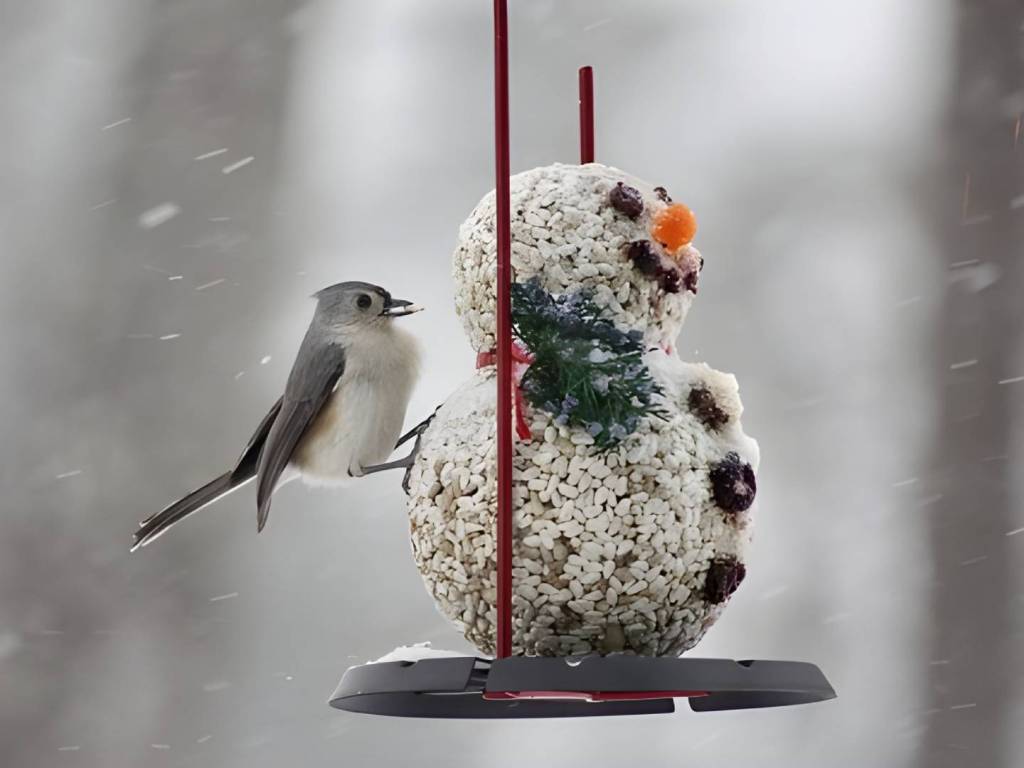
Let’s take a closer look at the tufted titmouse characteristics that make this bird such a favorite among backyard birders. First off, it’s easy to spot once you know what to look for. The Tufted Titmouse has a soft gray back, a white underside, and a peachy splash on its flanks. But the real standout feature? That little gray crest—kind of like a mohawk—that gives the bird a permanently alert expression.
In terms of size, the tufted titmouse size is modest. It’s about 6 to 6.5 inches long—just a bit bigger than a chickadee. Despite its small stature, this bird is bold. It’s known for being curious and brave, often grabbing food from feeders even with larger birds around.
One of the most interesting tufted titmouse behaviors is how it gathers food. It often takes seeds one by one and flies off to store them for later. These tiny birds actually cache food in tree bark and other hiding spots—a clever habit that helps them get through the colder months.
Here’s one of my favorite tufted titmouse fun facts: they sometimes pluck hair from live animals—including squirrels, dogs, and even humans—to use in their nests. Talk about resourceful!
With their sleek shape, expressive crests, and intelligent eyes, Tufted Titmice show us just how much personality a small bird can pack into a tiny frame. These tufted titmouse physical features make them both distinctive and delightful to observe.
How Can You Tell a Male from a Female Tufted Titmouse?
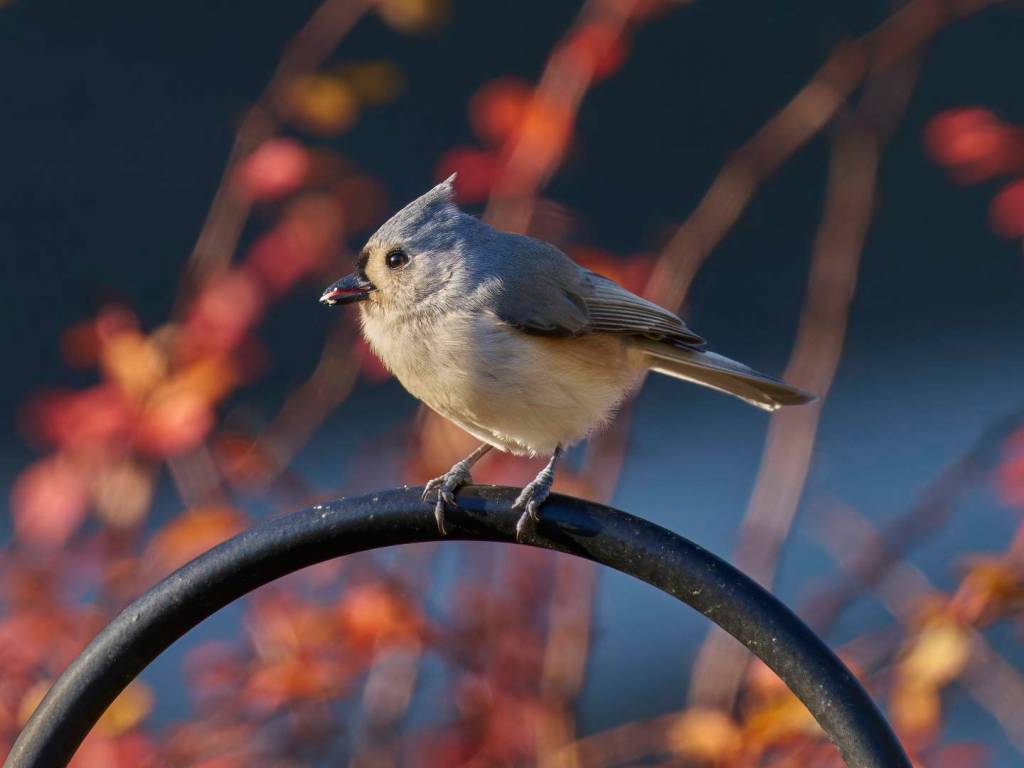
Now, you might be wondering—when you spot a Tufted Titmouse, how do you know if it’s a male or a female? The short answer? It’s tricky. Unlike birds with flashy plumage differences, the difference between male and female tufted titmouse birds is subtle—so subtle, in fact, that even experienced birdwatchers can have trouble. Both males and females share the same sleek gray feathers, white belly, and that signature tuft on top of the head.
So, how can you identify a male tufted titmouse vs female? Sometimes, behavior gives us the best clue. Males tend to be a little more vocal and territorial, especially during the breeding season. If you spot a Tufted Titmouse singing loudly from a branch or chasing others away from a feeder, there’s a good chance it’s a male. Females are often quieter and spend more time near the nest—especially when there are young to care for.
Looking at female tufted titmouse bird pictures, you’ll notice that visually, they are nearly identical to the males. A closer look at behavior, pairing patterns, and nesting activity is often the only way to tell them apart in the wild. So if you’re asking how to identify male tufted titmouse birds—start by watching what they do, not just how they look.
Nature keeps some secrets close, and the tufted titmouse female vs male puzzle is one of them. It just adds a little mystery to your next birdwatching adventure.
What Do Tufted Titmice Eat?

If you’ve ever asked yourself, “What do tufted titmice eat?” you’re not alone. These little birds may look delicate, but they’ve got hearty appetites and versatile diets. The tufted titmouse diet is a balanced mix of seeds, insects, nuts, and fruit. They’re especially fond of sunflower seeds, suet, and peanuts—favorites that will have them flocking to your feeders.
In the warmer months, they rely more heavily on protein-rich insects. Caterpillars, beetles, spiders, and ants are all on the menu. These protein-packed meals are especially important when they’re feeding young in the nest. You might spot them hopping through trees or clinging upside down to branches as they hunt—almost like little acrobats of the forest canopy.
During fall and winter, they shift toward seeds and berries. That’s when you’ll see them making more frequent stops at backyard feeders. If you’re interested in feeding tufted titmice, try offering black oil sunflower seeds, safflower seeds, or suet cakes. A tray or hopper feeder works best since these birds like a solid perch while they eat.
A fun fact about what the tufted titmouse eats—they’re known to be food storers. They’ll grab a seed, fly to a safe spot, and tuck it away for later. They’re planners, not just snackers.
So, if you want to attract this bold little songbird to your yard, offering the right backyard food for tufted titmouse can turn your space into a favorite stop on their daily rounds.
How Does the Tufted Titmouse Compare to a Blue Jay?

Now here’s a fun matchup: the tufted titmouse vs blue jay. At first glance, these two birds may seem worlds apart—one is small and subtle, the other loud and flashy—but both are part of the same bird family, the corvid-tit alliance, and they share more than you might think.
Let’s start with size. The Blue Jay is significantly bigger, measuring around 10 to 12 inches long, while the Tufted Titmouse comes in at about 6 to 6.5 inches. So in a head-to-head tufted titmouse comparison, the Blue Jay looks downright giant. And you’ll definitely hear the jay first—it’s bold, vocal, and not shy about making its presence known.
But don’t count out the Tufted Titmouse. While it’s quieter, it’s not timid. In fact, they’re known for holding their ground at feeders and darting in quickly between larger birds. When comparing blue jay vs tufted titmouse behavior, titmice are faster and more agile, while jays are stronger and more dominant.
In terms of coloring, Blue Jays are vivid with their electric blues and crisp black and white markings. Tufted Titmice are softer in appearance—muted grays, whites, and that warm peachy patch on the side. The differences between titmouse and blue jay are stark, but both species bring energy and intelligence to the backyard bird scene.
So if you’re comparing the tufted titmouse vs other birds, especially the Blue Jay, you’ll notice that both are clever, adaptable, and endlessly interesting to watch.
Where Can You Find Tufted Titmice?

If you’re hoping to spot a Tufted Titmouse in the wild, good news—they’re not particularly shy, and their range covers a big chunk of the eastern United States. In fact, the tufted titmouse range extends from the Midwest through the Southeast and up into New England. You’ll find them in deciduous forests, wooded suburbs, and even well-treed city parks. If you’ve got mature trees and a quiet backyard, there’s a good chance you’re already within tufted titmouse territory.
One of the more common questions is: do tufted titmice migrate? The answer is—nope! They’re year-round residents. Unlike some songbirds that head south for the winter, Tufted Titmice stick around, relying on food caches and backyard feeders to get through the colder months. This makes them a familiar sight for many birdwatchers, even during snowy seasons.
If you pull up a tufted titmouse range map, you’ll see that their distribution has actually expanded northward over the past century, thanks in part to warmer winters and more people offering feeders. They’ve adapted well to suburban life.
As for nesting, they prefer tree cavities, often using old woodpecker holes or nest boxes. A pair will claim a territory and stick close to it all year long. So if you see a Tufted Titmouse in your yard, there’s a good chance it’s part of a local family group.
In short, if you’re wondering where tufted titmice live, the answer is: probably not far from you—especially if trees and birdseed are involved.
What Does the Tufted Titmouse Sound Like?

You might hear a Tufted Titmouse before you ever see one. Their voice is clear, strong, and surprisingly loud for such a small bird. One of the most recognized tufted titmouse sounds is a whistled “peter-peter-peter,” repeated in a steady rhythm. Once you’ve heard it a few times, it’s hard to forget. It cuts through the forest like a flute, letting you know a titmouse is nearby.
The tufted titmouse call isn’t limited to just that famous phrase. These birds have a wide variety of chips, twitters, and alarm calls that they use to communicate with mates or warn others of predators. Their vocal range is impressive for their size, and their calls can even mimic elements of other birds’ sounds. In some areas, the tone of the call may vary slightly, but the message is always loud and clear.
When it comes to tufted titmouse vocalizations, males are the primary singers, especially during spring and early summer. That’s their way of defending territory and attracting a mate. Females may call, but they’re usually more reserved.
So, what’s the bird call of the tufted titmouse like in action? Imagine walking through a wooded trail in early morning. The sun’s just coming up, and you hear that bright, echoing call—”peter-peter-peter!” That’s your cue to look up. You’re close.
Listening to tufted titmouse song is not just enjoyable—it’s one of the easiest ways to find them. Train your ears, and this vocal little bird will lead you right to it.
Conclusion

The Tufted Titmouse may be small, but it’s full of character, charm, and clever habits. Whether you’re watching it dart around a backyard feeder or listening for its clear, whistled call in the woods, this little bird always makes an impression. We’ve explored how to tell the tufted titmouse male vs female, what makes them unique, what they eat, and how they compare to other birds like the Blue Jay. You’ve also learned where they live and how to recognize their voice. Now that you know a bit more about this feathered favorite, keep an eye—and an ear—out on your next outdoor adventure. The Tufted Titmouse just might be closer than you think.


 Wing Watchers with Wagner
Leave a comment