

Introduction
Welcome to the fascinating world of the Downy Woodpecker, a small yet captivating bird found across North America. Often seen flitting through wooded areas or pecking at backyard feeders, this tiny woodpecker is a delight for birdwatchers of all ages. Its energetic behavior, sharp calls, and unique drumming sounds make it easy to recognize.
The Downy Woodpecker is the smallest woodpecker species in North America, but don’t let its size fool you—this bird is packed with personality! Whether you’re strolling through a forest or sipping coffee by your bird feeder, spotting a Downy Woodpecker is always a treat.
In this article, we’ll explore everything from their striking appearance and nesting habits to their favorite foods and fun facts. Let’s get started!
Appearance
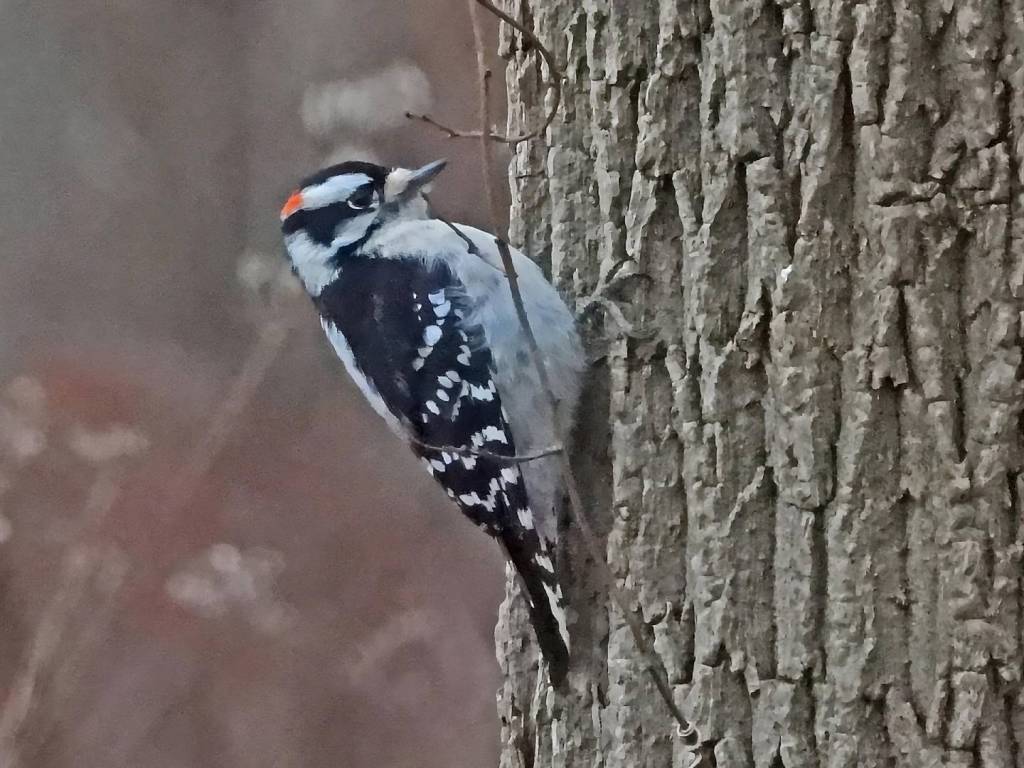
The Downy Woodpecker is a small, charismatic bird with distinct features that make it easy to spot. Measuring only about 5.5 to 7 inches in length, this little woodpecker is roughly the size of a sparrow. Its wingspan ranges from 9 to 10.5 inches, and it typically weighs less than an ounce, making it a lightweight member of the bird world.
One of the most striking characteristics of the Downy Woodpecker is its black-and-white plumage. The bird’s back is marked with a bold white stripe that contrasts sharply with its black wings, which are patterned with white spots. Its underparts are white, giving it a clean and crisp appearance.
Male Downy Woodpeckers are easy to distinguish from females thanks to a bright red patch on the back of their heads. Females, on the other hand, lack this red marking but share the same striking black-and-white pattern.
Another key feature of the Downy Woodpecker is its short, stubby bill. Unlike its larger cousin, the Hairy Woodpecker, the Downy’s bill is proportionally smaller, which is one of the best ways to differentiate the two species.
These birds have short tails that are supported by stiff, pointed feathers, which help them cling to tree trunks as they forage for food. Their compact size and bold markings make them a favorite among birdwatchers and nature enthusiasts alike.
Nesting Habits

The Downy Woodpecker is a skilled carpenter, creating its nesting cavity with precision and care. During the spring breeding season, males and females work together to excavate a nest in the trunk or branch of a dead or dying tree, also known as a snag. These cavities are typically 6 to 12 inches deep and are lined with soft wood chips left behind during excavation, making a cozy and protective space for their eggs.
The nesting site is usually located 5 to 50 feet above the ground, depending on the availability of suitable trees. The Downy Woodpecker is not picky about its habitat and can be found nesting in forests, orchards, parks, and even suburban areas. As long as there are trees and food sources, these adaptable birds will thrive.
Once the cavity is ready, the female lays 3 to 8 white eggs, which both parents take turns incubating for about 12 days. After the chicks hatch, they remain in the nest for approximately 20 to 25 days, relying on their parents for food and protection.
Interestingly, Downy Woodpeckers reuse their nesting cavities for roosting in the winter, though they often carve out new ones for the next breeding season. Their nesting habits not only support their survival but also benefit other cavity-dwelling species, as abandoned nests often become homes for other birds, such as chickadees and nuthatches.
Favorite Foods
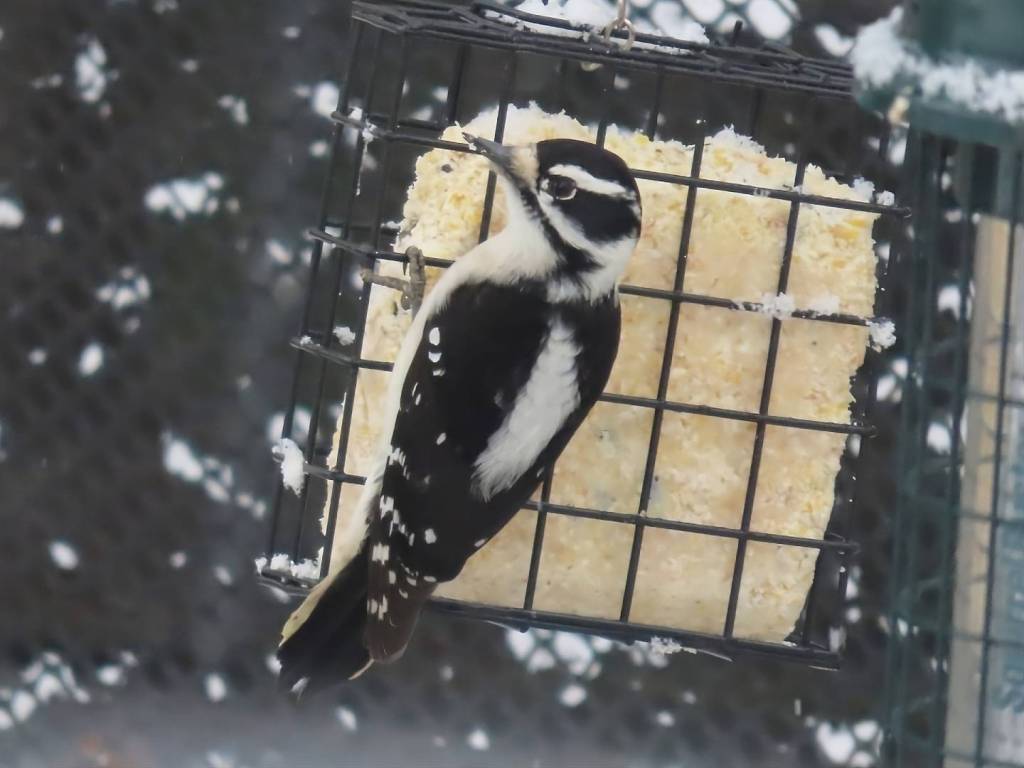
The Downy Woodpecker is a versatile eater with a diet that changes with the seasons. As an insectivore, it primarily feeds on insects and their larvae, making it an essential ally in controlling pest populations. Beetles, ants, caterpillars, and spiders are some of its favorite meals, which it skillfully extracts from tree bark using its sharp bill and long, barbed tongue.
During the colder months, when insects are scarce, the Downy Woodpecker shifts its diet to include seeds, berries, and even tree sap. It’s not uncommon to see these birds visiting backyard feeders for suet, sunflower seeds, peanuts, or millet. Their ability to adapt their diet to the season ensures they stay well-fed throughout the year.
Another fascinating aspect of the Downy Woodpecker’s feeding habits is its knack for using tools. These birds often wedge nuts into crevices or bark and hammer them open with their beaks, demonstrating remarkable problem-solving skills.
Downy Woodpeckers are also known to visit sapsucker wells—holes drilled by sapsuckers into trees—to drink the sap and snack on the insects attracted to it. This resourceful behavior highlights their ability to make the most of available food sources.
Their omnivorous diet and foraging ingenuity not only sustain them in various environments but also make them an important part of the ecosystem, helping control insect populations and spreading seeds that contribute to forest regeneration.
Fun Facts
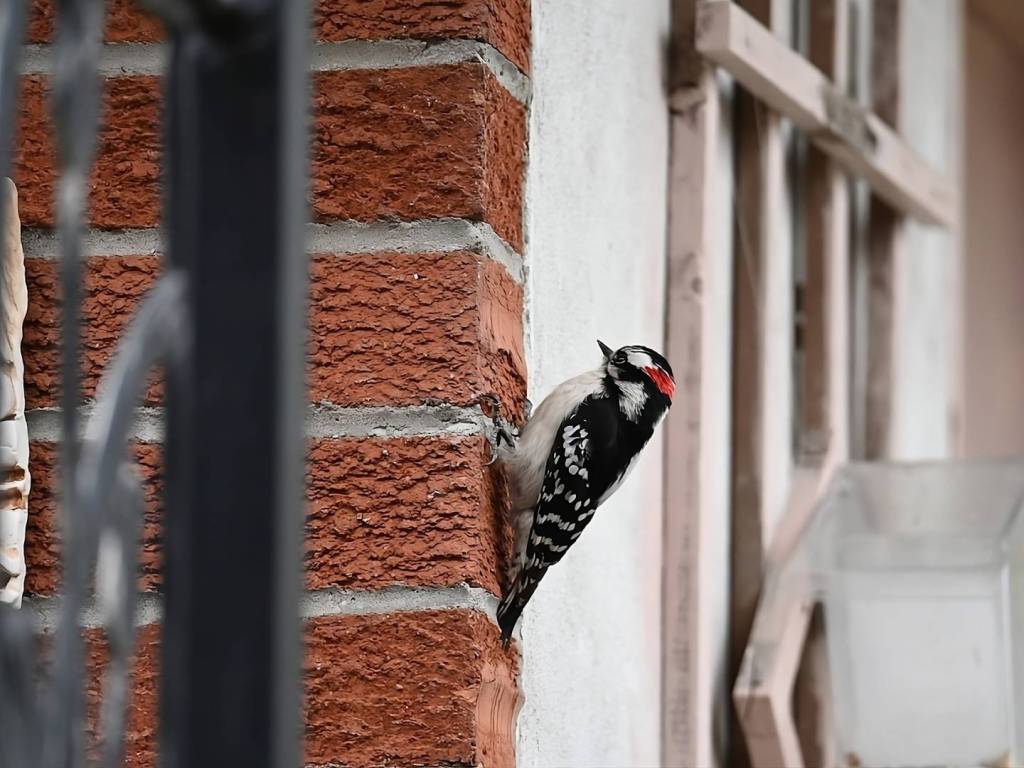
The Downy Woodpecker may be small, but it’s full of surprising traits and behaviors that make it a standout in the bird world. Here are some fun facts about this lively little bird:
- Drumming as Communication: Instead of singing like other birds, the Downy Woodpecker communicates by drumming on wood. The rapid, rhythmic sound serves as a way to mark territory and attract a mate. Each individual has a unique drumming pattern!
- Built to Peck: A Downy Woodpecker can peck up to 16 times per second. To protect its brain, the bird has a special spongy tissue in its skull that absorbs the impact.
- Mimicry Master: The Downy Woodpecker can sometimes be mistaken for its larger cousin, the Hairy Woodpecker. While they look similar, the Downy is smaller with a shorter bill, and its calls are softer and more high-pitched.
- Climbing Pro: Thanks to its zygodactyl feet—two toes facing forward and two facing backward—the Downy Woodpecker is an expert climber. It can effortlessly navigate vertical tree trunks and even hang upside-down while foraging.
- Backyard Buddies: These woodpeckers are frequent visitors to bird feeders, especially when stocked with suet and sunflower seeds. Their boldness often allows for close observation.
- Year-Round Residents: Unlike many birds, Downy Woodpeckers don’t migrate. They can be spotted in the same areas throughout the year, making them a consistent presence for birdwatchers.
These fascinating traits make the Downy Woodpecker a joy to observe and appreciate!
Conservation Efforts

The Downy Woodpecker is currently thriving across its wide range, but conservation efforts play a key role in ensuring its continued success. With habitats ranging from forests and orchards to urban parks and backyards, these adaptable birds have benefited from human efforts to preserve green spaces and provide supplemental food sources.
One significant conservation challenge for Downy Woodpeckers is habitat loss due to deforestation and urban development. Dead trees and snags, which are critical for nesting and roosting, are often removed for safety or aesthetic reasons. Conservationists emphasize the importance of leaving these natural structures intact whenever possible to support cavity-nesting birds like the Downy Woodpecker.
Another concern is the use of pesticides, which can reduce the availability of insects—an important part of the woodpecker’s diet. Promoting organic gardening and reducing pesticide use can help maintain healthy insect populations for birds to forage.
The Downy Woodpecker has also benefited from citizen science programs like the Christmas Bird Count and Project FeederWatch. These initiatives not only help researchers monitor population trends but also raise awareness about the importance of bird conservation.
Overall, the Downy Woodpecker’s stable population is a testament to its adaptability and the efforts of bird enthusiasts and conservationists alike. However, continued education and habitat protection will ensure this delightful bird remains a common sight in our forests, parks, and backyards for generations to come.
How to Attract to Your Backyard

Since the Downy Woodpecker is a frequent visitor to bird feeders and nesting boxes, it’s a perfect candidate for attracting to your backyard. Let’s explore how you can create a welcoming space for this charming bird.
Start by providing the right food. Downy Woodpeckers love suet, sunflower seeds, peanuts, and millet. A suet feeder is especially effective, as the bird’s natural foraging behavior involves clinging to vertical surfaces. Opt for this high-quality hopper feeder, which is perfect for holding sunflower seeds and allows for easy access.
Planting native trees and shrubs is another excellent way to draw in Downy Woodpeckers. They favor trees with soft bark, like willows and birches, which harbor plenty of insects. Adding berry-producing plants like dogwood or serviceberry can also supplement their diet, especially in winter.
Providing nesting opportunities is just as important. Installing a birdhouse designed for woodpeckers, with a 1¼-inch entrance hole, can encourage them to set up a home in your yard. Make sure to place the birdhouse on a sturdy tree or pole about 6 to 20 feet off the ground. Leaving dead trees or snags intact will also increase your chances of attracting these birds.
Lastly, limit pesticide use in your yard to ensure a healthy insect population for the woodpeckers to feed on. With a little effort, your backyard can become a haven for Downy Woodpeckers and other wildlife.
Conclusion

The Downy Woodpecker is a true treasure of North American backyards and forests. With its striking black-and-white plumage, resourceful feeding habits, and lively drumming, it’s no wonder this tiny woodpecker has captured the hearts of bird enthusiasts everywhere.
By learning about their appearance, nesting habits, and favorite foods, you can better appreciate their role in our ecosystems. Conservation efforts, both big and small, ensure that these birds continue to thrive. And with a little planning, you can even attract them to your backyard to enjoy up-close encounters. Next time you spot a Downy Woodpecker, take a moment to admire its hard work and adaptability. These birds remind us of the resilience of nature and the joy it brings to our lives.


 Wing Watchers with Wagner
Leave a comment