

Introduction
The Evening Grosbeak is a striking bird that commands attention with its bold colors and dynamic personality. Found across North America, these chunky finches bring a burst of vibrancy to forests and backyards alike. While their name suggests a preference for the evening, these birds are active throughout the day, delighting birdwatchers with their loud, cheerful calls and flocks that often visit feeders in winter.
As part of the finch family, Evening Grosbeaks are most commonly seen in coniferous forests, but they have a reputation for surprising appearances in urban settings, especially during irruptive years. In this article, we’ll explore their appearance, nesting habits, favorite foods, fun facts, conservation efforts, and how to attract these charming birds to your yard.
Appearance

The Evening Grosbeak is a truly eye-catching bird, thanks to its vibrant plumage and robust build. Males are the more colorful of the sexes, with bright yellow bodies that seem to glow in sunlight. Their black wings, accented by white patches, provide a dramatic contrast, while their yellow foreheads and dark heads give them a regal appearance. Their thick, conical beaks are pale green in the breeding season, making them stand out even more.
Females, while less vivid, are equally striking in their way. They have a subtle beauty, with grayish-brown bodies and soft yellow highlights on their sides and necks. Like the males, their wings feature the characteristic white patches, though their coloration overall is more muted. This difference in plumage helps birdwatchers identify the sexes at a glance.
Juveniles resemble females but have even duller plumage, often appearing as a mix of browns and grays. This camouflaged look helps them stay hidden from predators as they grow and gain their vibrant adult colors.
Evening Grosbeaks are relatively large finches, measuring around 6.3 to 7.1 inches in length, with a wingspan of 11 to 14 inches. Their stocky bodies and heavy beaks make them well-suited for cracking tough seeds and foraging efficiently. When in flight, their broad wings and undulating flight patterns are unmistakable.
With their bold colors and strong presence, it’s no wonder these birds are such a favorite among birdwatchers and backyard enthusiasts alike.
Nesting Habits

Evening Grosbeaks are relatively secretive when it comes to their nesting habits, often choosing locations that are tucked away from prying eyes. These birds prefer to build their nests high in the branches of coniferous or deciduous trees, favoring secluded areas in forests. They’re most commonly found in mixed woodlands where spruce, fir, and pine trees dominate, but they will also nest in aspen and oak trees, depending on the region.
The female takes the lead in constructing the nest, creating a loosely woven structure made of twigs, grass, and rootlets. She lines the inside with softer materials like moss, feathers, or fine grasses to provide a comfortable and warm environment for the eggs. The nests may appear flimsy at first glance, but they are sturdy enough to withstand typical weather conditions during the breeding season.
A typical clutch consists of 3 to 5 eggs, which are pale blue or greenish with speckles of brown or black. The female incubates the eggs for about 12 to 14 days, rarely leaving the nest during this time. Once the chicks hatch, they are completely dependent on their parents, as they are born blind and without feathers. Both parents take turns feeding the young a mixture of seeds and insects, ensuring they receive the nutrients needed for rapid growth.
After about two weeks, the fledglings leave the nest but remain close by as they continue to learn essential survival skills from their parents.
Favorite Foods

Evening Grosbeaks are true seed specialists, and their diet reflects their ability to crack open even the toughest seeds with ease. Their strong, conical beaks are perfectly adapted for this task, making them especially fond of seeds from trees like maples, elms, and pines. In fact, during the winter months, pine seeds make up a significant portion of their diet, as these trees provide a reliable food source when other options are scarce.
Aside from tree seeds, Evening Grosbeaks enjoy a variety of berries and fruits. They’ve been known to feast on cherries, crabapples, and even the occasional sunflower seed from a bird feeder. During the warmer months, they supplement their diet with insects, which provide much-needed protein, particularly during the breeding season when they are feeding their young.
These birds are also attracted to salt, an unusual dietary preference for finches. In the wild, they often visit roadsides to pick up small bits of salt and grit, which help them digest their food more effectively. This behavior can sometimes put them at risk near busy highways.
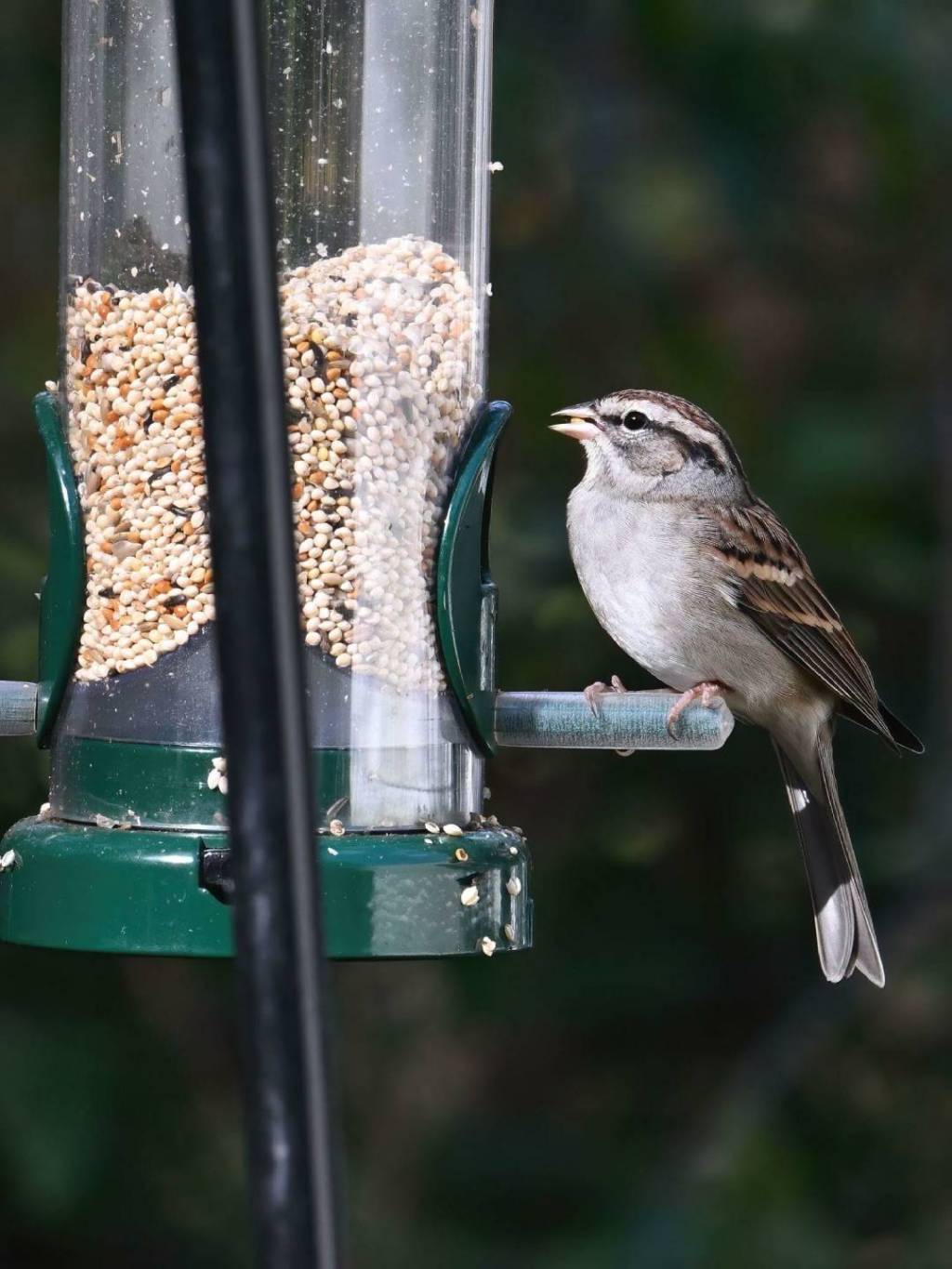
Evening Grosbeaks are opportunistic feeders and are known to take advantage of backyard bird feeders, especially those filled with sunflower seeds. Their large flocks can quickly empty a feeder, but their lively presence is worth the extra food. Attract them to your backyard with this specially designed birdfeeder.
Their diverse diet and adaptability make them fascinating to observe, whether in the wild or in your backyard.
Fun Facts

Evening Grosbeaks are full of surprises, and their unique traits make them a favorite among bird enthusiasts. Here are some fun facts about these fascinating birds:
- Misleading Name: Despite their name, Evening Grosbeaks aren’t more active in the evening than at any other time of day. Early naturalists thought their cheerful calls were most commonly heard at dusk, hence the name. In reality, they’re busy and vocal throughout the day.
- Irruptive Behavior: Evening Grosbeaks are known for their “irruptions,” where large flocks suddenly appear in areas outside their usual range. These unpredictable movements often happen in winter when food supplies in their typical habitats are scarce. During these events, they can show up in backyard feeders far from their usual forest homes, delighting birdwatchers.
- Social Flockers: These birds are highly social, often forming flocks of dozens to even hundreds of individuals. Their collective behavior is a spectacle, whether they’re foraging, flying, or simply perching together.
- Adaptable Diet: Their beaks are so powerful that they can crack seeds that are too tough for many other birds, such as cherry pits and maple seeds.
- Remarkable Calls: Their distinctive calls, which sound like a series of sharp whistles or chirps, are not just for communication. These sounds help keep large flocks together, especially during flights over long distances.
With their charming habits and striking looks, Evening Grosbeaks never fail to leave an impression.
Conservation Efforts
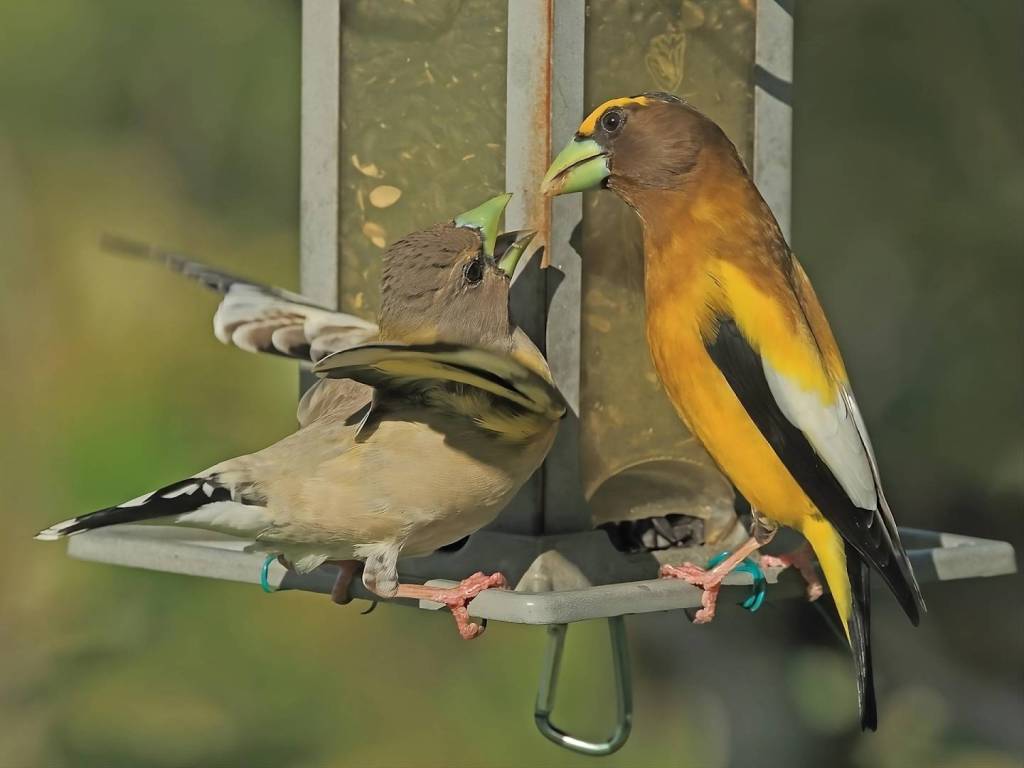
Evening Grosbeaks, while still a delight for many bird enthusiasts, face significant conservation challenges. Over the past few decades, their population has experienced a sharp decline, with some regions reporting reductions of more than 50%. This decline has led to their inclusion on several conservation watchlists, highlighting the need for action to protect their habitats and food sources.
One of the major threats to Evening Grosbeaks is habitat loss due to logging and urban development. As forests are cleared, the availability of nesting sites and essential food sources, such as conifer seeds, diminishes. Climate change also poses a growing concern, as it can disrupt the timing of seed production and insect availability, which are crucial for their survival and breeding success.
Another significant threat is pesticide use, particularly in areas where Evening Grosbeaks feed on insects. These chemicals not only reduce insect populations but can also directly harm birds through ingestion or contact.
Conservation groups are working hard to reverse these trends by protecting forested habitats, advocating for responsible pesticide use, and raising public awareness about the species’ plight. Citizen science projects, such as participation in bird counts and reporting sightings, also help researchers track population trends and migration patterns.
By taking steps to protect the ecosystems they rely on, we can ensure that Evening Grosbeaks continue to grace our forests and feeders for generations to come.
How to Attract to Your Backyard

Evening Grosbeaks are regular visitors to bird feeders, especially during the colder months, making this section the perfect choice. Their love of seeds, particularly sunflower seeds, makes it easy to draw them in if you provide the right setup.
To attract these vibrant birds, start with a sturdy platform feeder or hopper feeder. These birds often arrive in flocks, so a larger feeder will help accommodate their numbers. Fill it with black oil sunflower seeds, which are a favorite treat for Evening Grosbeaks. You can also offer hulled sunflower seeds or safflower seeds for variety.
Providing a water source can also enhance your chances of attracting them. A birdbath with fresh, unfrozen water in the winter can be particularly enticing. Grosbeaks appreciate a reliable place to drink and bathe, especially in colder climates where natural water sources may freeze.
Planting trees and shrubs like maples, pines, or cherries around your yard can provide a natural food source and shelter. These trees not only offer seeds but also make your yard more inviting as a rest stop during their journeys.
Patience is key, especially if you live outside their usual range. During irruptive years, you may suddenly find yourself hosting a lively flock of these stunning birds, and the effort will be well worth it. Keep your feeders full, and you might get lucky!
Conclusion

The Evening Grosbeak is a bird that captures the hearts of birdwatchers with its vivid colors, lively personality, and unique behaviors. From their powerful beaks to their irruptive movements, these finches have an array of traits that make them fascinating to observe. By understanding their habits, diet, and conservation needs, we can better appreciate their role in the ecosystem and take steps to protect them.
Whether you’re lucky enough to see them at your backyard feeder or encounter them during a forest walk, Evening Grosbeaks are a reminder of nature’s beauty and diversity. With some effort and care, we can ensure these charming birds continue to grace our lives for years to come.


 Wing Watchers with Wagner
Leave a comment