
Introduction
Hello everyone! Today, we’re going to delve into the fascinating world of one of the most agile and colorful aerial insectivores, the Violet Green Swallow. These birds are a joy to watch as they swoop and glide effortlessly through the air, showcasing their remarkable flying skills. With their vibrant plumage and graceful flight patterns, Violet Green Swallows are a favorite among bird enthusiasts and nature lovers. In this talk, we’ll explore their appearance, nesting habits, favorite foods, some intriguing fun facts, conservation efforts, and tips on how to observe them. So, let’s embark on this journey and uncover the beauty and wonder of the Violet Green Swallow!
Appearance
Vibrant Plumage
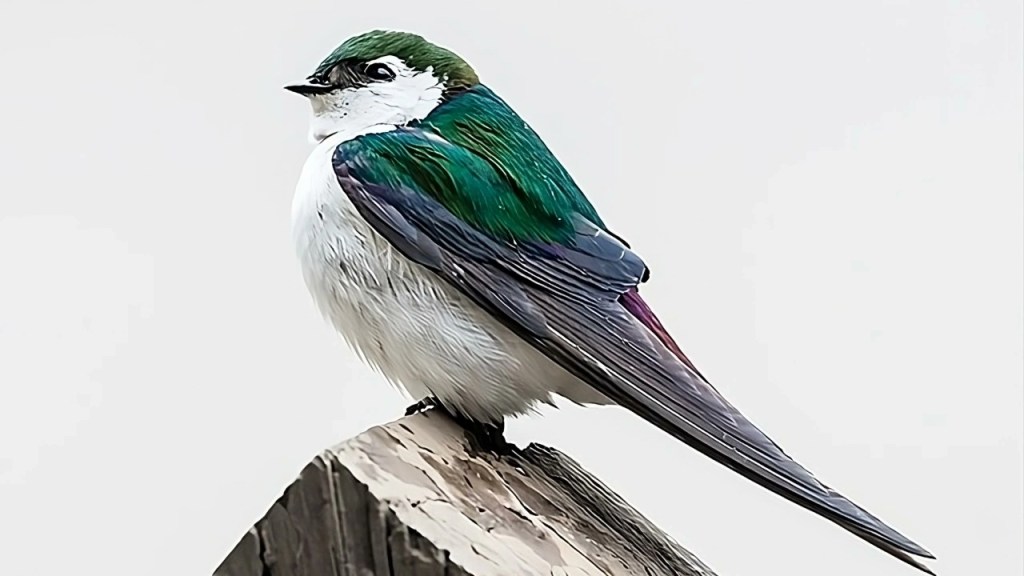
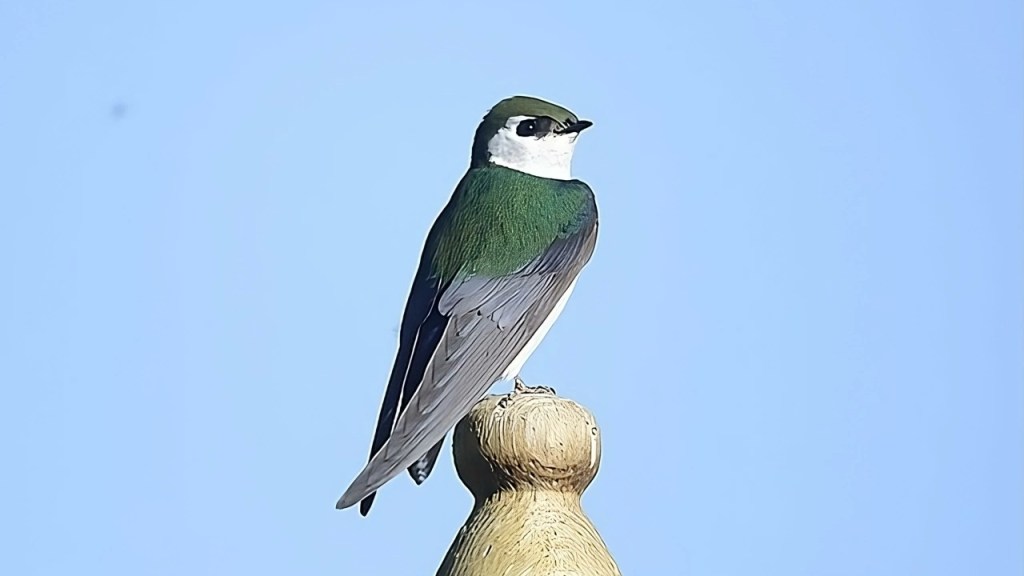
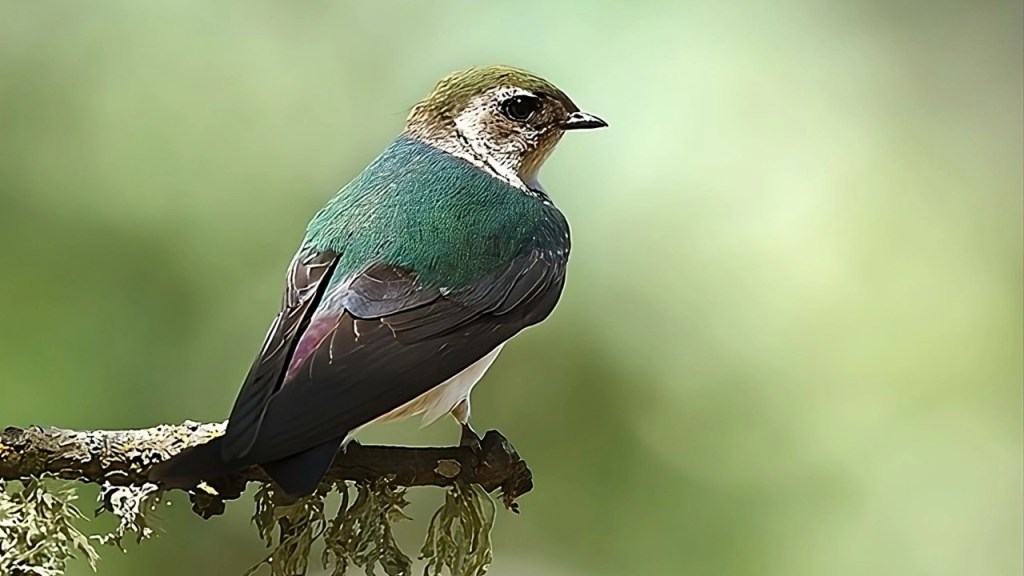
The Violet Green Swallow is aptly named for its stunning iridescent plumage. The upper parts of the male are a striking mix of deep green and violet, which shimmer beautifully in the sunlight. The head and back are primarily green, while the rump and tail exhibit shades of violet and purple. This iridescence is particularly noticeable when the bird is in flight or perched in the sun.
Distinctive Features
Both male and female Violet Green Swallows share several distinctive features. They have short, forked tails and long, pointed wings, which are perfectly adapted for their agile flying style. One of the most recognizable features is their white underparts, which contrast sharply with their colorful upperparts. Additionally, they have a white patch on the sides of their rump, which is more pronounced in males.
Gender Differences
While males are more vibrant, female Violet Green Swallows are also beautiful in their own right. Females tend to have a slightly duller green on their upperparts and may lack the vivid violet tones seen in males. However, they still display a lovely mix of green and purple, along with the characteristic white underparts and rump patches.
Juvenile Appearance
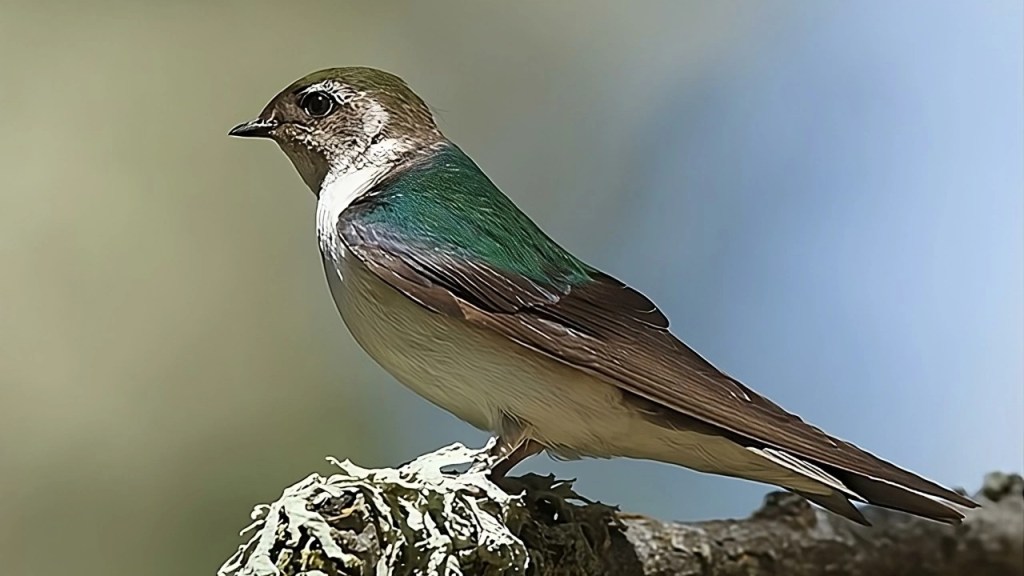
Juvenile Violet Green Swallows are less colorful than adults, with more muted tones. Their upperparts are generally brownish-gray, lacking the iridescence of the adults. However, they retain the white underparts and rump patches, making them easy to identify. As they mature, their plumage gradually takes on the vibrant colors of the adults.
Seasonal Changes
Unlike some birds, Violet Green Swallows do not undergo dramatic seasonal changes in their plumage. They maintain their beautiful colors year-round, although their appearance may be slightly duller during the molting period. This consistency in plumage makes them relatively easy to identify throughout the year.
Nesting Habits
Preferred Nesting Sites
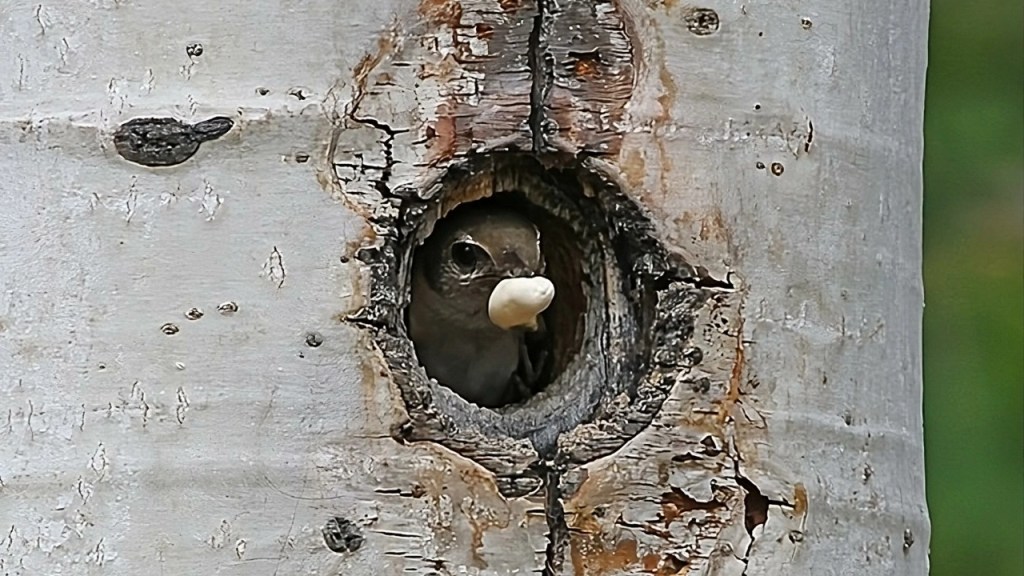
Violet Green Swallows prefer to nest in natural cavities, often found in tree trunks or cliff crevices. They are also known to use abandoned woodpecker holes and man-made structures such as nest boxes or even buildings. Their choice of nesting site is typically located near open areas, such as fields or water bodies, where they can easily hunt for insects.
Nest Construction
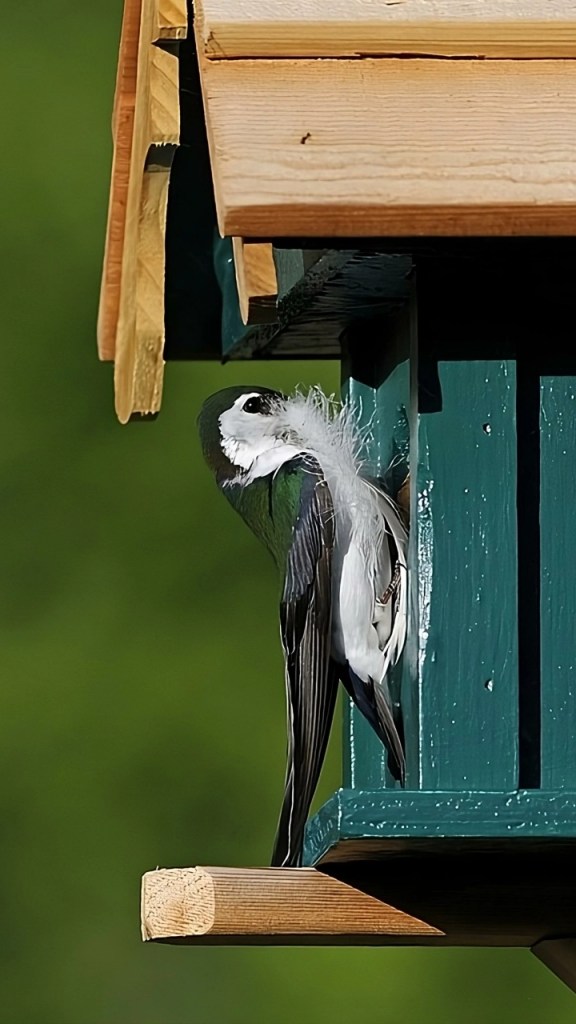
The process of nest building is a collaborative effort between both the male and female. They gather a variety of materials, including grass, twigs, and feathers, to construct a cup-shaped nest within the cavity. Feathers are especially favored as they provide a soft lining for the eggs and insulation for the developing chicks. The pair works diligently to ensure the nest is secure and comfortable.
Egg Laying and Incubation
Once the nest is complete, the female lays a clutch of 4 to 6 white eggs. She then takes on the primary responsibility of incubation, which lasts about 14 to 15 days. During this period, the male plays a supportive role, providing food and guarding the nest site from potential predators. The close cooperation between the pair is crucial for the successful hatching of their eggs.
Raising the Young
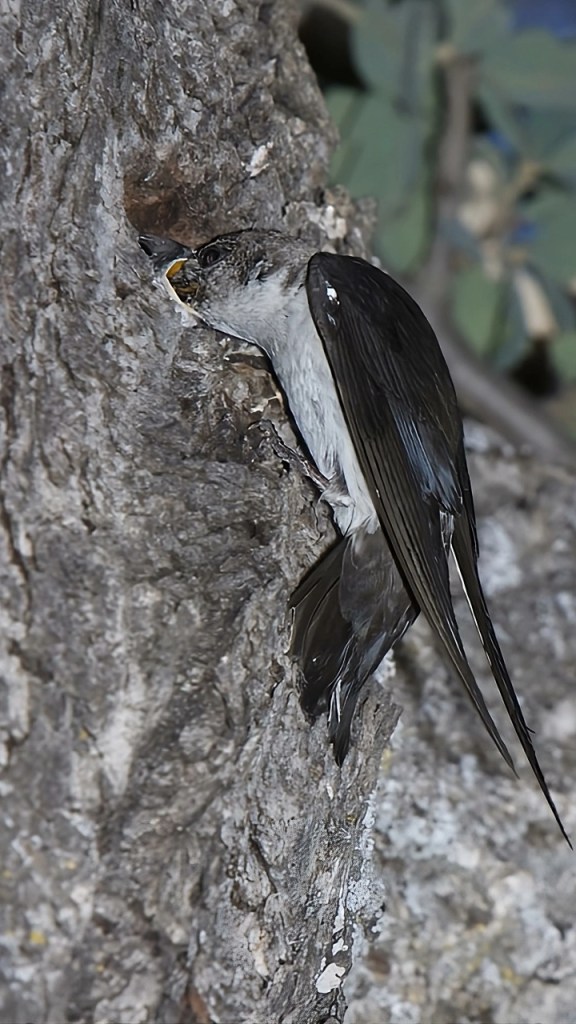
After the eggs hatch, both parents are actively involved in feeding and caring for the chicks. The nestlings are fed a steady diet of insects, which the parents catch on the wing. The chicks grow rapidly and are ready to fledge in about 21 to 24 days. Even after leaving the nest, the young swallows continue to receive care and feeding from their parents until they are fully independent.
Brood Parasitism
Violet Green Swallows occasionally fall victim to brood parasitism by other bird species, such as cowbirds. Brood parasites lay their eggs in the swallows’ nests, leaving the unsuspecting parents to raise the imposters’ chicks. This can be a significant challenge for the swallows, as it diverts resources away from their own offspring. Despite this, Violet Green Swallows have adapted various strategies to minimize the impact of brood parasitism, such as selecting nest sites that are difficult for parasites to access.
Nest Site Fidelity
Violet Green Swallows exhibit a high degree of nest site fidelity, often returning to the same nesting area year after year. If a particular site proves successful, they are likely to reuse it, making slight modifications as needed. This behavior not only ensures familiarity with the nesting area but also strengthens the bond between the pair as they work together to raise their young.
Favorite Foods
Insect Diet
Violet Green Swallows are insectivores, relying heavily on a diet of flying insects. Their primary food sources include a variety of insects such as flies, beetles, moths, and ants. They are incredibly agile fliers, capable of catching their prey mid-air with impressive precision. This diet provides them with the necessary protein and nutrients to sustain their high-energy lifestyle.
Foraging Techniques
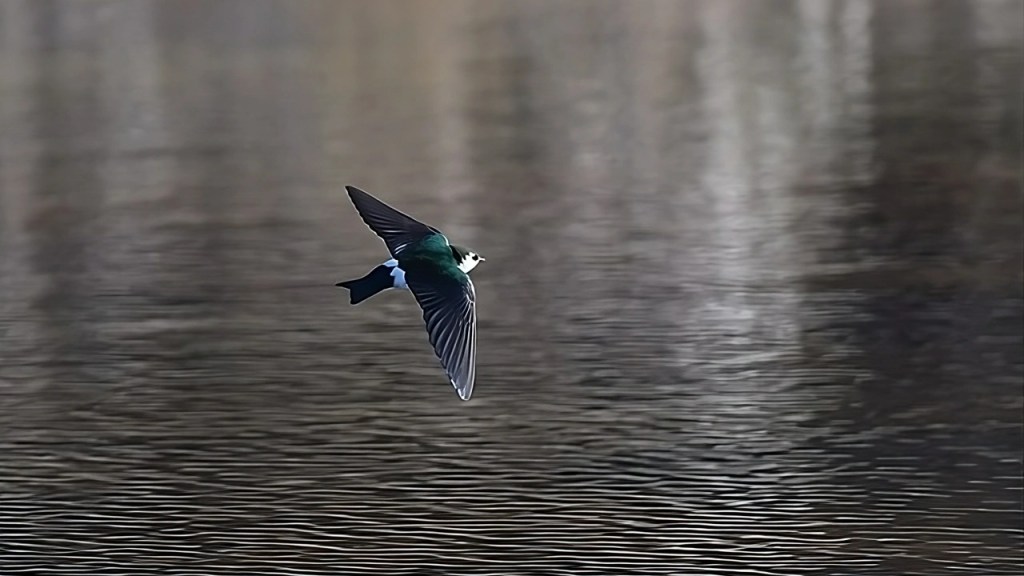
These swallows are expert foragers, employing several techniques to catch their prey. One common method is aerial hawking, where they fly swiftly through the air, snatching insects in flight with their wide, gaping mouths. They often hunt over open fields, water bodies, and forest edges where insect activity is high. Their acrobatic flight maneuvers, including quick turns and dives, make them highly efficient hunters.
Feeding in Groups
Violet Green Swallows often feed in groups, taking advantage of areas with abundant insect populations. They are known to join mixed-species foraging flocks, including other swallow species and swifts. This social feeding behavior helps them locate food more efficiently and may also provide some protection from predators. Large swarms of insects, such as those found near water, are particularly attractive to these feeding groups.
Seasonal Variations
The availability of food sources can vary seasonally, influencing the diet of Violet Green Swallows. During the breeding season, when insect populations are at their peak, they have an abundance of food to support the energy demands of raising their young. In contrast, during migration and in their wintering grounds, they may have to adjust their foraging strategies to adapt to different insect availabilities.
Water Sources
Water plays a crucial role in the diet of Violet Green Swallows, not just for hydration but also as a rich feeding ground. They often skim the surface of water bodies to catch emerging aquatic insects. Lakes, ponds, rivers, and marshes provide ample feeding opportunities, attracting insects that the swallows can easily catch. This reliance on water sources underscores the importance of healthy wetland ecosystems for their survival.
Feeding Young
Feeding the young is a demanding task that requires both parents to work tirelessly. They bring a steady supply of insects to the nestlings, which need frequent feeding to support their rapid growth. The chicks are fed a diet high in protein to ensure they develop strong muscles and feathers, essential for their eventual fledging and flight capabilities. The parents’ ability to efficiently catch and deliver food directly impacts the survival and health of their offspring.
Fun Facts
Exceptional Flyers
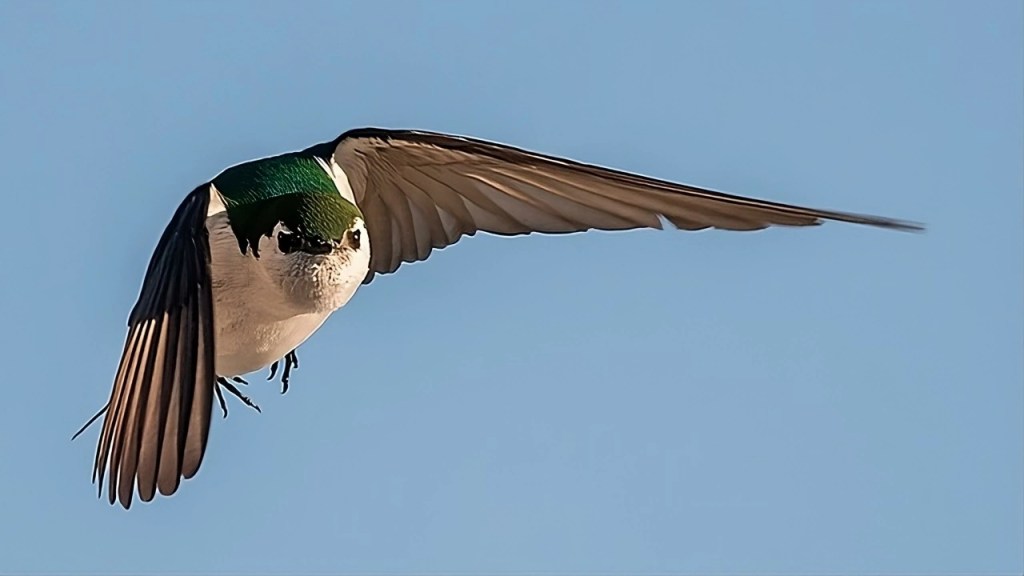
Violet Green Swallows are renowned for their exceptional flying abilities. They can execute quick turns, rapid dives, and complex aerial maneuvers with ease. This agility not only helps them catch flying insects but also evade predators. Their flying skills are a joy to watch and make them one of the most graceful birds in the sky.
Long-Distance Migrants
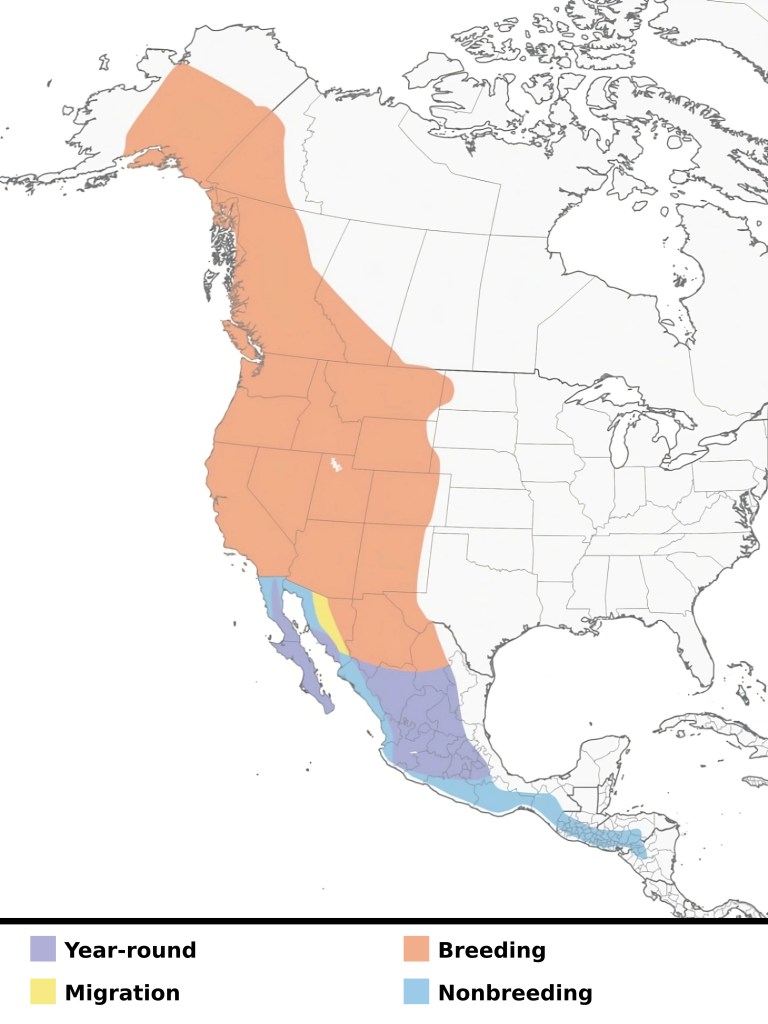
These swallows are long-distance migrants, traveling thousands of miles between their breeding grounds in North America and their wintering grounds in Central and South America. Their migration routes can span vast distances, showcasing their endurance and adaptability. Observing their migration patterns provides valuable insights into their behavior and the challenges they face during their journeys.
Unique Nesting Behavior
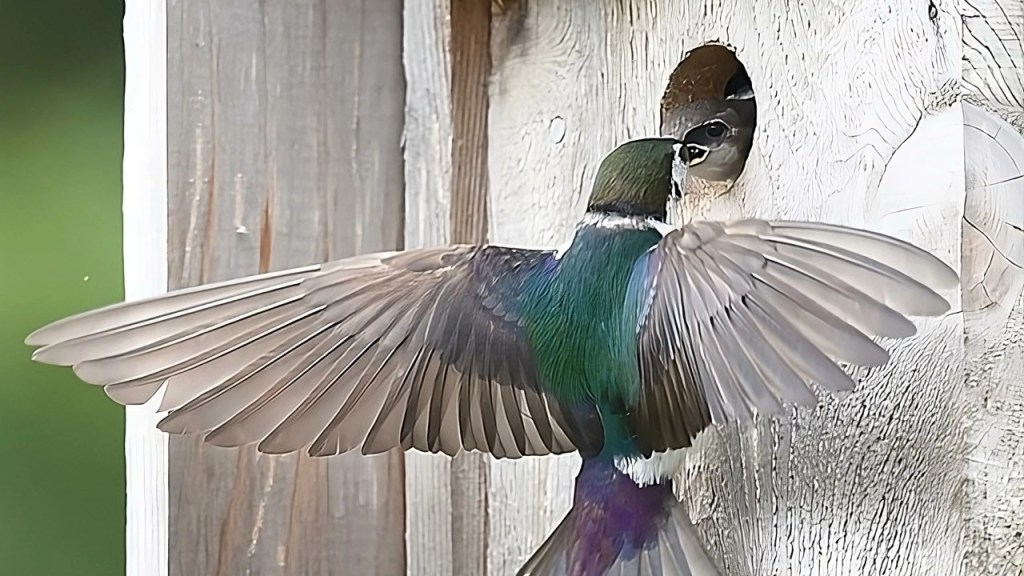
Unlike many other swallows, Violet Green Swallows prefer to nest in natural cavities or man-made nest boxes rather than constructing open cup nests. This behavior helps protect their eggs and chicks from predators and harsh weather conditions. Their willingness to use nest boxes has made them a popular subject for bird conservation projects.
Social Birds
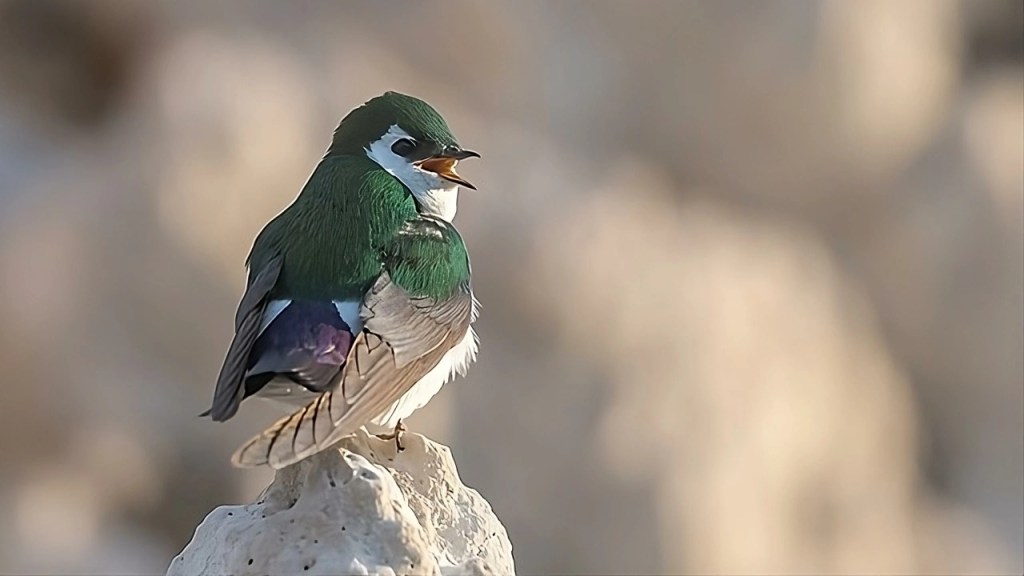
Violet Green Swallows are highly social and often seen in large flocks, especially during migration and at communal roosting sites. They communicate with each other through a series of cheerful chirps and calls. This social behavior extends to their feeding habits, where they often join mixed-species foraging flocks to increase their chances of finding food.
Colorful Plumage
The iridescent plumage of the Violet Green Swallow is one of its most striking features. The green and violet colors are not due to pigments but are a result of light refraction through the microscopic structure of their feathers. This gives them a shimmering effect that changes with the angle of the light, making them look even more dazzling in the sunlight.
Lifespan and Longevity
In the wild, Violet Green Swallows can live up to six years, though the average lifespan is typically shorter due to various natural threats. Their longevity is influenced by factors such as predation, availability of food, and habitat conditions. Those who survive their early years and harsh migratory journeys contribute to the stability and growth of their populations.
Role in Ecosystem
Violet Green Swallows play a crucial role in controlling insect populations. By consuming large quantities of insects, they help maintain a balance in their ecosystem. This insect control is beneficial not only for natural habitats but also for agricultural areas where pests can be a significant problem.
Conservation Efforts
Habitat Protection
Protecting the natural habitats of Violet Green Swallows is essential for their survival. Efforts to conserve and restore wetlands, forests, and open fields ensure that these birds have access to the nesting sites and food sources they need. Conservation organizations work tirelessly to protect these habitats from development and pollution, maintaining the delicate balance of the ecosystems where these swallows thrive.
Nest Box Programs
One of the most effective conservation strategies for Violet Green Swallows is the implementation of nest box programs. These programs involve placing specially designed boxes in suitable habitats to provide safe nesting sites. Nest boxes help compensate for the loss of natural cavities due to deforestation and other human activities. Volunteers and bird enthusiasts often participate in these programs, setting up and maintaining nest boxes to support local swallow populations.
Monitoring and Research
Ongoing research and monitoring are crucial for understanding the population dynamics and health of Violet Green Swallow populations. Scientists track their migration patterns, breeding success, and overall numbers to identify trends and potential threats. Citizen science projects, where birdwatchers contribute data, play a significant role in gathering information and raising awareness about the species.
Reducing Pesticide Use
The widespread use of pesticides can have a detrimental impact on Violet Green Swallows by reducing the availability of their insect prey. Conservation efforts include advocating for the reduction or elimination of pesticide use in agricultural and residential areas. Promoting integrated pest management practices that are less harmful to wildlife helps create a safer environment for these birds.
Climate Change Mitigation
Climate change poses a significant threat to many bird species, including Violet Green Swallows. Changes in temperature and weather patterns can affect their migration, breeding, and food availability. Conservation efforts aim to mitigate the impacts of climate change by protecting critical habitats and promoting sustainable practices that reduce greenhouse gas emissions.
Public Education and Outreach
Educating the public about the importance of Violet Green Swallows and the threats they face is a key component of conservation efforts. Programs and workshops hosted by nature centers, schools, and conservation organizations help raise awareness and encourage community involvement. By understanding the role these birds play in the ecosystem, people are more likely to support and engage in conservation activities.
International Cooperation
Since Violet Green Swallows are migratory birds, international cooperation is essential for their conservation. Efforts to protect their breeding and wintering grounds across different countries require collaboration between governments, NGOs, and local communities. International treaties and agreements, such as the Migratory Bird Treaty Act, provide a framework for protecting migratory birds and their habitats.
Observing the Violet Green Swallow
Identifying Features
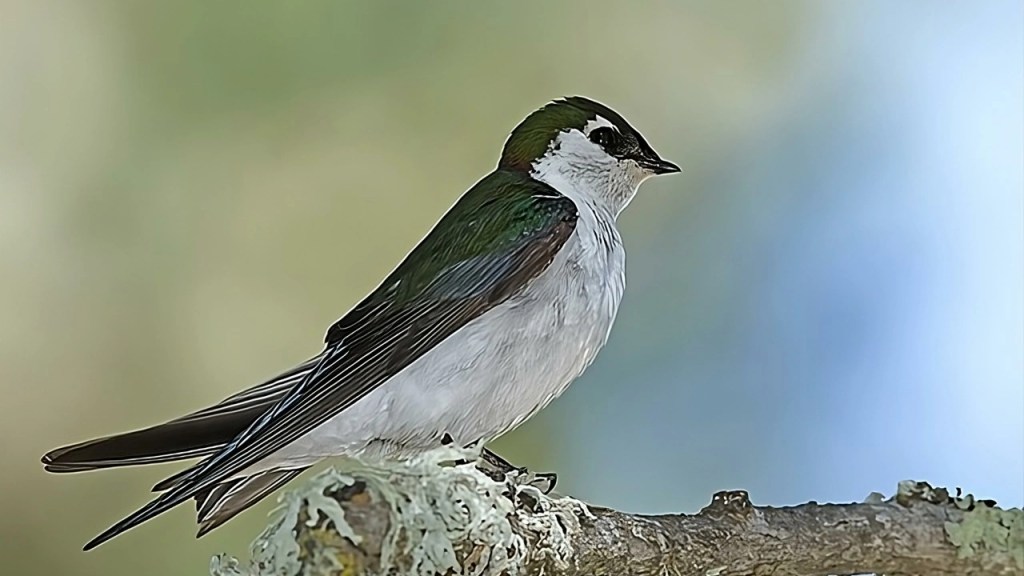
Violet Green Swallows are relatively easy to identify with their vibrant green and violet plumage, white underparts, and distinctive white rump patches. Observing their behavior can also help in identification. Look for their acrobatic flight patterns as they dart and swoop in pursuit of insects.
Best Time to Observe
The best time to observe Violet Green Swallows is during the breeding season, which typically runs from spring to late summer. During this time, they are most active and can be seen foraging for insects to feed their young. Early mornings and late afternoons are particularly good times to watch them as they are most active during these cooler parts of the day.
Ideal Locations
To observe Violet Green Swallows, visit habitats where they are commonly found. They prefer open areas near water bodies such as lakes, rivers, and wetlands, as well as forest edges and open fields. Look for them perched on utility wires, tree branches, or nesting near cliffs and in tree cavities.
Using Binoculars
Binoculars are an essential tool for birdwatching. They allow you to see the swallows up close and observe their intricate details and behaviors. Choose a pair with good magnification and clarity, and practice focusing quickly to keep up with their fast movements. Binoculars also help you spot nests in tree cavities or artificial nest boxes from a distance without disturbing the birds.
Watching Nesting Behavior
During the breeding season, you can observe nesting behavior by locating their nests. Be cautious and maintain a respectful distance to avoid disturbing them. If you find a nest box, you might see parents bringing food to their chicks or the fledglings taking their first flights. Documenting these behaviors can be a rewarding experience for birdwatchers.
Recording Observations
Keeping a journal or using birdwatching apps to record your observations can enhance your birdwatching experience. Note the date, time, location, weather conditions, and behaviors you observe. This information can contribute to citizen science projects and help track the health and population trends of Violet Green Swallows.
Photography Tips
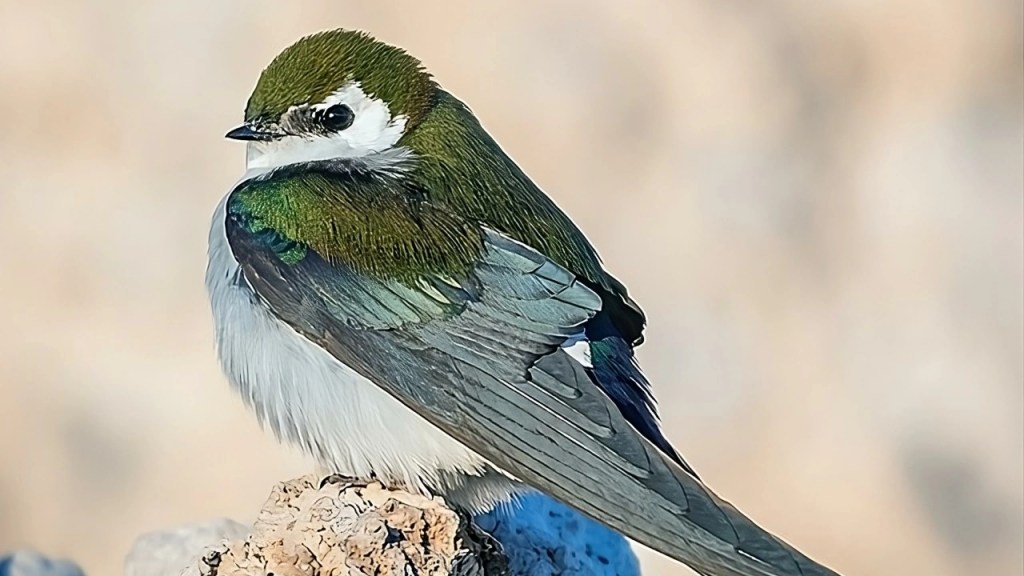
Photographing Violet Green Swallows can be challenging due to their swift and erratic flight patterns. To capture their beauty, use a camera with a fast shutter speed and continuous shooting mode. Patience and practice are key to getting clear, well-framed shots. Early morning and late afternoon light can provide the best natural lighting conditions for photography.
Joining Birdwatching Groups
Joining local birdwatching groups or societies can enhance your birdwatching experience. These groups often organize guided birdwatching tours, provide access to prime birdwatching locations, and offer opportunities to learn from more experienced birdwatchers. Sharing your sightings and experiences with others can also be a great way to build community and contribute to collective knowledge.
Respecting Wildlife and Habitats
Always practice ethical birdwatching by respecting the birds and their habitats. Avoid disturbing nests, do not attempt to handle the birds, and follow local guidelines and regulations. Keeping a safe distance ensures that you can enjoy observing Violet Green Swallows without impacting their natural behaviors.
Conclusion
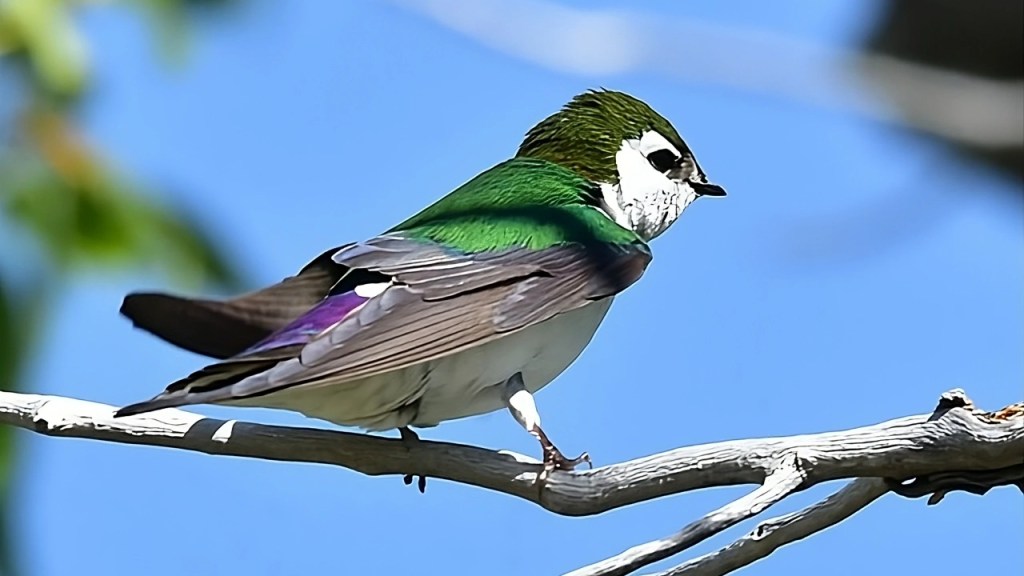
The Violet Green Swallow is a captivating bird with its vibrant plumage and agile flight. By understanding their appearance, nesting habits, and diet, we can better appreciate these remarkable creatures. Observing them in their natural habitats, supporting conservation efforts, and learning more about their behaviors all contribute to preserving this beautiful species. Whether you’re a seasoned birdwatcher or a curious nature enthusiast, the Violet Green Swallow offers a delightful glimpse into the wonders of avian life. Thank you for joining us on this journey to explore the fascinating world of the Violet Green Swallow.


 Wing Watchers with Wagner
Leave a comment