
Introduction
Welcome, everyone! Today, we’re going to learn about a delightful and colorful bird that many of you might have seen fluttering around your backyard or neighborhood. The House Finch is a charming little bird known for its cheerful song and vibrant plumage. Whether you’re an avid birdwatcher or just someone who enjoys the sights and sounds of nature, the House Finch is a bird that can easily capture your interest.
House Finches are native to North America, and they have a fascinating history of spreading across the continent. Originally found in the western United States and Mexico, these birds have now made themselves at home all over the country, even reaching parts of Canada. Their adaptability to various environments, from urban areas to rural landscapes, makes them a common yet delightful sight.
What makes the House Finch truly special is its bright red, orange, or yellow coloring, especially in males. This vibrant hue adds a splash of color to our surroundings, making them easily recognizable. But there’s much more to these birds than just their appearance. We’ll dive into their nesting habits, favorite foods, some fun facts, and the conservation efforts in place to ensure they thrive for years to come.
So, grab your binoculars and put on your explorer hats because we’re about to embark on an exciting journey into the world of the House Finch. Let’s get started by taking a closer look at what these birds look like.
Appearance

A Burst of Color
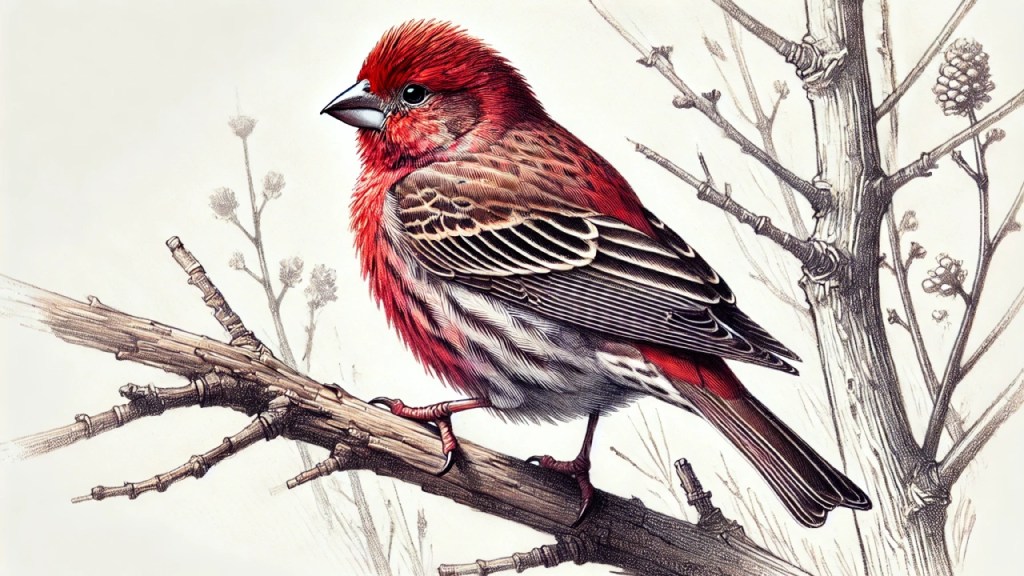
The House Finch is a small bird, but its vibrant coloring makes it stand out in any environment. Males are particularly eye-catching with their bright red plumage, which can sometimes appear orange or yellow. This coloration is not just for show; it’s a sign of good health and a diet rich in carotenoids, which are pigments found in the food they eat. Females, on the other hand, are more subdued in color, sporting shades of brown and grey that help them blend into their surroundings.
Size and Shape
House Finches are relatively small birds, measuring about 5 to 6 inches in length with a wingspan of around 8 to 10 inches. They have a short, conical bill that is perfect for cracking open seeds, their primary food source. Their bodies are compact, and they have a slightly forked tail, which is often flicked while they are perched.
Plumage Patterns
While the males are noted for their colorful plumage, both males and females share some common patterns. Their bodies are streaked with brown and white, which provides excellent camouflage against predators. The males’ red, orange, or yellow color is most prominent on the head, throat, and upper chest, with the intensity varying based on diet and health.
Seasonal Changes

Interestingly, the appearance of House Finches can change with the seasons. During the breeding season, males display their brightest colors to attract females. Outside of the breeding season, their colors can become less vivid. This change is due to the wear and tear on their feathers and the availability of food sources that provide the pigments needed for their colorful plumage.
Juvenile Appearance
Juvenile House Finches look quite different from their adult counterparts. They lack the bright colors of the males and are more similar in appearance to the adult females, with brown and white streaks. This helps them stay hidden from predators as they learn to fend for themselves.
Identifying Characteristics
To identify a House Finch, look for the following features:
- Males: Bright red, orange, or yellow on the head, throat, and chest, with brown and white streaked bodies.
- Females: Brown and white streaked bodies with no red, orange, or yellow coloring.
- Both sexes: Short, conical bill, slightly forked tail, and compact body shape.
Variations in Color
The color variations in males are particularly interesting. The red, orange, or yellow hues are directly influenced by their diet. For example, a diet rich in foods like berries or fruits that contain carotenoids will result in brighter red plumage. If their diet lacks these pigments, their colors can lean towards yellow or orange. This variation not only adds to their charm but also gives birdwatchers a clue about their eating habits and the health of their local ecosystem.
Nesting Habits

Choosing a Nesting Site
House Finches are quite adaptable when it comes to choosing a nesting site. Unlike many birds that prefer secluded or hidden spots, House Finches are comfortable nesting in a variety of locations, both natural and man-made. You might find their nests in trees, shrubs, building ledges, hanging planters, or even in old nests abandoned by other birds. This adaptability allows them to thrive in urban, suburban, and rural areas alike.
Nest Construction
The construction of a House Finch nest is a fascinating process. Both the male and female participate in building the nest, though the female takes the lead. They typically select a site that offers some protection from the elements and predators. Once a site is chosen, the female gathers materials like twigs, grasses, leaves, and feathers. She then weaves these materials together to form a cup-shaped nest, which provides a secure place for their eggs and future chicks.
Egg Laying and Incubation
Once the nest is complete, the female House Finch will lay a clutch of eggs, usually numbering between 2 to 6 eggs. The eggs are pale blue or greenish with small speckles, making them quite beautiful. The female is primarily responsible for incubating the eggs, which takes about 12 to 14 days. During this time, the male plays an important role in feeding the female and keeping a watchful eye for potential threats.
Raising the Chicks
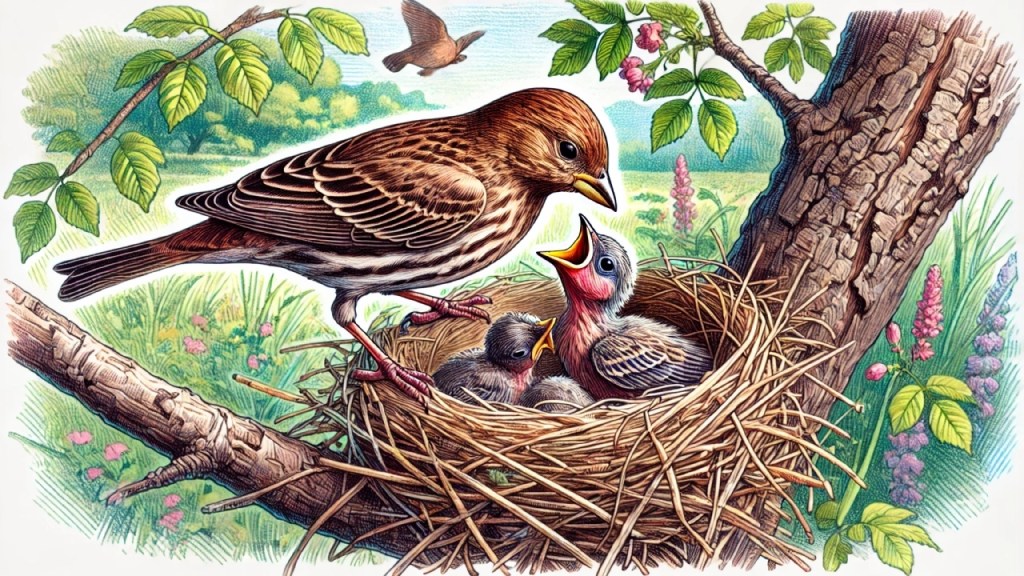
After the eggs hatch, the chicks are entirely dependent on their parents for food and protection. The young birds are altricial, meaning they are born blind, featherless, and vulnerable. Both parents share the responsibility of feeding the chicks a diet rich in seeds and, occasionally, insects to ensure they receive adequate nutrition for growth. The chicks grow rapidly and are usually ready to leave the nest or fledge about 12 to 19 days after hatching.
Fledging and Independence
When the chicks are ready to fledge, they leave the nest and start to explore their surroundings. This is a critical time for young House Finches as they learn to fly and forage for food. The parents continue to care for them for a short period after fledging, guiding them to food sources and helping them avoid danger. Within a few weeks, the young birds become more independent and start to blend into the local House Finch population.
Multiple Broods
House Finches are known for their prolific breeding habits. In favorable conditions, they can raise multiple broods in a single breeding season, which typically runs from March to August. This ability to have several sets of offspring each year helps maintain their population and spread across various regions.
Nesting Challenges
Despite their adaptability, House Finches face several challenges when it comes to nesting. Predators such as cats, snakes, and larger birds can pose a threat to eggs and chicks. Additionally, human activities like construction and habitat destruction can disrupt their nesting sites. However, their flexibility in choosing nesting sites helps them overcome many of these challenges.
Favorite Foods
Seed Lovers
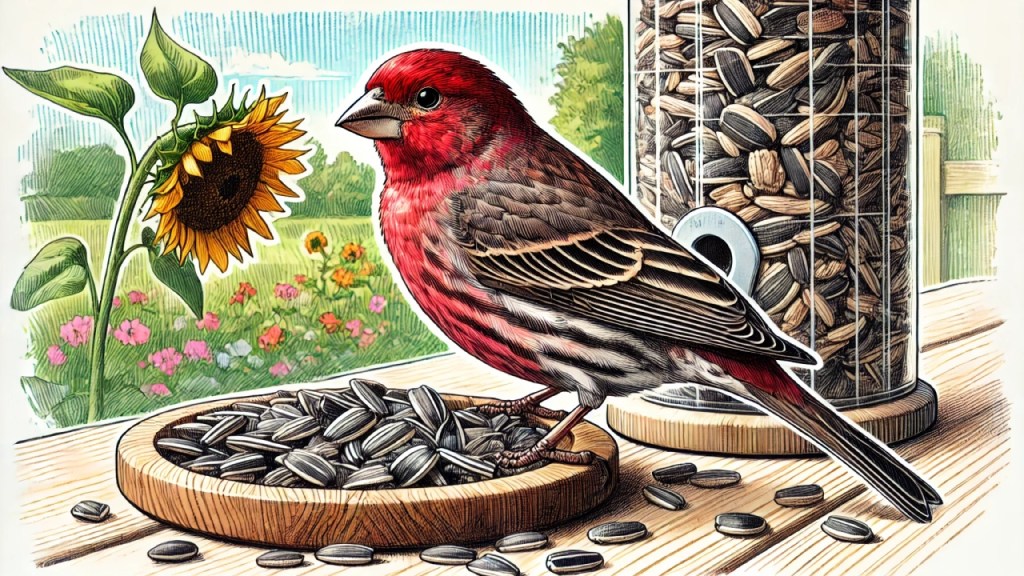
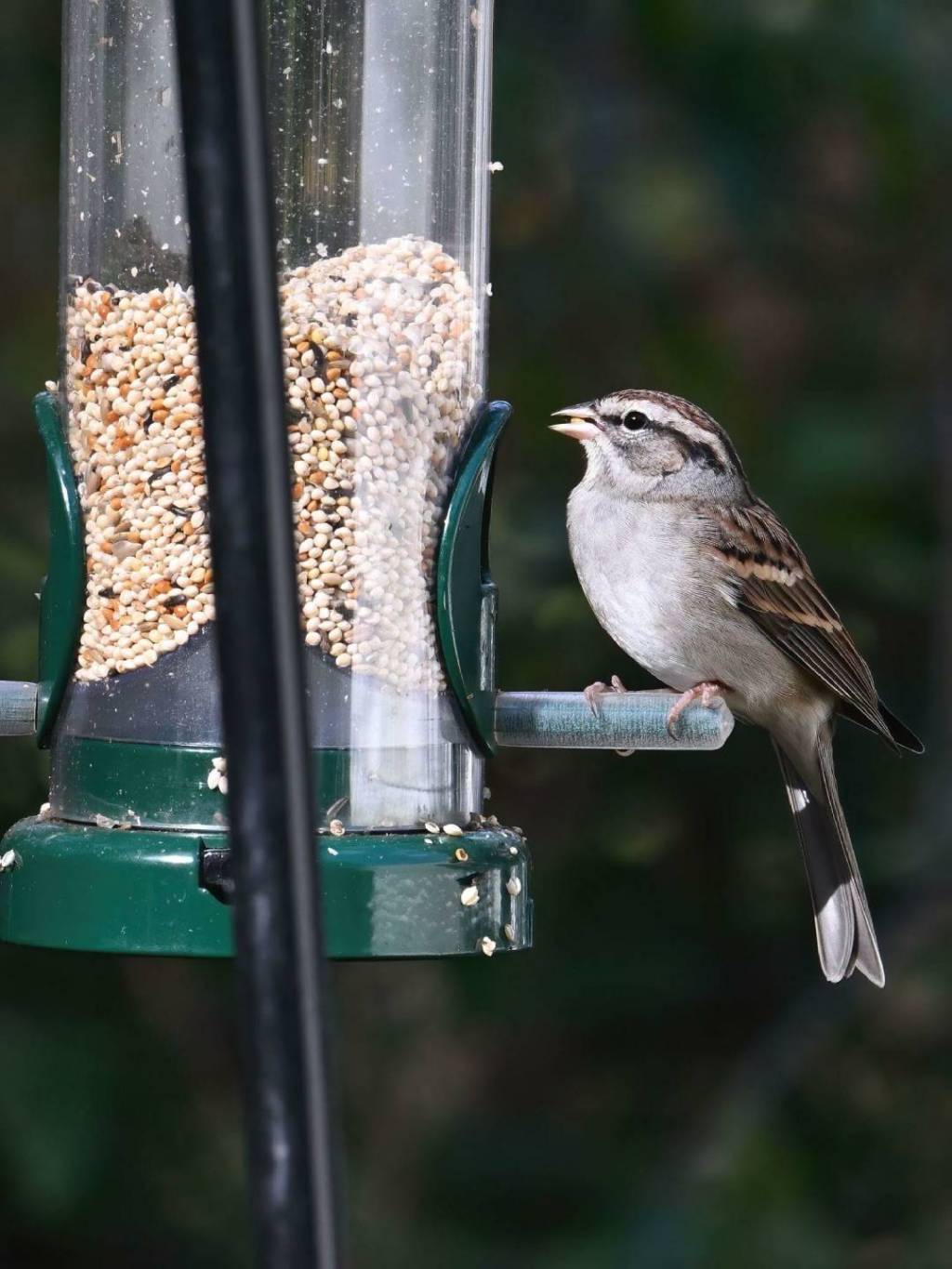
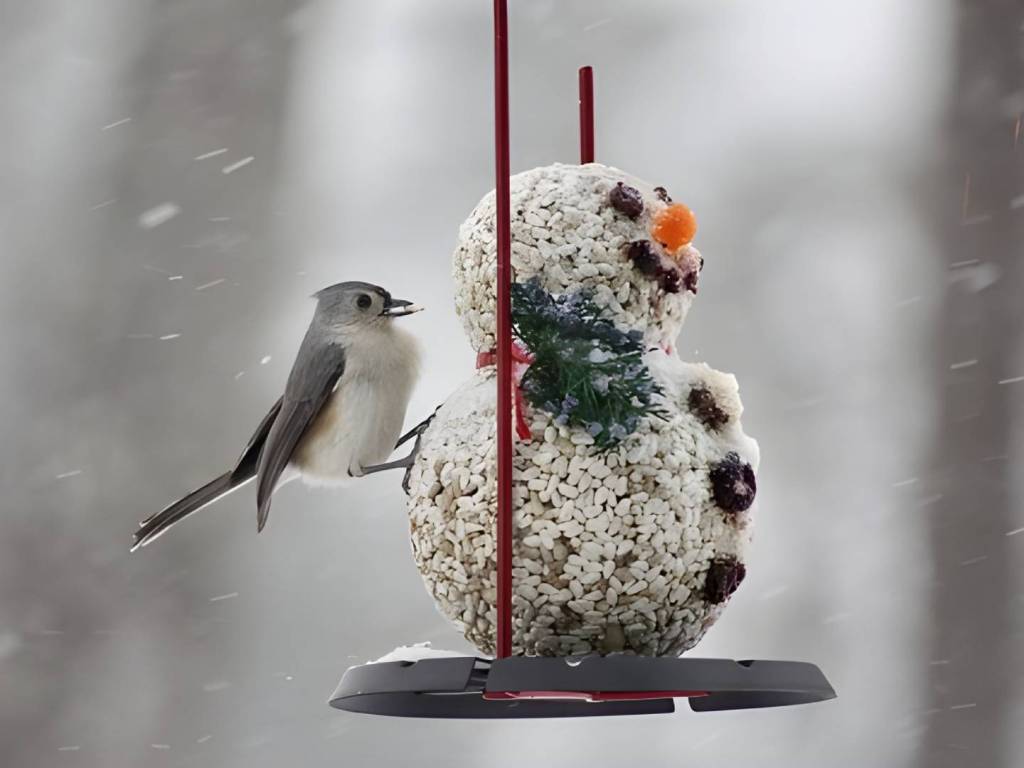
House Finches have a particular fondness for seeds, which form the bulk of their diet. These small birds have a knack for finding and cracking open seeds of all kinds. Some of their favorite seeds come from plants such as dandelions, sunflowers, and thistles. They are particularly attracted to bird feeders filled with sunflower seeds, which provide a rich and easy source of nutrition. Attract House Finches to your backyard with this specially designed birdfeeder.
Fruits and Berries
In addition to seeds, House Finches enjoy a variety of fruits and berries. They are often seen nibbling on the fruits of plants like mulberries, blackberries, and cherries. These fruits not only provide essential nutrients but also contribute to the vibrant coloration of the males through the carotenoids they contain. During the fruiting season, House Finches can be found flocking to berry bushes and fruit trees, making the most of these natural food sources.
Buds and Blossoms
Another favorite food source for House Finches is the buds and blossoms of various plants. They particularly enjoy the buds of trees such as maples and elms. By feeding on these, they help control the growth of certain plant species, playing a small but important role in their ecosystem. Their fondness for buds and blossoms is most noticeable in the spring when these food sources are plentiful.
Occasional Insects
While seeds, fruits, and buds make up the majority of their diet, House Finches will occasionally eat insects, especially during the breeding season. Insects provide a valuable source of protein, which is crucial for the growth and development of their chicks. They may consume small insects like aphids, beetles, and caterpillars, helping to keep these insect populations in check.
Visiting Bird Feeders

One of the reasons House Finches are so well-known is their frequent visits to bird feeders. They are not picky and will happily eat a variety of seeds provided by bird enthusiasts. Sunflower seeds, millet, and nyjer (thistle) seeds are some of their favorites. If you want to attract House Finches to your feeder, offering a mix of these seeds is a sure way to do it. Their sociable nature means that once one House Finch finds a feeder, others are likely to follow.
Foraging Habits
House Finches are versatile foragers, able to find food in a variety of environments. Whether they’re in a dense urban area or a rural countryside, these birds use their keen eyesight and strong beaks to locate and access food. They often forage in flocks, which provides safety in numbers and helps them efficiently locate food sources.
Seasonal Variations
The diet of House Finches can vary with the seasons. In the spring and summer, when fruits, berries, and insects are abundant, they diversify their diet to include these nutritious foods. In the fall and winter, they rely more heavily on seeds, which are more consistently available. This ability to adapt their diet according to the seasons ensures they have a steady food supply year-round.
Fun Facts

Unique Songsters
House Finches are known for their pleasant and melodious songs. Both males and females sing, but the males are particularly renowned for their musical abilities. Their song is a cheerful warble that consists of a series of rapid, high-pitched notes. This singing plays a crucial role in attracting mates and establishing territories. If you’re lucky, you might hear a male House Finch singing his heart out, especially during the breeding season.
Color Variations and Diet
One of the most fascinating aspects of the House Finch is the variation in the males’ plumage colors. The bright red, orange, or yellow hues in male House Finches are directly influenced by their diet. The more carotenoids they consume from foods like berries and certain seeds, the brighter their colors. This color variation is not just for show; it also serves as an indicator of the male’s health and his ability to find good food sources, making him more attractive to potential mates.
Adaptable Nest Builders
House Finches are incredibly adaptable when it comes to building their nests. They use a variety of materials, including twigs, grasses, leaves, feathers, and even bits of paper and string. This adaptability allows them to nest in diverse locations, from trees and shrubs to building ledges and hanging planters. Their nests are often found in unexpected places, showcasing their resourcefulness and ability to thrive in various environments.
Social Birds
House Finches are social creatures and are often seen in flocks. This social behavior helps them protect themselves from predators and find food more efficiently. Flocking also plays a role in their breeding success, as it allows them to communicate and establish social bonds. In winter, you might see large groups of House Finches gathering at bird feeders, creating a lively and colorful spectacle.
Geographic Expansion

Originally native to the western United States and Mexico, House Finches have successfully expanded their range across North America. This expansion is partly due to their adaptability to different environments and their ability to thrive in urban settings. They were introduced to the eastern United States in the 1940s and have since become one of the most common and widespread birds in North America.
Lifespan and Longevity
In the wild, House Finches typically live for about 5 to 10 years. However, their lifespan can be affected by various factors, including predation, disease, and food availability. Despite these challenges, their ability to raise multiple broods each year helps maintain their population.
Helping Control Pests
While primarily seed-eaters, House Finches play a role in controlling insect populations. During the breeding season, they often feed their chicks insects, providing a valuable source of protein. This behavior helps keep the populations of insects like aphids and caterpillars in check, benefiting the overall health of their habitats.
Bird Feeder Favorites
House Finches are among the most frequent visitors to backyard bird feeders. Their preference for seeds, especially sunflower seeds, makes them a favorite among birdwatchers who enjoy their lively presence and beautiful colors. By providing a consistent food source, bird feeders help support House Finch populations, especially during the colder months. Attract House Finches to your backyard with this specially designed birdfeeder.
Conservation Efforts

Understanding Their Status
House Finches are classified as a species of “Least Concern” by the International Union for Conservation of Nature. This means that, overall, their population is stable, and they are not at immediate risk of decline. However, maintaining this status requires ongoing efforts to monitor and address potential threats that could impact their populations.
Habitat Preservation
One of the key conservation efforts for House Finches focuses on preserving their natural habitats. Urban development and deforestation can lead to habitat loss, which affects many bird species, including the House Finch. Efforts to preserve green spaces, parks, and natural habitats in urban and suburban areas are crucial. These efforts ensure that House Finches and other wildlife have places to live, forage, and breed.
Mitigating Disease
House Finches have been affected by a disease known as House Finch eye disease, caused by the bacterium Mycoplasma gallisepticum. This disease can lead to conjunctivitis, causing swollen, crusty eyes that can lead to blindness and even death if untreated. Conservationists and bird enthusiasts can help mitigate the spread of this disease by regularly cleaning bird feeders and providing fresh water sources. Monitoring the health of local bird populations and reporting sick birds to wildlife authorities are also important steps in managing disease outbreaks.
Providing Food Sources
Maintaining bird feeders is a simple yet effective way to support House Finch populations. During the colder months, when natural food sources may be scarce, bird feeders provide essential nutrition. Offering a variety of seeds, particularly sunflower seeds, can attract House Finches and help them survive through the winter. Ensuring feeders are kept clean and well-stocked can make a significant difference in the health and survival of these birds.
Citizen Science Projects

Citizen science projects play a vital role in the conservation of House Finches. Programs like the Cornell Lab of Ornithology’s Project FeederWatch and the Great Backyard Bird Count encourage birdwatchers to record their observations. This data helps scientists track bird populations, monitor migration patterns, and detect potential threats. By participating in these projects, everyday citizens contribute valuable information that aids in the conservation of House Finches and other bird species.
Educating the Public
Education is a powerful tool in conservation. Raising awareness about the needs and challenges faced by House Finches helps garner support for conservation initiatives. Birdwatching clubs, nature centers, and schools often conduct educational programs that teach people about local bird species and how they can help protect them. Understanding the importance of habitat preservation, disease prevention, and responsible bird-feeding practices empowers individuals to make a positive impact.
Legal Protections
House Finches, like many other bird species, benefit from legal protections under the Migratory Bird Treaty Act in the United States. This legislation makes it illegal to harm, capture, or kill migratory birds without a permit. Such protections are essential for ensuring the long-term survival of House Finches and other migratory birds, providing a legal framework that supports conservation efforts.
Conclusion

We’ve journeyed through the fascinating world of the House Finch, exploring their appearance, nesting habits, favorite foods, and much more. These small but vibrant birds add a splash of color and a joyful melody to our surroundings, making them a favorite among birdwatchers and nature enthusiasts alike.
House Finches are a testament to nature’s adaptability and resilience. From their varied diet and colorful plumage to their flexible nesting choices, these birds have successfully expanded their range across North America, thriving in diverse environments. Their ability to adapt and flourish in both urban and rural settings underscores their unique place in our ecosystem.
Despite their stable population, it’s crucial to continue our conservation efforts. By preserving their habitats, preventing disease, and participating in citizen science projects, we can ensure that House Finches continue to brighten our landscapes for generations to come. Simple actions like maintaining clean bird feeders and supporting local conservation initiatives make a significant difference in their well-being.
As we conclude our exploration of the House Finch, I hope you’ve gained a deeper appreciation for these charming birds. Whether you’re observing them at a feeder or listening to their cheerful songs in a nearby park, the presence of House Finches is a delightful reminder of the beauty and complexity of the natural world. Let’s continue to cherish and protect these feathered friends, ensuring they remain a vibrant part of our communities.


 Wing Watchers with Wagner
Leave a comment