
Introduction
Welcome, nature enthusiasts and bird lovers! Today, we’re going to explore one of North America’s most vibrant and melodious songbirds, the Baltimore Oriole. Whether you’re an experienced birdwatcher or just starting your journey into the world of ornithology, the Baltimore Oriole is a fascinating species that never fails to captivate.
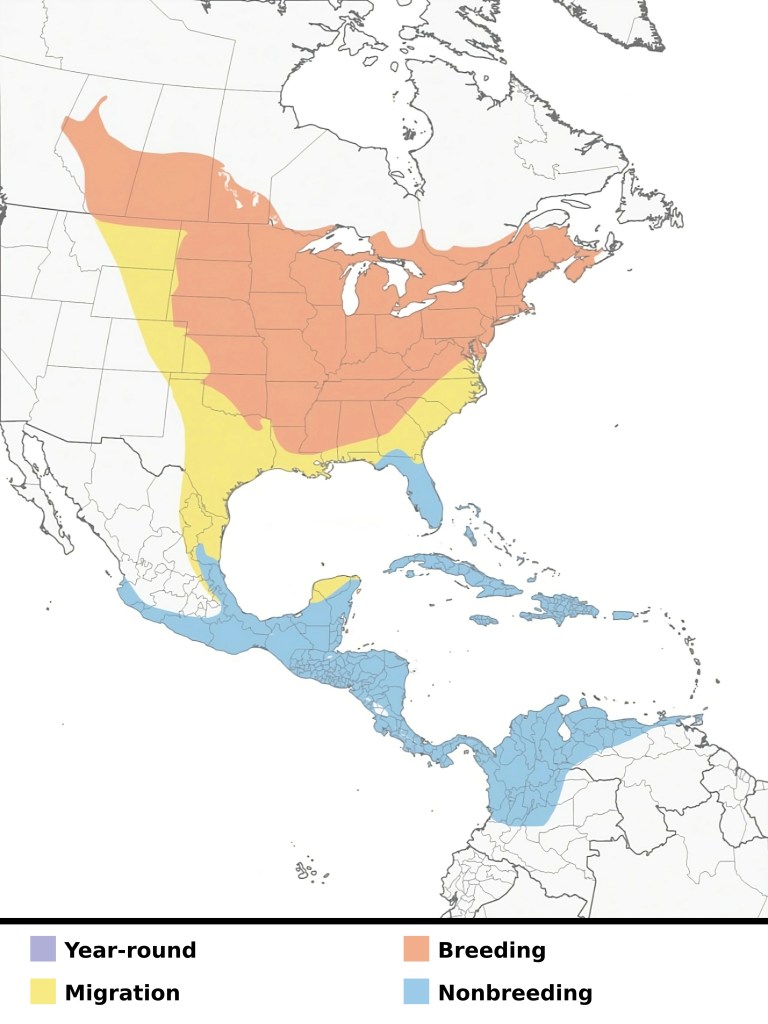
The Baltimore Oriole, a member of the blackbird family, is named for its striking resemblance to the heraldic colors of England’s Baltimore family—bright orange and black. This beautiful bird is commonly found in the eastern and central parts of North America during its breeding season and migrates to Central and South America for the winter. Orioles are known for their incredible nests, their fondness for sweet fruits and nectar, and their distinctive, flute-like songs that can brighten any day spent in nature.
Join us as we delve deep into the various aspects of the Baltimore Oriole’s life. We’ll look at its appearance, nesting habits, favorite foods, and some fun facts that make this bird truly unique. We’ll also discuss the conservation efforts that help ensure this vibrant bird continues to grace our skies.
So, grab your binoculars and get ready to learn all about the Baltimore Oriole. By the end of our journey, you’ll be well-equipped to spot these spectacular birds and understand their important role in our ecosystem.
Appearance

The Baltimore Oriole is a bird that truly stands out with its striking and vivid coloration. Let’s break down its appearance in detail so that you can easily identify this bird in the wild.
Male Baltimore Oriole
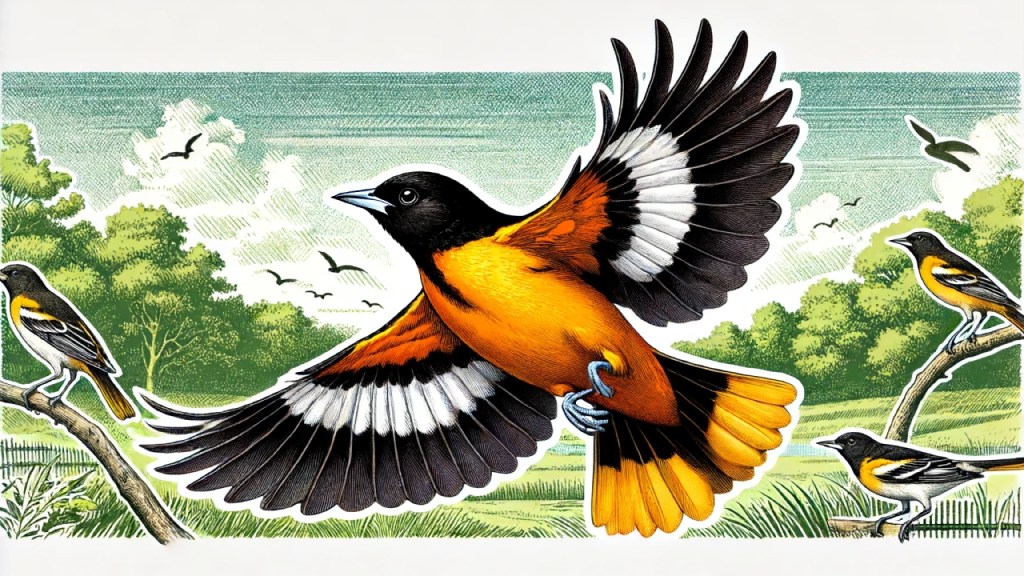
Male Baltimore Orioles are known for their bright, eye-catching plumage. They sport a brilliant orange color on their underparts, including the chest and belly. This vibrant orange contrasts sharply with their jet-black head, back, wings, and tail. The wings of the male oriole also feature white bars, adding an extra element of visual interest.
Female Baltimore Oriole
Female Baltimore Orioles, while less flashy than their male counterparts, are equally beautiful. Their plumage is more subdued, with a mix of duller orange-yellow and brownish hues. Their heads and backs are more grayish or olive-colored, and their wings have two distinct white wing bars. This coloration helps them blend into their surroundings more effectively, which is particularly useful during nesting.
Juvenile Baltimore Oriole
Juvenile Baltimore Orioles resemble the females but with even duller colors. As they mature, young males gradually acquire the bright orange and black plumage characteristic of adult males. Observing these changes can be fascinating, as you can see the gradual transformation from a more camouflaged state to the striking adult form.
Size and Shape

Baltimore Orioles are medium-sized songbirds. They measure about 6.7 to 7.5 inches in length, with a wingspan of around 9.1 to 11.8 inches. Their bodies are slim, which, combined with their long, pointed bills, makes them perfectly adapted for their insect and fruit-based diet.
Distinctive Features
One of the most distinctive features of the Baltimore Oriole is its flute-like song. Males are particularly vocal during the breeding season, using their melodic calls to attract mates and defend their territories. Their songs are a delightful addition to any spring or summer morning, often described as rich, musical, and reminiscent of a flute.
Another key feature is their nest. Baltimore Orioles weave intricate, hanging nests from slender fibers and grasses, often suspended from the tips of tree branches. These nests are not only functional but also a testament to the bird’s remarkable engineering skills.
Seasonal Changes
During the breeding season, the male’s plumage is at its brightest, making them easier to spot. However, after the breeding season, both males and females undergo a molt, during which they replace their feathers, resulting in slightly duller colors until the next breeding season.
Identification Tips
- To identify a Baltimore Oriole, look for the following:
- Bright orange underparts (males) or duller yellow-orange (females).
- Black head, back, wings, and tail in males.
- Olive-gray to brownish head and back in females.
- White wing bars on both males and females.
- A slender, pointed bill.
- Their distinctive, melodic song.
With these identification tips in mind, you’ll be well-prepared to spot a Baltimore Oriole on your next birdwatching adventure. Their vibrant colors and beautiful songs make them a favorite among bird enthusiasts and a joy to observe in their natural habitats.
Nesting Habits

Understanding the nesting habits of the Baltimore Oriole provides insight into the bird’s fascinating behavior and resourcefulness. Let’s explore where and how these birds create their homes.
Nest Construction
One of the most remarkable aspects of the Baltimore Oriole is its nest construction. Female orioles are the primary architects, skillfully weaving intricate, hanging nests that look like small pouches or sacks. These nests are typically suspended from the tips of slender branches, often high up in deciduous trees such as maples, elms, and cottonwoods.
Materials Used
The construction materials for these nests are carefully selected. Females gather plant fibers, grasses, strips of bark, and even string or yarn when available. They may also use hair or fine grasses to line the inside of the nest, creating a soft and secure environment for their eggs. The choice of materials ensures that the nest is both durable and flexible, able to withstand wind and rain while securely holding the eggs and chicks.
Building Process
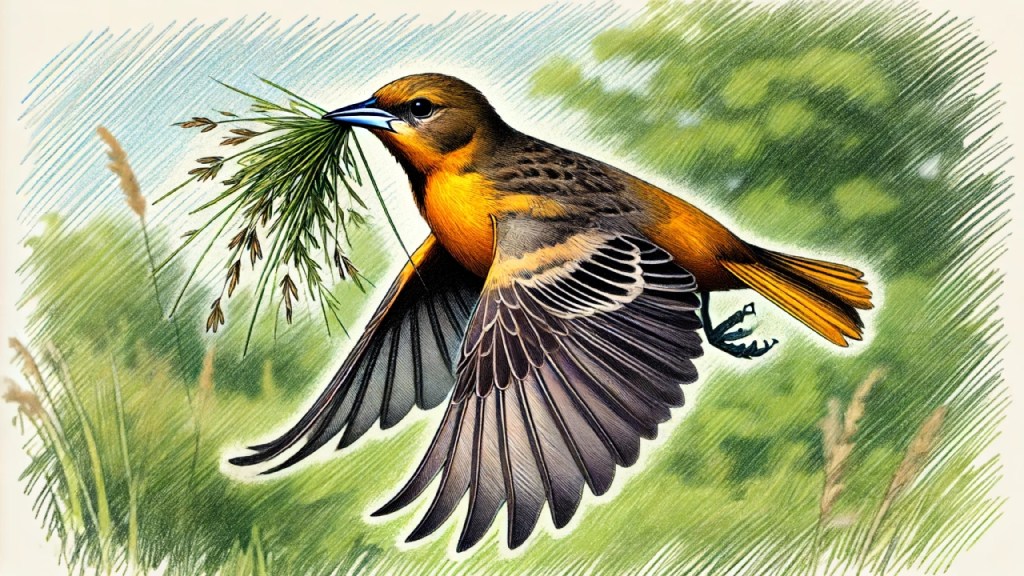
The nest-building process is meticulous and can take several days to complete. Female orioles weave the fibers into a complex structure, often tying knots and creating loops to form a strong, basket-like base. They then build up the sides of the nest, shaping it into a deep pouch that can be 3 to 5 inches deep. This design helps keep the eggs and chicks safe from predators and harsh weather conditions.
Nest Location
The location of the nest is crucial for the survival of the chicks. Baltimore Orioles prefer to place their nests high in the canopy, between 6 and 90 feet above the ground. This elevated position not only provides safety from ground-based predators but also places the nest within reach of abundant food sources like insects and fruits.
Breeding Season
The breeding season for Baltimore Orioles typically begins in late spring, around May or June. Males arrive at the breeding grounds first and establish territories by singing and displaying their bright plumage. Once the females arrive, they select mates based on the males’ displays and the quality of their territories.
Courtship
Courtship involves a series of displays and vocalizations. Males sing to attract females and often perform fluttering flights to showcase their vibrant colors. Once paired, the female starts building the nest while the male continues to defend their territory.
Egg Laying and Incubation
After the nest is completed, the female lays 3 to 7 eggs, which are pale gray to bluish-white with dark spots. The female is primarily responsible for incubating the eggs, which takes about 12 to 14 days. During this period, the male assists by bringing food to the female and keeping watch over the nest.
Raising the Chicks

Once the eggs hatch, both parents take part in feeding the chicks. The chicks are born blind and helpless, relying entirely on their parents for warmth and nourishment. The parents bring a steady supply of insects, spiders, and fruit to feed the growing chicks.
Fledging
The chicks grow rapidly and are ready to leave the nest, or fledge, about 12 to 14 days after hatching. Even after fledging, the young birds often remain close to their parents for several more weeks, learning essential survival skills such as finding food and avoiding predators.
Nest Reuse
Unlike some other bird species, Baltimore Orioles rarely reuse their nests. Each breeding season, the female constructs a new nest, which ensures that the nest is clean and free from parasites that could harm the chicks.
By understanding the nesting habits of the Baltimore Oriole, we gain a greater appreciation for their remarkable ingenuity and dedication to raising their young. Their intricate nests, careful selection of materials, and strategic placement are all testaments to their adaptability and survival skills.
Favorite Foods
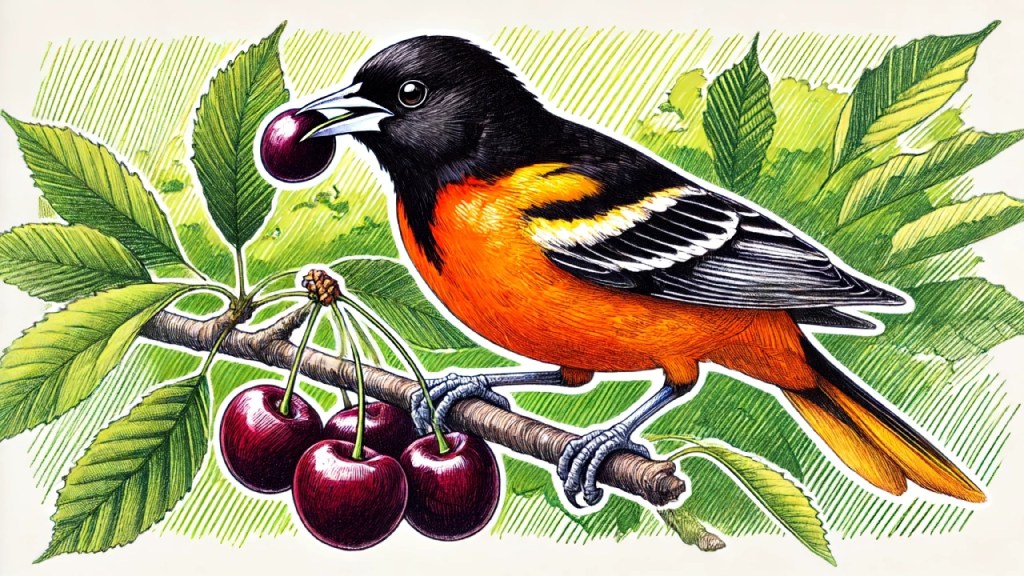
The Baltimore Oriole has a diverse and interesting diet that reflects its adaptability and the varied environments it inhabits. Understanding what these birds eat can help birdwatchers attract them to their yards and appreciate their role in the ecosystem.
Natural Diet
In the wild, Baltimore Orioles have a diet that changes with the seasons. During the breeding season, their diet is rich in insects, which provide the necessary protein for raising their young. As the seasons change, they shift to a diet that includes more fruits and nectar.
Insects
Insects make up a significant portion of the Baltimore Oriole’s diet, especially during the spring and summer months. They are particularly fond of caterpillars, beetles, grasshoppers, and spiders. These insects are abundant during the breeding season and provide the protein and nutrients essential for the growth and development of their chicks.
Orioles are also known to feed on smaller insects, like ants and aphids, which they often find on the leaves and bark of trees. Their sharp, pointed bills are perfect for picking insects out of crevices and foliage.
Fruits
As summer progresses and insect populations dwindle, Baltimore Orioles turn to fruits for sustenance. They have a particular fondness for dark-colored, juicy fruits. Some of their favorites include:
- Mulberries
- Cherries
- Huckleberries
- Serviceberries
They also enjoy eating grapes and raspberries. Orioles are known to peck at the fruit to extract the sweet juices, leaving behind a characteristic “pecked” appearance.
Nectar
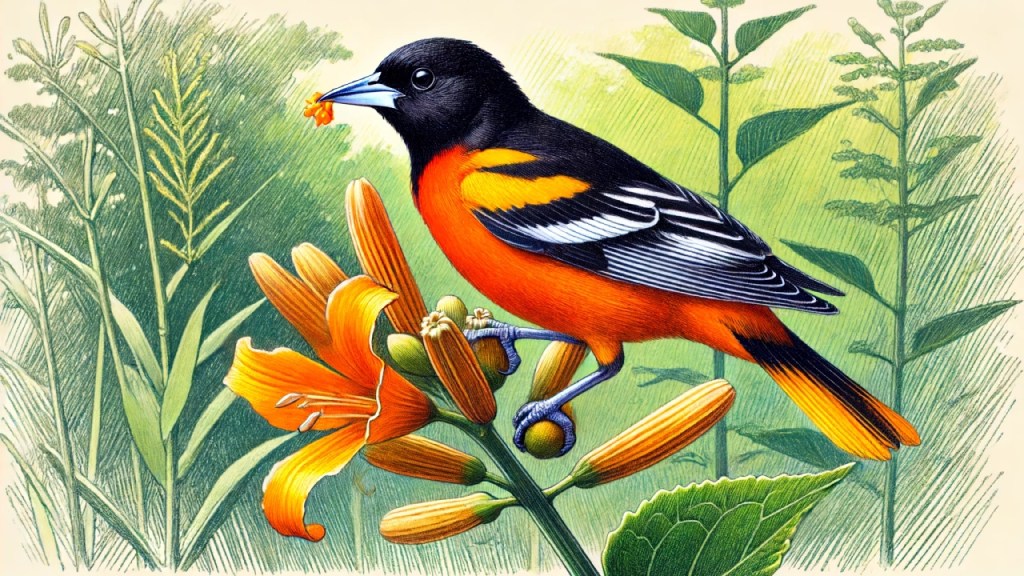
Baltimore Orioles have a sweet tooth, which is why they are often seen visiting flowering plants to sip nectar. They are particularly attracted to brightly colored flowers, especially those that are orange or red. This affinity for nectar is similar to that of hummingbirds, although orioles do not hover while feeding. Instead, they perch on the flower or nearby branch to drink the nectar.
Some common nectar sources for Baltimore Orioles include:
- Trumpet vine
- Honeysuckle
- Bee balm
- Bottlebrush
Attracting Orioles to Your Yard
If you want to attract Baltimore Orioles to your yard, providing their favorite foods is a great strategy. Here are some tips to make your yard more oriole-friendly:
Oriole Feeders
Specialized oriole feeders are designed to hold nectar, fruit, and jelly, catering to the orioles’ varied diet. These feeders often have bright orange accents to attract the birds. Fill the feeders with sugar water (a mixture of four parts water to one part sugar) and place them in a visible spot in your yard.
Fruit Offerings

Place slices of oranges, apples, or peaches on platform feeders or spike them on branches. Orioles are especially fond of oranges, so cutting them in half and placing them in a prominent spot can be very effective. The sweet scent and vibrant color of the fruit will draw them in.
Jelly
Grape jelly is a favorite treat for the Baltimore Orioles. You can offer it in small dishes or special jelly feeders. Just be sure to provide only a small amount at a time and clean the feeders regularly to prevent spoilage and mold growth.
Native Plants
Planting native flowering plants and fruit-bearing shrubs in your garden will provide natural food sources for orioles. Choose plants that bloom in bright colors and produce berries or nectar that orioles love. Some good choices include trumpet vine, bee balm, and elderberries.
Seasonal Variations
It’s important to note that the diet of Baltimore Orioles can vary based on the availability of food sources in different seasons and regions. During migration, they rely heavily on nectar and fruit to fuel their long journeys. In their wintering grounds in Central and South America, they continue to consume a mix of fruits and insects, adapting to the local food availability.
By understanding and providing the Baltimore Oriole’s favorite foods, you can enjoy the presence of these beautiful birds in your yard while supporting their nutritional needs. Watching them feed and interact with their environment offers a wonderful opportunity to appreciate their unique behaviors and vibrant colors.
Fun Facts

Baltimore Orioles are full of interesting and surprising traits that make them a favorite among birdwatchers. Here are some fun facts that will deepen your appreciation for these vibrant songbirds.
Unique Nesting Techniques
One of the most remarkable things about Baltimore Orioles is their nest-building skills. Unlike many birds that build simple cup-shaped nests, orioles weave intricate, hanging pouches. These nests are often likened to little bags or baskets suspended from tree branches, showcasing the birds’ advanced construction abilities. The female does most of the work, creating a secure and hidden environment for her eggs and chicks.
Migratory Marvels
Baltimore Orioles are long-distance migrants. They travel thousands of miles between their breeding grounds in North America and their wintering grounds in Central and South America. This journey requires significant energy and navigation skills. They typically migrate at night, using the stars to guide their way, and can cover an impressive distance in a single night.
Colorful Identity
The bright orange and black coloration of the male Baltimore Oriole is not just for show. These vivid colors play a crucial role in attracting mates and establishing territory. The more vibrant the male’s plumage, the more likely he is to attract a female. This coloration also helps in deterring rivals, making it clear that the territory is occupied.
Orioles and Orioles
The name “Oriole” is derived from the Latin word “aureolus,” meaning “golden.” Interestingly, the Baltimore Oriole is not related to the Old World orioles found in Europe, Africa, and Asia. Instead, it belongs to the New World blackbird family, Icteridae. Despite this, both groups of birds share similar bright plumage, which led to their shared name.
Song and Communication

Baltimore Orioles are known for their beautiful and melodic songs. Males are especially vocal during the breeding season, using their songs to attract females and establish territories. Their songs consist of a series of clear, flute-like notes. Each male has a unique song pattern, which can change slightly each year, making it possible to identify individual birds by their songs.
Role in Ecosystem
Baltimore Orioles play an important role in their ecosystem. By feeding on insects, they help control pest populations. Their diet of fruits and nectar also makes them important seed dispersers and pollinators. As they move from flower to flower, they transfer pollen, aiding in plant reproduction. Additionally, by consuming fruits and later excreting the seeds, they help spread various plant species.
Attracted to Specific Colors
Orioles are particularly attracted to the color orange, which is why many oriole feeders and nectar containers are designed with bright orange hues. If you want to attract Baltimore Orioles to your yard, incorporating orange elements can be very effective. This color preference extends to their choice of flowers and fruits as well.
Cultural Significance
The Baltimore Oriole holds a special place in American culture. It is the state bird of Maryland, and its name is tied to the coat of arms of Lord Baltimore, Maryland’s founding proprietor. This bird’s bright colors are also reflected in the uniforms of the Baltimore Orioles baseball team.
Adaptability

Baltimore Orioles are highly adaptable birds. They can thrive in various habitats, from open woodlands and forest edges to urban parks and suburban gardens. This adaptability helps them find food and nesting sites in diverse environments, contributing to their widespread distribution.
Birdwatching Delight
Spotting a Baltimore Oriole is always a treat for birdwatchers. Their bright colors, distinctive songs, and dynamic behaviors make them a favorite subject for observation and photography. They are often one of the first migratory birds to arrive in spring, signaling the return of warmer weather and the blooming of flowers.
These fun facts highlight the Baltimore Oriole’s unique characteristics and the joy they bring to those who observe them. Their vibrant presence and fascinating behaviors make them a true gem in the bird world.
Conservation Efforts
The Baltimore Oriole, with its striking colors and melodic songs, is a cherished sight for bird enthusiasts. However, like many bird species, it faces several threats that necessitate concerted conservation efforts. Let’s explore the challenges Baltimore Orioles face and the measures taken to protect them.
Habitat Loss

One of the primary threats to Baltimore Orioles is habitat loss. Urbanization, agricultural expansion, and deforestation reduce the availability of suitable breeding and feeding grounds. As trees are cut down and natural landscapes are altered, orioles find fewer places to build their intricate nests and find food.
Urban and Suburban Habitats
Interestingly, Baltimore Orioles have shown some adaptability by nesting in urban and suburban areas. However, these environments can still pose risks due to the presence of domestic cats, collisions with buildings, and limited natural food sources. Conservationists emphasize the importance of planting native trees and shrubs in urban landscapes to provide orioles with the resources they need.
Pesticides
The use of pesticides in agriculture and residential areas can have detrimental effects on Baltimore Orioles. These chemicals reduce the populations of insects that orioles feed on, leading to a decline in available food. Moreover, consuming contaminated insects can directly harm the birds, affecting their health and reproductive success.
Integrated Pest Management
Promoting integrated pest management (IPM) practices, which minimize the use of harmful chemicals, can help mitigate this issue. IPM strategies include using biological control agents, such as beneficial insects, and adopting organic farming practices that support a healthier ecosystem for birds and other wildlife.
Climate Change
Climate change poses a significant long-term threat to the Baltimore Orioles. Changes in temperature and weather patterns can affect the availability of food and suitable breeding habitats. For instance, earlier springs can lead to a mismatch in the timing of migration and the peak availability of insects, impacting the birds’ ability to raise their young successfully.
Research and Monitoring

Ongoing research and monitoring are crucial in understanding the impacts of climate change on Baltimore Orioles. Scientists track migration patterns, breeding success, and food availability to gather data that can inform conservation strategies. By understanding how climate change affects these birds, conservationists can develop targeted actions to mitigate its effects.
Conservation Programs
Several organizations and programs focus on the conservation of Baltimore Orioles and other migratory birds. These initiatives aim to protect habitats, conduct research, and raise public awareness about the importance of bird conservation.
North American Bird Conservation Initiative
The North American Bird Conservation Initiative (NABCI) is a collaborative effort that brings together government agencies, non-profit organizations, and academic institutions to promote bird conservation across the continent. NABCI’s work includes protecting critical habitats, supporting research, and engaging the public in conservation efforts.
Partners in Flight
Partners in Flight (PIF) is another key program dedicated to the conservation of landbirds in the Western Hemisphere. PIF works to identify species at risk, develop conservation plans, and implement strategies to protect birds and their habitats. Baltimore Orioles benefit from the collaborative efforts and resources that PIF provides.
Public Engagement

Engaging the public in conservation efforts is essential for the long-term protection of Baltimore Orioles. Birdwatchers, gardeners, and community members can all play a role in supporting these beautiful birds.
Citizen Science
Citizen science programs, such as the Cornell Lab of Ornithology’s eBird project, allow individuals to contribute valuable data on bird sightings and behaviors. By participating in these programs, bird enthusiasts help researchers track population trends and identify conservation needs.
Habitat Restoration
Individuals can also support oriole conservation by creating bird-friendly habitats in their yards and communities. Planting native trees and shrubs, providing fresh water sources, and avoiding pesticide use are simple yet effective ways to help Baltimore Orioles thrive.
International Cooperation
Since Baltimore Orioles are migratory birds, international cooperation is vital for their conservation. Efforts to protect habitats in both their breeding and wintering grounds require collaboration across borders.
Migratory Bird Treaties
International agreements, such as the Migratory Bird Treaty Act, facilitate cooperation between countries to protect migratory birds. These treaties establish legal frameworks for conserving habitats, regulating hunting, and addressing threats like habitat loss and climate change.
Through a combination of habitat protection, sustainable practices, public engagement, and international cooperation, we can ensure that Baltimore Orioles continue to grace our skies with their vibrant presence and enchanting songs. By supporting conservation efforts, we help safeguard the future of these remarkable birds and the ecosystems they inhabit.
Conclusion

As we wrap up our exploration of the Baltimore Oriole, it’s clear that these birds are not only visually stunning but also play a crucial role in our ecosystems. From their vibrant plumage and intricate nests to their migratory journeys and diverse diets, Baltimore Orioles are truly remarkable. They add a splash of color and a melody of songs to our natural world, making them a favorite among birdwatchers and nature enthusiasts.
Understanding their nesting habits, favorite foods, and fun facts about their behavior enhances our appreciation of these birds. Moreover, recognizing the conservation efforts aimed at protecting Baltimore Orioles underscores the importance of preserving their habitats and ensuring their survival amidst various threats.
Whether you’re hoping to spot a Baltimore Oriole in your backyard or are fascinated by its beauty and behavior, remember that every small action to support bird conservation makes a significant difference. By creating bird-friendly environments and supporting conservation initiatives, we can help ensure that future generations will continue to enjoy the presence of these incredible birds. Thank you for joining us on this journey through the life of the Baltimore Oriole. Keep your binoculars handy, your feeders stocked, and your eyes on the trees—you never know when you might catch a glimpse of this orange-and-black marvel.


 Wing Watchers with Wagner
Leave a comment