

Introduction
Welcome, bird enthusiasts and nature lovers! Today, we will dive into the fascinating world of the American Goldfinch, a small but vibrant bird that is sure to capture your heart. Known for their bright yellow plumage and cheerful songs, these delightful creatures are a favorite among birdwatchers across North America. Whether you’ve spotted one flitting about your backyard or heard their melodic tunes during a morning walk, the American Goldfinch brings a splash of color and joy to our natural surroundings.
We will explore the various aspects of the American Goldfinch’s life, from its striking appearance to its nesting habits, favorite foods, and some intriguing fun facts. We will also discuss the important conservation efforts in place to protect these beautiful birds. By the end of our journey, you will have a deeper appreciation for the American Goldfinch and perhaps be inspired to look out for these charming birds in your neighborhood.
Appearance
Breeding Season Plumage
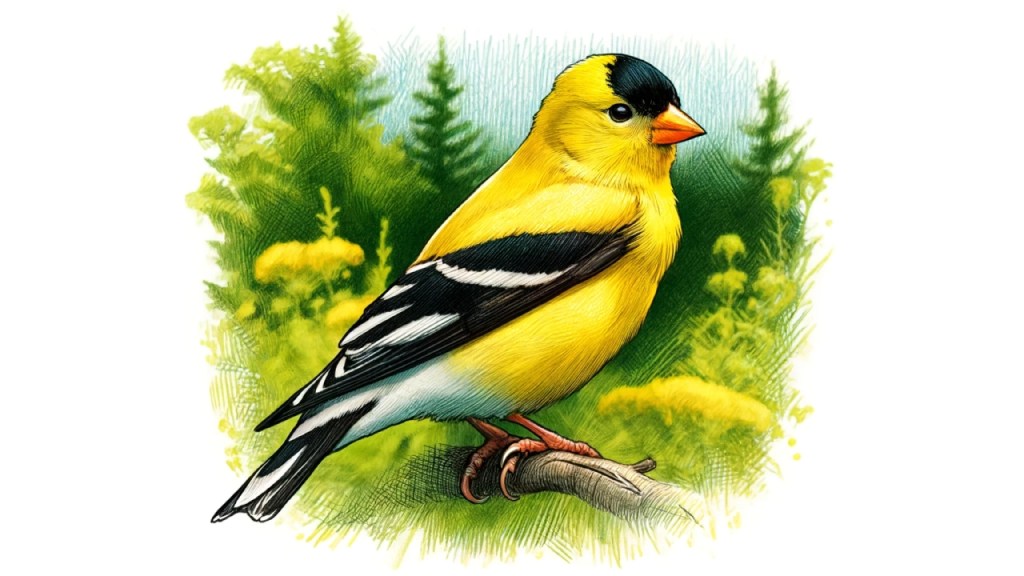
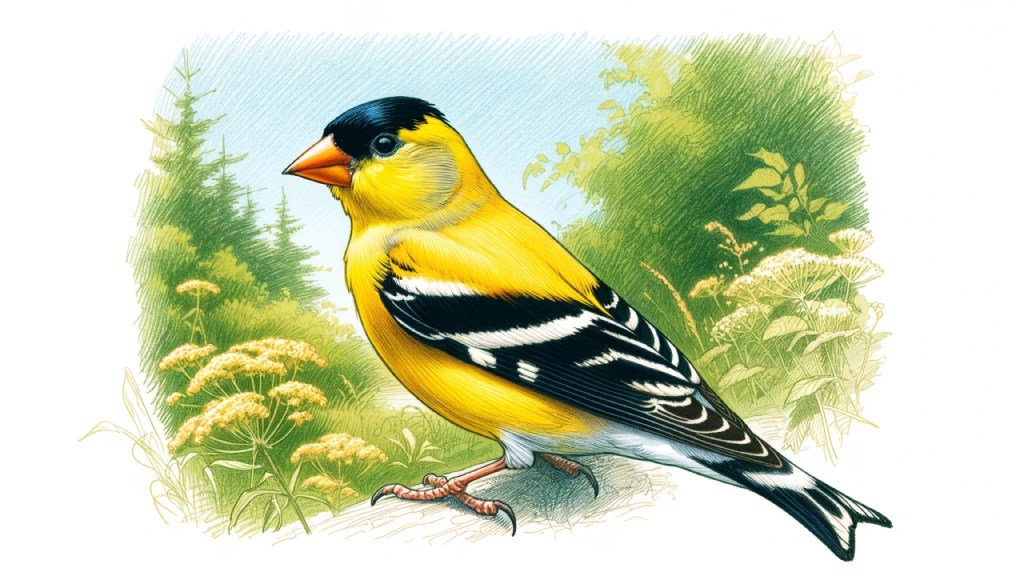
During the breeding season, the male American Goldfinch is easily identifiable by his bright yellow plumage, which stands out vividly against the green summer landscape. This vibrant yellow is paired with a striking jet-black cap on his head, black wings with white markings, and a notched tail. The male’s beak is a bright orange during this period, creating a beautiful contrast with his golden feathers.
In comparison, the female American Goldfinch displays a more subdued coloration. Her plumage is a softer olive-yellow, lacking the bold black cap of the male, providing her with some protection while nesting. However, she still retains the characteristic black wings with white markings and an orange beak.
Seasonal Changes
As the seasons change, so does the American Goldfinch’s appearance. In winter, both males and females adopt a more muted look to blend into the winter landscape. Males shed their bright yellow feathers for a brownish-olive hue similar to the females, and their beaks also turn a paler color. This seasonal transformation is unique among finches and adds to the allure of the American Goldfinch.
Juvenile American Goldfinches resemble winter adults with their dull brownish-yellow plumage. This coloration helps them stay hidden from predators as they mature and develop the vibrant colors of their adult counterparts.
Size and Structure

The American Goldfinch is a small bird, measuring about 4.3 to 5.1 inches in length, with a wingspan of 7.5 to 8.7 inches. They are lightweight, weighing approximately 0.4 to 0.7 ounces, which makes them agile and able to maneuver easily among trees and shrubs.
Wing Characteristics
The American Goldfinch’s wings are not only beautiful but also highly functional. Their black wings with white stripes allow for remarkable flight patterns, including an undulating flight style where they alternate between rapid flapping and gliding. This unique flying style is both efficient and mesmerizing to observe.
The American Goldfinch is a small bird with a big presence. Its vibrant colors, seasonal transformations, and graceful flight make it a favorite among birdwatchers and nature enthusiasts.
Nesting Habits
Nest Construction
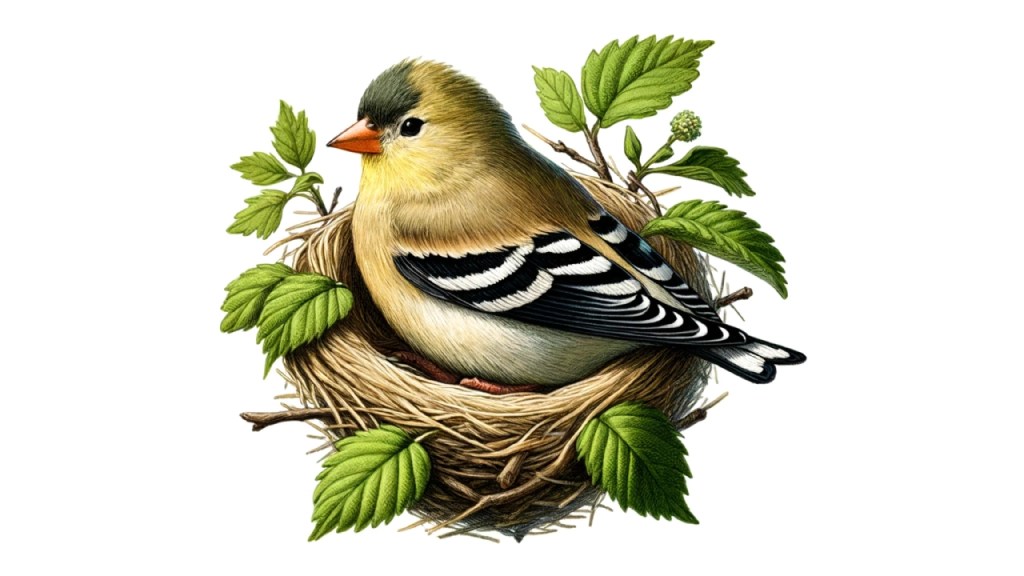
The American Goldfinch is quite particular about its nesting habits, often waiting until mid to late summer to begin building its nest. This timing aligns with the peak abundance of seeds, which are a crucial food source for their young. Unlike many other birds, American Goldfinches are known for their late breeding season.
When it comes to nest construction, the female takes the lead. She selects a location that is well-concealed, typically in a shrub or a small tree, anywhere from 4 to 10 feet off the ground. The nest itself is a marvel of natural engineering. The female meticulously weaves plant fibers, grass, and spider silk to create a compact and sturdy cup-shaped structure. The nest’s inner lining is often made of soft materials like plant down and feathers, providing a cozy environment for the eggs.
Egg Laying and Incubation
Once the nest is ready, the female lays between 4 to 6 pale blue or greenish eggs. The incubation period lasts about 12 to 14 days, during which the female diligently keeps the eggs warm. During this time, the male plays a supportive role, bringing food to the female and guarding the nest from potential threats.
The eggs hatch in sequence, usually a day or two apart. The hatchlings are born blind, featherless, and dependent on their parents. The female continues to brood the young, keeping them warm, while the male increases his role in foraging and providing food.
Raising the Young

Feeding the young American Goldfinches is a team effort. Both parents are involved in bringing food to the nestlings. Unlike many other songbirds that feed their young insects, American Goldfinches primarily feed their chicks regurgitated seeds. This diet is rich in nutrients and supports the rapid growth of the chicks.
The young remain in the nest for about 11 to 17 days. During this period, they grow rapidly, developing feathers and gaining strength. As they approach fledging, the nest becomes increasingly cramped, and the chicks start to exercise their wings in preparation for their first flight.
Fledging and Independence
Fledging is a critical stage in the life of young American Goldfinches. They leave the nest but remain under the watchful eyes of their parents, who continue to feed them for a short period. The fledglings stay close to the nest site, gradually learning to forage on their own and develop the skills needed for survival.

As the young gain independence, the family group often stays together for a while, moving through the landscape in search of food. The social structure of American Goldfinches is quite fluid, with flocks forming and disbanding as the seasons change and food sources shift.
The nesting habits of the American Goldfinch are a fascinating blend of timing, meticulous construction, and dedicated parenting. These birds have adapted their breeding cycle to the availability of seeds, ensuring their young have the best chance of survival.
Favorite Foods
Seed Preferences

The American Goldfinch has a strong preference for seeds, which make up the bulk of its diet. These birds are primarily granivorous, meaning they rely heavily on a variety of seeds for their nutritional needs. One of their favorite seed sources is the thistle, particularly from plants like the bull thistle and the Canada thistle. The fine, downy seed heads of these plants are especially attractive to Goldfinches, providing them with a rich and abundant food supply.
Another favored seed source for the American Goldfinch is sunflower seeds. Whether found in the wild or provided in bird feeders, sunflower seeds offer a high-energy meal that is easy for these birds to access and enjoy. Additionally, Goldfinches are fond of seeds from dandelions, asters, and other composite flowers, which they deftly pluck from the seed heads using their specialized beaks.
Feeding Behavior
American Goldfinches have a unique and somewhat acrobatic feeding style. They are often seen hanging upside down or sideways from plant stems and seed heads as they extract seeds. This behavior not only demonstrates their agility but also allows them to access seeds that other birds might find difficult to reach.
Their conical, sharp beaks are perfectly adapted for their seed-based diet. These beaks enable them to crack open efficiently and consume seeds, even those with hard shells. Goldfinches are also known to store seeds in their crops, a special part of their esophagus, which allows them to gather and transport food back to their feeding spots or nests.
Seasonal Diet Changes
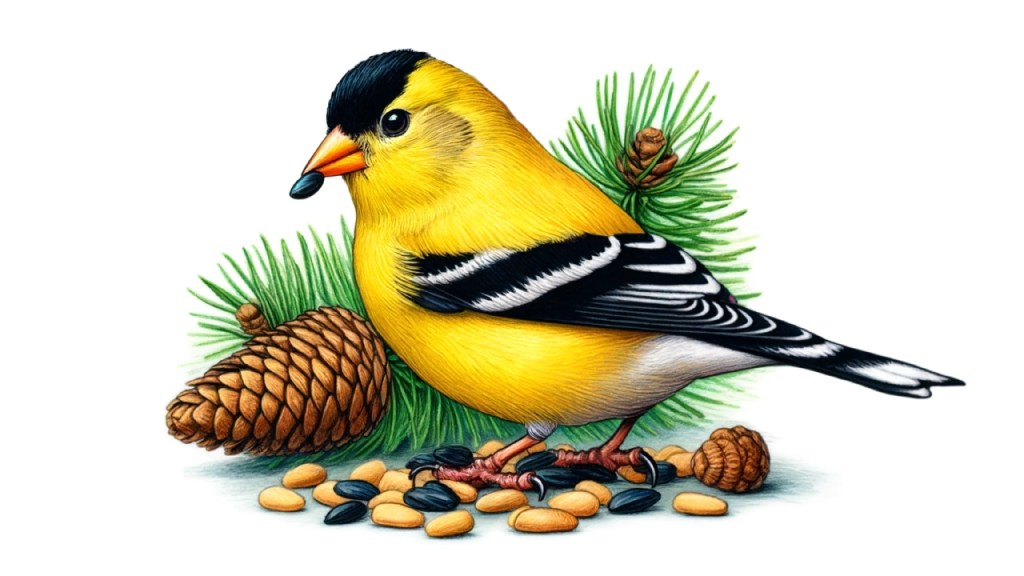
The diet of the American Goldfinch can vary with the seasons, depending on the availability of seeds. During the spring and summer months, when a variety of plants are in bloom, these birds have access to a diverse array of seeds. This abundance supports their breeding activities and the raising of their young.
In the fall and winter, the American Goldfinch’s diet shifts to include more seeds from trees and shrubs, such as birch, alder, and pine. During these colder months, they also visit backyard bird feeders more frequently, taking advantage of the sunflower seeds, nyjer (thistle) seeds, and other offerings provided by bird enthusiasts. Attract American Goldfinches to your backyard with this specially designed birdfeeder.
Importance of Water
While seeds are their primary food source, American Goldfinches also require water for drinking and bathing. They are often seen visiting birdbaths, streams, and puddles to quench their thirst and keep their plumage clean. Providing a reliable water source in your garden can attract these charming birds and support their health and well-being.
Role in Ecosystem

By consuming a wide variety of seeds, American Goldfinches play a crucial role in their ecosystems. They help control plant populations, particularly those of weedy species like thistles and dandelions. Additionally, as they forage, they contribute to the dispersal of seeds, facilitating plant reproduction and diversity.
The American Goldfinch’s diet is a fascinating aspect of its life, centered around a preference for seeds and adaptable feeding behaviors. Their diet not only influences their habitat choices and seasonal movements but also highlights their important role in maintaining ecological balance.
Fun Facts
Molting Twice a Year
One of the most intriguing aspects of the American Goldfinch is its molting pattern. Unlike many other bird species that molt only once a year, the American Goldfinch molts twice. They undergo a complete molt in the late summer after the breeding season and then a partial molt in late winter. This results in the dramatic seasonal color changes observed in males, who transform from their vibrant yellow breeding plumage to a more subdued olive-brown during the non-breeding season.
Acrobatic Feeders

Goldfinches are known for their acrobatic feeding habits. They often hang upside down or sideways from plant stems and seed heads, demonstrating remarkable agility and balance. This behavior allows them to access seeds in places that might be difficult for other birds to reach. It’s a treat to watch them deftly maneuvering to extract seeds from thistle heads or sunflower plants.
Flight Call
The American Goldfinch has a distinctive flight call that can be heard as they flit about. This call, often described as “po-ta-to-chip,” is a series of high-pitched notes that they repeat in flight. This cheerful sound is not only a delight for birdwatchers but also serves as a way for Goldfinches to communicate and maintain contact with each other while flying.
Adaptations for Seed Eating
The American Goldfinch has several adaptations that make it an efficient seed eater. Their conical beaks are perfect for cracking open seeds, and their agile feet allow them to grip stems and seed heads securely. Additionally, their digestive system is specially adapted to process seeds, which form the majority of their diet.
Nest Defense Strategy

Goldfinches have a unique strategy for defending their nests against parasitic birds like the Brown-headed Cowbird, which lays its eggs in the nests of other birds. By nesting later in the summer, Goldfinches reduce the risk of parasitism, as Cowbirds have typically finished their breeding season by this time. This clever timing helps ensure that their own chicks receive all the attention and resources they need.
Symbol of Happiness
The American Goldfinch has long been associated with happiness and positivity. Its bright yellow plumage and cheerful song make it a symbol of joy in many cultures. In folklore and literature, the Goldfinch often represents the beauty and vitality of nature, bringing a sense of delight to those who observe it.
Long Migration
While some Goldfinch populations are resident year-round in their habitats, others undertake long migrations. Those in the northern parts of their range often migrate to the southern United States and Mexico during the winter months. This migration helps them find ample food sources and avoid the harsh northern winters.
Social Behavior

Goldfinches are highly social birds. Outside the breeding season, they form flocks that can number in the dozens or even hundreds. These flocks move together in search of food and water, creating a lively and dynamic scene wherever they go. Their social nature also extends to their interactions at bird feeders, where they often feed in groups.
Lifespan
In the wild, American Goldfinches typically live up to three to six years, though some individuals can live longer. Various factors, including predation, food availability, and environmental conditions, can influence their lifespan. In captivity, where they are protected from predators and provided with consistent food, they can live up to ten years or more.
The American Goldfinch is a bird full of fascinating traits and behaviors. From its unique molting pattern and acrobatic feeding habits to its cheerful flight call and social nature, there is much to admire about these delightful creatures.
Conservation Efforts
Habitat Preservation

One of the primary conservation efforts for the American Goldfinch involves preserving their natural habitats. These birds thrive in open areas with abundant wildflowers, meadows, and fields. Conservation organizations work to protect these habitats from urban development and agricultural expansion. By maintaining these open spaces, we ensure that Goldfinches have access to the diverse plant species they rely on for food and nesting materials.
Efforts also include restoring native plant species in areas where they have been depleted. Planting native thistles, sunflowers, and other seed-producing plants not only supports Goldfinches but also benefits other wildlife and promotes biodiversity. Community initiatives and public awareness campaigns encourage homeowners and land managers to incorporate native plants into their gardens and landscapes.
Bird-Friendly Practices
Promoting bird-friendly practices among the general public is another key aspect of conservation. Simple actions, such as providing clean bird feeders with appropriate seeds like nyjer and sunflower seeds, can make a significant difference. Ensuring birdbaths are filled with fresh water helps Goldfinches stay hydrated, especially during hot summer months.
Reducing the use of pesticides and herbicides in gardens and agricultural areas also benefits Goldfinches and other birds. These chemicals can reduce the availability of seeds and insects that birds rely on for food. By adopting organic gardening practices, we create safer environments for these birds to thrive.
Monitoring and Research
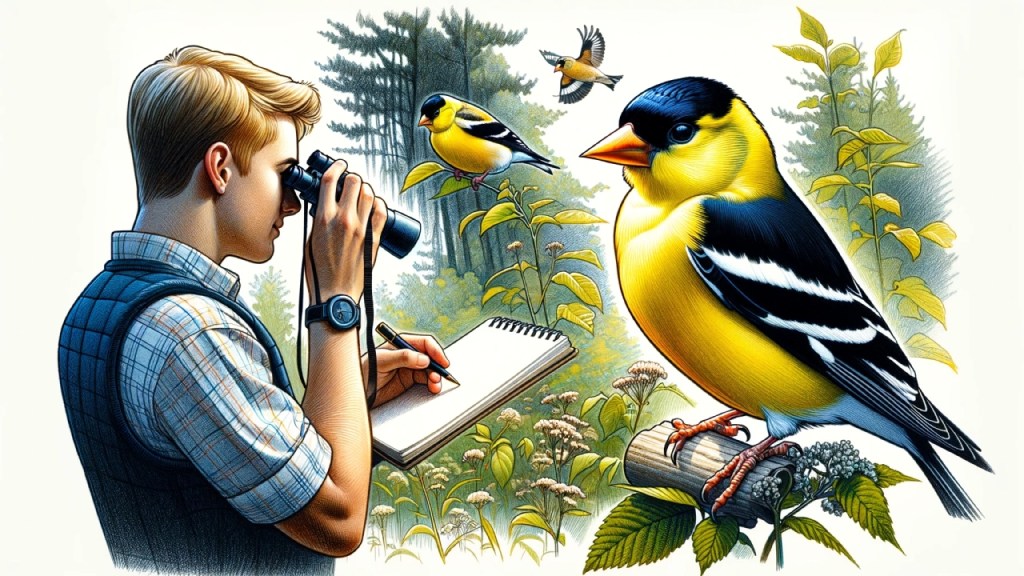
Ongoing monitoring and research are essential for understanding the health and status of American Goldfinch populations. Ornithologists and citizen scientists participate in bird surveys and breeding bird atlases to track population trends and distribution. Programs like the North American Breeding Bird Survey and Project FeederWatch provide valuable data that inform conservation strategies.
Research also focuses on understanding the impacts of climate change on Goldfinch populations. Changes in temperature and precipitation patterns can affect the availability of food and suitable nesting sites. By studying these impacts, scientists can develop conservation plans that address future challenges and ensure the resilience of Goldfinch populations.
Mitigating Threats
Addressing specific threats to American Goldfinches is a critical component of conservation efforts. Window collisions are a significant hazard for many birds, including Goldfinches. Conservation organizations promote the use of window decals and other deterrents to reduce these collisions. Additionally, keeping cats indoors helps protect Goldfinches and other small birds from predation.
Habitat fragmentation poses another threat to Goldfinch populations. Conservationists work to create and maintain wildlife corridors that connect fragmented habitats, allowing birds to move freely and access resources. These corridors are particularly important for migratory populations that travel long distances between breeding and wintering grounds.
Education and Advocacy

Educating the public about the importance of conservation and the role of American Goldfinches in our ecosystems is vital. Schools, nature centers, and community groups offer programs that teach people of all ages about birdwatching, habitat preservation, and sustainable practices. By fostering a love for birds and nature, these programs inspire individuals to take action in their communities.
Advocacy at the local, state and national levels also plays a crucial role in conservation. Organizations like the Audubon Society and the American Bird Conservancy work to influence policies that protect birds and their habitats. Through legislative advocacy and public campaigns, they raise awareness about the need for stronger environmental protections and funding for conservation programs.
The conservation efforts for the American Goldfinch involve a multifaceted approach that includes habitat preservation, bird-friendly practices, monitoring and research, threat mitigation, and education and advocacy. By working together, we can ensure that these beautiful birds continue to grace our landscapes for generations to come.
Conclusion
The American Goldfinch, with its vibrant plumage, cheerful song, and acrobatic feeding habits, is a beloved bird that captures the hearts of birdwatchers and nature enthusiasts alike. Throughout this exploration, we’ve delved into various aspects of the Goldfinch’s life, from its striking appearance and unique nesting habits to its dietary preferences and fascinating behaviors. We’ve also highlighted the critical conservation efforts aimed at preserving these beautiful birds and ensuring their continued presence in our natural world.
As we’ve seen, the American Goldfinch is more than just a pretty bird. It plays a vital role in its ecosystem by controlling plant populations and dispersing seeds. Its adaptability, social nature, and resilience make it a true marvel of nature. By understanding and appreciating these qualities, we can better support and protect Goldfinches and other wildlife. Whether you’re a seasoned birdwatcher or a curious newcomer, there’s always more to learn and discover about the American Goldfinch. So, the next time you see a flash of yellow in your garden or hear the distinctive “po-ta-to-chip” call, take a moment to appreciate the wonder of these delightful creatures. Your efforts to create bird-friendly habitats and support conservation initiatives can make a significant difference in ensuring that the American Goldfinch continues to thrive.


 Wing Watchers with Wagner
Leave a comment