

Introduction
The American Crow is a familiar sight across most of North America, from remote forests to bustling city parks. These intelligent birds are part of the Corvidae family, which is renowned for its smart and adaptable members. The American Crow’s all-black plumage, raucous calls, and bold nature make it one of the most recognizable and frequently encountered birds in urban and rural landscapes.
Crows are not just ubiquitous; they are also masters of adaptation. Thriving in a variety of habitats, they demonstrate remarkable versatility in their behavior and diet, which has allowed them to become one of the most successful avian species in North America. This adaptability is also reflected in their social structure, which ranges from solitary individuals to large communal groups that can include hundreds of crows.
Join us as we explore the fascinating aspects of the American Crow, from its striking appearance and complex social behavior to its intriguing nesting habits and diet. By understanding more about these clever birds, we can appreciate their role in ecosystems and the challenges they face in the wild. Now, let’s uncover the secrets of one of nature’s most watchful observers.
Appearance

General Description
The American Crow is immediately recognizable by its robust build, glossy black feathers, and stout beak. Typically, these birds measure about 17 to 21 inches in length, with a wingspan ranging from 33 to 39 inches. Their feathers exhibit a striking iridescence in sunlight, casting hues of blue and purple that contrast with their overall black coloration. This play of colors highlights their meticulous grooming habits.
Feather Structure
Crows possess a layered feather structure that not only contributes to their sleek appearance but also serves practical functions. The outer feathers are stiff and water-resistant, aiding in flight efficiency and moisture protection. Beneath these, softer down helps with insulation, which is crucial for surviving in diverse climates, ranging from the cold northern winters to more temperate regions.
Beak and Eyes
One of the most distinctive features of the American Crow is its strong, conical beak, adapted for a varied diet. The beak is all black, matching their plumage seamlessly. Their eyes are dark brown, almost blending into their face, giving them a watchful and somewhat mysterious expression. These keen eyes are vital for spotting food and predators from great distances.
Size Variation
While generally consistent in size and shape, there is slight regional variation among populations. Crows in the northern parts of their range tend to be larger, a common trait known as Bergmann’s Rule, which suggests that larger sizes are selected for in colder climates to conserve body heat.
Comparison with Similar Species

The American Crow is often confused with the Common Raven, another black corvid. However, ravens are significantly larger and possess a heavier bill and a shaggier throat. The crow’s call, a distinct “caw caw,” is sharper and higher pitched compared to the raven’s deeper and more resonant “cronk.”
Nesting Habits
Nest Location
American Crows are versatile and opportunistic when it comes to choosing nesting sites. They typically select tall trees, but the exact location can vary widely—from secluded woodland areas to noisy urban settings. Crows may also nest on human-made structures, adapting well to the urban environment. The height of the nest provides a strategic advantage, offering protection from predators and a good view of the surrounding area.
Nest Construction
Crow nests are robust structures made of sticks and twigs, lined with softer materials like grass, bark, feathers, and animal fur. Both male and female crows collaborate in the nest-building process, which can take up to two weeks. The result is a sturdy platform that supports the eggs and the nurturing of young crows.
Egg Laying and Incubation
A typical clutch consists of 4 to 6 pale greenish to bluish eggs, speckled with brown. The female primarily incubates the eggs for about 18 days, during which the male provides food and protection. This close partnership is essential for the survival of their offspring, especially in areas with high predator populations.
Fledging and Parental Care

Once hatched, the crow chicks, or nestlings, are altricial—meaning they are born vulnerable and dependent on parental care. They remain in the nest for about 4 to 5 weeks, during which both parents feed them a diet of insects, worms, and other small animals. Post-fledging, juveniles often stay with their parents throughout the winter, forming larger family groups that contribute to communal roosts.
Social Structure in Breeding
Crows are known for their complex social structures, which play a critical role in their breeding success. Older offspring from previous broods often assist in rearing younger siblings, a behavior known as cooperative breeding. This not only increases the survival rates of the chicks but also provides a learning experience for the older siblings.
Favorite Foods
Diet Overview
The American Crow is an omnivore with a highly varied diet, reflecting its adaptability to different environments. This flexibility in feeding habits allows crows to thrive in almost any habitat, from rural farmlands to urban centers. They are not picky eaters and will consume practically anything edible.
Natural Food Sources

In natural settings, crows feast on a wide array of items, including insects, earthworms, seeds, and fruits. During the spring and summer, their diet is heavily insect-based, which provides high protein essential for breeding and growth. They also eat small animals such as frogs, mice, and other birds’ eggs and nestlings, mainly when other food sources are scarce.
Scavenging Behavior
One of the crow’s key survival strategies is scavenging. They are famous for their ability to utilize food sources that other species overlook, including carrion and garbage. This not only helps clean up the environment but also provides a steady food supply. Crows have been observed following garbage trucks and frequent landfill sites, which are treasure troves of discarded food.
Interaction with Human Habitats
In urban areas, American Crows adapt their diet to include human food waste. They are familiar visitors to picnic areas, parking lots, and outdoor restaurants where they can snatch unattended food items. This opportunistic feeding behavior sometimes leads them into conflict with humans, particularly in areas where they are considered pests.
Seasonal Variations
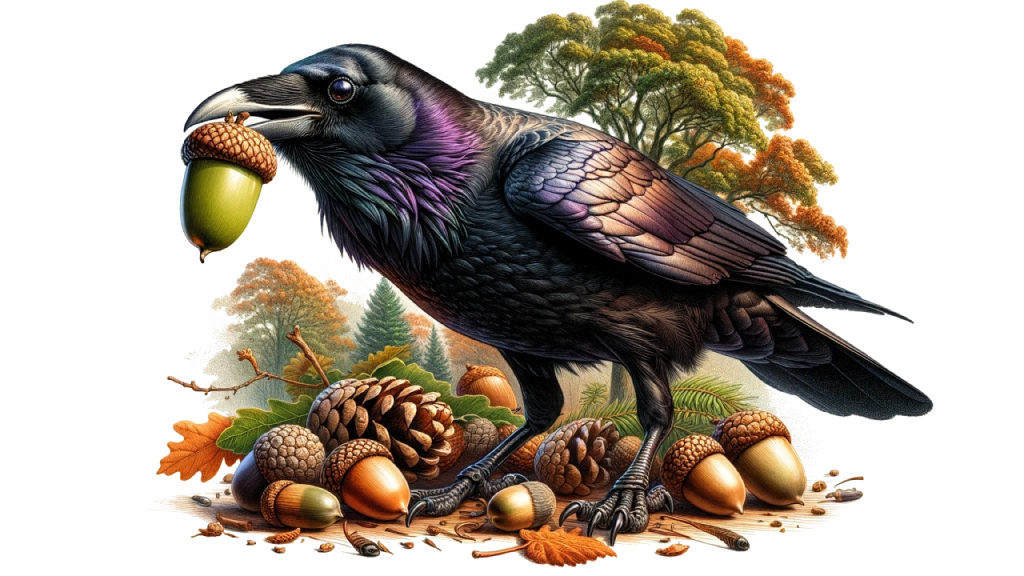
The crow’s diet also changes with the seasons. In autumn, they shift to consuming more nuts and seeds, such as acorns and walnuts, which are abundant. This helps them build up fat reserves for the winter. During colder months, their ability to exploit human-associated food sources becomes even more crucial as natural food becomes scarce.
Fun Facts
Intelligence and Tool Use
American Crows are among the most intelligent birds in the world. They are known for their problem-solving abilities and have been observed using tools—a behavior once thought to be exclusive to humans and primates. For example, crows have been seen crafting hooks from twigs to retrieve insects from hard-to-reach places, demonstrating their ingenuity.
Complex Communication
Crows have a sophisticated system of communication that includes a variety of sounds, each with different meanings. These sounds range from warning calls to expressions of delight. They can also mimic sounds from their environment, including human voices. This vocal flexibility allows them to convey complex messages to each other, enhancing their social interactions.
Playful Behavior

Crows are not all business; they also have a playful side. Observations show that crows engage in activities purely for fun, such as sliding down snowy rooftops or playing catch with small objects. Such play is thought to be important for learning and social bonding, especially among younger birds.
Mourning Rituals
Crows may hold what can be described as ‘funerals’ for deceased comrades. When a crow dies, others often gather around the body. This behavior is not fully understood, but it’s believed that these gatherings may be a way to learn about potential dangers in the area or to mourn the loss of a fellow crow.
Memory and Recognition
Crows have remarkable memories. They can recognize individual human faces and remember them for years. They are known to bring gifts like shiny objects to people who have fed or helped them in the past. Conversely, they can also hold grudges against those who have harmed them, demonstrating their complex emotional capacity.
Conservation Efforts
Status and Threats

The American Crow is currently classified as Least Concern by the IUCN Red List, indicating a stable population across its extensive range. However, this status does not mean it is without challenges. Habitat loss due to urbanization and agricultural development threatens its natural environment. Additionally, crows are sometimes targeted for population control due to their perceived nuisance in urban areas and their impact on crops.
Legal Protections
Crows are protected under the Migratory Bird Treaty Act in the United States, which makes it illegal to harm or capture these birds without a permit. This legislation is crucial for their conservation, as it helps manage populations without resorting to harmful measures. Education about the ecological role of crows can also help mitigate human-crow conflicts.
Research and Monitoring
Ongoing research is vital for understanding the population dynamics and ecological impact of American Crows. Scientists conduct studies on their behavior, diet, and habitat use, which can inform conservation strategies and urban planning to accommodate both human and crow populations. Citizen science projects also play a significant role, with birdwatchers contributing to long-term monitoring efforts.
Community Engagement

Educating the public about crows’ benefits helps garner support for conservation efforts. Programs that teach about crows’ intelligence and ecological importance can reduce hostility and encourage coexistence. Additionally, promoting bird-friendly practices in urban areas, like providing proper waste disposal and protecting nesting sites, can improve the survival rates of urban crows.
Conservation Successes
Efforts to create environments where crows and humans coexist are showing positive outcomes. For example, modifying urban landscapes to include more green spaces and tree cover not only benefits crows but also enhances the overall biodiversity and quality of life in these areas. Recognizing the crow’s role in ecosystem functioning—as a scavenger and a predator—can highlight their importance in maintaining ecological balance.
Conclusion
The American Crow, with its stark black plumage and captivating intelligence, is more than just a common sight in North American landscapes—it’s a testament to adaptability and resilience. These birds have not only managed to survive in a rapidly changing world but have thrived in environments as varied as remote forests and urban centers. Their ability to exploit diverse food sources and adapt their nesting habits to different surroundings makes them exemplary figures in the avian world.

However, despite their adaptability, crows face ongoing challenges such as habitat loss and negative human perceptions. Conservation efforts, backed by legal protections and community engagement, are crucial to ensuring that crows continue to flourish. These efforts not only help protect the crows but also enhance our understanding of these complex creatures and the roles they play in ecosystems.
As we continue to share our spaces with these intelligent birds, it becomes increasingly important to appreciate their presence and the ecological benefits they provide. By fostering a coexistence mindset and supporting conservation initiatives, we can ensure that the American Crow remains a vital part of our natural heritage for generations to come.


 Wing Watchers with Wagner
Leave a comment