Introduction
Dive into the enchanting world of the Scottish Crossbill, the only bird species endemic to the United Kingdom. This elusive avian resident of the Caledonian forests has sparked the curiosity of ornithologists and bird lovers with its unique characteristics and specialized lifestyle. Nestled within the ancient pine woodlands of Scotland, the Scottish Crossbill leads a life intricately woven into the fabric of its habitat.
Let’s explore the distinctive appearance of the Scottish Crossbill, its feeding and nesting habits, and the particular preferences that dictate its diet. We’ll also uncover some fun facts highlighting the bird’s unique place in the ecosystem and the conservation efforts crucial for its survival. We aim to bring you closer to understanding the Scottish Crossbill, shedding light on its behavior, ecological role, and the importance of preserving its natural environment.

As we journey through the dense, whispering pines where the Scottish Crossbill thrives, we’ll discover a bird that is not only a symbol of the Scottish wilderness but also a testament to the complex interdependencies of nature. The Scottish Crossbill’s story is one of adaptation and resilience, offering insights into the region’s broader challenges and triumphs of wildlife conservation. Join us as we explore the life of this fascinating species, celebrating the unique heritage and natural beauty of Scotland’s feathered inhabitant.
Appearance
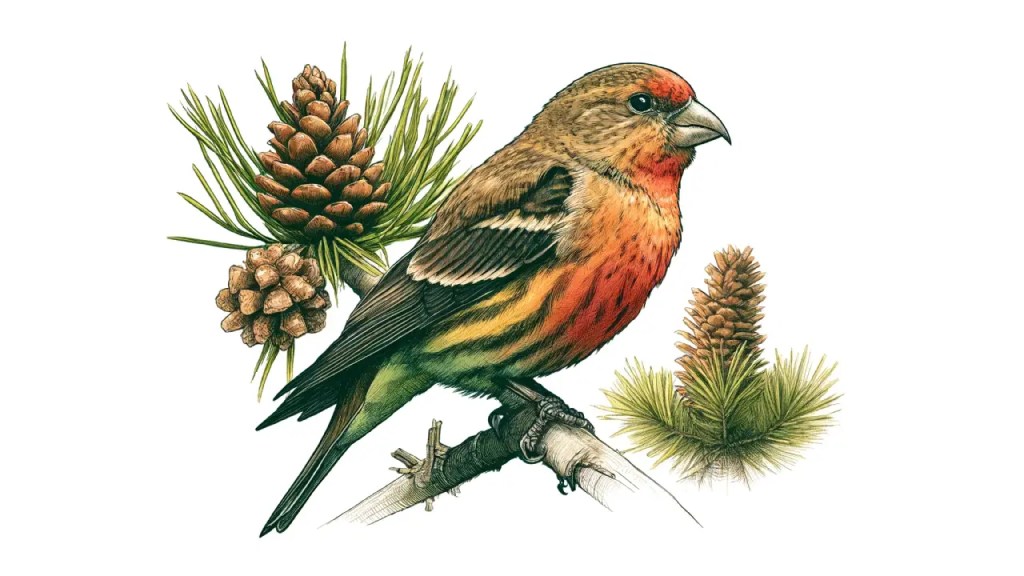
The Scottish Crossbill, a bird cloaked in mystery and endemic to the Scottish Highlands, boasts a unique appearance that sets it apart from other crossbill species. With subtle yet distinct features, this bird is specially adapted to its coniferous forest habitat.
Plumage and Size
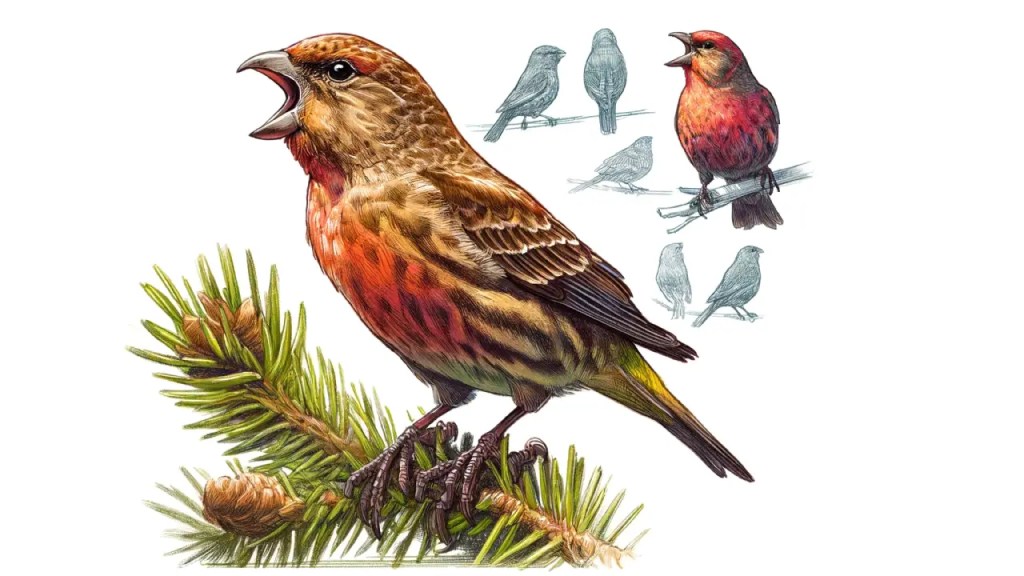
The Scottish Crossbill is a robust bird, similar in size to other crossbills, measuring approximately 6 to 7 inches in length. Its plumage is a blend of colors, primarily consisting of deep reddish-brown hues for males, while females display more subdued olive-green tones. Both sexes exhibit darker wings and tail feathers, strikingly contrasting their body color. The plumage provides excellent camouflage among the pine needles and cones and plays a role in sexual and species identification.
Distinctive Bill
The Scottish Crossbill’s most notable feature is its crossed bill, from which it gets its name. This unique adaptation allows the bird to efficiently extract seeds from pine cones, which are its primary food source. The bill’s size and shape are slightly different from those of similar crossbill species, with a more substantial and curved upper mandible perfectly suited to the tough cones of the native Scots pine.
Eye and Leg Features
Their eyes are sharp and alert, set in a face where the crossed bill dominates the profile. The Scottish Crossbill’s legs and feet are strong and sturdy, equipped with powerful claws for gripping and maneuvering through branches. These claws enable the bird to hang upside down or at odd angles while foraging.
Seasonal Variations

The plumage of the Scottish Crossbill may undergo slight changes throughout the year. During the breeding season, the males can exhibit brighter colors to attract females, while in winter, the plumage may become slightly duller, aiding in camouflage against the stark, snowy backdrop of their highland habitat.
Juvenile Appearance
Young Scottish Crossbills are more uniformly brown and lack the distinct coloration of the adults. They undergo a molt as they mature, gradually developing the species’ characteristic plumage and bill shape.
Subspecies Distinctions
While the Scottish Crossbill is considered a distinct species, it closely resembles the Parrot and Common Crossbill in appearance. However, subtle differences in bill structure, size, and vocalizations help distinguish the Scottish Crossbill from its relatives. These differences are critical for ornithologists and birdwatchers in identifying the species within its natural habitat.
The appearance of the Scottish Crossbill is a testament to the evolutionary forces at play in Scotland’s isolated woodlands, resulting in a bird perfectly attuned to its environment. From the distinctive crossed bill to the rich, camouflage-friendly plumage, every aspect of its appearance has been shaped by the need to survive and thrive in the Caledonian forests, making the Scottish Crossbill a unique emblem of Scottish natural heritage.
Nesting Habits

The Scottish Crossbill’s nesting habits are as unique as the bird itself. They are intricately tied to the ancient Caledonian forests of Scotland. These practices provide insight into the species’ life cycle and adaptation to its specific ecological niche.
Nest Site Selection
Scottish Crossbills strongly prefer nesting in Scots pine trees, the species’ most favored habitat. They typically choose sites that offer security and seclusion, often selecting dense foliage or the junction of a trunk and branch to build their nest. This choice protects the nest from predators and harsh weather conditions.
Nest Construction
The female Scottish Crossbill is primarily responsible for constructing the nest. The structure is built with twigs, moss, and lichen, forming a sturdy base, and lined with softer materials like feathers and fine grasses to create a warm, comfortable environment for the eggs and chicks. The construction process, which can take several days, results in a well-camouflaged and insulated nest that blends seamlessly with the surrounding foliage.
Breeding Season and Clutch Size

The breeding season for Scottish Crossbills usually starts in late March and can extend into August, depending on environmental conditions. During this period, the female lays between 2 and 5 eggs, which is often influenced by factors such as food availability and the female’s health. The eggs are pale blue or greenish, speckled with darker spots.
Incubation and Fledging
Incubation is predominantly the female’s duty, lasting about 13 to 16 days. During this time, the male provides food for the nesting female. Once the eggs hatch, both parents feed the vulnerable chicks, which are born blind and featherless. The young crossbills grow quickly, fledging approximately 2 to 3 weeks after hatching, though they continue to depend on their parents for food and protection for several weeks after that.
Multiple Broods
Scottish Crossbills may attempt to raise multiple broods within a single breeding season depending on the abundance of food, particularly pine seeds. This strategy increases the chances of offspring survival and contributes to the population’s growth, highlighting the species’ reproductive adaptability.
Conservation and Nesting Sites

The conservation of suitable nesting habitats is critical for the Scottish Crossbill’s survival. The protection of the Caledonian forest not only supports the species’ nesting requirements but also ensures the availability of its primary food source. Conservation efforts aim to manage and restore these woodland areas, promoting a healthy ecosystem for the Crossbill and other forest inhabitants.
The nesting habits of the Scottish Crossbill offer a glimpse into the life of a species perfectly adapted to its environment. From selecting the ideal nest site to raising their young in the secluded safety of the pine forests, these habits underscore the Crossbill’s reliance on the ancient woodlands of Scotland. In preserving these habitats, conservation initiatives safeguard the Scottish Crossbill and maintain the ecological integrity of one of Britain’s most iconic natural landscapes.
Favorite Foods
The diet of the Scottish Crossbill is intricately connected to the coniferous forests of Scotland, particularly the Scots pine, which provides the bulk of its sustenance. Let’s explore this bird’s specific dietary preferences and how its feeding behavior impacts the ecosystem.
Scots Pine Seeds
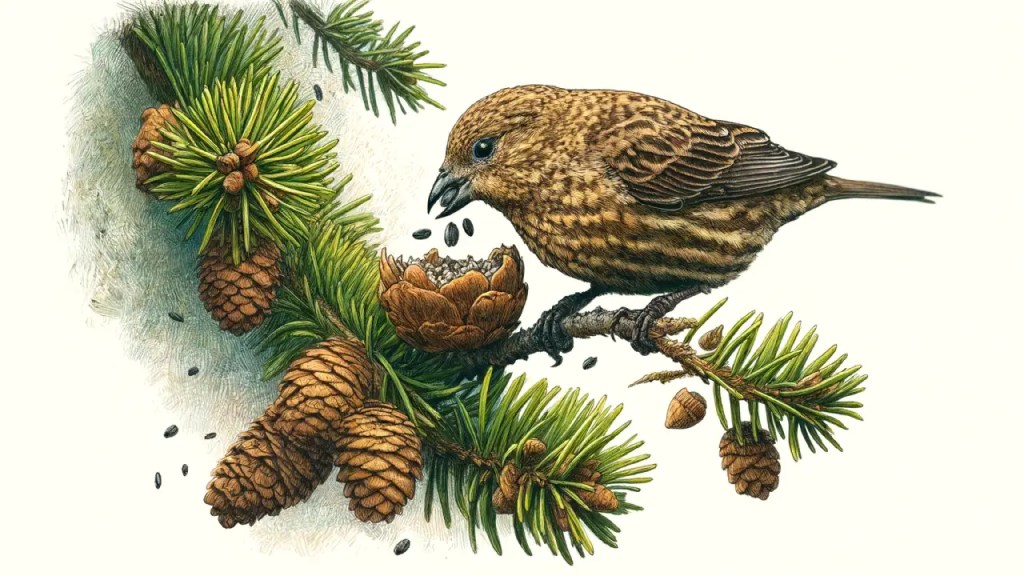
The seeds of the Scots pine are the primary food source for the Scottish Crossbill. Its unique bill is specially adapted to extract these seeds from the cones, a task it performs with remarkable dexterity. The bird’s preference for these seeds is not just a matter of availability but also nutritional value, as they provide a high-energy food source, especially crucial during the breeding season and winter months.
Variety in Coniferous Diet
While the Scots pine dominates its diet, the Scottish Crossbill also feeds on the seeds of other conifer species when available. Depending on the season and regional tree composition, this can include larch, spruce, and fir. This variety helps the Crossbill maintain a balanced diet, ensuring its survival even if one food source becomes scarce.
Foraging Strategy
The Scottish Crossbill’s foraging behavior is a spectacle of agility and skill. They often cling to cones at the tips of branches, using their powerful bills to pry the scales apart and access the seeds. This method demonstrates their physical adaptation and cognitive ability to solve the problem of extracting hidden food.
Seasonal Feeding Patterns

The availability of conifer seeds can vary seasonally, with peaks often occurring in late summer and autumn when cones mature. The Scottish Crossbill adjusts its feeding habits accordingly, sometimes storing seeds in crevices or under bark to access during leaner periods.
Impact on Forest Regeneration
By feeding on conifer seeds, Scottish Crossbills play a crucial role in their habitat’s ecological dynamics. As they consume the seeds, they also contribute to seed dispersal since not all seeds are digested. Some are dropped or pass through the bird, potentially germinating in new locations and contributing to forest regeneration and diversity.
Adaptation to Environmental Changes
The Scottish Crossbill’s diet and foraging behavior are sensitive indicators of environmental health and change. Fluctuations in seed production can affect their food availability and distribution due to climate change or forestry practices. Monitoring these birds’ feeding habits can provide valuable insights into the health of the coniferous forests they inhabit.
The Scottish Crossbill’s favorite foods highlight its role as a specialist feeder within the Caledonian pine forests. Its survival and reproductive success are closely linked to the abundance and accessibility of conifer seeds, underscoring the interconnectedness of species within this unique ecosystem. As such, the conservation of the Scottish Crossbill is inherently tied to preserving its native forest habitat.
Fun Facts
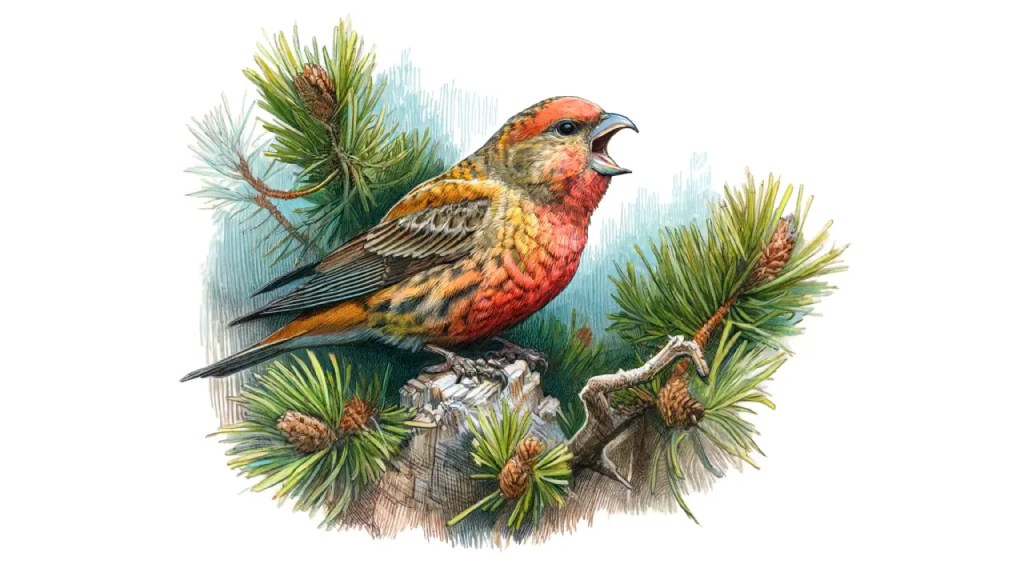
Delving into the life of the Scottish Crossbill uncovers a wealth of fascinating details and behaviors that underscore its unique status as Britain’s only endemic bird species. Here are some intriguing facts about this distinctive bird:
Unique Bill Adaptation
The Scottish Crossbill’s most notable feature is its crossed bill, an evolutionary trait that perfectly equips it to extract seeds from conifer cones, particularly those of the Scots pine. This specialized bill is a feeding tool and a symbol of the bird’s deep evolutionary connection to its habitat.
Endemic to Scotland
The Scottish Crossbill is the only bird species endemic to the UK, found nowhere else in the world except the Scottish Highlands. This exclusivity adds to the bird’s allure and emphasizes the importance of preserving its natural habitat.
Vocal Distinctions
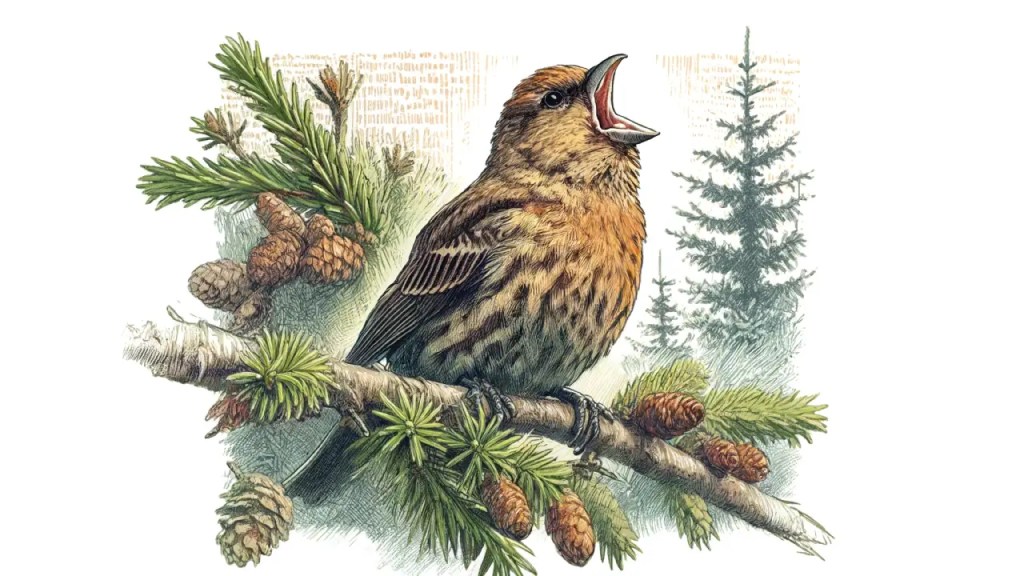
Despite its physical similarities to other crossbill species, the Scottish Crossbill can be identified by its distinct call and song. These vocalizations are crucial for species identification and mating, with studies showing slight variations in pitch and pattern that differentiate it from its close relatives.
Master of Camouflage
The Scottish Crossbill’s plumage blends seamlessly with the coniferous forests it inhabits. This natural camouflage protects it from predators and aids in its survival in the wild, allowing it to remain inconspicuous while feeding and nesting.
Conservation Indicator
As a species closely tied to the Caledonian forest ecosystem, the Scottish Crossbill is an essential indicator for conservationists. Changes in its population and health can reflect the broader environmental impacts affecting these ancient woodlands.
Winter Breeding
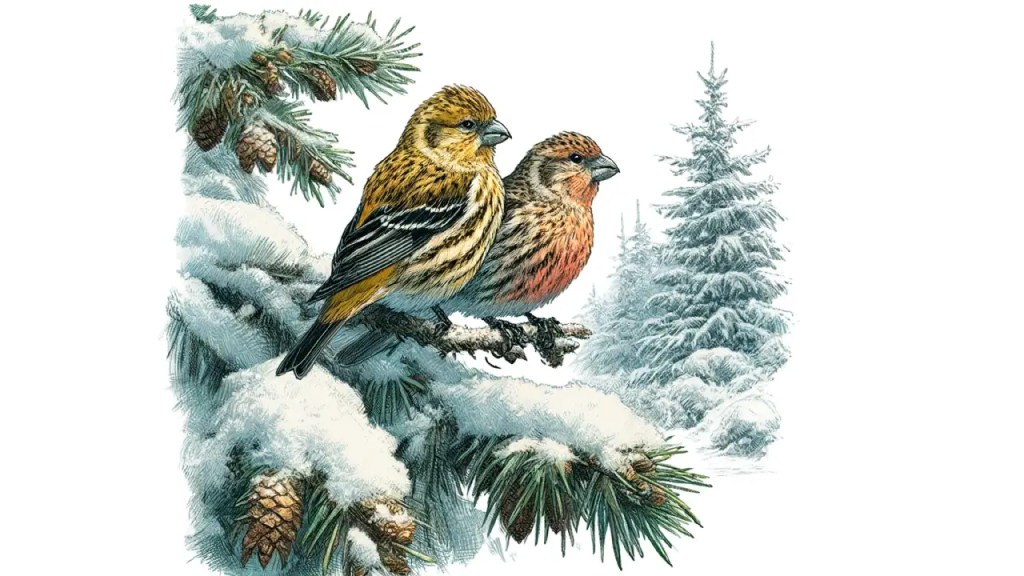
Uniquely, the Scottish Crossbill can breed in winter, a rare trait among UK birds. This adaptation is likely tied to the seasonal availability of its primary food source, the Scots pine seeds, ensuring the chicks have ample food upon hatching.
Social Structure
Scottish Crossbills form flocks outside the breeding season, often mixing with other crossbill species. These social gatherings allow for efficient foraging and provide a measure of safety in numbers from potential threats.
The Scottish Crossbill is a living testament to Scotland’s unique natural heritage. Its distinct characteristics and behaviors are integral to the ecological tapestry of the Caledonian forests, making it a fascinating subject for ornithologists and bird enthusiasts alike.
Conservation Efforts
The Scottish Crossbill is a species of significant conservation interest. Given its limited range and specialized habitat requirements, concerted efforts are necessary to ensure its sustainability.
Habitat Management and Protection

The cornerstone of Scottish Crossbill conservation is the preservation and management of its native pine forest habitat. Conservation organizations and government agencies work to protect these areas from deforestation, degradation, and fragmentation. Efforts include promoting sustainable forestry practices, restoring degraded forest areas, and expanding native woodland through reforestation projects.
Monitoring and Research
Regular monitoring of Scottish Crossbill populations helps assess their status and guide conservation actions. Research focuses on understanding their breeding patterns, feeding habits, and habitat preferences. Studies also aim to distinguish the Scottish Crossbill from similar crossbill species, ensuring accurate population assessments and aiding in the development of targeted conservation strategies.
Climate Change Mitigation
With climate change posing a potential threat to the Scottish Crossbill’s habitat, conservation efforts also address the broader environmental challenges. Initiatives to reduce carbon emissions, enhance ecosystem resilience, and prepare for climate-related changes in forest dynamics are critical for safeguarding the future of the Scottish Crossbill and its habitat.
Public Engagement and Education
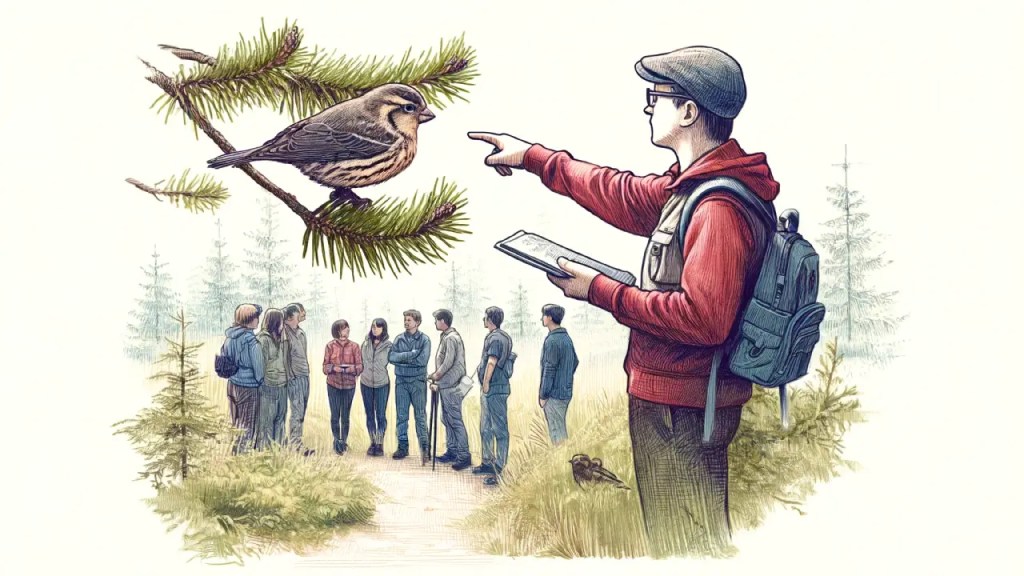
Raising awareness about the Scottish Crossbill and its ecological significance is crucial for garnering public support for conservation efforts. Educational programs, birdwatching events, and citizen science projects encourage community involvement and foster connections between people and the natural environment.
Collaborative Conservation Efforts
Protecting the Scottish Crossbill requires collaboration across various sectors. Conservation groups, forestry commissions, landowners, and government bodies must work together to implement effective conservation plans. International cooperation is also important, particularly in research and sharing best practices for conserving similar species and habitats.
Threat Mitigation
Addressing specific threats to the Scottish Crossbill, such as predation by invasive species or habitat loss due to development, is a crucial aspect of conservation work. Management plans often include measures to control invasive species and guidelines to minimize the impact of human activities on critical habitats.
Conservation of the Scottish Crossbill is a multifaceted endeavor that balances the needs of this unique bird with the ecological and economic considerations of its habitat. Through dedicated research, habitat management, and collaborative conservation efforts, the aim is to maintain a stable and healthy population of Scottish Crossbills, ensuring that they continue to thrive in Scottish woodlands.
Conclusion

The Scottish Crossbill, endemic to the Caledonian forests, stands as a testament to the uniqueness and richness of Scotland’s natural heritage. Its existence, so closely tied to the ancient pines of the Highlands, underscores the importance of conservation and the stewardship of our natural world. In preserving the Scottish Crossbill, we safeguard a part of our ecological identity, ensuring that the delicate balance of these old-growth forests continues to thrive.
Conservation efforts for the Scottish Crossbill are a beacon of hope, demonstrating the positive impact of targeted actions to protect a species and its environment. These initiatives benefit the Crossbill and support many other species that share its woodland home, enhancing biodiversity and ecosystem health. As we move forward, the lessons learned from conserving the Scottish Crossbill can guide broader efforts to protect natural habitats worldwide. In the call of the Scottish Crossbill, we hear the whispers of ancient woods and the resilience of nature. Its song reminds us of the beauty and complexity of the natural world and our role in preserving it for future generations. As stewards of the earth, we are responsible for ensuring that the Scottish Crossbill and countless other species continue to find refuge in the wild landscapes that have nurtured them through the ages.


 Wing Watchers with Wagner
Leave a comment