Introduction
Embark on a journey into the world of the American Robin, one of North America’s most recognizable and beloved birds. Known for its bright red breast and cheerful song, the robin heralds the arrival of spring and symbolizes renewal and growth. In this comprehensive profile, we’ll explore the facets of the American Robin’s life, delving into its distinctive appearance, intricate nesting habits, dietary preferences, and more.
Our exploration will unveil the robin’s adaptability and resilience, which have enabled it to thrive in diverse environments, from wild forests to urban backyards. We’ll also discover fun facts highlighting the bird’s unique behaviors and the significant conservation efforts underway to protect its habitat and future. With a friendly and relaxed narrative, this profile aims to enhance your understanding and appreciation of the American Robin, painting a picture of a bird that is not only a common sight but also an integral part of the ecological tapestry of its range.
Join us as we celebrate the American Robin, a bird that invites us to connect more deeply with the natural world through its daily activities and seasonal rhythms. Whether perched melodiously in the treetops or foraging diligently on the ground, the robin’s presence is a testament to our avian companions’ enduring beauty and complexity.
Appearance

The American Robin, often hailed as a harbinger of spring, boasts a distinctive appearance that makes it one of the most recognizable birds in North America. This section delves into the physical attributes and plumage details that characterize this beloved bird.
Iconic Plumage
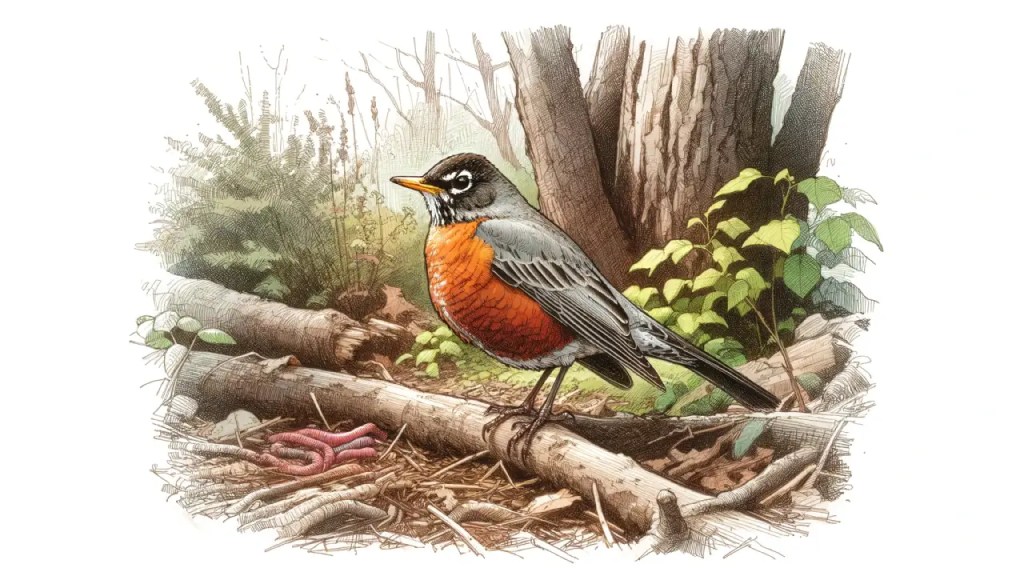
The robin’s most striking feature is its vibrant red or orange breast, which starkly contrasts its gray back, wings, and tail. This bold chest coloration, ranging from deep maroon to bright orange, serves as a visual signal to other robins and is a key identifier for bird enthusiasts. The intensity of the breast color can vary based on age, diet, and geographical location, with those having access to richer food sources typically displaying more vivid hues.
Size and Structure

As a medium-sized bird, the American Robin typically measures about 9 to 11 inches in length and has a wingspan of 12 to 16 inches. It has a round body, long legs, and a fairly long tail that often flicks up and down. The robin’s build is adapted for both hopping on the ground and perching in trees, showcasing its versatile lifestyle.
Sexual Dimorphism
While both male and female robins have similar size and shape, the males generally boast brighter plumage than females. Females tend to have paler breasts and more muted overall coloration, which can aid camouflage while incubating eggs and raising young.
Juvenile Appearance
Young robins, or fledglings, differ markedly from adults in that they exhibit a speckled breast of white and dark spots against a grayish background. This speckled pattern provides additional camouflage during their vulnerable early days and gradually molts into the adult’s solid-colored breast as they mature.
Facial and Beak Features
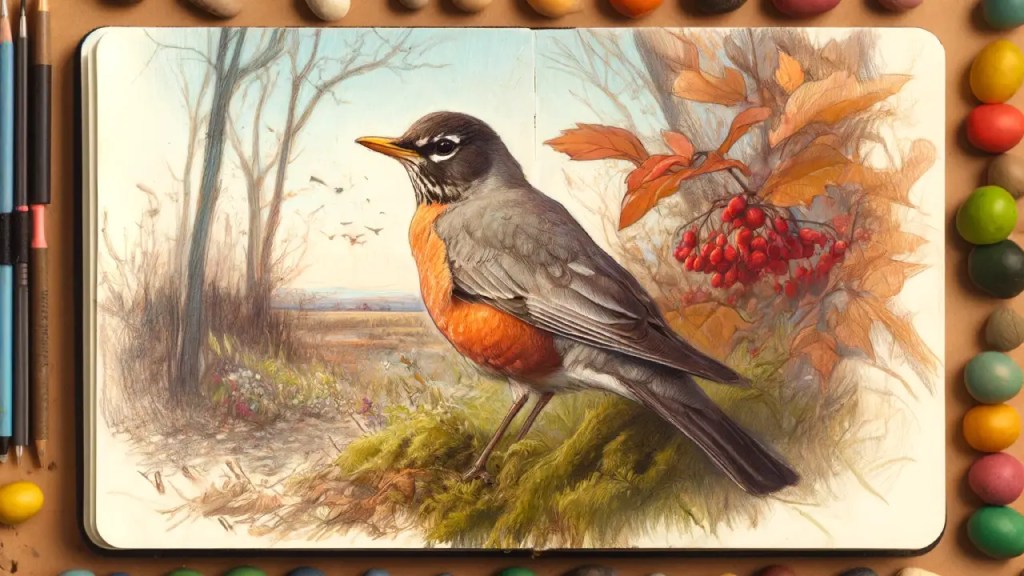
The robin’s white eyering stands out against its dark head, giving it an alert expression. Its beak is straight and strong, yellow with a black tip, and designed efficiently for foraging earthworms, insects, and fruits.
Molt and Seasonal Changes
Robins undergo a complete molt once a year, typically in late summer or early fall, where they replace their feathers. This process ensures their plumage remains in good condition for insulation, camouflage, and display. Observers might notice variations in color intensity and feather condition throughout the year, reflecting the bird’s life cycle and environmental interactions.
Adaptability in Appearance
The American Robin’s appearance is not only a result of evolutionary adaptation but also a reflection of its ability to thrive in varied environments. From lush forests and mountainous regions to suburban gardens and city parks, robins can be found almost everywhere across the continent, their physical traits enabling them to exploit a wide range of habitats.
Exploring the American Robin’s appearance provides insight into its life and ecology. The striking red breast signals the arrival of spring, and the subtle yet significant variations in plumage tell a story of adaptation, survival, and the interconnectedness of life within North American ecosystems.
Nesting Habits

The American Robin is famous for its melodious song and vibrant plumage and its distinctive nesting habits, which reflect the bird’s adaptability and resilience. These traits allow the robin to thrive in a variety of environments, from natural woodlands to urban landscapes.
Location and Nesting Sites
Robins are versatile nesters, choosing locations that offer safety and proximity to food sources. They commonly build nests in the forks of trees or shrubs, but they are also known to nest on man-made structures like window ledges, eaves, and light fixtures. This adaptability in nesting location underscores the robin’s ability to coexist with human-altered landscapes.
Nest Construction

The female robin is the nest’s primary architect, constructed with grass, twigs, and mud. The inner cup is lined with finer grasses and sometimes feathers, creating a soft, insulated environment for the eggs. The use of mud gives the nest a sturdy, cup-shaped structure, providing durability and protection throughout the breeding season.
Breeding Season and Clutch Size
The breeding season for American Robins typically begins in April and can last through July, with the possibility of producing several broods. A typical clutch contains three to five sky-blue eggs, known for their distinctive color. The female exclusively incubates the eggs for about 14 days, during which the male often guards the nest and brings food to the female.
Fledging and Parental Care
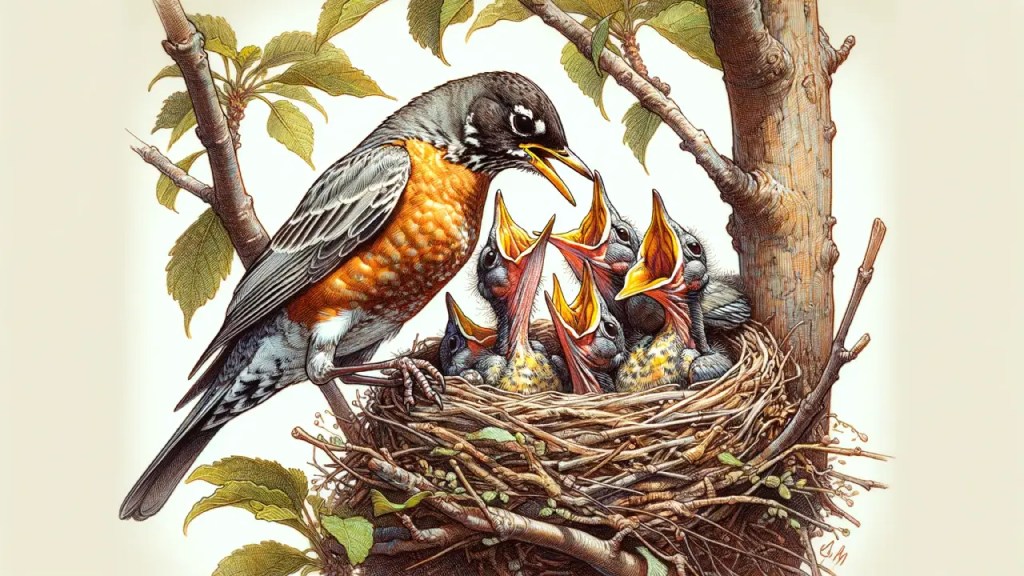
Once hatched, robin chicks are altricial, meaning they are born blind and featherless, requiring significant parental care. Both parents feed the chicks a diet rich in insects and worms, facilitating rapid growth. After about two weeks, the fledglings leave the nest, yet they remain dependent on their parents for food and protection for several more weeks.
Multiple Broods
One reason for the American Robin’s abundance is its ability to raise multiple broods each season. Robins can raise two or even three sets of offspring in regions with longer warm periods, maximizing their reproductive success.
Predation and Nesting Challenges
Despite their prolific breeding habits, robin nests are subject to predation from animals such as cats, snakes, and larger birds. Additionally, inclement weather and habitat destruction pose significant threats to nest success. Robins’ adaptability in nesting site selection is crucial in mitigating these risks.
The nesting habits of the American Robin offer a window into the bird’s life cycle and ecological role. From the construction of mud-reinforced nests to the challenges of raising multiple broods in varied environments, these behaviors highlight the robin’s adaptability and the importance of conservation efforts to maintain healthy populations and habitats.
Favorite Foods
The American Robin, a common sight in backyards across North America, has a diverse diet that supports its active lifestyle throughout the year. Understanding what these birds eat brings us closer to their world and helps create bird-friendly environments in our own spaces.
Insects and Invertebrates
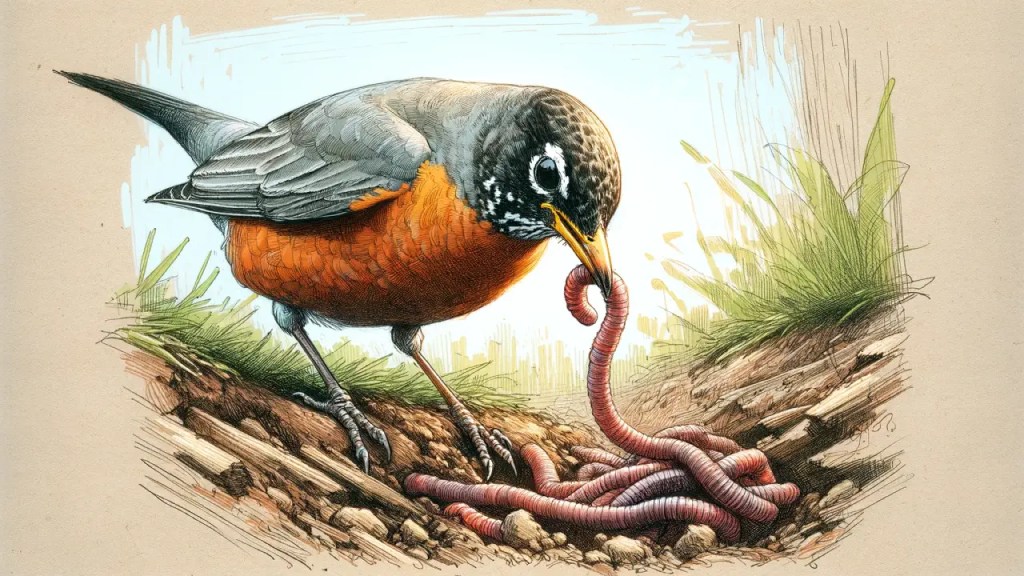
During the spring and summer, the American Robin’s diet primarily consists of various insects and invertebrates, including earthworms, beetles, caterpillars, and grasshoppers. Their foraging technique is iconic; robins are often seen hopping across lawns, tilting their heads to listen and look for prey in the soil. This method allows them to detect the subtle movements of earthworms and other creatures, making them efficient hunters.
Fruits and Berries
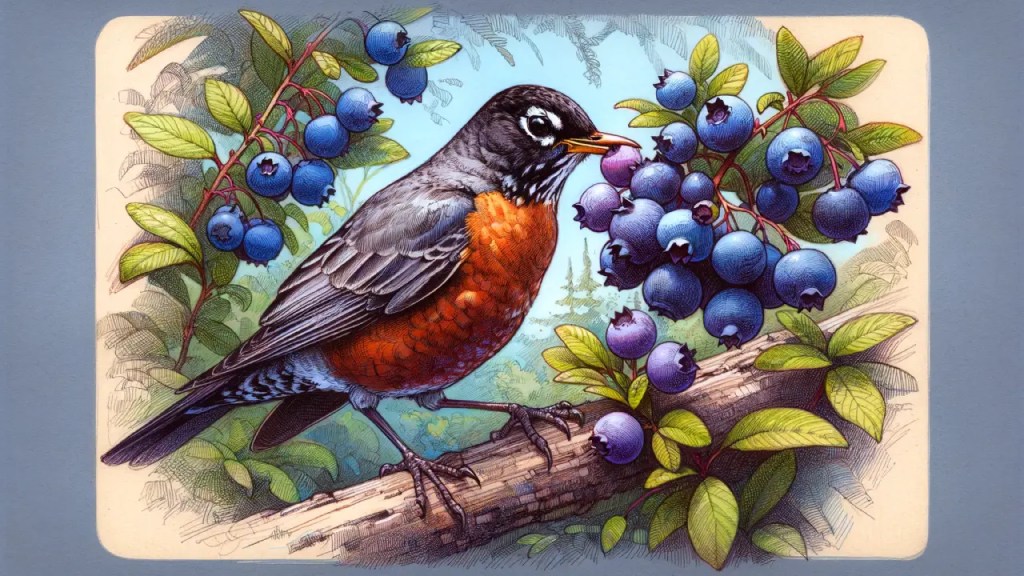
As the seasons change and the availability of insect prey diminishes, robins shift their diet to include more fruits and berries. They feed on a variety of native plants like chokecherries, sumac, and hawthorn, as well as cultivated fruits in gardens and orchards. This dietary flexibility helps them to survive in different environments and during the colder months when insects are scarce.
Adaptation to Urban Environments
American Robins adapt their feeding habits to the available resources in urban and suburban areas. They can often be found foraging in parks, gardens, and lawns, taking advantage of natural and human-provided food sources. Bird feeders stocked with mealworms or fruit can attract robins, though they are less likely to visit seed feeders.
Feeding Behavior
American Robins are diurnal feeders, active from dawn to dusk. They employ a run-and-stop hunting technique on the ground, which is effective for catching invertebrates and picking up fallen fruits and berries. Robins also forage in trees and shrubs, plucking berries and fruit with their beaks.
Importance of Water
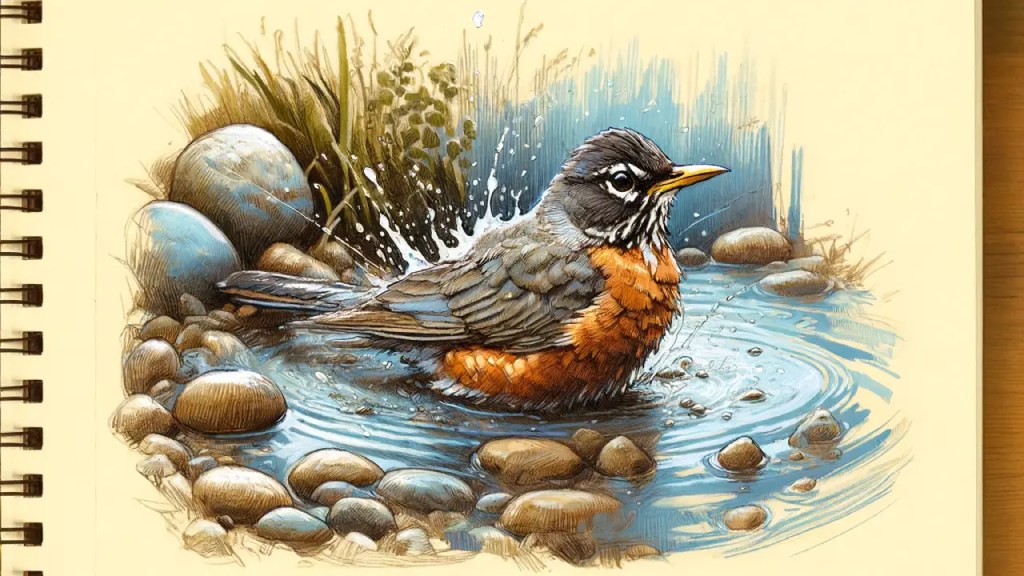
Robins require access to fresh water for drinking and bathing. Water sources meet their hydration needs and attract insects, providing feeding opportunities. A landscape’s presence of birdbaths and natural water features can increase its attractiveness to robins and other wildlife.
Role in Seed Dispersal
American Robins play a crucial role in seed dispersal by consuming various fruits and berries. The seeds pass through their digestive system and are deposited in new locations, contributing to the spread of many plant species and the overall health of ecosystems.
The American robin’s dietary habits illustrate the bird’s adaptability and integral role in the ecological web. From hunting insects on the ground to foraging for fruits in the trees, robins contribute to controlling pest populations and dispersing seeds, enhancing the biodiversity and balance of their habitats. Their presence in a range of environments, from rural to urban, underscores the importance of maintaining bird-friendly spaces to support the diverse dietary needs of these familiar and cherished birds.
Fun Facts
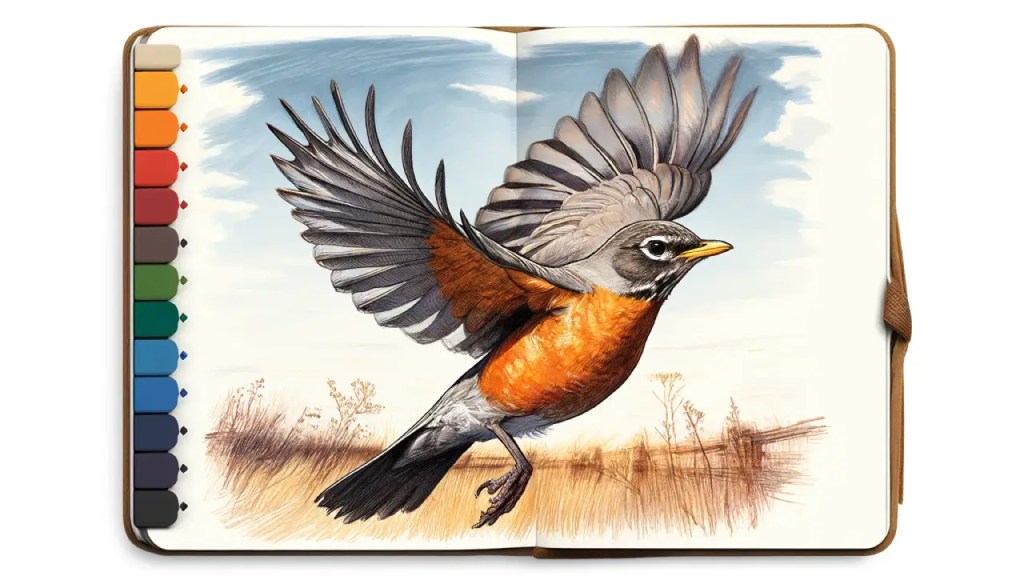
The American Robin, a familiar and beloved presence in North American landscapes, harbors fascinating behaviors and traits that deepen our appreciation for this common bird. Here are some intriguing facts about the American Robin that highlight its unique place in the natural world.
Not Really a Robin
Despite its name, the American Robin is not closely related to the European Robin. It was named by early European settlers who were reminded of the red-breasted European species. Still, it actually belongs to the thrush family, which includes birds known for their melodic songs.
Weather Predictors
American Robins are often seen as heralds of spring, as their return to breeding grounds and increased visibility coincide with warmer weather. However, if food is available, robins can withstand cold temperatures. They may winter in their breeding range, making their presence more a sign of changing seasons than of immediate weather shifts.
Night Singers

While known for their dawn chorus, American Robins can also be heard singing at night, especially during the breeding season and around bright urban lights. This behavior is thought to be related to territorial declarations or the extended daylight in urban areas tricking the birds into thinking it’s dawn.
Earthworm Myths
It’s a common belief that robins listen for earthworms when tilting their heads. While their vision is sharp for spotting worms, the head tilt is actually to use both eyes to get a better view of the ground and detect the slight movements of their prey.
Impressive Parents
American Robins are diligent in their parenting roles. The female typically constructs the nest and incubates the eggs, but both parents are involved in feeding and protecting the young. After the fledglings leave the nest, their parents continue to care for them, teaching them to find food and survive in the wild.
Multiple Broods

Robins can raise two to three broods during the breeding season, often using the same nest for successive broods or building a new one on top of the old. This prolific breeding strategy helps maintain their population numbers.
Territorial Songs
Male robins are highly territorial during the breeding season. Their songs, which can start as early as before dawn, serve to claim territory and attract mates. Each male has a unique song pattern, which can change in response to encroachments by other males.
Urban Adapters
American Robins have adapted well to urban environments, often found in city parks, gardens, and lawns. Their adaptability to different habitats, including human-dominated landscapes, has helped maintain their population stability despite the ongoing loss of more natural areas.
These fun facts about the American Robin reveal the complexity and adaptability of a bird often considered a simple harbinger of spring. Their behaviors, from unique vocalizations to robust parenting, underscore the robin’s resilience and the fascinating dynamics of their daily life and ecological relationships.
Conservation Efforts
While the American Robin is abundant and widespread, maintaining its population is essential, reflecting broader environmental health and stability. Here’s a look at the conservation efforts that help ensure the continued presence of this iconic bird.
Habitat Preservation

Preserving its natural habitat is the key to the American Robin’s thriving population. Robins prefer areas with a mix of open ground for foraging and trees or shrubs for nesting. Conserving forests, parks, and even urban green spaces is crucial for providing these habitats. Efforts to protect wetlands, woodlands, and grasslands benefit the robin and countless other species.
Monitoring and Research
Ongoing research and monitoring are vital for understanding the long-term population trends of the American Robin and their response to environmental changes. Ornithologists and citizen scientists contribute to tracking robin populations through bird counts and other survey methods, helping identify potential threats and inform conservation strategies.
Pesticide Management
Pesticides can reduce the availability of the insects that robins eat, especially during the breeding season when they rely heavily on protein-rich prey to feed their young. Promoting integrated pest management (IPM) and reducing pesticide use in agriculture and urban landscaping can help ensure robust food sources for robins and other insectivorous birds.
Public Engagement and Education

Educating the public about the American Robin and its role in the ecosystem can foster a greater appreciation and desire to protect these birds. Community programs, educational initiatives, and birdwatching groups can encourage people to participate in conservation efforts and create bird-friendly environments in their backyards.
Climate Change Mitigation
As with many species, the American Robin faces challenges from climate change, which can alter its habitat and food availability. Supporting policies and initiatives to mitigate climate change impacts, such as reducing carbon emissions and enhancing green infrastructure, is essential for the long-term conservation of robins and other wildlife.
Building Bird-Friendly Communities
Encouraging the development of bird-friendly practices in urban and suburban areas, such as planting native plants, preserving trees, and maintaining bird baths and feeders, can significantly impact the health and population of robins. These practices not only benefit robins but also enhance the biodiversity and ecological health of the areas.
Supporting Broader Conservation Initiatives

Finally, the well-being of the American Robin is tied to the health of ecosystems across its range. Supporting broader environmental and conservation initiatives helps maintain the ecological balance and biodiversity essential for robins and many other species.
Through these and other conservation efforts, we can help ensure that the American Robin continues to thrive and delight observers with its presence and song. The robin’s story is deeply intertwined with the health of the environment, making it a symbol of the importance of ecological stewardship and the need for continued attention to conservation and habitat protection.
Conclusion
The American Robin, with its cheerful song and presence, is more than a symbol of spring’s arrival; it embodies nature’s resilience and continuity. Through the seasons, the robin adapts and thrives, playing its part in the ecological balance, from controlling insect populations to dispersing seeds that contribute to the growth of new life. Their widespread presence across the continent speaks to their adaptability and the crucial role they play in various ecosystems.

Conservation efforts for the American Robin, while reflecting its current stable status, are essential in changing landscapes and climate conditions. Protecting the robin’s habitat, ensuring a sustainable food supply, and mitigating environmental threats are actions that not only benefit this species but also support the vast web of life that shares its home. The robin’s well-being is a gauge of environmental health and a reminder of our responsibility to care for our shared planet.
Appreciating the American Robin reminds us of the joy and beauty nature offers and the importance of nurturing the environments that sustain such wondrous life. Let the robin’s song inspire us to maintain the harmony of nature, ensuring that these melodies continue to resonate through our lives, heralding the cycles of the seasons and the enduring spirit of the wild. Through understanding and cherishing the American Robin, we commit to a future where humanity and nature can flourish, celebrating the enduring song of life that connects us all.


 Wing Watchers with Wagner
Leave a comment