Introduction
Welcome to a journey through the reeds and waters where the Great Blue Heron reigns supreme. With its impressive stature and serene demeanor, this bird embodies the grace and mystery of wetlands across North America. Whether standing still as a statue or gliding over waters with powerful wings, the Great Blue Heron captures the imagination of all who encounter it.
Often mistaken for a distant relative of the stork, this heron has a unique charm that sets it apart. From its distinct call that echoes across quiet waters at dawn to its intricate mating dances, there’s more to this bird than meets the eye. This profile aims to peel back the layers, introducing you to the world of the Great Blue Heron, from its striking appearance to its survival strategies and the conservation efforts ensuring its future.
So, grab your binoculars, and let’s venture into the wetlands. You’re about to get up close and personal with one of nature’s most elegant and efficient hunters, a true marvel of avian design. The Great Blue Heron story is a tapestry woven with survival, adaptation, and beauty threads. It’s a tale that reminds us of the interconnectedness of our ecosystems and the critical role each species plays within them.
Appearance

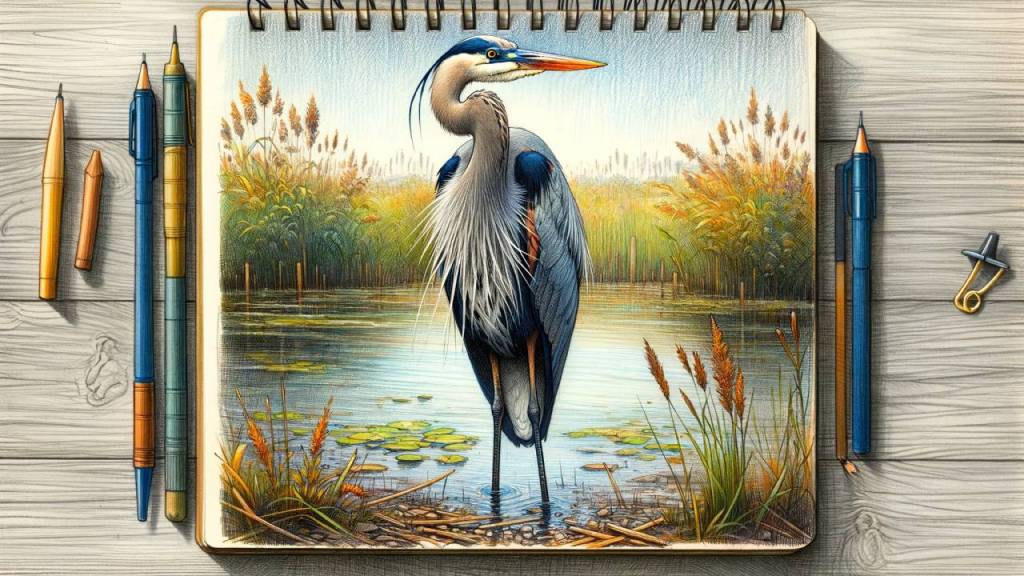
Standing tall among the reeds, the Great Blue Heron is a sight. With its long, sinewy neck, slate-gray feathers, and striking white face cap, this bird does not just blend into the wetlands; it defines them. Measuring an impressive three to four and a half feet in height with a wingspan that can reach up to six feet, it’s one of North America’s largest herons. Yet, for all its size, the Great Blue Heron embodies an unparalleled grace.
The heron’s plumage is primarily a soft, stunning gray-blue, offering perfect camouflage against sky and water. Its head is adorned with a stylish black stripe above the eye, extending into long, delicate plumes that trail behind its head, especially prominent during the breeding season. These plumes add a touch of elegance to an already regal appearance, making the heron a distinguished figure in the avian world.
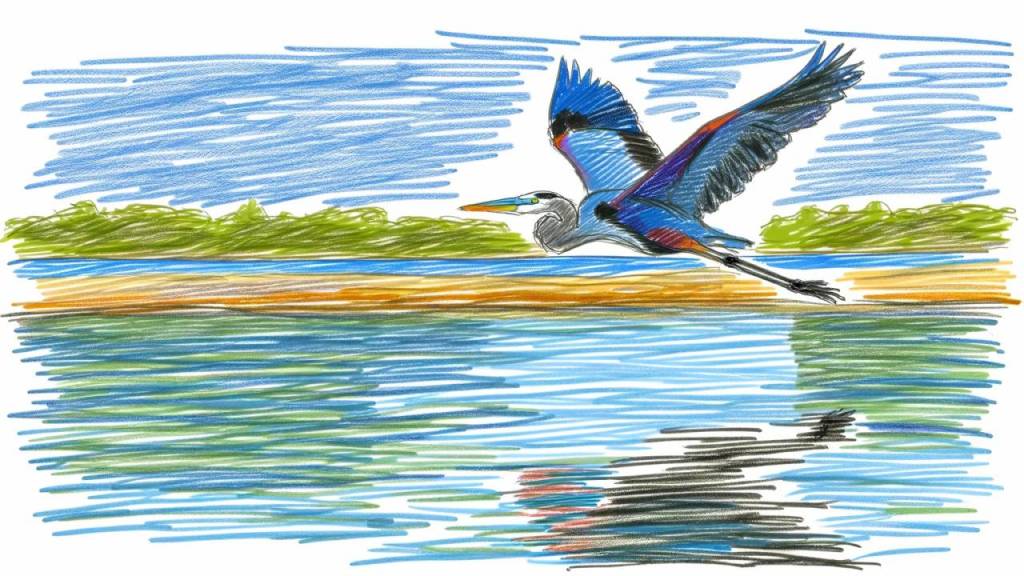
But it’s not just the heron’s colors and size that captivate; it’s also its posture and movements. The bird often stands motionless, a master of patience, waiting for the perfect moment to strike its prey. When it flies, it does so with slow, deliberate wingbeats, its neck curled into an “S” shape and legs trailing behind, creating an image of serene power.

In addition to its size and plumage, the Great Blue Heron’s eyes are a notable feature. Sharp and penetrating, they reflect a keen intelligence. These eyes can spot a fish moving in murky waters or a frog camouflaged among lily pads, demonstrating the heron’s prowess as an apex predator in its habitat.
Despite its imposing presence, the Great Blue Heron is remarkably lightweight, weighing only five to six pounds. This lightness, a result of its hollow bones — a common feature among birds — enables it to take to the skies easily and land with the softness of a whisper. This combination of strength and lightness allows the heron to move with the precision and elegance that define its hunting technique and flight.
The Great Blue Heron’s appearance is not just a matter of beauty; it’s a suite of adaptations that have enabled it to thrive in various wetland habitats. From the stealth provided by its camouflaged plumage to the sharp vision that guides its hunting, every aspect of its appearance serves a purpose. It’s a perfect blend of form and function, a testament to the marvels of evolution and nature’s intricate design.
Feeding Habits

The Great Blue Heron stands as a silent sentinel over the water’s edge, its eyes fixed intently on the murky depths below. This isn’t just patience; it’s strategy. As master fishers, these herons exhibit a remarkable blend of stillness and explosive speed, showcasing a hunting technique honed by millennia of adaptation.
Stealth and Precision
The heron’s approach to feeding is a study in precision. It wades slowly, its long legs moving with careful deliberation, causing minimal disturbance in the water. This stealth allows it to get strikingly close to its prey without detection. Then, with a sudden thrust of its neck, the heron spears its meal with its sharp, dagger-like bill. The speed of this strike is breathtaking, a blink-and-you-miss-it moment that’s often the difference between feast and famine.
A Diverse Diet

While fish are the primary component of the Great Blue Heron’s diet, these birds are not fussy eaters. Their menu includes a wide variety of aquatic organisms – frogs, salamanders, small mammals, and even other birds. Insects and crustaceans also make the list, making the heron’s diet as diverse as the habitats they occupy. This variety ensures that the heron can adapt to seasonal changes in food availability, a key to its survival in the varied climates across its range.
Hunting Across Habitats
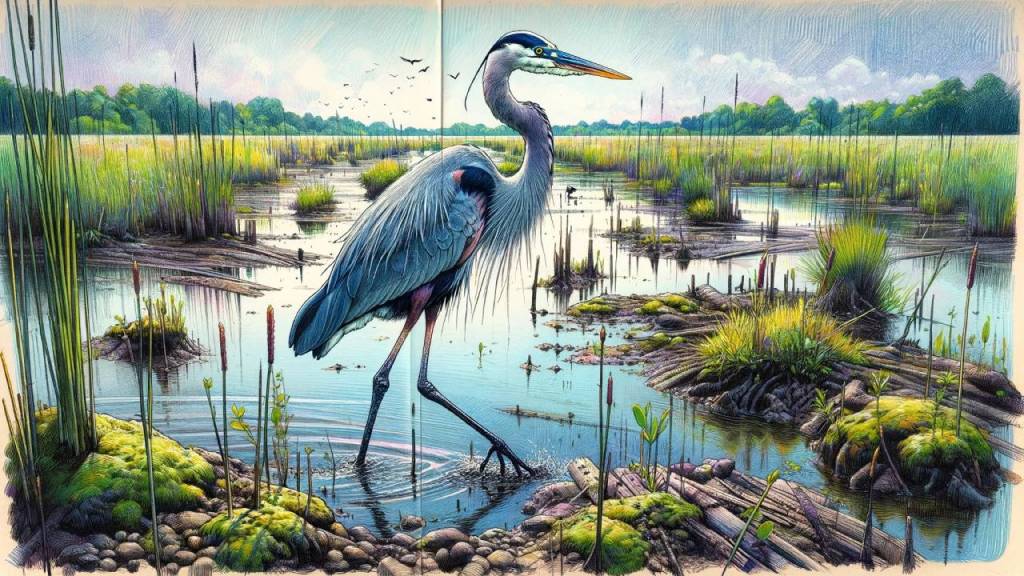
Great Blue Herons are versatile hunters, capable of finding food in both freshwater and saltwater environments. They frequent the shallow edges of lakes, rivers, marshes, and coastlines, places where their prey is abundant. The heron’s ability to hunt in diverse habitats is crucial to its status as a widespread species across most of North America.
Tidal Opportunists
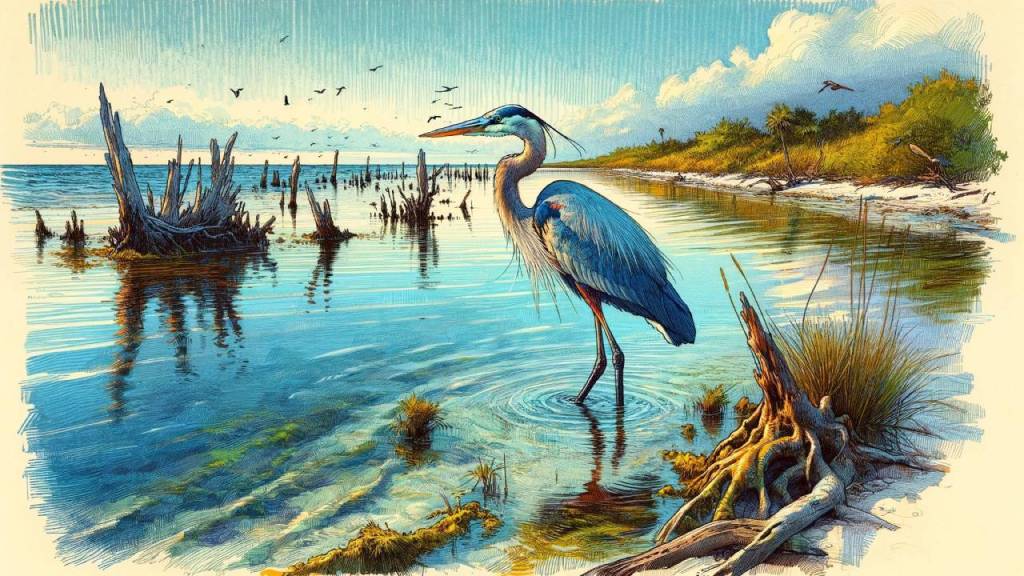
Great Blue Herons display remarkable adaptability in coastal regions by timing their feeding with the tides. They take advantage of low tides when fish and other prey are more concentrated and accessible to catch. This synchronization with the natural rhythms of their environment underscores the heron’s deep connection to the ecosystems it inhabits.
Solitary Hunters
While they may roost in colonies, Great Blue Herons typically hunt alone. This solitary behavior ensures that each bird has access to enough food resources without direct competition from its kind. It balances community and individual needs, a dance of independence and interdependence that characterizes much of the natural world.
The feeding habits of the Great Blue Heron are a testament to the bird’s adaptability, precision, and strength. Whether standing motionless, awaiting the perfect moment to strike, or gliding gracefully through its aquatic hunting grounds, the heron embodies the spirit of the wild – patient yet powerful, serene yet deadly. In every catch and every meal, we see the circle of life unfold, a reminder of the delicate balance that sustains our planet’s diverse ecosystems.
Favorite Foods
The Great Blue Heron, a master hunter of the water’s edge, has a diet as expansive as the habitats it frequents. This bird’s feeding habits are a mirror to the rich biodiversity of aquatic ecosystems, and it shows a preference for a wide array of foods that sustain its large stature and fuel its patient.

Fish
Central to the heron’s diet is fish, which it hunts with unparalleled skill. The types of fish it consumes vary widely depending on its geographic location, encompassing everything from tiny minnows to larger species found in the shallows. The heron’s technique for catching fish — a sudden, lightning-fast jab into the water — is as effective as it is mesmerizing to observe.
Amphibians and Aquatic Invertebrates
Beyond fish, the Great Blue Heron’s menu extends to frogs, salamanders, and a variety of aquatic invertebrates. Tadpoles and larger adult frogs are particularly favored during the breeding season when the herons require more energy. Snails, shrimp, and crabs also contribute to the heron’s diet, offering a rich source of nutrition.

Small Mammals and Birds
Though less common, the Great Blue Heron will occasionally prey on small mammals like voles, mice, and even rabbits that venture too close to the water’s edge. Similarly, small birds, particularly those nesting on the ground or in low-lying bushes near water bodies, can become prey for the opportunistic heron.
Reptiles
In warmer climates, the diet of the Great Blue Heron expands to include reptiles. Small snakes, lizards, and even baby turtles can find themselves targeted. The heron’s ability to consume a wide range of prey sizes is evident in its handling of these reptiles, showcasing the adaptability and versatility of its feeding strategy.
Foraging and Feeding Techniques
Integral to understanding the Great Blue Heron’s favorite foods is appreciating the nuanced techniques it employs in foraging. Whether it’s stalking through shallow waters or standing stock-still waiting for prey to come within range, each method is a testament to the heron’s mastery over its environment. The bird’s long legs allow it to wade deeper than many other herons. At the same time, its broad wings enable quick movement over water to new hunting grounds, ensuring a diverse and abundant diet.
In essence, the Great Blue Heron’s dietary habits reflect its ecological niche as a top predator in wetland habitats. The variety in its diet underscores the heron’s adaptability and its role in maintaining the health and balance of aquatic ecosystems. Through its feeding, the Great Blue Heron contributes to the control of fish and amphibian populations, illustrating the interconnectedness of predator and prey within the natural world.
Fun Facts
The Great Blue Heron, a familiar sight along the waterways of North America, is not just another bird; it is a creature of remarkable abilities and intriguing behaviors. Here are a few fun facts that showcase the unique aspects of this majestic bird:
Architectural Nests
Great Blue Herons are skilled architects when it comes to nest building. Their nests, often reused and expanded year after year, can become massive structures measuring over four feet wide and deep. These nests are typically found high in trees or cliffsides, providing protection from predators. A heron colony can have nests situated remarkably close together, creating a bustling community of bird families.
Vocal Communication
While they may seem silent and solitary while hunting, Great Blue Herons have a range of vocalizations used for communication within their colonies. From deep, guttural croaks to softer calls exchanged between mates and offspring, their vocal repertoire is essential to their social interactions.
Impressive Wingspan
The wingspan of a Great Blue Heron can reach up to six feet, making it one of the largest birds most people are likely to encounter in North America. This impressive wingspan allows for efficient flight over long distances, facilitating their migratory behavior and ability to cover vast territories in search of food.
Not Just Fishers
While primarily fish eaters, Great Blue Herons have been known to expand their diet in surprising ways. These birds have been observed preying on gophers and other small mammals, demonstrating their adaptability and opportunistic feeding habits.
A Symbol of Clean Water

The presence of Great Blue Herons is often a good indicator of water quality. These birds rely on clean, unpolluted waterways for fishing, and their health can reflect the overall health of the aquatic ecosystem they inhabit.
Conservation Efforts
The conservation of the Great Blue Heron is vital for the species’ survival and the health of the ecosystems they inhabit. As indicators of environmental health, protecting these herons means safeguarding the waterways and wetlands crucial to our well-being and that of countless other species.
Habitat Preservation
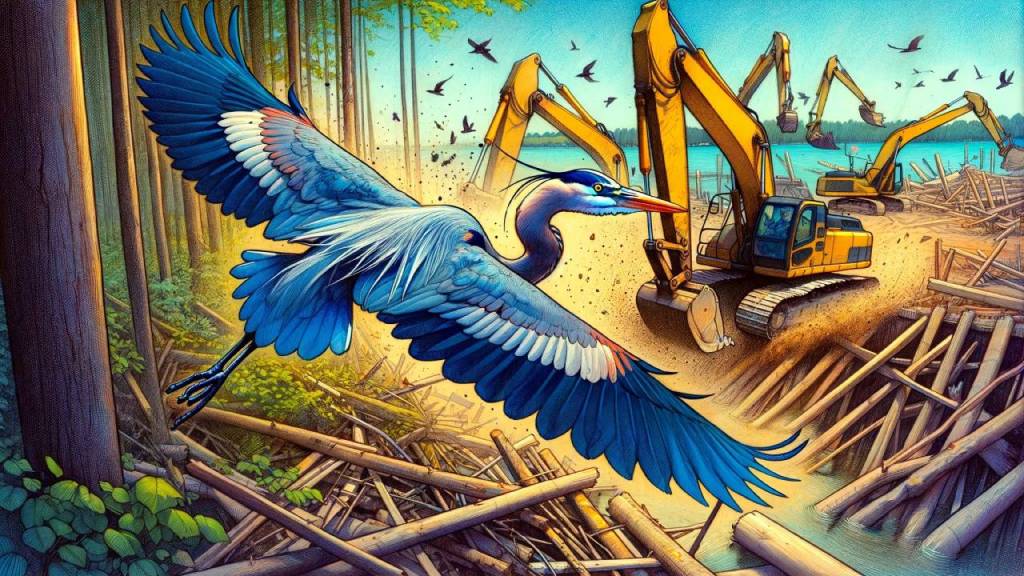
The primary focus of conservation efforts is the preservation and restoration of natural habitats. Wetlands, marshes, and shorelines are critical for the heron’s feeding and nesting. Supporting wetland conservation initiatives and opposing development encroaching on these areas are essential.
Pollution Control
Reducing pollution, particularly in waterways, is essential. Efforts to clean up rivers, lakes, and coastal areas directly benefit the Great Blue Heron populations. Advocating for stricter pollution controls and responsible waste management can make a significant difference.
Climate Action
Climate change poses a long-term threat to the Great Blue Heron’s habitat through rising sea levels and changes in water availability. Supporting policies and practices that reduce greenhouse gas emissions is crucial for their future.
Public Education

Raising awareness about the Great Blue Heron and the challenges it faces is critical. Educational programs highlighting these birds’ importance and how individuals can contribute to their conservation can foster a community of conservation advocates.
Support for Conservation Organizations
Many organizations work tirelessly to protect the Great Blue Heron and its habitat. Donating to or volunteering with these groups amplifies their efforts and contributes to the broader goal of environmental preservation.
Conclusion

In the grand tapestry of North American wildlife, the Great Blue Heron stands tall — literally and figuratively. This majestic bird, with its unparalleled grace and quiet strength, offers us a window into the rich biodiversity of our waterways. It reminds us of the fragile beauty of our natural world and the urgent need to protect it. As guardians of their habitats, we hold the power to ensure that the serene silhouette of the Great Blue Heron continues to grace our skies and water edges.
Conservation efforts for the Great Blue Heron go beyond safeguarding a single species; they represent a commitment to preserving the health of entire ecosystems. These efforts, from habitat preservation to pollution control, underscore the interconnectedness of life and the ripple effects our actions have on the planet. We inspire a collective movement towards environmental stewardship by fostering a deeper understanding and appreciation for the Great Blue Heron. Let the Great Blue Heron inspire us to look beyond our reflections in the water to see the broader picture of ecological balance and harmony. In doing so, we commit to a future where nature thrives and the haunting call of the heron continues to echo across undisturbed waters. Our legacy can be one of coexistence, respect, and lasting protection for the natural wonders that enrich our lives.


 Wing Watchers with Wagner
Leave a comment