
Introduction:
In the heart of the forest, where the air is filled with the scent of pine and the whispers of nature, there echoes a sound as ancient as the trees. It’s not the rustle of leaves or the murmuring of a creek but the powerful drumming of the Pileated Woodpecker. With its striking appearance and distinctive call, this bird symbolizes the wild, untamed beauty that thrives in the dense woodlands of North America.
Imagine walking through a lush forest, the ground soft underfoot, when suddenly you’re stopped in your tracks by the sight of a large, black bird with bold white stripes and a flaming red crest. This isn’t just any bird; it’s the Pileated Woodpecker, one of nature’s most impressive carpenters. With a wingspan that can reach up to 29 inches and a call that pierces the forest air, it’s a creature that commands attention.
But the Pileated Woodpecker is more than just a stunning sight; it plays a crucial role in the ecosystem. Its feeding and nesting habits shape the environment, creating opportunities for other species to thrive. It’s a bird connecting us to the wild, reminding us of the intricate web of life outside our doorsteps.

Join us as we delve into the world of the Pileated Woodpecker. From its majestic appearance and fascinating feeding habits to its favorite foods and its vital role in conservation, we’ll explore what makes this bird a true marvel of nature. Whether you’re an avid birdwatcher or simply someone who appreciates the beauty of the natural world, something is enchanting about the Pileated Woodpecker that captures the imagination.
So, let’s embark on this journey together, through the dense forests and the canopy of trees, to discover the secrets of the Pileated Woodpecker. It’s a story of survival, beauty, and the deep, enduring connection between birds and their habitats. Welcome to the captivating world of the Pileated Woodpecker, where nature’s wonders unfold one peck at a time.
Appearance: A Striking Silhouette

When you first glimpse a Pileated Woodpecker, it’s an image you’re not likely to forget. Imagine a bird almost the size of a crow, standing boldly on the side of a tree, its black body stark against the bark, white stripes flashing down its neck, and a cap of brilliant red that seems to catch fire in the sunlight. This is the Pileated Woodpecker, a creature of such distinctive beauty that it leaves an indelible mark on the memory of those who see it.
The most striking feature of the Pileated Woodpecker is undoubtedly its crest. The bright red crest, which both males and females boast, can be seen from a distance, serving as a beacon in the dense forest. But it’s not just for show. This crest, which rises and falls in response to the bird’s emotional state, is a tool for communication, signaling alertness or aggression to others of its kind.
Their size, more significant than any other North American woodpecker, barring the possibly extinct Ivory-billed Woodpecker, gives them a formidable presence. With a wingspan that can stretch nearly 30 inches and a length from beak to tail of up to 19 inches, they’re a testament to the grandeur of the avian world. Yet, despite their size, Pileated Woodpeckers move with a grace that belies their strength, flitting from tree to tree in search of food or excavating large cavities with their powerful beaks.

Speaking of beaks, the Pileated Woodpecker’s chisel-like beak is a marvel of nature’s design. Black and robust, it’s ideally suited for the bird’s lifestyle of drilling into wood to find insects. Watching a Pileated Woodpecker at work, you can’t help but be amazed at the precision and power of each strike, chips of wood flying as it carves into even the toughest trees.
But it’s not just the beak or the crest that makes the Pileated Woodpecker so distinctive. Their plumage is a study in contrast, with the deep black of their body set off by bold white stripes that run from the throat down the sides of the neck to the shoulders. Males have an additional red stripe on their cheeks, a dash of color that adds to their striking appearance.
In flight, the Pileated Woodpecker is equally impressive. Those large wings unfold, revealing white underwing feathers that contrast sharply with the dark body, creating a visual spectacle that’s hard to miss. Watching them fly, especially against the backdrop of a clear blue sky, is to witness the beauty of the natural world in motion.
The appearance of the Pileated Woodpecker, from its imposing size and striking colors to the sheer power of its presence, is a reminder of the diversity and splendor of bird life. In every flash of red crest, every beat of mighty wings, we see the wild heart of the forest beating solid and free.
Feeding Habits: The Forest’s Master Carpenter
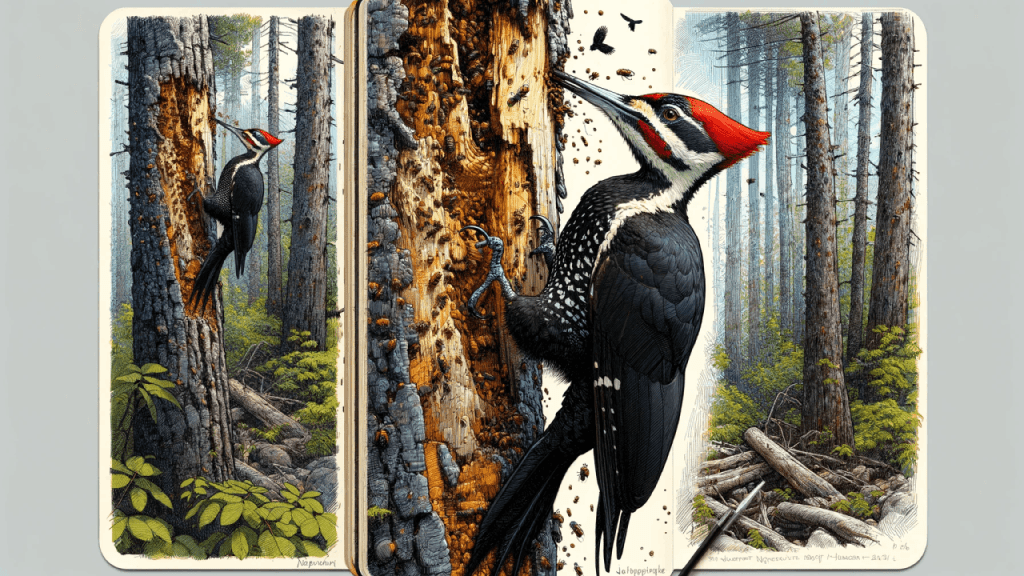
The Pileated Woodpecker’s feeding habits are a fascinating display of nature’s ingenuity and strength, showcasing this bird as the forest’s master carpenter. These woodpeckers have adapted perfectly to their role as predators of insects, primarily carpenter ants, which constitute a significant part of their diet. The search for food drives the Pileated Woodpecker to peck at decaying trees, their powerful beaks easily tearing into the wood to unearth hidden insect colonies.
Their feeding behavior is not random but a calculated effort that showcases their intelligence and adaptability. The Pileated Woodpecker prefers dead or dying trees with abundant insects, using their keen sense of hearing to detect the movements of larvae and ants beneath the bark. Once they locate their prey, they use their strong, chisel-like beak to drill into the wood, creating distinctive rectangular holes that signify their presence.
These woodpeckers are known for consuming vast quantities of ants, with a single bird capable of eating thousands of insects in one day. This highlights their role as natural pest controllers and underscores the importance of their feeding habits for maintaining the health of forest ecosystems.
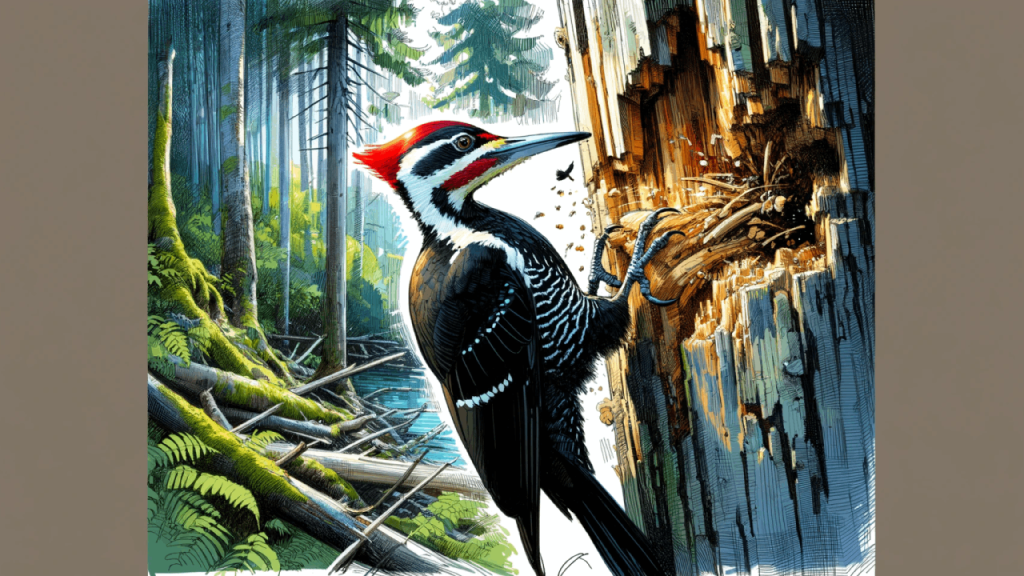
While insects make up the bulk of their diet, Pileated Woodpeckers are also known to enjoy a variety of fruits and nuts, diversifying their diet according to availability. In the fall and winter, when insects are harder to find, they may feed on wild berries, fruits, and even the seeds of poison ivy, demonstrating their adaptability to seasonal changes.
Offering suet in feeders can be an effective strategy for those interested in attracting Pileated Woodpeckers to their backyards. Suet, a high-energy food source, mimics the fat and protein-rich diet these birds seek, especially during the colder months. However, it’s essential to place feeders away from potential predators and in a quiet, wooded area to mimic their natural feeding environment as closely as possible.
The feeding habits of the Pileated Woodpecker illustrate their crucial role in the ecosystem as both predator and scavenger and highlight their remarkable adaptability and resilience. By understanding and appreciating these behaviors, we gain insight into the complex web of life that thrives in our forests and the vital role that these majestic birds play within them.
Favorite Foods: A Varied Palette for the Picky Pecker
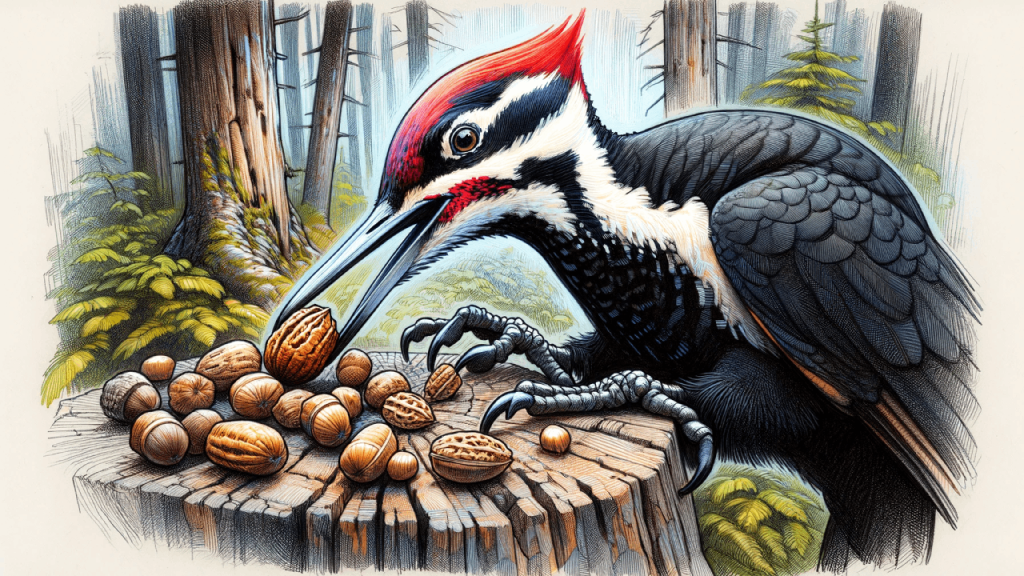
The Pileated Woodpecker, with its appetite for destruction, is not just a hunter of insects but also a connoisseur of the forest’s bounty. While their diet primarily consists of ants and wood-boring insects, these birds have a varied palate that includes a wide range of fruits and nuts, showcasing their ability to adapt to the seasonal offerings of their habitat.
Insect Delicacies
At the heart of their diet are carpenter ants, a favorite they skillfully extract from under the bark of dead trees. This task is accomplished through their remarkable ability to carve into wood, creating deep holes to access their prey. Beetles, larvae, and other insects also form part of their diet, providing the necessary protein for their high-energy lifestyle.
Fruity Feasts
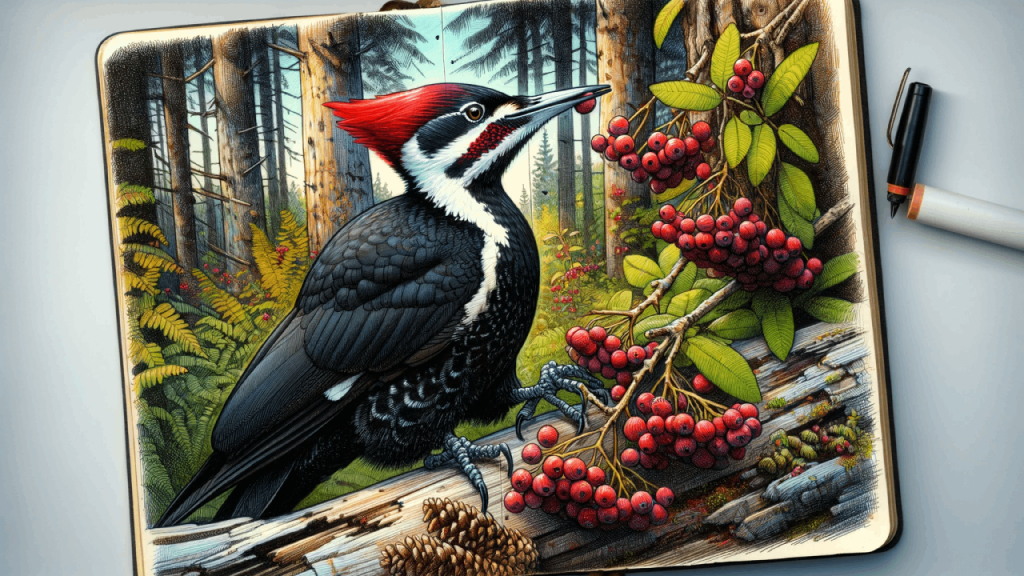
Beyond insects, Pileated Woodpeckers have a sweet spot for fruits. They feast on wild berries, including serviceberries, blackberries, and huckleberries. The fall season often sees them diversifying their diet with these sugary treats, which offer a vital energy source as the temperature drops and insects become scarcer.
Nutty Nibbles
Nuts and seeds also find their way into the diet of these woodpeckers, with acorns, beechnuts, and pine seeds being particularly favored. These items are typically consumed in winter, highlighting the bird’s ability to switch feeding habits according to availability and season.
Suet as a Supplement
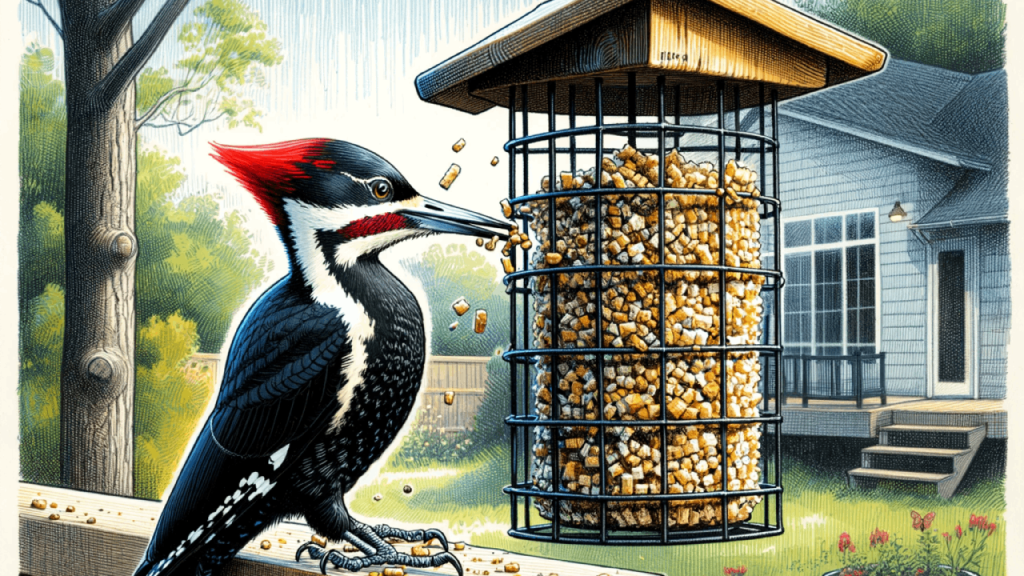
For bird enthusiasts looking to attract Pileated Woodpeckers to their backyards, suet feeders can be an excellent choice. Being rich in fat, Suet mimics the high-caloric diet these birds pursue in the wild. It’s particularly appealing in the winter, offering a reliable food source when insects and fruits are hard to come by.
Adapting to Availability
The Pileated Woodpecker’s diet reflects its adaptability and resilience. They ensure their survival across the changing seasons by varying their food intake based on what the environment offers. This flexibility also impacts the forest ecosystem, as Pileated Woodpeckers help control insect populations and disperse seeds, contributing to the health and regeneration of their woodland homes.
Feeding and Watching Tips
Observing a Pileated Woodpecker in action can be a thrilling experience. When setting up feeders, placing them near wooded areas or trees is crucial to mimic their natural feeding environment. Patience is key, as these birds are cautious and may take time to visit new food sources.
Conservation Efforts: Protecting the Majestic Forest Drummers

The Pileated Woodpecker, a symbol of wild, untouched forests, faces challenges threatening its habitat and survival. Conservation efforts for these birds are not just about preserving a species; they’re about maintaining the delicate balance of our forest ecosystems. Here’s how we can protect these magnificent creatures and ensure their continued presence in our woodlands.
Understanding the Threats
Primary threats to the Pileated Woodpecker include habitat loss due to deforestation, urban development, and logging. These activities reduce the availability of their primary food sources and nesting sites, directly impacting their populations. Climate change also poses a long-term threat, altering the habitat and food availability.
Preserving Habitat

The cornerstone of conservation efforts is habitat preservation. Supporting national parks, nature reserves, and conservation initiatives that protect old-growth forests and woodland areas is vital. On a local level, leaving dead trees standing (where safe) or maintaining wooded areas in our backyards can provide essential habitat for these woodpeckers.
Promoting Sustainable Practices
Advocating for and supporting sustainable forestry practices can help ensure that the forests remain a viable habitat for Pileated Woodpeckers and countless other species. Sustainable logging, reforestation efforts, and policies prioritizing primary forest conservation are crucial steps in this direction.
Fostering Community Involvement
Engaging communities in conservation efforts through education and awareness programs can have a profound impact. Workshops, bird-watching clubs, and citizen science projects like bird counts and habitat monitoring can foster a connection with nature and encourage collective action for conservation.
Creating Safe Spaces

Creating bird-friendly environments can make a significant difference for those of us with the privilege of living near wooded areas. Beyond setting up feeders, ensuring that outdoor spaces are safe from predators, free of pesticides, and providing natural food sources like berry-producing plants can attract and sustain Pileated Woodpeckers.
Supporting Conservation Organizations
Many organizations tirelessly protect bird habitats and advocate for wildlife conservation policies. Donating to or volunteering with these organizations can amplify conservation efforts, providing the resources needed to make a tangible difference.
Advocacy and Policy Support
Lastly, supporting policies that protect wildlife habitats and address climate change is crucial. Advocacy can take many forms, from voting for environmentally responsible leaders to participating in campaigns that push for stronger environmental protections.
The conservation of Pileated Woodpeckers is a collective responsibility that extends beyond individual actions. It’s about advocating for policies and practices that preserve our natural world, educating those around us about the importance of conservation, and taking direct action to protect these birds and their habitats. Together, we can ensure that the deep drumming of the Pileated Woodpecker continues to resonate through our forests, a testament to our commitment to preserving our planet’s natural beauty and diversity.
Conclusion

As we draw the curtains on our journey through the world of the Pileated Woodpecker, it’s clear that these birds are not just another character in the forest’s backdrop. They are vital players in the ecological theater, architects of biodiversity, and symbols of the wilderness that so many of us cherish. From their striking appearance and fascinating feeding habits to their critical role in forest health and the concerted efforts required to conserve their habitats, Pileated Woodpeckers embody the interconnectedness of nature’s web.
The drumming of the Pileated Woodpecker, which reverberates through the woods, is more than just a call—it’s a reminder. It beckons us to pay attention to the world beyond our windows, to the intricate dance of life that unfolds in our forests. These birds invite us to explore, to learn, and ultimately, to act. They remind us that conservation is not a passive endeavor but an active commitment to safeguarding our natural heritage.
In sharing the story of the Pileated Woodpecker, we’ve woven a tale of beauty, resilience, and coexistence. It’s a narrative that underscores the importance of each individual’s conservation role, from welcoming our backyards to advocating for the protection of vast wilderness areas. It’s a call to action, urging us to contribute to a future where the forest drums beat strong and free, where Pileated Woodpeckers and countless other species thrive, unthreatened by the encroachments of modern life.

Let this article serve not just as a source of knowledge but as an inspiration. May the majestic Pileated Woodpecker inspire you to look more closely at the natural world, appreciate its wonders, and participate in its preservation. Together, we can ensure that these magnificent birds’ deep, resonant drumming continues to echo through our forests, a testament to our collective efforts to preserve nature’s wild, untamed spirit.
As the sun sets on our exploration, we’re left with a sense of awe and a renewed commitment to the environment. With its vibrant crest and powerful call, the Pileated Woodpecker stands as a beacon of hope, guiding us towards a more conscious and concerted effort to protect our planet’s incredible biodiversity. Let’s answer their call, for in doing so, we enrich our lives and the very fabric of life itself.



 Wing Watchers with Wagner
Leave a comment